
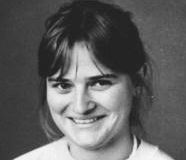
Therressa Jolynn Ritchie
Murderer Megan Huntsman
Murderer · USA · 1996
Megan Huntsman was 40 at sentencing. She was a mother of three children who wer…
6 victims
Megan Huntsman
Murderer · USA · 1996
Megan Huntsman was 40 at sentencing. She was a mother of three children who wer…
6 victims
 Angela Johnson
Murderer · USA · 1993
Angela Jane Johnson was convicted in federal court of aiding and abetting the m…
5 victims
Angela Johnson
Murderer · USA · 1993
Angela Jane Johnson was convicted in federal court of aiding and abetting the m…
5 victims
 Catherine May Wood
Murderer · USA · 1987
Catherine May Wood was an American caregiver who worked at the Alpine Manor Nur…
5 victims
Catherine May Wood
Murderer · USA · 1987
Catherine May Wood was an American caregiver who worked at the Alpine Manor Nur…
5 victims
 Michele Kalina
Murderer · USA · 1996
Michele Kalina pleaded guilty to murder for one of five infants she initially w…
5 victims
Michele Kalina
Murderer · USA · 1996
Michele Kalina pleaded guilty to murder for one of five infants she initially w…
5 victims
 Amy Bishop
Murderer · USA · 1986
Amy Bishop — biology professor and perpetrator · James Anderson — Bishop’s husb…
4 victims
Amy Bishop
Murderer · USA · 1986
Amy Bishop — biology professor and perpetrator · James Anderson — Bishop’s husb…
4 victims
 Susan Eubanks
Murderer · USA · 1996
Susan Dianne Eubanks, also referred to as Susan Eubanks, was convicted by a jur…
4 victims
Susan Eubanks
Murderer · USA · 1996
Susan Dianne Eubanks, also referred to as Susan Eubanks, was convicted by a jur…
4 victims
 Grace Fortescue
Murderer · USA · 1932
Grace Hubbard Fortescue (née Grace Hubbard Bell; 1883–1979) was a New York soci…
1 victim
Grace Fortescue
Murderer · USA · 1932
Grace Hubbard Fortescue (née Grace Hubbard Bell; 1883–1979) was a New York soci…
1 victim
 Yoo Young-Chul
Serial killer · South Korea · 2003
Yoo Young-Chul (Korean: 유영철; born 1970) was a South Korean serial killer and se…
20 victims
Yoo Young-Chul
Serial killer · South Korea · 2003
Yoo Young-Chul (Korean: 유영철; born 1970) was a South Korean serial killer and se…
20 victims
 Robert Bayne
Murderer · United Kingdom · 2010
Robert Bayne was convicted in the High Court of Justiciary in Edinburgh of murd…
1 victim
Robert Bayne
Murderer · United Kingdom · 2010
Robert Bayne was convicted in the High Court of Justiciary in Edinburgh of murd…
1 victim
 Marlin Gray
Murderer · USA · 1991
Marlin Gray was convicted of murder and sentenced to death in connection with t…
2 victims
Marlin Gray
Murderer · USA · 1991
Marlin Gray was convicted of murder and sentenced to death in connection with t…
2 victims
 Dayton Leroy Rogers
Serial killer · USA · 1987
Dayton Leroy Rogers was sentenced to death on June 9, 1989. He was resentenced…
8 victims
Dayton Leroy Rogers
Serial killer · USA · 1987
Dayton Leroy Rogers was sentenced to death on June 9, 1989. He was resentenced…
8 victims
 Holly Harvey
Homicide · USA · 2004
Defendant: Holly Harvey (15) Country/State: Georgia, United States Holly Harvey…
2 victims
Holly Harvey
Homicide · USA · 2004
Defendant: Holly Harvey (15) Country/State: Georgia, United States Holly Harvey…
2 victims
- Gender
- female
- Country
- USA
- Location
- Dayton, Montgomery County, Ohio, USA
- Date of birth
- October 21, 1970
- Age at first offence
- 25
- Characteristics
- child killer, domestic violence
- Victim profile
- Samantha R. Ritchie, 4 (her daughter)
- Method of murder
- Beating
- Date(s) of murder
- July 18, 1995
- Years active
- 1995
- Date of arrest
- 15 days after
- Status
-
Life imprisonment
Sentenced to 22 years to life in prison on February 14, 1996
Case details
Therressa Jolynn Ritchie was convicted for killing her 4-year-old daughter, Samantha Ritchie, after Samantha caught Ritchie having sex with a neighbor. Ritchie maintained her innocence.
Background
Ritchie’s ex-husband, Denton Ritchie, and Samantha’s father participated in the proceedings and made statements during sentencing-related events. Ritchie’s mother, Joyce Shoemaker, also made statements in court proceedings.
A children services spokesperson said that Montgomery County Children Services Board investigated complaints that Ritchie’s children—Samantha and three older half-brothers—were not being properly supervised, and that the investigation determined there was nothing there.
The offence
Samantha Ritchie was beaten and killed after Samantha discovered her mother having sex with a neighbor.
Police said Samantha died of head injuries. A neighbor account stated that Samantha “stumbled upon her mother having sex with a neighbor,” and that the neighbor testified to holding his pants while Ritchie clubbed the child to death. At least one witness account stated that Ritchie attacked Samantha with a cast on her broken wrist and a wrench after the girl found the neighbor and Ritchie having sex. The neighbor also testified that he helped Ritchie dispose of the girl’s body.
Ritchie reported that Samantha was missing. She later acknowledged reporting Samantha missing to a 911 operator.
Investigation
On July 18, 1995, Ritchie reported to a Dayton, Ohio 911 operator that her four-year-old daughter Samantha was missing. The local media covered the disappearance extensively, and a search followed.
Police found Samantha’s body on July 22, 1995 in a water-filled pit on the grounds of an abandoned foundry near Ritchie’s neighborhood. Search teams with dogs found the body in a watery pit about a block from Ritchie’s home.
A massive five-day search involved volunteers from the community after Ritchie reported Samantha missing, and authorities received a tip that Samantha may have been injured.
Police announced approximately two weeks after the initial report of the missing child that Ritchie had been arrested in Samantha’s death. A police chief urged parents to comfort their children, stating: “It’s a frightening time for them. Reassure them that they are OK.”
Arrest
Ritchie and Ernest Vernell Brooks were arrested and charged in Samantha’s death and related offences.
Ernest Vernell Brooks, described as 43, pleaded not guilty to gross abuse of a corpse and other charges, and later pleaded guilty to charges that included gross abuse of a corpse, tampering with evidence, and obstructing justice.
Ritchie was arraigned on charges including involuntary manslaughter, abuse of a corpse, inducing panic, and tampering with evidence. Bail was set at $1 million for Ritchie. Brooks’s bail was set at $250,000.
Trial
Pretrial publicity and venue
Ritchie sought a change of venue based on pretrial publicity, and later challenged the process of voir dire and the denial of a motion for change of venue in appellate proceedings.
The jury deliberated five hours before convicting her. The jury trial began on January 29, 1996 and concluded on February 14, 1996 with convictions for murder and additional crimes.
Ritchie told the judge before sentencing: “I've been wrongly accused,” Therressa Jolynn Ritchie told the judge Wednesday. “Do not just put me in a corner and allow the person who done this to go free.”
The federal appellate record described categories used during jury selection and the handling of jurors exposed to news reports. The trial court used juror categories, including:
- Category One: jurors not familiar with the case, news accounts, parties, or attorneys, and having no opinion.
- Category 2: jurors somewhat familiar but with no opinion about guilt or innocence.
- Category No. 3: jurors familiar and who had formed or expressed an opinion not firmly held.
- Category No. 4: jurors very familiar with closely held opinions.
The trial court explained the rationale for individual voir dire and then proceeded with group voir dire. In that proceeding, the trial court stated: “If you are in Category No. 3 or 4, which I assume the remainder of you are, counsel and the Court are going to proceed to question you individually, out of the presence of the other jurors. This individual voir dire or separate questioning is being conducted because we are going to be asking each of you exactly what it is that you recall viewing, listening to, or reading about pertaining to this case, and what you know or believe you know about it. We will then ask you what, if any, your opinions are and the extent to which they are held. To make these inquiries in the presence of each other would cause substantial confusion and probable prejudice to the parties because, first of all, people hear, see, and read, and interpret things, and remember things differently, particularly news items, and we don't want one person's recollection of these accounts either adding to or changing what another person's state of the knowledge or impression might be. Secondly, opinions about whether defendant is guilty or not guilty that are expressed in the presence of other jurors, which opinions are not based on evidence produced in court, could unfairly affect the other potential jurors who either do or do not share those opinions.”
The trial court later stated: “Ladies and gentlemen, we are proceeding, I think, perhaps not quite as rapidly as I had originally anticipated, but we are going in the right direction as far as inquiring of you about your qualifications to serve as jurors in this case... We are going to, I think efficiency will allow us to inquire of all of you as a group of jurors now on the questions that we want to talk to you about, which will allow us to get to your eligibility for further questioning perhaps a little more efficiently. In Category Three, each of you, by placing yourself in that category, have classified yourself as being familiar with the case, news accounts, the parties, or the attorneys in some fashion. That the jurors have followed the news accounts and do recall some details of those reports. These are jurors who may have formed or expressed an opinion about whether defendant is guilty or not guilty of the offenses charged, but these opinions are not firmly held. *** The obligation of the Court and counsel is to inquire of you further, those who are in this category further, to determine the nature of the knowledge or details that you have acquired about this case from whatever source, and also to inquire of you about what opinions you either previously have held or presently hold about whether defendant is guilty or not guilty of these offenses, and, finally, to inquire of you whether or not you can set aside and set out of your mind and lay aside the opinions, particularly the opinions which you may have formed, but also any of the information that you may have received or particularly that you recall having received from any news media sources. *** Again, let me repeat. Any prospective jurors who have opinions about whether the defendant is guilty or not guilty of the offense that have been derived from news accounts or any other source that may have come to them that cannot set these opinions aside and perform as a fair, unbiased, unprejudiced juror in this case? Okay. Subject to the one exception then, we are going to bring groups of 14 of you into the box and allow counsel to proceed to question you individually.”
A transcript excerpt quoted questioning of jurors in the voir dire process. The record included the following exchange:
BY MR. HECK: Q. Mrs. Smith.
A: Miss.
Q. Miss Smith. Again, Category Three, which is you have an opinion but it is not firmly held, is that correct?
A. Yes.
Q: Where did you get your information from?
A. Channel 7 and some of the Dayton Daily.
Q. And I am going to ask you, did you speak to any of your friends or co-workers or anything like that?
A. Co-workers.
Q. And did they have opinions about the case?
A. Yes, they did.
Q. And did they tell you what those opinions were?
Q. And as a result of what you saw, let me ask you, first, do you remember any specifics of what you saw or read?
A. Just her being found and the cast.
Q. Anything else?
A. No.
Q. Nothing after that?
Q. Nothing recently, in the last week or two?
Q. And as a result of that, did you reach an opinion as to the guilt or innocence of the defendant?
A. Well, I thought she was guilty.
Q. And I am going to ask you, can you put that aside?
Q. And listen to the evidence, watch the witnesses, listen and follow the instructions Judge will give you, and render an opinion completely apart from what you may have read or saw on TV?
A. Yes, I could.
Q. Any problem with that at all?
The record also included:
MR. CHECK: Yes.
BY MR. HECK: Q. You have heard the parameters. I assume since you are in No. 3, that you have an opinion, but it is not firmly held opinion.
A. Yes, sir.
Q. Where did you read, hear, or see, or get this information?
A. Television, no particular station, mostly. A little bit of newspapers from the Dayton Daily.
Do you remember anything specifically that you saw or heard?
...
A. I tried to think of this before, you know. This lady just brought up a lot of things I don't remember. I remember a cast, but I don't remember anything about it. As far as what she brought up, I don't remember a lot of that.
...
Q. Again, going through a trial, you may hear things in a trial that you recollect, something that you had heard previously. That is not uncommon in any case. Okay? That is not a problem. Not a problem that you have an opinion. Do you have an opinion in this particular case?
A. No, I don't think I do. I should say, no, I don't. Think, is not good. But, the reason — you talked to the lady about television, believing. Television and newspapers, I like to read and see TV about stories, but as far as making my opinions about those stories, I like to get a little more facts. Sometimes I don't think you can do that with them. I try to reserve my judgment.
...
Q. Have you talked to anyone else about the case?
A. The case was also talked about at work, but not in detail. It was more like, did you hear about the child being missing? Afterwards, it was did you hear there was an arrest? That's about the amount of talking that I was involved in at work.
Q. Okay. Anything else that you recall that you saw on TV about the defendant or that you heard or read, anything specifically?
A. Most of mine was before the child was found.
Q. You have no opinion, then, at this time?
A. No. I can't say that I don't. I'd say I don't have an opinion.
Thank you.
A. Sorry.
Q. That's not a problem.
Convictions and acquiescence of claims
The Ohio appellate proceedings affirmed the trial court’s decision regarding the motion to change venue. The Sixth Circuit habeas discussion described that Ritchie was convicted of murder and additional crimes with a sentence of 22 years to life. The record described that the Ohio Supreme Court declined appellate review.
Ritchie was sentenced for murder and additional offences, with the sentence ultimately described as 22 years to life on February 14, 1996.
Sentencing
At the sentencing on February 15, 1996 (Associated Press dated February 15, 1996), Ritchie was sentenced to a term “of 15 years to life” and she had previously been convicted the prior day by a jury. Another sentencing-related statement described that the judge sentenced her to 21 years to life, while the case’s current status records “Sentenced to 22 years to life in prison on February 14, 1996.”
Denton Ritchie told the judge before sentencing: “She had no emotion whatsoever,” Ritchie said. “Jolynn betrayed the entire community, believing that her crime would be forever undetected.” “I know how it happened, but I will never understand why. Jolynn took the most precious thing in my life away from me.” “May God have mercy on your soul because I have none for you.”
Ritchie faced additional penalties connected to charges including tampering with evidence, inducing panic, and abuse of a corpse.
Appeals
Ritchie pursued federal habeas relief under 28 U.S.C. § 2254. The Sixth Circuit described that it reviewed denial of the habeas petition and affirmed the district court’s denial. The Sixth Circuit case included:
- United States Court of Appeals, Sixth Circuit 313 F.3d 948
- Petitioner-appellant: Therressa Jolynn Ritchie
- Respondent-appellee: Shirley Rogers, Warden
- Argued: September 20, 2002
- Decided and Filed: December 18, 2002
The Sixth Circuit concluded the judgment denying the writ of habeas corpus was affirmed.
Aftermath
After conviction, the Ohio Parole Board said Ritchie would spend at least ten more years behind bars for the murder of her daughter. The Ohio Parole Board said she could not go back before the parole board until 2020 and she would remain incarcerated at the Ohio Reformatory for Women in Marysville for at least the next ten years.
Denton Ritchie spoke against early release, stating: “I hate her for what she did,” Denton Ritchie said. “She did a heinous crime and deserves to rot.”
He said afterwards: “I did everything in my power to keep her where she is at for the simple reason you never know. There’s nothing guaranteed,” he said. “As long as I’m breathing, I'm going to keep her there,” he said. “That’s where she’s going to be.”
The record described Denton Ritchie approached the Parole Board two weeks before the parole hearing with a petition of more than 1,000 signatures supporting continued incarceration.
The federal appellate material also described that intense publicity accompanied the search, subsequent discovery of Samantha’s body, and the child’s funeral, and that grief turned to public scorn once Ritchie was charged and then indicted. The appellate record included that intense publicity involved massive coverage and that Dayton Daily News called the homicide story the Number 1 news story for that calendar year.
Other details
At her arraignment, Ritchie pleaded innocent to involuntary manslaughter, abuse of a corpse, inducing panic and tampering with evidence. Bail was set at $1 million.
The federal appellate record described that the report set off a massive search by many volunteers in the Dayton community where Ritchie and Samantha lived, and that search dogs discovered Samantha’s body on July 22, 1995 in a pool of water in a nearby foundry.
Prosecutors said Ritchie struck her daughter with a cast on her arm and killed her after a night of heavy partying.
Police initially refused to say how they thought Samantha was killed, why she was killed, where the crime occurred, or what kind of weapon was used, while stating that Samantha died of head injuries.
Ritchie’s former husband and Samantha’s father was Denton Ritchie, and Ritchie’s mother was Joyce Shoemaker.
Ritchie was incarcerated at the Ohio Reformatory for Women in Marysville.
Spotted an error, or have more information about this case?