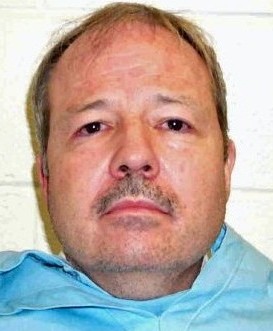
Larry Bill Elliott
Murderer Russell Ellwood
Murderer · USA · 1991
Russell Ellwood was a former taxi driver. Authorities suspected him of killing…
20 victims
Russell Ellwood
Murderer · USA · 1991
Russell Ellwood was a former taxi driver. Authorities suspected him of killing…
20 victims
 Robert Martines Perez
Murderer · USA · 1994
Name: Robert Martines Perez · Other name used in proceedings: Robert Martinez P…
15 victims
Robert Martines Perez
Murderer · USA · 1994
Name: Robert Martines Perez · Other name used in proceedings: Robert Martinez P…
15 victims
 Billy Frank Vickers
Murderer · USA · 1993
Billy Frank Vickers Vickers was executed by lethal injection in Texas on Januar…
14 victims
Billy Frank Vickers
Murderer · USA · 1993
Billy Frank Vickers Vickers was executed by lethal injection in Texas on Januar…
14 victims
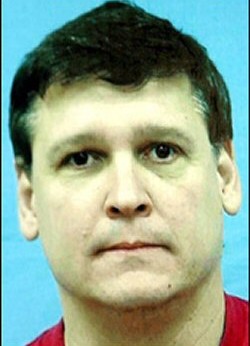 Doug Williams
Mass murderer · USA · 2003
Doug Williams was a 48-year-old assembly line worker at a Lockheed Martin plant…
6 victims
Doug Williams
Mass murderer · USA · 2003
Doug Williams was a 48-year-old assembly line worker at a Lockheed Martin plant…
6 victims
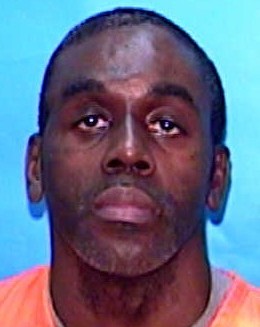 Victor Tony Jones
Murderer · USA · 1990
Name: Victor Tony Jones · Date of birth: 05/01/61 · Court: Eleventh Judicial Ci…
2 victims
Victor Tony Jones
Murderer · USA · 1990
Name: Victor Tony Jones · Date of birth: 05/01/61 · Court: Eleventh Judicial Ci…
2 victims
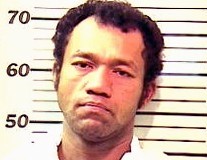 Lam Luong
Mass murderer · USA · 2008
Lam Luong was a Vietnamese refugee who was sentenced to death in Alabama for th…
4 victims
Lam Luong
Mass murderer · USA · 2008
Lam Luong was a Vietnamese refugee who was sentenced to death in Alabama for th…
4 victims
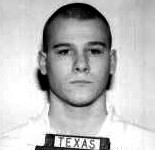 Leo Gordon Little
Homicide · USA · 1998
Leo Gordon Little (TDCJ Number: 999302) was born 07/14/1980. He was a White mal…
1 victim
Leo Gordon Little
Homicide · USA · 1998
Leo Gordon Little (TDCJ Number: 999302) was born 07/14/1980. He was a White mal…
1 victim
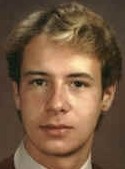 Derek Rocco Barnabei
Murderer · USA · 1993
Derek Rocco Barnabei — convicted person; petitioner-appellant · Sarah Wisnosky…
1 victim
Derek Rocco Barnabei
Murderer · USA · 1993
Derek Rocco Barnabei — convicted person; petitioner-appellant · Sarah Wisnosky…
1 victim
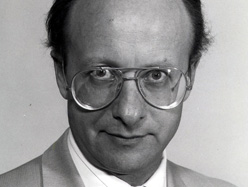 Valery Fabrikant
Mass murderer · Canada · 1992
Valery Fabrikant was a former associate professor of mechanical engineering at…
4 victims
Valery Fabrikant
Mass murderer · Canada · 1992
Valery Fabrikant was a former associate professor of mechanical engineering at…
4 victims
- Gender
- male
- Country
- USA
- Location
- Prince William County, Virginia, USA
- Date of birth
- November 13, 1949
- Age at first offence
- 52
- Characteristics
- jealousy, drug addict
- Victim profile
- Dana Thrall (female, 25) and Robert Finch (male, 30)
- Method of murder
- Shooting
- Date(s) of murder
- January 2, 2001
- Years active
- 2001
- Date of arrest
- —
- Status
-
Executed
Executed by electrocution in Virginia on November 17, 2009
Case identification
Larry Bill Elliott
Timeline
- 1 January 2001 — Elliott broke into Finch's Woodbridge townhouse.
- 2 January 2001 — Mary Bracewell observed a man beside a pickup truck on Belfry Lane at about 4:00 a.m.; police responded to reports and discovered Robert A. Finch dead and Dana Thrall shot and later died.
- 3 January 2001 — Detective Hoffman and another detective traveled to Fort Meade in Hanover, Maryland to locate and examine Elliott’s pickup truck.
- 4 January 2001 — Rebecca Gragg was interviewed again and admitted receiving a telephone call early on the morning of the murders, claiming it had come from Finch.
- 7 January 2001 — Detective Hoffman conducted another interview with Elliott; Elliott admitted he had been in Finch’s neighborhood “hundreds of times.”
- 8 January 2001 — Officer Leo took possession of Elliott's pickup truck pursuant to a search warrant.
- 12 January 2001 — Detectives interviewed Gragg.
- 19 January 2001 — Detectives interviewed Gragg again.
- 25 May 2002 — After deliberating for 4 ½ hours, a jury found Elliott guilty of first-degree murder and capital murder in the deaths of the Prince William couple.
- 31 July 2002 — The jury recommended life in prison for the murder of Finch and the death penalty for the murder of Thrall.
- August 2002 — Circuit Court Judge William D. Hamblen threw out the verdict and ordered a retrial after a juror improperly discussed the case with her husband, an attorney, on the day the panel decided on punishment.
- 2 April 2003 — Elliott was retried and was convicted by a new jury of all counts.
- 4 April 2003 — The jury recommended that Elliott’s punishment be fixed to life in prison for the murder of Finch and a death sentence for killing Thrall.
- 22 May 2003 — The trial judge sentenced Elliott to die.
- 5 April 2005 — Elliott filed a petition for a writ of habeas corpus in the Virginia Supreme Court.
- 10 January 2005 — The U.S. Supreme Court declined to hear defense appeals.
- 16 April 2005 — (Referenced as part of federal habeas context) The federal habeas petition was described as pending following state proceedings.
- 2007 — The Supreme Court affirmed Elliott’s convictions and sentence of death; further habeas relief was denied in state collateral proceedings.
- 15 November 2009 — Execution date context described as the date of execution; the case status states November 17, 2009.
- 17 November 2009 — Elliott was executed by electrocution in Virginia.
Background
Larry Bill Elliott was a former Army counterintelligence expert and later a civilian employee for the United States Army as a counterintelligence expert at Fort Meade, Hanover, Maryland.
The offence
Victims
- Robert A. Finch, 30
- Dana Thrall, 25
- Finch’s two young children were aged six and four.
Capital murder and first-degree murder
Elliott was convicted in the Circuit Court, Prince William County, of capital murder of Dana Thrall and first-degree murder of Robert A. Finch, along with two counts of use of a firearm in the commission of a felony.
Investigation
Events leading to discovery
At approximately 4:00 a.m. on 2 January 2001, Mary Bracewell, a newspaper delivery person, was traveling her route in the Woodbridge community of Prince William County, Virginia. She became suspicious when she saw a man standing beside a pickup truck parked on Belfry Lane. Bracewell observed the man, appearing to carry a flashlight, walk to the north end of Belfry Lane, cross the street, walk onto a grassy area between two townhouses, and then disappear from her view. Bracewell called police.
At 4:15 a.m., Officer Marshall T. Daniel of the Prince William County Police Department received a radio dispatch directing him to respond to Bracewell’s call and arrived three minutes later. Daniel noted the pickup truck was locked and had a Department of Defense windshield identification sticker and a cellular telephone on the passenger seat.
At 4:27 a.m., Officer Daniel received a radio call to respond to a report of a domestic disturbance at a townhouse at 3406 Jousters Way. Miller telephoned police after being awakened by a crashing sound at approximately 4:20 a.m. As she placed the call, Miller heard three or four “hollow” sounds followed by “the most horrible scream” she had ever heard. Miller thought the screaming voice sounded like that of Thrall.
Tommy Young heard two loud “banging noises” from 3406 Jousters Way, followed by the sound of a female scream and three more banging noises. Young also saw that the front storm door was swaying back and forth and that the front window shades, normally half-drawn, were fully closed.
At 4:25 a.m., Officer Scott Bigger arrived at 3406 Jousters Way, knocked on the front door, and received no response. Officer Daniel then walked around to the back. Daniel could hear a large dog barking “pretty hysterical[ly], angry” inside the yard. Looking through a gap between the shades, Daniel saw legs of a person lying prone and motionless in the foyer. Officer Bigger opened the unlocked front door, and Finch was found dead on the floor.
Officer Daniel secured the back of the home while Bigger waited for additional officers. Daniel then returned to Belfry Lane, where the truck had been parked, arriving there at 4:38 a.m. The truck was gone.
At approximately 4:45 a.m., Officer Sheldon R. Creamer entered the home and heard “a muffled breathing sound” coming from the kitchen. In the kitchen, Creamer found Thrall shot and lying in a pool of blood. Emergency medical personnel evacuated her to the Washington Hospital Center in the District of Columbia, where she later died.
Thrall suffered multiple gunshot wounds including a defensive wound to her right hand, three to her head, and one to her chest, and blunt force trauma to the back of her head consistent with a pistol-whipping. Creamer found that the backdoor was locked by its doorknob lock but that the door’s deadbolt lock was not engaged. He found that the gate of the privacy fence was secured with a locked padlock. Thrall’s two sons, aged six and four, were found crying and upset upstairs and were removed from the home.
Forensic evidence
Officer Thomas Leo, a crime scene analyst, collected bloodstain samples inside the townhouse, and DNA testing confirmed the blood was that of Thrall and Finch. Leo found a bloodstain on the inside of the gate of the privacy fence, and subsequent DNA testing showed it was consistent with Elliott’s DNA to a degree that a match would occur “once in the entire world population.”
Although a murder weapon was never recovered, forensic testing of ten bullets recovered from the home and during the autopsies confirmed that all had been fired by the same weapon. The bullets were a type used only in a revolver-type handgun. Gary Arnsten, a firearms expert with Virginia’s Division of Forensic Science, testified that because no weapon of that type could hold more than five or six bullets in its revolving chamber, he was certain the weapon had been reloaded during the murders.
Officer Leo also found that the interior of Elliott’s pickup truck had been recently cleaned, noting wet carpet and a “silicone type base cleaner.” Testing of samples from the underside of the truck’s floor mats showed trace residue of blood, though samples were too small for accurate DNA testing, and a further blood sample from the seat cushion was consistent with Elliott’s DNA.
Interviews and links to Elliott
Detective Charles Hoffman spoke with Finch’s sister, Jennifer Finch, on the day of the murders. Jennifer Finch informed Hoffman that Finch had a prior romantic relationship with Rebecca Gragg and that Finch and Gragg had a bitter custody dispute over their two children.
Hoffman traveled to Gragg’s residence in Dale City, Virginia, and found vehicles parked there, including one registered in Elliott’s name. Gragg returned later that day and was interviewed. She maintained that Elliott was her “friend and business partner.” She denied knowing anything about the murders but stated that Finch had many enemies.
On January 3, 2001, Hoffman and another detective traveled to Fort Meade in Hanover, Maryland, where Elliott worked as a civilian counterintelligence expert. They located the pickup truck and Hoffman observed a flashlight, a cellular telephone, and a box of bandages on the seat. During the encounter, Elliott identified himself as the owner of the truck and agreed to talk. Elliott said Gragg was an employee at a brewing company he owned in West Virginia and admitted he had supplied her with a credit card in the name of “Rebecca L. Elliott,” claiming it was for business purposes. Elliott said he had been traveling during the New Year’s holiday and had spoken to her several times by cellular telephone to arrange a business meeting. He said he knew Gragg and Finch were involved in a dispute regarding custody, and he claimed Gragg traveled to Florida and took the children with her, telling him she had car trouble and would not return to Virginia in time to return the children to Finch at 2:00 p.m. on New Year’s Day under a visitation agreement. Elliott claimed he had driven to Gragg’s residence early in the afternoon of New Year’s Day to explain to Robert Finch the problems Rebecca was having with getting back. Elliott denied any relationship with Gragg other than employer-employee and denied knowing Finch, claiming he had seen him only once.
Hoffman told Elliott the truck was seen in Finch’s neighborhood during the early morning hours of the day of the murders, and Elliott denied being in the area. Elliott said he spent the night of January first to second sleeping in his truck at a rest area in Maryland. Elliott voluntarily accompanied the detectives to the Anne Arundel County, Maryland Police Department.
Admissions by Elliott about the relationship
During an interview at the Anne Arundel County, Maryland Police Department, Elliott admitted the “true nature” of his involvement with Gragg. He said he initiated a relationship with Gragg in mid-1999 after viewing her photograph on an Internet website called “Adult Friend Finders.” Gragg had posted an advertisement seeking a “sugar daddy.” Elliott testified that Gragg told him she had worked as a stripper and “private escort,” a euphemism for a “call-girl” prostitute, and that she wanted to turn her life around and needed financial support to start a business designing and selling costumes for strippers. Elliott agreed only to friendship and said Gragg was not interested in a romantic or sexual relationship.
Elliott admitted providing significant financial support, including paying private school tuition for her children, paying the mortgage on one house Gragg owned in West Virginia and rental on others where she lived with her husband and children at various times, providing cars, and permitting her to use his credit cards. He also admitted paying for breast augmentation surgery for Gragg, who had begun operating a pay-to-view pornographic website. Elliott said supporting Gragg placed a significant financial burden on him and that he had to sell investments to pay her credit card debts.
Elliott said he knew where Finch lived. After he had gone to Gragg’s house on the afternoon of January 1, 2001, Elliott said he had driven to Finch’s house. He denied getting out of his truck and claimed he had seen “a black man with a slinky walk going to the front door of the home.” Elliott then said he drove to a national retail store and a restaurant before driving to the rest stop in Maryland where he spent the night. He later said he drove back to Gragg’s residence about 3:00 a.m. on the morning of January 2, 2001, to retrieve a case of motor oil he had seen the day before. Elliott said he went to a convenience store and called Gragg’s cellular telephone on a pay telephone because his own cellular telephone battery had run down. Telephone company records showed a call was placed from the pay telephone to Gragg’s cellular telephone at 3:28 a.m. on January 2, 2001.
Elliott admitted that after calling Gragg, he drove to Finch’s neighborhood. He admitted leaving his truck, claiming he did so only because he needed to urinate, and said that after urinating by a guardrail on the side of the road, he walked by Thrall’s and Finch’s townhouse. Elliott denied going onto the property and denied hearing gunshots, a scream, or anything unusual. At the conclusion of this interview, Hoffman took a photograph of an abrasion he had noticed on one of Elliott’s hands.
Further interviews of Rebecca Gragg
On January 4, 2001, Gragg, accompanied by her lawyer, was interviewed again. She admitted receiving a telephone call early on the morning of the murders but claimed it had come from Finch. She claimed Finch threatened to call police if she did not return the children that afternoon and said she did not believe Elliott committed the murders.
On January 7, 2001, Elliott admitted he had been in Finch’s neighborhood “hundreds of times,” and he admitted walking through the neighborhood but denied being on the property where Thrall and Finch lived.
On January 8, 2001, Officer Leo took possession of Elliott’s pickup truck pursuant to a search warrant.
Detectives interviewed Gragg on January 12, 2001 and again on January 19, 2001, and she continued to deny knowledge of the murders. Police suspected she was not fully forthcoming based on a polygraph examination she agreed to take, but they were uncertain about the extent of her knowledge and whether she was directly involved.
Gragg had continuing contact with police over the next several months but did not provide additional information about Elliott.
Arrest
On May 9, 2001, Elliott was arrested in Maryland and charged with capital murder. Maryland State Police said Elliott was leaving in his vehicle at a high rate of speed and there was concern he was attempting to flee. Elliott claimed he intended to turn himself in.
On May 10, 2001, Prince William County detectives interviewed Gragg again. Gragg agreed to submit to a second polygraph examination. After the polygraph examiner and Detective Hoffman told Gragg her responses indicated untruthfulness, Gragg asked to speak with her attorney. After consulting with her attorney, Gragg told police the telephone call she had received early on the morning of the murders was not from Finch. She described that when the caller realized she thought she was talking to Finch, the caller said he was “tired of this s* * * and was going to take care of it” and hung up. Gragg then realized the call had come from Elliott.
Gragg attempted to call Elliott’s cellular telephone, but the call was answered by a voice mail system. Gragg said she received several more calls on January 2, 2001 from Elliott. In one call, Elliott told her “all of our problems had been taken care of.” In another call, Elliott claimed “Jerry,” a cryptic figure Elliott supposedly knew through his work with military counterintelligence, “had come out of nowhere to help him, that he had to go clean up this mess.” Elliott later told Gragg he was looking for a place “to dump ... these bloodied black trash bags from the mess that Jerry had made.” Gragg told police she had not been truthful in prior interviews because she feared Elliott and “Jerry,” because Elliott had told her that “Jerry” was watching her and that he would kill her or her family if she went to police. After Elliott was in custody and police assured her there was no “Jerry,” she decided to be truthful. Gragg’s attorney confirmed she had told him multiple occasions that she feared Elliott would harm her if she told the police what she knew.
Prosecution and charges
On August 6, 2001, the Prince William County grand jury returned indictments charging Elliott with:
- capital murder of Thrall
- first degree murder of Finch
- two counts of the use of a firearm in the commission of a felony
In Elliott’s direct appeal, the Virginia Supreme Court discussed the convictions including:
- capital murder of Dana L. Thrall under Code § 18.2-31(7)
- first degree murder of Robert A. Finch under Code § 18.2-32
- firearm offenses related to these two murders under Code § 18.2-53.1
Trial
First trial
Elliott was tried on the indictments initially in a jury trial in July 2002. The jury found him guilty and sentenced him to death. The trial court declared a mistrial after determining a juror improperly discussed the case with her husband, an attorney, on the day the panel decided on punishment.
Before the July 2002 trial, Elliott filed numerous motions, including motions to have Virginia capital murder and death penalty statutes declared unconstitutional and a request that the jury be instructed that if the Commonwealth presented evidence of vileness during the penalty determination phase, the jury was to be unanimous in its determination of the elements of the act that caused it to be vile. The trial court denied the motions without comment.
After the mistrial was declared, Elliott did not renew the pre-trial motions or request adoption of the first trial rulings for the retrial.
Motions relevant to the retrial
Before the retrial, Elliott sought disclosure of exculpatory and impeaching information within Rebecca Gragg’s initial statement to police and related police reports. Elliott also sought an in limine ruling permitting introduction of a videotape of Gragg’s polygraph examinations.
The trial court directed the Commonwealth to disclose all statements “authored by Rebecca Gragg and furnished to the Office of the Commonwealth's Attorney” during the pendency of the prosecution. The Commonwealth provided additional material including a forty-eight-page statement “generated by Ms. Gragg.”
On February 10, 2003, a hearing was held on admitting the videotape of Gragg’s polygraph examinations. The trial court ruled that during cross-examination of Gragg, Elliott could establish police confronted her on May 10, 2001 that she was untruthful and that this was why she made prior inconsistent statements, while avoiding “this morass of polygraph.”
Retrial
Elliott’s second trial commenced on March 24, 2003.
At trial, Brandon T. Jackson, an employee of the United States Army Intelligence & Security Command at Fort Belvoir, testified he knew Elliott since 1991. Jackson recounted that on December 26, 2000, Elliott sent him an email stating Elliott and some co-workers at Fort Meade wanted to establish a gun range and asked if Jackson could acquire gun silencers to avoid complaints. Jackson testified he ignored the email because he believed the request was “ludicrous,” and that obtaining gun silencers legally was complex. Jackson testified he discussed the issue with Elliott by phone after receiving the email and Elliott asked about detailed questions including whether a silencer could be purchased at a gun show.
Rebecca Gragg testified about the relationship, asserting she made it clear she was not seeking a romantic or sexual relationship. She testified that Elliott once claimed to her they had sexual intercourse while she had been under the effects of a pre-operative sedative before her breast augmentation surgery. After that incident, Gragg testified Elliott “constantly” professed love and provided increasing financial support and goods. Gragg testified she became uncomfortable and refused to see Elliott socially, and that Elliott then made excuses to see her and would arrive unannounced. Gragg also testified Elliott employed a private investigator for her custody dispute with Finch, and when the investigator failed, Elliott told her he knew people who could do it better. Gragg said she told Elliott not to interfere. Gragg testified she revealed to Elliott she resumed her relationship with Finch and was still in love. She testified Elliott told her “Jerry” was “checking up” on her so he could “keep [Gragg] in line.”
Gragg testified Elliott told her that if she went to the police, these people would be killed, and she testified Elliott specifically mentioned Finch. Gragg testified Elliott grabbed her by the arm and told her she should take him seriously because “people's lives were in danger,” and if Gragg refused, he did not know what “Jerry” might do. Gragg testified Elliott gave her personal information about his wife’s financial accounts and had her pose as his wife on the telephone to make transfers; Elliott threw the information away and Gragg retrieved it and later turned it over to police.
Gragg also testified that on December 26, 2000, Elliott sent her a rambling email. The email indicated Jackson was “only one of two people that I am working this issue with,” and the other person, “Mac,” was “into anything that went bang and he just may have some connections.” Elliott stated “He is the type of guy that would bolt if I mentioned any of this in an email,” referenced “this one issue resolved,” and wrote a postscript telling Gragg to remember he loved her even “if everything goes south.” Gragg testified she understood “issue” and “problem” referred to the child custody dispute with Finch.
The Commonwealth rested, and Elliott recalled Detective Hoffman for limited purposes. Elliott offered no other evidence.
During jury deliberations, the jury sent a question to the trial court asking to view a videotape of the crime scene admitted into evidence; with concurrence, the trial court permitted the jury to view it. After four hours of deliberation, the jury returned verdicts convicting Elliott of:
- capital murder of Thrall
- first-degree murder of Finch
- two related firearm offenses
At the defense request, the jury was polled and each juror agreed with the verdicts.
Penalty determination phase
In the penalty phase, the Commonwealth called Thrall’s mother, brother, and sister-in-law for victim impact testimony, including the effect on Thrall’s two sons.
Elliott called his wife and six co-workers as character witnesses regarding his good character, mild manner, and strong work ethic, including his twenty years enlisted service in the United States Army as a counterintelligence specialist and subsequent civilian employment in that same capacity.
Elliott’s wife testified they married in 1976 and had a daughter, and that she admitted Elliott had not had a close relationship with their daughter. She testified she was unaware of Elliott’s relationship with Gragg until after the murders and she testified he was not a violent person and “would not hurt anybody.” She also testified she was unaware until after the murders that Elliott dissipated about $200,000 of her separate assets during his relationship with Gragg.
The trial court ruled the case would be submitted to the jury only on the vileness aggravating factor. Defense counsel agreed with the instruction defining the vileness aggravating factor requiring that the murder of Thrall “was outrageously or wantonly vile, horrible or inhuman, in that it involved torture, depravity of mind or aggravated battery of the victim beyond the minimum necessary to accomplish the act of murder.” Defense counsel objected for the record to capital murder instructions because the evidence would not support a finding that Finch’s murder was vile.
During deliberations in the penalty phase, the jury sent a question about where the money to pay a fine would come from and “where would the money go.” With concurrence of the parties, the trial court instructed the jury not to concern itself with those matters.
The jury returned verdicts sentencing Elliott to death for the capital murder of Thrall, life imprisonment for the first-degree murder of Finch, and a total of eight years imprisonment for the two firearm offenses.
Sentencing
After the jury returned the death sentence verdict, the trial court ordered a post-sentence report. In the post-sentence report, Elliott claimed for the first time that his relationship with Gragg had in fact evolved into a sexual, though not necessarily romantic, arrangement. Elliott also maintained his innocence.
At the sentencing hearing on May 22, 2003, the trial court overruled several post-verdict motions filed by Elliott. Elliott denied involvement in the murders and asserted he was the victim of “lies that were told in [the] courtroom” and “a police department that practices Gestapo techniques.”
The trial court imposed sentence in accord with the jury’s verdicts: death for Thrall, life imprisonment for Finch, and eight years total for firearm offenses.
Appeals
Direct appeal
On January 10, 2005, the U.S.
The Virginia Supreme Court addressed the capital murder conviction and death sentence and affirmed the judgment, including holdings regarding:
- denial of Elliott’s motion in limine to admit into evidence videotape of witness polygraph examinations
- denial of Elliott’s attempt to introduce evidence concerning an incident in which husband of Commonwealth witness had brandished a gun at the victim
- determination that imposition of death was not excessive or disproportionate to similar cases
The Virginia Supreme Court also described that the trial court did not abuse its discretion by denying Elliott’s motion in limine to admit the polygraph videotape and by excluding evidence of third parties’ animosity.
Elliott v. Commonwealth, 267 Va. 396, 593 S.E.2d 270 (Va. 2004) (Direct Appeal).
Elliott v. Warden of Sussex I State Prison, 274 Va. 598, 652 S.E.2d 465 (Va. 2007) (State Habeas).
Outcome
The jury convicted Elliott of capital murder of Dana Thrall and first degree murder of Robert A. Finch and firearm offenses related to these murders. The trial court sentenced him to die. After unsuccessful direct appeal and state collateral proceedings, Elliott was executed.
Aftermath
Elliott filed a petition for a writ of habeas corpus in the Virginia Supreme Court and later federal habeas proceedings.
In state habeas corpus, the Virginia Supreme Court held:
- the Commonwealth did not commit a Brady violation
- counsel was not ineffective and dismissed the petition.
In federal habeas corpus proceedings, the petition was dismissed and remaining motions were deemed moot, with the execution stay lifted.
Other details
Rebecca Gragg and custody dispute context
Detective Hoffman was informed that Finch and Gragg were involved in a bitter custody dispute over Finch’s two children. Elliott and Gragg met online after she posted an advertisement looking for a “sugar daddy.” The prosecution presented a motive of jealousy, and the record described that Elliott perceived Finch as a threat to a relationship between Elliott and Gragg.
Police evidence and weapons recovery
No murder weapon was recovered. Forensic testing of bullets recovered from the home and during autopsies showed all bullets were fired by the same revolver-type handgun and that it had been reloaded during the murders.
DNA and blood samples
DNA testing confirmed bloodstains to be that of Thrall and Finch, and a bloodstain on the inside of the privacy fence gate was consistent with Elliott’s DNA to the degree described by the Virginia Supreme Court.
U.S. Army involvement and gun silencers evidence
Testimony and email communications addressed Elliott’s interest in acquiring gun silencers for practice shooting and for connections around “gun range” issues. Elliott sought to acquire gun silencers, and he had discussed potential purchasing at a gun show.
Execution
Elliott’s legal outcome was execution by electrocution in Virginia on November 17, 2009.

Spotted an error, or have more information about this case?