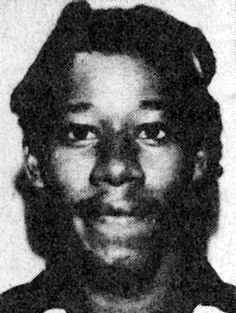
Connie Ray Evans
Murderer Ervil LeBaron
Murderer · USA · 1972
Ervil Morrell LeBaron (1925 to August 16, 1981) was the leader of a polygamous…
35 victims
Ervil LeBaron
Murderer · USA · 1972
Ervil Morrell LeBaron (1925 to August 16, 1981) was the leader of a polygamous…
35 victims
 Brian Kevin Rosenfeld
Murderer · USA · 1985
Brian Kevin Rosenfeld Brian Kevin Rosenfeld was sentenced to three concurrent l…
23 victims
Brian Kevin Rosenfeld
Murderer · USA · 1985
Brian Kevin Rosenfeld Brian Kevin Rosenfeld was sentenced to three concurrent l…
23 victims
 Marvin Gray
Murderer · USA · 1975
Marvin Gray was convicted killer who claimed responsibility for 23 slayings and…
23 victims
Marvin Gray
Murderer · USA · 1975
Marvin Gray was convicted killer who claimed responsibility for 23 slayings and…
23 victims
 Yahweh ben Yahweh
Murderer · USA · 1980
Yahweh ben Yahweh was born and legally named Hulon Mitchell Jr. (October 27, 19…
23 victims
Yahweh ben Yahweh
Murderer · USA · 1980
Yahweh ben Yahweh was born and legally named Hulon Mitchell Jr. (October 27, 19…
23 victims
 Russell Ellwood
Murderer · USA · 1991
Russell Ellwood was a former taxi driver. Authorities suspected him of killing…
20 victims
Russell Ellwood
Murderer · USA · 1991
Russell Ellwood was a former taxi driver. Authorities suspected him of killing…
20 victims
 Walter Kelbach
Spree killer · USA · 1966
Walter Kelbach was 28 years old. Myron Lance was 25 years old. Kelbach and Lanc…
6 victims
Walter Kelbach
Spree killer · USA · 1966
Walter Kelbach was 28 years old. Myron Lance was 25 years old. Kelbach and Lanc…
6 victims
 Christopher Dorner
Spree killer · USA · 2013
Christopher Dorner Dorner died from a self-inflicted gunshot wound to the head,…
4 victims
Christopher Dorner
Spree killer · USA · 2013
Christopher Dorner Dorner died from a self-inflicted gunshot wound to the head,…
4 victims
 Dorothea Puente
Serial killer · USA · 1982
Dorothea Puente was a convicted serial killer. In Sacramento, California, she r…
9 victims
Dorothea Puente
Serial killer · USA · 1982
Dorothea Puente was a convicted serial killer. In Sacramento, California, she r…
9 victims
 Mine An Ener
Murderer · USA · 2003
Mine An Ener was a Villanova University history professor specializing in Middl…
1 victim
Mine An Ener
Murderer · USA · 2003
Mine An Ener was a Villanova University history professor specializing in Middl…
1 victim
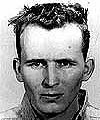 Joseph Francis Bryan
Homicide · USA · 1964
Joseph Francis Bryan was born in Camden, New Jersey. He first ran afoul of the…
3 victims
Joseph Francis Bryan
Homicide · USA · 1964
Joseph Francis Bryan was born in Camden, New Jersey. He first ran afoul of the…
3 victims
- Gender
- male
- Country
- USA
- Location
- Jackson, Mississippi, USA
- Date of birth
- 1960
- Age at first offence
- 21
- Characteristics
- drugs
- Victim profile
- Arun Pahwa, 28 (convenience store clerk)
- Method of murder
- Shooting (.38 caliber revolver)
- Date(s) of murder
- 1981
- Years active
- 1981
- Date of arrest
- —
- Status
-
Executed
Executed by asphyxiation-gas in Mississippi on July 8, 1987
Case overview
Connie Ray Evans was executed by asphyxiation-gas in Mississippi on July 8, 1987. He had been condemned in 1981 for the murder of a convenience store worker during a robbery.
Connie Ray Evans was 27 at the time he was pronounced dead at 12:22 A.M. He had entered a guilty plea to capital murder and his case proceeded directly to the penalty phase under Mississippi’s bifurcated scheme. The jury recommended the death penalty and found that the State proved four statutory aggravating circumstances that outweighed any mitigating circumstances.
Evans’ execution was carried out at the State Prison at Parchman. Officials began the release of gas into the chamber and Connie Ray Evans was pronounced dead 17 minutes later, according to Warden Donald Cabana.
Timeline
- July 8, 1987 — Officials at the State Prison at Parchman began the release of gas into the chamber; Connie Ray Evans was pronounced dead at 12:22 A.M., 17 minutes later.
- March 12, 1987 — The United States Court of Appeals for the Fifth Circuit affirmed the district court’s denial of Evans’ habeas petition (809 F.2d 239).
- July 6, 1987 — The United States Court of Appeals for the Fifth Circuit denied a stay of execution and denied an application for a certificate of probable cause to appeal the denial of Evans’ second petition for federal habeas corpus (821 F.2d 1065).
- June 26, 1987 — The United States District Court, Southern District of Mississippi, dated excerpts used in the appendix in Civil Action No. J-87-0081(B).
The offence
The murder occurred during an armed robbery of a neighborhood grocery store in Jackson, Mississippi.
Evans forced the grocery store clerk onto his knees and then shot him in the back of his head at close range. Evans and his accomplice, Alfonso Artis, fled after the robbery and murder.
During the armed robbery, Evans acted as a lookout while Alfonso Artis entered the grocery store with a .38 caliber revolver. Artis made the store clerk, Arun Pahwa, get on his knees behind the counter. Evans entered the store, received the handgun from Artis, and stood over Pahwa with the cocked revolver pointed at Pahwa’s head. When Artis could not get the cash register drawer open, he ordered Pahwa to get up and open the cash register; Pahwa was forced back into a kneeling position. Evans and Artis collected approximately $140 from the cash register and Pahwa’s pockets. As Artis turned to leave, Evans shot Pahwa in the back of his head from a distance of approximately three or four feet.
Evans pleaded guilty to capital murder and his case proceeded directly to trial on the penalty phase as required by Mississippi’s bifurcated scheme.
Investigation, arrest, and confession
Alfonso Artis was apprehended by police the next day. Connie Ray Evans turned himself in to the police 17 days later.
Petitioner confessed that he shot the victim because "the man knew me and I did not want him to identify me." Evans later recanted this portion of his confession at the sentencing hearing. Evans testified that he did not intend to shoot the victim, but fired because the victim made a slight movement of his knees when a telephone rang. Nevertheless, the jury found that Evans shot the victim for the purpose of avoiding arrest.
People involved
- Connie Ray Evans — defendant; condemned in 1981; convicted killer; petitioner-appellant in federal appeals; executed in Mississippi.
- Alfonso Artis — accomplice; entered the grocery store with a .38 caliber revolver; pleaded guilty and testified against Evans; apprehended next day after the crime.
- Arun Pahwa — store clerk victim; 28 years old; was shot in the head during the robbery; death occurred in 1981 as described in the appeals.
- Donald A. Cabana — Warden of the prison at Parchman; supervised executions.
- Ed Peters — district attorney who prosecuted Evans’ capital case.
- Morris Thigpen — Commissioner, Mississippi Department of Corrections (respondent-appellee in 809 F.2d 239).
- GEE, RANDALL and DAVIS — Circuit judges named in the Fifth Circuit cases.
- W. Eugene Davis — Circuit Judge who wrote the opinion in 809 F.2d 239 and July 6, 1987 appellate proceedings.
- Mary Rouchon — prospective juror discussed in the second federal habeas appeal (Witherspoon v. Illinois issue).
- Reverend Owens — prospective expert witness proposed to testify on “Christian tenets of mercy.”
- Dr. Balder Raj Pahwa — identified the victim’s body from photographs; described as the victim’s brother.
- Reverend Owens — trial witness sought as an expert on “Christian tenets of mercy.”
- Bill Allain — Governor referenced in relation to refusing to block the execution.
- Donald Cabana / Cabana — described as reflecting on his “cardinal rule never to get close to your clients,” and on befriendment of the condemned inmate.
Trial
Plea and jury recommendation
Evans pleaded guilty to capital murder. His case proceeded directly to the penalty phase of Mississippi’s bifurcated scheme. The jury recommended the death penalty, finding that the State proved four statutory aggravating circumstances that outweighed any mitigating circumstances.
Evans’ death sentence was upheld on direct appeal: Evans v. State, 422 So.2d 737 (Miss.1982). The Mississippi Supreme Court denied error coram nobis relief: Evans v. State, 441 So.2d 520 (Miss.1983).
Aggravating circumstances found by the jury
The jury found four statutory aggravating circumstances:
- that the capital offense was "especially heinous, atrocious and cruel";
- that the capital offense was committed by a person "under sentence of imprisonment";
- that the capital offense was committed "for the purpose of avoiding or preventing a lawful arrest"; and
- that the capital offense was committed while the defendant was engaged in committing a robbery.
Evans argued that all four findings should be overturned. The district court rejected Evans’ arguments on the first three aggravating circumstances. The appellate court also rejected Evans’ arguments for the reasons stated by the district court.
The fourth aggravating circumstance involved that the murder was committed during the course of a robbery. Evans argued it failed to adequately narrow the class eligible for the death penalty because it duplicated an element of the crime; the appellate court rejected this argument.
Evidentiary issues in the sentencing phase
Evans alleged that the trial court improperly allowed evidence to be admitted during sentencing:
- nine color slides of the victim of the homicide;
- the spent bullet and certain personal belongings of the victim;
- testimony of a pathologist and investigating officer with respect to the cause of death and the scene of the crime; and
- testimony of the victim's brother.
Evans argued the evidence was not relevant in the sentencing phase because of his previous guilty plea. He also argued that the introduction of this evidence created "an atmosphere in which it was impossible" to get a fair trial. The appellate court held that admission of these four categories of evidence did not deny Evans fundamental fairness.
The victim’s brother, Dr. Balder Raj Pahwa, identified the victim’s body from the photographs. His testimony, described as emotional, was brief and did not pervade the sentencing hearing. The appellate court determined his testimony did not deny Evans a fundamentally fair trial.
Exclusion of Reverend Owens testimony
Evans argued that the trial court erred in refusing to let Reverend Owens testify as an expert on the "Christian tenets of mercy."
The appellate court agreed with the district court that Reverend Owens’ testimony would have consisted of an "abstract review of Biblical teachings" and was not related to the petitioner or the crime committed. The exclusion did not deny Evans fundamental fairness.
The appendix excerpt further discussed that the court refused testimony on the Christian tenets of mercy, citing Evans, 809 F.2d at 242 and Evans, 631 F.Supp. at 285-86.
Prosecutor’s closing remarks
In the federal appeal, Evans complained of five remarks made by the prosecutor during closing argument:
- references to the consequences of a sentence of "life imprisonment";
- negative comments regarding the possible rehabilitation of the defendant;
- a characterization of the crime as the "most horrible crime I can imagine";
- the reading to the jury portions of a note in evidence written by petitioner to his accomplice; and
- remarks that petitioner was not entitled to "mercy."
Only the first comment was addressed in depth, and the others were stated not to warrant relief.
The prosecutor stated: “You can send him to life imprisonment, but that's ... just your sentence. And you can do something else that they said; you can decide that a sentence of life imprisonment is the way to stop crime. Did you hear the preposterous statement that the defense attorney made. The way to stop crime is to catch people and put them in prison. There's a man that was put in prison, sentenced to prison on three separate crimes, and within two years and a couple of months he killed a man. And he says that's the way to stop crime. Sentence them to prison and we'll stop crime. Hogwash. Nothing is going to stop him from crime other than the sentence we are requesting. He's already shown you that. That's fact.... [R. 446-447]”
The prosecutor also stated: “What's the first thing he did when he ... found out what he was fixing to face? Well, tried and true jurors, when he was fixing to go to the penitentiary, escape. Think about that and he tells you the death penalty isn't a deterrent. [R. 449]”
The appellate court held that the argument was not constitutional error because it addressed Evans’ past record of escape rather than the possibility of parole or reversal on appeal.
Jury instruction regarding mercy
Evans argued the trial court erred in refusing to allow an instruction on mercy.
The appellate court stated the proposed instruction was unnecessary because of two related instructions. The court told the jury: “Even if you find the existence of one, two, or three or more aggravating circumstances, you still can conclude that the circumstances are insufficient to warrant death, and you may impose a sentence of life imprisonment.”
The trial judge also instructed the jury: “You are not required to find any mitigating circumstance in order to make a recommendation of mercy that is binding on the trial court....”
The appellate court concluded that these instructions satisfied the requirement to inform the jury of the option to return a verdict of life imprisonment.
Appeals
Habeas corpus appeal and denial
Evans sought habeas relief contesting the sentence of death. The Fifth Circuit affirmed the district court’s denial of habeas relief, finding no error.
The case was: Connie Ray Evans, Petitioner-Appellant, Cross-Appellee, v. Morris Thigpen, Commissioner, Mississippi Department of Corrections, Respondent-Appellee, Cross-Appellant. No. 86-4331. Federal Circuits, 5th Cir. March 12, 1987. Appeals from the United States District Court for the Southern District of Mississippi.
The Fifth Circuit stated it affirmed the district court’s denial of habeas relief and vacated the stay of execution entered pending appeal.
Recited procedural history in the habeas appeal
Evans pleaded guilty to capital murder and proceeded directly to penalty phase. The jury recommended death, finding four statutory aggravating circumstances. The sentence was upheld on direct appeal, and the Mississippi Supreme Court denied error coram nobis relief. Evans’ application for federal habeas relief was denied by the district court, Evans v. Thigpen, 631 F.Supp. 274 (S.D.Miss.1986), and Evans now appealed.
Jury instruction and evidentiary issues in habeas review
The habeas appeal addressed evidentiary rulings, prosecutor’s closing remarks, jury instruction on mercy, exclusion of prospective juror Mary Rouchon, and discriminatory application of the death penalty, including discussion of McCleskey v. Kemp and procedural default under Engle v. Isaac.
Exclusion of prospective juror Mary Rouchon (Witherspoon)
Evans contended that exclusion for cause of prospective juror Mary Rouchon violated Witherspoon v. Illinois.
The Fifth Circuit concluded that her exclusion was fairly supported by the record, referring to her "very strong feelings" about the death penalty and that she could not follow the law or consider the death penalty where a killing in the course of a robbery was involved.
Second federal habeas petition and certificate of probable cause
Connie Ray Evans sought a stay of execution and a certificate of probable cause to appeal the district court’s denial of his second petition for federal habeas corpus. His execution was set for July 8, 1987.
The case was: Connie Ray Evans, Petitioner-Appellant, v. Donald A. Cabana, Commissioner, Mississippi Department of Corrections, Respondent-Appellee. No. 87-4489. Federal Circuits, 5th Cir. July 6, 1987. Appeal from the United States District Court for the Southern District of Mississippi.
The Fifth Circuit denied a stay of execution and denied the application for a certificate of probable cause.
Claims in the second habeas petition
Evans raised two issues:
- that black jurors were impermissibly excluded from his petit jury in violation of Swain v. Alabama, 380 U.S. 202, 85 S.Ct. 824, 13 L.Ed.2d 759 (1965); and
- that his trial counsel was constitutionally ineffective under Strickland v. Washington, 466 U.S. 668 (1984).
The Fifth Circuit agreed with the district court that Evans had not made a substantial showing of the denial of a federal right.
Swain v. Alabama discussion and juror composition
The Fifth Circuit discussed Swain and explained that Evans pleaded guilty and that his sentencing phase was heard by a jury that included eight whites and four blacks. The venire consisted of thirty-four potential jurors: twenty-one whites and thirteen blacks.
The district attorney exercised ten or eleven of his twelve peremptory strikes and excluded nine of the thirteen blacks from the venire. The court noted the prosecutor had one or two peremptory challenges remaining after the jury was selected.
Evans relied on district attorney Ed Peters’ deposition and statistics from the First Judicial District of Mississippi. The Fifth Circuit held Evans’ claim failed because he did not prove a Swain violation occurred in his case and that it was insufficient to prove a Swain violation based solely on statistics from other cases and a philosophy that did not continue "unabated" in Evans’ trial.
It was undisputed that four blacks were selected to be jurors at the sentencing trial and participated in the unanimous death penalty recommendation.
Ineffective assistance of counsel claims
Evans argued ineffective assistance of counsel based on:
- advising him to plead guilty because counsel assumed pleading guilty would exclude damning evidence in sentencing;
- failing to anticipate Booth v. Maryland and failing to take appropriate action to exclude the testimony of the victim’s brother;
- failing to present available evidence in mitigation; and
- by failing to object, allowing slides of the victim at the crime scene to remain on the projection screen for over fifteen minutes.
The Fifth Circuit rejected these arguments on the merits. It reviewed counsel’s strategy under Strickland and accepted that trial counsel’s advice to plead guilty was not deficient, including that evidence of guilt was described as overwhelming and counsel could reasonably conclude that pleading guilty could lead to limitation of arguably cumulative evidence.
The court also concluded the other ineffective assistance arguments had no merit, including that counsel had objected to the victim’s brother testimony and that Evans did not identify what else counsel could or should have done to exclude that evidence. The court also agreed with the district court’s conclusions about mitigating evidence and the slides’ display time.
Sentencing
Evans was sentenced to death after the jury recommended death upon finding four statutory aggravating circumstances that outweighed mitigating circumstances.
The appeals court later affirmed denial of federal habeas relief to Evans and vacated a stay of execution entered pending appeal.
Execution
Connie Ray Evans was strapped into the chair in the gas chamber. He was asked if he had any last words.
Evans replied that he did, but only for Warden Cabana. Cabana stepped back into the chamber and Evans told him: "From one Christian to another, I love you. You can bet I'm going to tell the Man how good you are."
The execution involved asphyxiation-gas in Mississippi. Donald Cabana, the warden of the prison, said Evans was pronounced dead at 12:22 A.M., 17 minutes after officials began release of gas into the chamber.
Cabana said in the last hour Evans’ frame of mind was ''as good as could be expected under the circumstances.'' Cabana also said Evans ''He again expressed regret for the crime and for the obvious pain and suffering it caused.''
Cabana stated Evans had a final statement that would not be made public because: ''He requested it be kept confidential, and I will honor that request.''
Opponents of capital punishment held a candlelight vigil outside the Governor's Mansion in Jackson, Miss., to protest Evans’ execution.
Gov. Bill Allain refused to block the execution after Supreme Court rulings. The refusal was described as Gov. Allain saying that Evans had admitted the crime and his rights had been protected.
Cabana reflected on his role, stating: "I'm killing a friend of mine tonight"
Cabana also reflected on his third and last execution he supervised being the toughest because he had "violated my cardinal rule never to get close to your clients," allowing himself to befriend the condemned inmate, Connie Ray Evans.
Cabana said Evans had come into prison an embittered 19-year-old drug addict and had changed greatly in the eight years before Cabana was required to execute Evans in 1987. Cabana said his perspective on crime and punishment was colored by his childhood. Cabana said his birth mother had been a prostitute, drug addict and "convicted felon who did time," and that several sib lings had suffered greatly as a result. Cabana said: "I could have turned out very differently"
He said he reflected on "the hundreds of times" he looked into prison cells and realized that, without some luck, the tables could have been turned, and he stated: "There's a very, very thin line between the keeper and the kept."
Other details
Victim and robbery details as described
The victim was Arun Pahwa, 28, whose parents owned the store and another store where Evans had worked. The accomplice in the robbery testified against Evans, pleaded guilty to manslaughter and armed robbery, and was sentenced to 20-year and 25-year prison terms. A judge suspended all but five years of the two terms.
Petitioner’s confession and recantation
Evans testified he fired because the victim made a slight movement of his knees when a telephone rang. The jury still found Evans shot the victim for the purpose of avoiding arrest.
Display of slides
Evans argued in the second habeas petition that trial counsel was ineffective for failing to object to the display of slides for 15 minutes during cross-examination. The district court and appellate court had previously ruled the slides were properly admissible; the second appeal focused on the length of time they were shown. The court found that the prosecutor had asked Evans questions regarding the position of the victim in the slide exhibits, and it concluded that counsel’s performance did not fall below a reasonable standard for failing to object to the amount of time the slides were displayed.
Additional procedural statements and citations included
The habeas discussion included references to juror exclusion standards, including Wainwright v. Witt and Witherspoon v. Illinois. The discriminatory application discussion included Engle v. Isaac, McCleskey v. Kemp, Wicker v. McCotter, and Prejean v. Maggio, and it included discussion that the procedural default barred the claim because Evans did not address the issue in Mississippi courts and did not show "cause and prejudice" to explain the default.
The second habeas discussion included references to Batson v. Kentucky, Allen v. Hardy, Smith v. McCotter, and Willis v. Zant.
Recited case procedural dispositions
In the first federal habeas appeal, the Fifth Circuit concluded: "We find no error and affirm." It affirmed denial of habeas relief and vacated the stay of execution entered by the district court pending appeal.
In the second federal habeas petition decision, the Fifth Circuit denied a stay of execution and denied a certificate of probable cause to appeal.
Notes embedded in appellate materials
Evans recanted the confession portion at sentencing hearing. Evans testified he did not intend to shoot the victim but fired due to the victim’s slight movement when a telephone rang. Despite that, the jury found Evans shot the victim to avoid arrest.

Spotted an error, or have more information about this case?