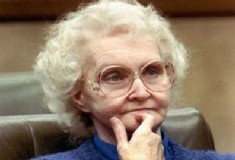
Dorothea Puente
Serial killer Genene Jones
Serial killer · USA · 1977
Genene Anne Jones (born July 13, 1950) was a former pediatric nurse who worked…
11 victims
Genene Jones
Serial killer · USA · 1977
Genene Anne Jones (born July 13, 1950) was a former pediatric nurse who worked…
11 victims
 Debra Brown
Serial killer · USA · 1984
Debra Denise Brown was an African-American serial killer and the partner-in-cri…
8 victims
Debra Brown
Serial killer · USA · 1984
Debra Denise Brown was an African-American serial killer and the partner-in-cri…
8 victims
 Aileen Wuornos
Serial killer · USA · 1989
Aileen Carol Wuornos was an American serial killer who killed seven men in Flor…
7 victims
Aileen Wuornos
Serial killer · USA · 1989
Aileen Carol Wuornos was an American serial killer who killed seven men in Flor…
7 victims
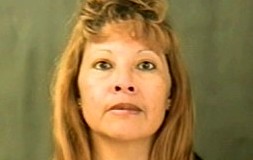 Diana Lumbrera
Serial killer · USA · 1976
Diana Lumbrera (1976–1990) systematically suffocated 6 of her own children and…
7 victims
Diana Lumbrera
Serial killer · USA · 1976
Diana Lumbrera (1976–1990) systematically suffocated 6 of her own children and…
7 victims
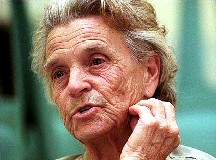 Faye Copeland
Serial killer · USA · 1986
Faye Della Copeland was born in 1921 and died on December 30, 2003. She was des…
5 victims
Faye Copeland
Serial killer · USA · 1986
Faye Della Copeland was born in 1921 and died on December 30, 2003. She was des…
5 victims
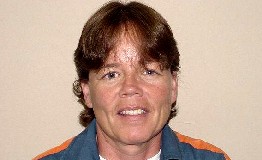 Gwendolyn Graham
Serial killer · USA · 1987
Gwendolyn Graham worked as a nurse’s aide at the Alpine Manor Nursing Home in W…
5 victims
Gwendolyn Graham
Serial killer · USA · 1987
Gwendolyn Graham worked as a nurse’s aide at the Alpine Manor Nursing Home in W…
5 victims
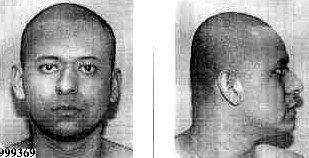 Bernardo Tercero
Murderer · USA · 1997
Bernardo Aban Tercero was born on 8/20/1977. He was a 23-year-old at the time o…
1 victim
Bernardo Tercero
Murderer · USA · 1997
Bernardo Aban Tercero was born on 8/20/1977. He was a 23-year-old at the time o…
1 victim
 James Scott Porter
Murderer · USA · 1995
James Scott Porter was a defendant in a capital murder case. · 1990 — Porter pl…
2 victims
James Scott Porter
Murderer · USA · 1995
James Scott Porter was a defendant in a capital murder case. · 1990 — Porter pl…
2 victims
 Dovie Dean
Murderer · USA · 1952
Dovie Blanche Dean was executed by electrocution on January 15, 1954. Dovie Bla…
1 victim
Dovie Dean
Murderer · USA · 1952
Dovie Blanche Dean was executed by electrocution on January 15, 1954. Dovie Bla…
1 victim
 Meryl Stanley McDonald
Murderer · USA · 1994
Meryl Stanley McDonald was convicted in a Florida case involving a murder-for-h…
1 victim
Meryl Stanley McDonald
Murderer · USA · 1994
Meryl Stanley McDonald was convicted in a Florida case involving a murder-for-h…
1 victim
 Rebecca Olenchock
Murderer · USA · 2010
Rebecca Olenchock was found guilty but mentally ill and was sentenced to life i…
1 victim
Rebecca Olenchock
Murderer · USA · 2010
Rebecca Olenchock was found guilty but mentally ill and was sentenced to life i…
1 victim
 James Rodden
Murderer · USA · 1983
James Rodden (James Edward Rodden Jr.) · Terry Trunnel (victim) · Joseph Arnold…
2 victims
James Rodden
Murderer · USA · 1983
James Rodden (James Edward Rodden Jr.) · Terry Trunnel (victim) · Joseph Arnold…
2 victims
- Gender
- female
- Country
- USA
- Location
- Sacramento, California, USA
- Date of birth
- January 9, 1929
- Age at first offence
- 53
- Characteristics
- poisoner, abuse, alcohol
- Victim profile
- Ruth Munroe, 61 / Everson Gillmouth, 77 / Alvaro "Bert" Montoya, 51 / Dorothy Miller, 64 / Benjamin Fink, 55 / Betty Palmer, 78 / Leona Carpenter, 78 / James Gallop, 62 / Vera Faye Martin, 64
- Method of murder
- Poisoning (drug overdose )
- Date(s) of murder
- 1982 - 1988
- Years active
- 1982–1988
- Date of arrest
- November 17, 1988
- Status
-
Died in custody
Sentenced to life in prison without parole on December 11, 1993; died in prison on March 27, 2011
Case overview
Dorothea Puente was a convicted serial killer. In Sacramento, California, she ran boarding houses and cashed the Social Security checks of elderly and mentally disabled boarders. People who complained were killed and buried in her yard.
Dorothea Helen Puente was born January 9, 1929 in Redlands, California. She died March 27, 2011 in prison in Chowchilla, California, at the age of 82 from natural causes.
Background
Puente was born on January 9, 1929 as Dorothea Helen Gray in Redlands, California, to Trudy Mae Yates and Jesse James Gray. Her parents worked as cotton pickers. Her father died when she was four. Her mother died when she was six, after which she was sent to an orphanage until relatives from Fresno, California took her in.
In later life, Puente lied about her childhood, claiming she was one of 18 children born and raised in Mexico. She also claimed other details about her life, including that she was one of three children born and raised in Mexico.
In 1945 or 1946, Puente married for the first time at age 16 to a soldier named Fred McFaul, who had returned from the Pacific Theater. Puente had two daughters between 1946 and 1948. She sent one to relatives in Sacramento and gave the other up for adoption. In 1948, she became pregnant again but suffered a miscarriage. McFaul left her in late 1948. Puente later claimed her husband died of a heart attack within days of their union.
After her release from jail, Puente was soon impregnated by a man she barely knew and gave birth to a baby girl, whom she gave up for adoption.
In 1952, Puente married a Swede named Axel Johanson. She had a violent 14-year marriage with him. Puente divorced Johansen in 1966.
Puente married Roberto Puente in Mexico City. Roberto was nineteen years younger than Dorothea, and the marriage lasted about two years.
Puente married for the third time in 1976 to Pedro Montalvo, who was described as a physically abusive alcoholic. That marriage lasted a few months. Puente later married again to Everson Gillmouth as they made wedding plans, though the source does not state a marriage took place.
The offence
Puente ran a boarding house and cashed elderly and mentally disabled boarders’ Social Security checks. Police and others described her motive as financial gain. The source described police estimates of her ill-gotten income as totaling more than $5,000 per month. The murders were associated with the upstairs apartment at 1426 F Street in downtown Sacramento, California, rather than her earlier 16-room boarding house.
Seven bodies were eventually found buried in her yard. She was charged with a total of nine murders and was convicted of three.
Investigation and arrests
Suspicion was first aroused when neighbors noticed odd activities of a homeless alcoholic man known only as “Chief,” whom Puente stated she had “adopted” and appointed as her handyman. “Chief” dug in the basement and carted soil and rubbish away in a wheelbarrow; the basement floor was then covered with a concrete slab. Later, “Chief” took down a garage in the backyard and installed a fresh concrete slab there as well. “Chief” then disappeared.
On November 11, 1988, police inquired after the disappearance of tenant Alvaro Montoya, a developmentally disabled schizophrenic whose social worker reported him missing. They uncovered disturbed soil on the property and found the body of tenant Leona Carpenter, 78. Investigators later found seven bodies and Puente was charged with nine murders, convicted of three, and sentenced to two life sentences.
During the initial investigation, Puente was not immediately suspected and was allowed to leave the property, ostensibly to buy a cup of coffee at a nearby hotel. After purchasing coffee, Puente fled to Los Angeles. She befriended an elderly pensioner met in a bar. The pensioner recognized her from police reports and called authorities.
Puente’s trial was moved to Monterey County, California, on a change of venue motion filed by her attorneys Kevin Clymo and Peter Vlautin, III.
Key victims named in the case
- Ruth Monroe, 61 years old, began living with Puente in April 1982 in Puente’s upstairs apartment at 1426 F Street and died from an overdose of Codeine and Tylenol. Puente told police Monroe was very depressed because her husband was terminally ill, and investigators judged the incident a suicide.
- Malcolm McKenzie, 74 years old, accused Puente of drugging him and robbing him. Puente was convicted of three charges of theft on August 18, 1982, and sentenced to five years in jail.
- Everson Gillmouth, 77 years old, corresponded with Puente in prison and was waiting for her in a red 1980 Ford pickup when she was released in 1985. His body was found after Puente asked handyman Ismael Florez to transport a box to a storage depot and then dumped it on the Garden Highway in Sutter County; the box was spotted by a fisherman on January 1, 1986. Investigators found a badly decomposed and unidentifiable body of an elderly man inside.
- Leona Carpenter, 78 years old, was found buried in the yard after police uncovered disturbed soil in November 1988.
- Alvaro “Bert” Montoya, mentally retarded schizophrenic; his disappearance led police to the property. His remains were among those excavated from the yard.
- Dorothy Miller, 64 years old, an American Indian, was found with her arms taped to her chest with duct tape.
- Ben Fink, 55 years old, was found dressed in striped boxer shorts.
- Betty Palmer, 78 years old, was found with remains missing the head, hands and lower legs; her remains were described as in a sleeveless white nightgown.
- James Gallop, 62 years old, was last seen in July 1987.
- Vera Martin, 64 years old, was found with a wristwatch still ticking when unearthed.
- John McCauley, 59, was charged as an accomplice in the murders and was later freed for lack of evidence.
- Morris Solomon was referenced as another location where bodies had been excavated in April 1987.
Additional identification details described included four victims being identified by December 10, 1988 as Ben Fink (55-year-old), Alvaro Montoya (52-year-old), Dorothy Miller (65-year-old), and Vera Martin (65-year-old). The source also described two more bodies remaining unidentified at the time.
Trial
Puente went on trial in February 1993 before Judge Michael J. Virga. The prosecutor was John O’Mara, described as homicide supervisor in the Sacramento County District Attorney’s office. O’Mara called over 130 witnesses. The prosecution argued that Puente had used sleeping pills to put tenants to sleep and then suffocated them, and that she hired convicts to dig holes in her yard.
Kevin Clymo concluded his closing argument by showing a picture commonly used in psychology that could be viewed in different ways and saying: “Keep in mind things are not always as they seem.”
The jury deliberated for about a month. On the afternoon of August 2, the jury sent a note stating: “We the jury, are deadlocked on all nine counts - we would like further instructions.” The next day, after a defense motion for mistrial was fended off, Judge Virga instructed the jury to go back and try again.
On the afternoon of August 26, the jury reached a verdict. The clerk read verdicts including:
- Guilty of the crime of murder in the second degree of Leona Carpenter
- Guilty of the crime of murder in the first degree of Dorothy Miller
- Guilty of the crime of murder in the first degree of Ben Fink The verdict also included an allegation under special circumstances that found Dorothea Puente had committed multiple murder.
The court declared a mistrial on the six other counts. The jury was deadlocked 7–5 for life earlier, and Judge Michael J. Virga declared a mistrial when the jury said further deliberations would not change their minds. Under the law, Puente received life without the possibility of parole.
The defense team included Kevin Clymo and Peter Vlautin, III.
In the penalty phase arguments:
- John O’Mara argued: “Does anyone become responsible for their conduct in this world? ...These people were human beings, they had a right to live-they did not have a lot of possessions-no houses-no cars-only their social security checks and their lives. She took it all... Death is the only appropriate penalty”.
- Kevin Clymo responded by evoking Dorothea the child and caregiver.
- Peter Vlautin addressed the jurors in confidential tones and said: “We are here today to determine one thing: What is the value of Dorothea Puente's life? That is the question. Does she have to be killed?”
- Peter Vlautin said: “You have heard of the despair which was the foundation of her life, the anger and resentment...If anyone in the jury room tells you it was not that bad, ask them would you want that to happen to yourself? Would you want that to happen to your children? ... I am led to believe if there is any reason for us to be living here on this earth, it is to somehow enhance one another's humanity, to love, to touch each other with kindness, to know that you have made just one person breathe easier because you have lived. I submit to you ladies and gentlemen that is why these people came to testify for Dorothea Puente ... "
- Peter Vlautin said: “I think you can only truly understand why so many people testified and asked you to spare Dorthea's life only if you have ever fallen down and stumbled on the road of life and had someone pick you up, give you comfort, give you love, show you the way. Then you will understand why these people believe Dorothea's life is worth saving. That is mitigating. That is a human quality that deserves to be preserved. It is a flame of humanity that has burned inside Dorthea since she was young ... That is reason to give Dorthea Puente life without the possibility of parole.”
After hearing the verdict, Puente declared to her lawyers: “I didn't kill anyone.”
Sentencing
On December 11, 1993, Judge Virga sentenced Dorothea Puente to life in prison without the possibility of parole. Puente was incarcerated at Central California Women’s Facility (CCWF) in Chowchilla, Madera County, California.
Aftermath and death
Puente maintained her innocence and insisted all her tenants had died of “natural causes.”
Puente died on March 27, 2011 in prison in Chowchilla, California, at the age of 82 from natural causes.
Media and later correspondence
Dorothea Puente appeared in the criminal documentary Crime Stories on Discovery Channel, Biography Channel and History Television.
In 1998, Puente began corresponding with Shane Bugbee. She sent recipes and other prison art. In 2004, the book “Cooking With A Serial Killer” was released, including a lengthy interview, almost 50 recipes, and prison art sent to Bugbee by Puente.
Other details
Puente was alleged to have cashed checks, and an envelope containing $3,042.55 was found during processing after her arrest.
The source described Puente’s operation as taking in “40 new tenants,” most described as alcoholics and drug addicts, and described her collecting tenants’ mail and paying them only small amounts while pocketing the rest.
The source also referenced a note about her being accused of “Donna Johansson” and her interest in disability income during her time in Los Angeles, and stated she was arraigned without bail on one count of murder, that of Bert Montoya.

Spotted an error, or have more information about this case?