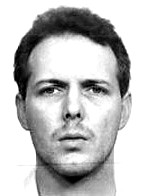
Gary Etheridge
Murderer Brian Kevin Rosenfeld
Murderer · USA · 1985
Brian Kevin Rosenfeld Brian Kevin Rosenfeld was sentenced to three concurrent l…
23 victims
Brian Kevin Rosenfeld
Murderer · USA · 1985
Brian Kevin Rosenfeld Brian Kevin Rosenfeld was sentenced to three concurrent l…
23 victims
 Yahweh ben Yahweh
Murderer · USA · 1980
Yahweh ben Yahweh was born and legally named Hulon Mitchell Jr. (October 27, 19…
23 victims
Yahweh ben Yahweh
Murderer · USA · 1980
Yahweh ben Yahweh was born and legally named Hulon Mitchell Jr. (October 27, 19…
23 victims
 Russell Ellwood
Murderer · USA · 1991
Russell Ellwood was a former taxi driver. Authorities suspected him of killing…
20 victims
Russell Ellwood
Murderer · USA · 1991
Russell Ellwood was a former taxi driver. Authorities suspected him of killing…
20 victims
 Robert Martines Perez
Murderer · USA · 1994
Name: Robert Martines Perez · Other name used in proceedings: Robert Martinez P…
15 victims
Robert Martines Perez
Murderer · USA · 1994
Name: Robert Martines Perez · Other name used in proceedings: Robert Martinez P…
15 victims
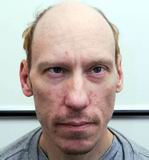 Stephen Port
Serial killer · United Kingdom · 2014
Stephen Port (born 1975) was a convicted British rapist and serial killer who m…
4 victims
Stephen Port
Serial killer · United Kingdom · 2014
Stephen Port (born 1975) was a convicted British rapist and serial killer who m…
4 victims
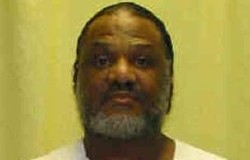 Reginald Brooks
Murderer · USA · 1982
Reginald Brooks was a 66-year-old Black man. His legal outcome was the executio…
3 victims
Reginald Brooks
Murderer · USA · 1982
Reginald Brooks was a 66-year-old Black man. His legal outcome was the executio…
3 victims
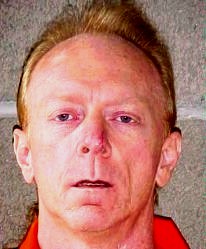 Michael Ray White
Murderer · USA · 1987
Michael Ray White was Caucasian. White and Susan Minter were lovers. Minter was…
1 victim
Michael Ray White
Murderer · USA · 1987
Michael Ray White was Caucasian. White and Susan Minter were lovers. Minter was…
1 victim
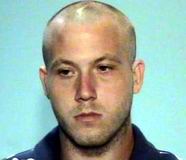 Guy Heinze Jr.
Mass murderer · USA · 2009
Guy Heinze Jr. was convicted of malice murder for the Aug. 29, 2009 slayings of…
8 victims
Guy Heinze Jr.
Mass murderer · USA · 2009
Guy Heinze Jr. was convicted of malice murder for the Aug. 29, 2009 slayings of…
8 victims
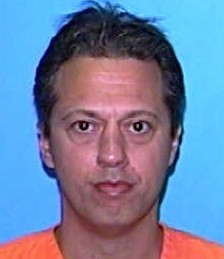 Victor Carl Puiatti
Murderer · USA · 1983
Victor Carl Puiatti Victor Carl Puiatti was sentenced to death on May 4, 1984.…
1 victim
Victor Carl Puiatti
Murderer · USA · 1983
Victor Carl Puiatti Victor Carl Puiatti was sentenced to death on May 4, 1984.…
1 victim
 Joji Obara
Murderer · Japan · 1992
Joji Obara (織原城二; Obara Jōji) was born in 1952 in Osaka, Japan. He was a convic…
1 victim
Joji Obara
Murderer · Japan · 1992
Joji Obara (織原城二; Obara Jōji) was born in 1952 in Osaka, Japan. He was a convic…
1 victim
- Gender
- male
- Country
- USA
- Location
- Brazoria County, Texas, USA
- Date of birth
- January 3, 1964
- Age at first offence
- 26
- Characteristics
- robbery, rape, drugs
- Victim profile
- Christie Chauviere (female, 15)
- Method of murder
- St abbing with knife
- Date(s) of murder
- February 2, 1990
- Years active
- 1990
- Date of arrest
- 5 days after
- Status
-
Executed
Executed by lethal injection in Texas on August 20, 2002
Case details
Gary Wayne Etheridge was convicted of capital murder and sentenced to death for the fatal stabbing of Christie Chauviere during the course of committing or attempting to commit robbery, aggravated sexual assault, and/or kidnapping in Brazoria County, Texas, on February 2, 1990. He was executed by lethal injection in Texas on August 20, 2002.
Timeline
- Late January 1990 — Gary Wayne Etheridge started working at a townhouse-condominium complex in San Luis Pass.
- February 2, 1990 — Gail Chauviere arrived home around 5:40 p.m. and confronted Etheridge inside her home with her 15-year-old daughter, Christie; Etheridge demanded money, stabbed Gail, and assaulted and fatally stabbed Christie.
- February 7, 1990 — An off-duty Houston police officer spotted Etheridge walking along Highway 288 and arrested him.
- April 1990 — Etheridge was indicted in Brazoria County, Texas, for the capital offense of murdering Christie Chauviere during the course of a robbery of Gail Chauviere and during the course of a robbery, aggravated sexual assault, and kidnaping of Christie Chauviere.
- November 6, 1990 — A jury found Etheridge guilty of capital murder.
- November 8, 1990 — Etheridge was sentenced to die for the capital murder of Christie Chauviere.
- May 10, 1995 — The Texas Court of Criminal Appeals denied rehearing.
- June 22, 1994 — Etheridge’s conviction and sentence were affirmed by the Texas Court of Criminal Appeals.
- October 10, 1995 — The United States Supreme Court denied Etheridge’s petition for writ of certiorari.
- April 23, 1997 — Etheridge filed an application for writ of habeas corpus in state court.
- June 18, 1997 — Etheridge filed an amended writ.
- April 1, 1998 — The Texas Court of Criminal Appeals denied relief.
- November 13, 1998 — Etheridge filed a petition for federal habeas corpus in the United States District Court for the Southern District of Texas, Houston Division.
- May 19, 1999 — The district court denied relief and denied permission to appeal.
- February 2, 2000 — The United States Court of Appeals for the Fifth Circuit denied permission to appeal.
- October 16, 2000 — The United States Supreme Court denied a petition for writ of certiorari.
- November 1, 2001 — Etheridge filed a subsequent state habeas writ and a motion for a stay of execution.
- November 6, 2001 — The Texas Court of Criminal Appeals granted the stay.
- April 17, 2002 — The Court of Criminal Appeals dismissed Etheridge’s subsequent state habeas writ and vacated his stay of execution.
- June 20, 2002 — Etheridge filed a writ of mandamus and another motion for a stay of execution in the Court of Criminal Appeals.
- June 24, 2002 — The Court of Criminal Appeals agreed and granted Etheridge a stay of execution.
- July 10, 2002 — A newly appointed judge set the current August 20, 2002 execution date.
- August 18, 2002 — A Canadian Coalition to Abolish the Death Penalty press release discussed an invitation to Governor Rick Perry to witness Etheridge’s execution.
- August 20, 2002 — Etheridge was executed by lethal injection; he was pronounced dead at 6:22 p.m.
Background
Gail Chauviere worked as a project manager at a townhouse-condominium complex in San Luis Pass. Gary Wayne Etheridge started working at the complex in late January 1990. Gail regularly brought home a bag of cash from the apartment complex.
Christie Chauviere was Gail’s 15-year-old daughter.
Etheridge had prior convictions introduced during the punishment phase, including juvenile and adult offenses. At least one juvenile offense involved unauthorized use of a motor vehicle and burglary of a building, followed by probation breach and modification of disposition for commitment to the Texas Youth Council.
The State also introduced adult offenses Etheridge was convicted of, including driving with a suspended license, driving while intoxicated, burglary of a building, and aggravated assault. The aggravated assault conviction involved an incident on November 19, 1984, while Etheridge was in the Texas Department of Corrections; indictments included attempted murder and aggravated assault (habitual), and Etheridge was convicted of aggravated assault. Geoffrey Mack testified that Etheridge stabbed Mack in prison while he slept and then threatened to kill him when he awoke.
The offence
On the night of February 2, 1990, Gail Chauviere arrived home from work around 5:40 p.m. and found Etheridge already inside her house. A dark car was in Gail’s driveway.
Etheridge ordered Gail to come into the house with him. Christie, Gail’s daughter, was sitting on the arm of a love seat.
Etheridge asked Gail if she was expecting any visitors, and she replied that her father was coming over. He then asked, “Gail, where is the money? I know you bring it home.” Gail responded that the money was in the bank bag. Etheridge asked, “The money is in there?” and Gail responded, “Yes. Take it; take the money and go. Just take it. I won't tell anybody. Just please don't harm Christie.”
As Gail said this, she reached for her daughter, who was moving off the love seat toward her mother. Etheridge jerked Christie to him by her hair. Christie screamed, and Etheridge told her to shut up and threatened to slit her throat. He then pulled a knife from behind his back and began stabbing Gail.
Gail testified that she was stabbed two or three times on her left side and then struck on the head, and that one blow was so severe she thought she heard an explosion within her head. She blacked out by the fireplace in the den and had only intermittent memories after the stab to her head. She remembered being stabbed in the back and in the lower abdomen. She never heard any intruders besides Etheridge and never heard Etheridge speak to anyone other than her and Christie. Gail did not see Etheridge stab Christie.
After his own car would not start, Etheridge took Gail’s car and fled.
Christie was found nude from the waist down in the entranceway. Her hands were tied in front of her with a telephone cord, and she had been gagged with a towel. A doctor testified that Christie had four fatal stab wounds and was dead at the scene. The doctor also testified that Christie's attacker stabbed her in the face between her nose and right eye and that she had several defensive wounds on her forearms.
The pathologist who performed Christie's autopsy found no semen in Christie’s genitals, but testified that injuries to her genitals were consistent with knife wounds.
Investigation and arrest
An off-duty Houston police officer arrested Etheridge on February 7, 1990 after spotting him walking along Highway 288.
When asked why he was under arrest, Etheridge responded: “Yes, I know I'm under arrest for killing that 15-year-old girl. I'm sorry for what I did, and I was going back to Brazoria County to turn myself in.”
A Justice of the Peace read Etheridge his rights and had him sign a document confirming he received the warning. Etheridge did not request a lawyer despite being told he had a right to have one present during questioning.
Etheridge spent four hours answering questions from officers and drafting a written statement, and he signed each page of the statement. The next day, officers conducted another interview with Etheridge and tape recorded it.
During the taped interview, Etheridge denied raping Christie and said he could not remember stabbing either woman. He did state unequivocally, “I killed a girl.” He also said that no one came with him to the Chauviere’s house and that he went there alone; he claimed someone across the street saw him arrive and leave.
After the taped interview, officers allowed Etheridge to speak to his father on the telephone. Etheridge knew the officers were recording the call. He denied raping Christie and told his father to tell anyone that harassed his family that he killed Christie, not the family.
Etheridge declared that he wanted to talk to the press so that he could tell them that he killed the girl.
John Rhyne, a Richwood police officer, first discovered Christie in the entranceway, nude from the waist down, and found her hands tied with a telephone cord and gagged with a towel. He then found Gail moaning for help in an adjacent room.
A doctor testified that Gail arrived at the hospital with multiple penetrating wounds to her neck, face, chest, upper abdomen, and arms, including a severe wound to her right eye and a gaping slash wound to her neck.
Statements and last words
Etheridge’s last statement included:
“To the victim's family -- I'm sorry for what was taken from you. I hope you have peace. To my sweet Claudia, I love you. Stay strong, keep building, and be careful. I hope there's closure for the victim's family and everybody. That's about it. I can feel it burning. I'm getting really dizzy.”
After the lethal injection was started, Etheridge said: “I can feel it burning. I'm getting really dizzy.” He then gasped, sputtered, and lost consciousness. He was pronounced dead at 6:22 p.m.
Trial
Indictment and plea
In April 1990, Etheridge was indicted in Brazoria County, Texas, for the capital offense of murdering Christie Chauviere in the course of a robbery of Gail Chauviere and in the course of a robbery, aggravated sexual assault, and kidnaping of Christie Chauviere. He entered a plea of not guilty.
Verdict
On November 6, 1990, the jury found Etheridge guilty of capital murder.
Punishment hearing and sentence
Following a separate punishment hearing, the trial court sentenced Etheridge to death.
Evidence described at trial (offense details)
Gail testified that Etheridge asked for money and she pleaded with him not to harm Christie. Gail described Etheridge grabbing Christie by her hair and threatening to slit Christie’s throat before stabbing Gail.
Gail also described her intermittent memories after she blacked out by the fireplace in the den. She remembered trying to push away and begging him: “No, no. Please don't do this!”
At trial, a neighbor testified that he saw Etheridge driving Chauviere’s car out of the driveway and that Etheridge was alone in the car. Gail testified he was the lone attacker.
Sentencing and criminal history evidence (introduced at punishment phase)
At the punishment phase, the State introduced evidence of several previous offenses committed by Etheridge.
- Kyle Teat, a field supervisor for the Brazoria County Juvenile Probation Department, discussed the juvenile offense of unauthorized use of a motor vehicle and burglary of a building committed by Etheridge, as well as his breach of probation by breaking into a car and committing theft. Teat identified an adjudication order, an order of probation, a petition for hearing to modify disposition or revoke probation due to the violation, and a final order modifying disposition for commitment to the Texas Youth Council.
- Bonnie Barker, deputy custodian of the Brazoria County Sheriff’s Department, testified about adult offenses Etheridge was convicted of, including driving with a suspended license, driving while intoxicated, burglary of a building, and aggravated assault.
- Jackie Moff, deputy district clerk and custodian of records of the Brazoria County district clerk’s office, explained the aggravated assault conviction that occurred on November 19, 1984 while Etheridge was in the Texas Department of Corrections, citing indictments for attempted murder and aggravated assault (habitual). Moff testified that although Etheridge was convicted only of aggravated assault, the victim Geoffrey Mack confirmed that Etheridge had stabbed Mack in prison while he slept and then threatened to kill him when he awoke. Mack claimed he and Etheridge argued over prison barter.
- Charles Wagner, former chief of investigation for the city of Freeport, testified to Etheridge’s bad reputation as a peaceful and law-abiding citizen in the community of Freeport. Larry Bullard, Wagner’s successor, testified similarly and to a sting operation where he caught Etheridge selling cocaine. The material also stated Etheridge was never convicted of this charge.
- Payton Taylor, a refrigerator technician, testified he worked as a police informant who bought cocaine in a sting operation against Etheridge. Etheridge later started a fight with Taylor in the Brazoria County Jail for betraying him. Taylor testified about Etheridge’s bad reputation as a peaceful and law-abiding citizen.
- John Devens, a Brazoria County jail captain, testified to Etheridge’s bad reputation in jail as a peaceful and law-abiding citizen since his incarceration for the instant offense.
Appeals and habeas corpus
Etheridge’s conviction and sentence were automatically appealed to the Texas Court of Criminal Appeals. The court affirmed the conviction and sentence on June 22, 1994, and denied rehearing on May 10, 1995.
The United States Supreme Court denied Etheridge’s petition for writ of certiorari on October 10, 1995.
Etheridge filed state habeas applications, including on April 23, 1997 and amended on June 18, 1997. The trial court entered findings recommending denial of relief after a hearing via affidavits. The Texas Court of Criminal Appeals denied relief on April 1, 1998.
Etheridge filed a federal habeas corpus petition on November 13, 1998 in the United States District Court for the Southern District of Texas, Houston Division. On May 19, 1999, the district court denied relief and denied permission to appeal.
On February 2, 2000, the United States Court of Appeals for the Fifth Circuit similarly denied permission to appeal.
Etheridge filed a petition for writ of certiorari to the United States Supreme Court, which was denied on October 16, 2000.
On November 1, 2001, Etheridge filed a subsequent state habeas writ and a motion for a stay of execution. The Court of Criminal Appeals granted the stay on November 6, 2001.
On April 17, 2002, the Court of Criminal Appeals dismissed Etheridge’s subsequent state habeas writ and vacated his stay of execution, and a new execution date was set for June 27, 2002.
On June 20, 2002, Etheridge filed a writ of mandamus and another motion for a stay of execution in the Court of Criminal Appeals, arguing that the trial judge who set June 27, 2002 lacked authority. The Court of Criminal Appeals granted a stay on June 24, 2002. A new judge was appointed to Etheridge’s case and the stay was lifted. On July 10, 2002, the newly appointed judge set the current execution date of August 20, 2002.
Aftermath
Gail Chauviere required blood transfusions because of her wounds. She contracted hepatitis C from the transfusions and never fully recovered. She died from the disease in 1999.
Etheridge’s scheduled execution proceeded on August 20, 2002; he was pronounced dead at 6:22 p.m.
Other details
At the time of the offence, Etheridge was described as a maintenance worker and as being on parole for about six weeks after serving part of a 10-year term for burglary. He had prior convictions and an extensive juvenile and adult criminal history including theft and burglary convictions. The material also described him as starting using cocaine at age 17.
Theresa, Etheridge’s wife, and their baby daughter, Brittany, were taken with Etheridge during his flight. Etheridge left two children that Theresa was babysitting with the mother of those children at a bar, where Etheridge told the woman that he had killed a man in a knife fight.
Etheridge drove with Theresa and Brittany to the home of Charles and Glenda Roenker. Glenda Roenker remembered Etheridge being covered in blood and testified that Etheridge told the Roenkers he had just stabbed a man and thought the man was dead. Etheridge cleaned up in their bathroom, dressed a cut on his finger, and left with Theresa and Brittany. About half an hour later, Etheridge and Theresa returned and asked the Roenkers to take care of Brittany, then left again.
Etheridge later abandoned his wife in Mobile, Alabama, and after wrecking Gail’s car in Alabama, he hitchhiked back to Texas.
Etheridge was 38 at execution.
A Canadian Coalition to Abolish the Death Penalty press release dated August 18, 2002 included the following quotation from a letter:
“...if you allow Texas to carry out the execution I will invite you to attend his execution together with me because in this case I need your support and guidance. I need a shoulder to lean on and someone who explain to me that it was the right thing to kill my husband. "
The press release also included a quoted registered letter to Governor Rick Perry:
“...It’s now time for you to have the courage of your convictions and stand up to your own words. I think it would be important to you to finally witness an execution since you already signed so many death warrants,”
The press release ended with another quoted closing:
“With this letter I respectfully invite you in the name of Mr. Gary Etheridge, in the name of the Canadian Coalition Against The Death Penalty and in my name, to witness the murder of Mr. Etheridge on August 20, 2002 after 6:00 PM. Sincerely yours, -Claudia Schweiger-Etheridge.”
The material also included Etheridge’s quoted statements from death row:
“I'm a Christian hypocrite backslider," Etheridge once said from death row. "I'm repentant but can't follow the rules. I still lust after pretty women. I'm human. I'm scared to death of death."
One section included a quotation attributed to Etheridge in a death-row interview:
“I never intended to hurt everyone," Etheridge said in a death-row interview. "I cut and stabbed Gail with a little bitty pocket knife."
Another section included a quotation attributed to Etheridge:
“I was there. I done wrong and I feel responsible, but I did not kill the girl.”
A quotation attributed to Carolyn Barrett appeared in the material:
“It has taken us 2 years to get another one, so I really don't know,” Barrett said. “It questions your faith in the Texas justice system." “Gary looked at my mother and said 'We are all going to die someday,'” Barrett said.
The material also contained a quotation attributed to Carolyn Barrett:
“I think its very ironic that people will quote Judge Gayle and what Judge Gayle said and ignore what Gary said to my mother,” Barrett said. “He can do and say what he wants and nobody cares.”
A quotation attributed to District Attorney Jeri Yenne appeared in the material:
“The Gary Etheridge case should be a stellar example of due process,” Yenne said. “When people complain and moan about the death penalty I want them to look at the Gary Etheridge case and see how many bites at the apple he has had. It would have been nice if Christie Chauviere had had as much due process as Gary Etheridge is afforded before he executed the death warrant on her,” Yenne said.
The material included references to a final meal and final words. The final meal was described as: Nachos (with cheese and peppers), crispy French fries, one cheeseburger, one fried chicken patty, one cinnamon roll, cheese, ketchup, and pickles.
Spotted an error, or have more information about this case?