Francis Michael Fahey
Murderer Carl Williams
Murderer · Australia · 2003
Carl Antony Williams (b. October 13, 1970) was an Australian convicted hitman a…
4 victims
Carl Williams
Murderer · Australia · 2003
Carl Antony Williams (b. October 13, 1970) was an Australian convicted hitman a…
4 victims
 Ashley Coulston
Murderer · Australia · 1992
Ashley Coulston was an Australian sailor and triple murderer who was serving th…
3 victims
Ashley Coulston
Murderer · Australia · 1992
Ashley Coulston was an Australian sailor and triple murderer who was serving th…
3 victims
 Bandali Debs
Murderer · Australia · 1997
Bandali Michael Debs (born 18 July 1953) was an Australian murderer. Debs was f…
3 victims
Bandali Debs
Murderer · Australia · 1997
Bandali Michael Debs (born 18 July 1953) was an Australian murderer. Debs was f…
3 victims
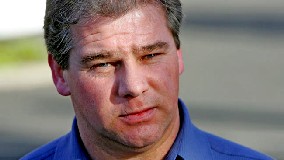 Robert Farquharson
Murderer · Australia · 2005
Robert Donald William Farquharson (born 1969) was an Australian father convicte…
3 victims
Robert Farquharson
Murderer · Australia · 2005
Robert Donald William Farquharson (born 1969) was an Australian father convicte…
3 victims
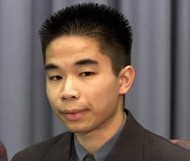 Sef Gonzales
Murderer · Australia · 2001
Sef Gonzales (born September 16, 1980) was an Australian man who was convicted…
3 victims
Sef Gonzales
Murderer · Australia · 2001
Sef Gonzales (born September 16, 1980) was an Australian man who was convicted…
3 victims
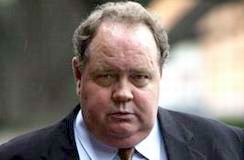 Bruce Burrell
Murderer · Australia · 1995
Bruce Allan Burrell was an Australian convicted double murderer who was sentenc…
2 victims
Bruce Burrell
Murderer · Australia · 1995
Bruce Allan Burrell was an Australian convicted double murderer who was sentenc…
2 victims
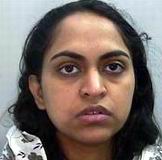 Sara Ege
Murderer · United Kingdom · 2010
Sara Ege was convicted of murder and perverting the course of justice at Cardif…
1 victim
Sara Ege
Murderer · United Kingdom · 2010
Sara Ege was convicted of murder and perverting the course of justice at Cardif…
1 victim
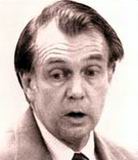 Richard Crafts
Murderer · USA · 1986
Richard Crafts was sentenced to 50 years in prison on January 9, 1990. Helle Cr…
1 victim
Richard Crafts
Murderer · USA · 1986
Richard Crafts was sentenced to 50 years in prison on January 9, 1990. Helle Cr…
1 victim
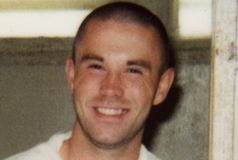 Mark Anthony Duke
Mass murderer · USA · 1997
Mark Anthony Duke was 16 years old when he committed a capital offense. He resi…
4 victims
Mark Anthony Duke
Mass murderer · USA · 1997
Mark Anthony Duke was 16 years old when he committed a capital offense. He resi…
4 victims
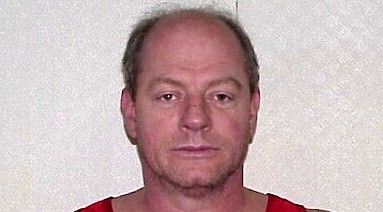 Thomas Clyde Bowling
Murderer · USA · 1990
Name: Thomas Clyde Bowling Also known as: Thomas Clyde Bowling Jr.; T.C. Date o…
2 victims
Thomas Clyde Bowling
Murderer · USA · 1990
Name: Thomas Clyde Bowling Also known as: Thomas Clyde Bowling Jr.; T.C. Date o…
2 victims
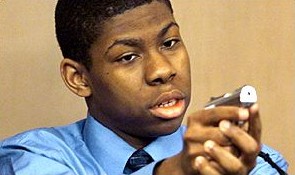 Nathaniel Brazill
Homicide · USA · 2000
Nathaniel Brazill Nathaniel Brazill was an American. He was born September 22,…
1 victim
Nathaniel Brazill
Homicide · USA · 2000
Nathaniel Brazill Nathaniel Brazill was an American. He was born September 22,…
1 victim
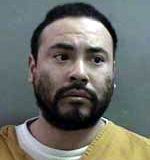 William Marrufo
Homicide · USA · 2005
William Jesus Marrufo was a former drummer for the band Ozomatli. Marrufo’s fam…
1 victim
William Marrufo
Homicide · USA · 2005
William Jesus Marrufo was a former drummer for the band Ozomatli. Marrufo’s fam…
1 victim
- Gender
- male
- Country
- Australia
- Location
- Hendra/Bald Hills, Brisbane, Queensland, Australia
- Date of birth
- 1953
- Age at first offence
- 49
- Characteristics
- —
- Victim profile
- Jasmin Crathern, 41 / Julie Louise McColl (prostitutes)
- Method of murder
- St abbing with knife
- Date(s) of murder
- August 2, 2002 / February 26, 2003
- Years active
- 2002–2003
- Date of arrest
- May 2003
- Status
-
Life imprisonment
Sentenced to two life sentences with a minimum 25 years on April 11, 2006
Case details
Francis Michael Fahey was sentenced to two life sentences with a minimum 25 years on April 11, 2006.
Fahey was convicted by a jury of the killings of Jasmin Crathern and Julie Louise McColl.
Timeline
- August 8, 2002 — Francis Michael Fahey murdered Jasmin Crathern at Hendra.
- February 26, 2003 — Francis Michael Fahey murdered Julie Louise McColl at Bald Hills.
- May 2003 — Police search at Fahey’s home found a military bayonet and evidence including ropes and tool marks on crimps.
- 1999 — Fahey had a heart attack.
- September 14, 2005 — Fahey pleaded not guilty in the Supreme Court in Brisbane to the August 8, 2002 killing of Jasmin Crathern and the February 26, 2003 murder of Julie McColl; he admitted to police he had a bondage fetish.
- September 28, 2005 — Fahey was convicted by a seven-man, five-woman jury after deliberating for just four hours; he had confessed to police interviews.
- April 11, 2006 — Fahey was sentenced to two life sentences with a minimum 25 years before he could apply for parole.
- High Court case involving Darling Downs rapist Jason Buckley — The sentencing approach for indefinite terms was discussed by reference to a recent High Court case.
Background
Francis Michael Fahey was an ambulance officer and was described as being from Narangba north of Brisbane, north of Brisbane. Fahey was 52 at the time of the pleading and conviction coverage, and he was remanded in custody after the conviction.
Fahey was diagnosed with an adjustment disorder. He also had problems with his hearing in one ear and a heart attack in 1999. Fahey had been treated for post-traumatic stress disorder for a number of years, a condition believed to have been triggered by 11 years in the Queensland Ambulance Service in central Queensland.
Fahey had no previous criminal convictions and was said to have a good work history.
Fahey’s wife was Beth Fahey. The coverage said Beth Fahey had lived with him for 13 years and described him as “quite a loving and caring and gentle person,” and a gentlest and most loving person she had ever met in her life. Her account included that she believed his symptoms had been ignored and he had been mistreated by medical professionals, treated with medication only and not offered counselling.
The offences
Fahey murdered Jasmin Crathern and Julie Louise McColl.
Jasmin Crathern
- Crathern was stabbed 14 times.
- Her body was found in a vacant lot at Hendra, north of Brisbane.
- Crathern’s age was stated as 41.
Julie Louise McColl
- McColl was found naked and bound by ropes “bondage style” at Deep Water Bend, on Brisbane’s northern outskirts.
- She had been stabbed in the torso 24 times.
- Her murder was dated to February 26, 2003.
Both victims were described as prostitutes who worked off the streets of Fortitude Valley.
Investigation
Fahey was linked to the murders by unique tyre and boot prints. The case also involved DNA evidence from shoes, Fahey’s car, and a military bayonet found at his house, as well as semen on Crathern’s shirt.
The trial heard that security vision and witness sightings showed Fahey’s distinctive dual-cab utility truck.
Ropes and tool marks on crimps used to tie McColl were said to be consistent with ropes and the markings of tools found at Fahey’s home during a police search in May 2003.
Investigating lead officer Superintendent Mike Condon said the verdict was a fitting end to more than two years of hard work by the Taskforce Midas team.
Arrest and police interviews
Fahey confessed to the murders in police interviews.
He confessed to the murder of Jasmin Crathern at Hendra on August 8, 2002, and to the murder of Julie Louise McColl at Bald Hills on February 26, 2003.
The coverage included verbatim remarks from Fahey in police interviews:
- "Definitely the wrong thing to do, killing anyone is wrong,"
- "I spent all my (expletive) life saving lives, now I'm taking them and I don't know why. Thank Christ it wasn't any of my own family."
In interview tapes played to the court, Fahey told police he had snapped and stabbed the women to death, but could not remember the incidents or explain why.
Fahey also described the events around McColl:
- "I though I might have cut myself,"
- "I was actually wondering what was going on. I had to go to Emerald the next day and I remember wondering why I was out."
When asked by the police why he would kill the women, Fahey said:
- "I have no idea."
Fahey said:
- "I've had quite a few explosions of anger."
- "I know my wife became quite frightened at times."
Fahey said he harboured a deep hatred for his ex-wife and came to close to committing suicide but stayed alive to spite her:
- "She said it was the kind of thing I would do (commit suicide) so I thought I would prove the bitch wrong."
Trial
Fahey was convicted after a two-week trial.
Conviction and jury
- A jury deliberated for four hours.
- The jury was described as seven-man, five-woman.
- Outside the court during conviction coverage, investigating lead officer Superintendent Mike Condon said the families would hope now for some closure for the families involved in what had been a very difficult investigation.
Charges addressed at trial and plea On September 14, 2005, Fahey pleaded not guilty in the Supreme Court in Brisbane to:
- the August 8, 2002 killing of prostitute Jasmin Crathern, and
- the February 26, 2003 murder of New Zealand-born Julie McColl.
Bondage fetish evidence and admissions Hours of police tape were played to the jury in which Fahey admitted he liked tying women up, but said it was “more for foreplay.”
Fahey said in the tape:
- "I'm not into pain; I don't like causing pain and I don't like receiving pain,"
Fahey demonstrated on a dummy how he tied up McColl moments before she died. The demonstration involved tying her ankles together and her arms behind her back with a rope connecting them.
When asked about killing the women, Fahey said he did not know:
- "I have no idea."
Defence Defence barrister Rick Taylor argued that there were legitimate explanations for the presence of the DNA, and there was the possibility of evidence being mishandled throughout the case.
Rick Taylor also argued that Fahey’s admissions were those of an isolated, stressed and psychologically frail person who had accepted what police had told him.
Outside court, Beth Fahey said she still could not believe in her heart that the man she had lived with was capable of doing this, and she described him as a loving and caring and gentle person. She said:
- "I still cannot believe in my heart that the man that I've lived with all those years is capable of doing this. He's quite a loving and caring and gentle person,"
Beth Fahey also said:
- "All I know is Mr Fahey is a sick man, and that's the only way I can look at it – that he's done this at a time when he has been unable to cope,"
And she said:
- "This was a desperate man who desperately wanted to get better and I honestly don't know what's gone wrong. I cannot to this second believe that Mike could kill anybody, because he is the gentlest and most loving person I've ever met in my life."
Prosecution Crown prosecutor Peter Feeney withdrew an application to have Fahey sentenced to an indefinite term after medical advice on Fahey’s health and observations made on indefinite sentencing.
Feeney said the murders were brutal and must have been terrifying for the victims, and he made the following statement:
- "Fahey must have derived so much pleasure from the first killing that it overwhelmed any qualms about the second,"
At sentence proceedings, Feeney had indicated he would apply to the Attorney-General for consent to seek an indefinite life sentence from the Supreme Court.
Superintendent Mike Condon said:
- "We're very pleased with the results, and we hope now for some closure for the families involved in what has been a very difficult investigation,"
Sentencing
At the resumed sentence hearing, the hearing was delayed after a government medical officer was called to examine Fahey and his ability to comprehend the hearing.
After Fahey was cleared to continue, the Crown prosecutor withdrew an application to have Fahey sentenced to an indefinite term.
Justice White sentenced Fahey to two life sentences, with a minimum 25 years to be served before he would be eligible to apply for parole.
Outside court after sentencing, McColl’s father Tom Annas had nothing to say about the sentence, and Superintendent Mike Condon said the family was satisfied with the result.
Appeals
No appeal outcome was stated.
Outcome
Francis Michael Fahey was convicted by a jury of the killings of Jasmin Crathern and Julie Louise McColl.
He was sentenced to two life sentences with a minimum 25 years before applying for parole on April 11, 2006.
Other details
Fahey’s wife Beth Fahey said she hoped for the victims’ families’ sake the sentence would give them some closure. She said she believed anti-depressant medication Fahey was taking at the time, because of stress from work as an ambulance officer, could have caused his behaviour.
Beth Fahey said:
- "He was singing out for help and wasn't getting it. I saw him go from a vibrant man who loved his work to a cowering and crying person,"
Fahey picked up both women in Brisbane’s Fortitude Valley area and then drove them to secluded places where he killed them.
There was a reference to indefinite sentences in Queensland being granted only for prisoners who were considered to be a continuing threat to the community or whose crimes were of extreme violence.
Justice White said it was not possible for the court to speculate whether Fahey’s actions were a result of the “horrors” he had witnessed as an ambulance officer.
Spotted an error, or have more information about this case?