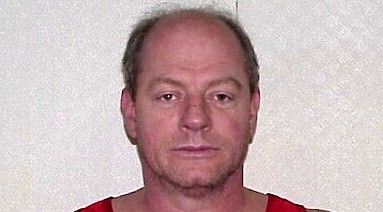
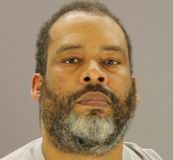
Thomas Clyde Bowling
Murderer Brian Kevin Rosenfeld
Murderer · USA · 1985
Brian Kevin Rosenfeld Brian Kevin Rosenfeld was sentenced to three concurrent l…
23 victims
Brian Kevin Rosenfeld
Murderer · USA · 1985
Brian Kevin Rosenfeld Brian Kevin Rosenfeld was sentenced to three concurrent l…
23 victims
 Yahweh ben Yahweh
Murderer · USA · 1980
Yahweh ben Yahweh was born and legally named Hulon Mitchell Jr. (October 27, 19…
23 victims
Yahweh ben Yahweh
Murderer · USA · 1980
Yahweh ben Yahweh was born and legally named Hulon Mitchell Jr. (October 27, 19…
23 victims
 Russell Ellwood
Murderer · USA · 1991
Russell Ellwood was a former taxi driver. Authorities suspected him of killing…
20 victims
Russell Ellwood
Murderer · USA · 1991
Russell Ellwood was a former taxi driver. Authorities suspected him of killing…
20 victims
 Robert Martines Perez
Murderer · USA · 1994
Name: Robert Martines Perez · Other name used in proceedings: Robert Martinez P…
15 victims
Robert Martines Perez
Murderer · USA · 1994
Name: Robert Martines Perez · Other name used in proceedings: Robert Martinez P…
15 victims
 Michelle Byrom
Murderer · USA · 1999
Name: Michelle Byrom · Offender data (as stated): White; age 43 at crime (DOB 1…
1 victim
Michelle Byrom
Murderer · USA · 1999
Name: Michelle Byrom · Offender data (as stated): White; age 43 at crime (DOB 1…
1 victim
 Seiji Katagiri
Mass murderer · Japan · 1982
Seiji Katagiri (片桐 清二 Katagiri Seiji) served as Captain of Japan Airlines Fligh…
24 victims
Seiji Katagiri
Mass murderer · Japan · 1982
Seiji Katagiri (片桐 清二 Katagiri Seiji) served as Captain of Japan Airlines Fligh…
24 victims
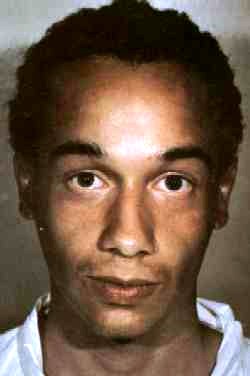 Kenneth Erskine
Serial killer · United Kingdom · 1987
Kenneth Erskine (born 1962) was an English serial killer known as the “Stockwel…
7 victims
Kenneth Erskine
Serial killer · United Kingdom · 1987
Kenneth Erskine (born 1962) was an English serial killer known as the “Stockwel…
7 victims
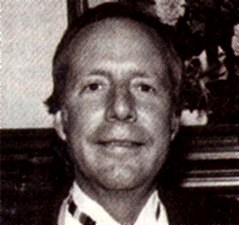 John Eleuthère DuPont
Homicide · USA · 1996
John Eleuthère duPont (November 22, 1938 – December 9, 2010) was an American bi…
1 victim
John Eleuthère DuPont
Homicide · USA · 1996
John Eleuthère duPont (November 22, 1938 – December 9, 2010) was an American bi…
1 victim
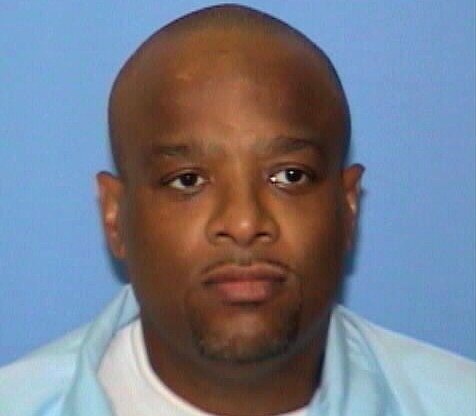 Ronald Macon
Serial killer · USA · 1999
Ronald Macon was convicted of three murders and one criminal sexual assault in…
3 victims
Ronald Macon
Serial killer · USA · 1999
Ronald Macon was convicted of three murders and one criminal sexual assault in…
3 victims
 Joel Carl Smith
Murderer · United Kingdom · 2003
Joel Carl Smith (born 1973) was a drug dealer. He was also known as “Cocaine” o…
2 victims
Joel Carl Smith
Murderer · United Kingdom · 2003
Joel Carl Smith (born 1973) was a drug dealer. He was also known as “Cocaine” o…
2 victims
- Gender
- male
- Country
- USA
- Location
- Lexington, Kentucky, USA
- Date of birth
- January 18, 1953
- Age at first offence
- 37
- Characteristics
- history of mental illness, alcohol, mentally retarded, motive unclear
- Victim profile
- Eddie and Tina Early
- Method of murder
- Shooting (.357-magnum revolver)
- Date(s) of murder
- April 9, 1990
- Years active
- 1990
- Date of arrest
- 2 days after
- Status
-
Sentenced to death
Sentenced to death on January 4, 1991
Case information
Name: Thomas Clyde Bowling Also known as: Thomas Clyde Bowling Jr.; T.C. Date of birth: 1-18-53 Place: Lexington, Kentucky; Fayette County; Powell County; Knoxville home; neighboring Tennessee (arrest)
Timeline
- April 9, 1990 — Eddie and Tina Early were shot to death in their automobile in a parking lot outside a Lexington dry-cleaning establishment; their two-year-old son Christopher was also shot but not fatally.
- April 11, 1990 — Bowling was arrested in neighboring Tennessee; his car and a .357-calibre handgun were found hidden at his family's home in rural Kentucky.
- December 10, 1990 — Trial began.
- December 12, 1990 — The guilt phase began.
- December 28, 1990 — Bowling was convicted of two counts of murder.
- January 4, 1991 — Sentenced to death in Fayette County.
- September 30, 1993 — The Kentucky Supreme Court affirmed Bowling’s conviction and sentence. Two justices dissented.
- February 28, 1995 — Bowling filed a notice of intent to file a motion for post-conviction relief under Kentucky Rule of Criminal Procedure (RCr) 11.42.
- February 1, 1996 — Governor Patton set Bowling’s execution date for February 1, 1996.
- January 26, 1996 — Bowling’s counsel filed a rushed but formal RCr 11.42 motion.
- February 8, 1996 — The state circuit court granted additional time, giving Bowling 120 additional days from the initial deadline.
- May 28, 1996 — A supplemental RCr motion was filed, but it was not verified as required by Kentucky law.
- June 6, 1996 — A revised version of the supplemental motion was filed as a verified supplemental motion.
- October 1, 1996 — The circuit court ordered both versions of the supplemental motion stricken.
- August 12, 1999 — Bowling filed a motion for a writ of habeas corpus with the district court.
- 2001 — The district court denied the writ of habeas corpus. The district court granted a certificate of appealability as to all issues.
- December 10, 2002 — The case was argued in the United States Court of Appeals for the Sixth Circuit.
- September 17, 2003 — The Sixth Circuit decided and filed its opinion.
- December 30, 2003 — Petition for rehearing was denied en banc.
- April 16, 2008 — The U.S. Supreme Court, by a 7-2 vote, rejected the challenge to the use of lethal injections to execute prisoners.
Background
Thomas Clyde Bowling (also identified as Thomas Clyde Bowling Jr.; T.C.) was assessed at the age of 12-13 as having an IQ of 74, and with the margin of error this placed him within the range for mental retardation. He had a documented history of adaptive deficits described as a “follower” and easily manipulated. Throughout school, his parents had to lay out his clothes for him and ensure that he bathed and maintained personal hygiene. He was described as a slow learner and spent three years in the ninth grade, failing health class three years in a row. His attorneys stated he had potential innocence and mental retardation issues; they pursued appeals and clemency on those grounds.
The offence
Early in the morning of April 9, 1990, Eddie and Tina Earley were shot to death in their automobile in a parking lot outside a Lexington dry-cleaning establishment. Their two-year-old son Christopher was also shot but survived.
During the incident, the Commonwealth presented evidence that debris consistent with a car collision was found and that the Earleys’ car must have been hit by a 1981 light blue Chevrolet Malibu. The police determined that a 1981 Malibu was registered in the county to Bowling.
At trial, there were three eye-witnesses to the crime. Larry Turner did not see the shooter and only reached the scene after hearing what he thought was a car backfiring; by then the killer had fled. Turner observed the Earleys’ dented car, the dead bodies, and the child crying. David Boyd testified that while stopped at a stoplight he looked back and saw two cars in the parking lot and a man firing a gun into one of them; the shooter stood and looked at the scene before driving off. Boyd described the car as a light blue 1979 or 1980 Malibu and the shooter as six feet tall with a medium build, wearing a black jacket and a brimmed hat. Norman Pullins had seen events from a nursing home across the street but could not be found by either party; the police played an audiotape of Pullins’ interview that had taken place the morning of the shootings by agreement of the parties.
Investigation
Police arriving at the scene found several witnesses offering varied observations of the shooter, collected several bullets from inside and outside the vehicle, and recovered debris consistent with a car collision. Police determined that the Earleys’ car must have been hit by a 1981 light blue Chevrolet Malibu and that a 1981 Malibu was registered to Bowling.
On April 10, 1990, police received a telephone call from Bowling’s sister, Patricia Gentry. Gentry and her mother, Iva Lee Bowling, were worried because they had not seen Bowling (affectionately known as T.C.) since approximately 6:00 a.m. the preceding day. After watching the news reports and seeing that Bowling’s car matched the description of the suspected killer’s car, they drove to property owned by the family in rural Powell County. There they discovered Bowling’s car, though Bowling was not there. When they returned to Gentry’s Knoxville home, they discovered Bowling asleep on the couch. After consulting with their minister, they called the police, who came and picked Bowling up without incident. Police recovered Bowling’s car from the Powell County property and discovered a buried .357-magnum revolver there.
Bowling’s personal effects were retrieved from his sister’s house, including a black jacket.
Arrest
Bowling was arrested on April 11, 1990 in neighboring Tennessee.
Trial
Jury selection and trial structure
On December 10, 1990, the trial began. In voir dire, the court’s stated goal was to qualify forty-four of the ninety-nine pooled jurors. Qualifying forty-four jurors would allow the defendant to have eighteen peremptory challenges and the government twelve, leaving twelve people to be jurors and two to be alternates. The court later qualified forty-eight jurors but then struck the four extra jurors.
Guilt phase evidence
The Commonwealth produced twenty-five witnesses and presented evidence including:
- A police officer’s testimony that Bowling’s Malibu was found in the thicket, along with an orange jacket, an orange Little Caesar’s T-shirt from Bowling’s workplace, and a black Rangers’ hat in a small shed.
- An officer’s testimony that an unused outhouse on the property included several empty alcohol bottles thrown inside.
- An officer’s testimony about finding the gun on the property.
- A forensic pathologist’s testimony that the Earleys had no chance of surviving the injuries.
- A police automotive expert’s testimony that glass, plastic, and chrome debris from the crime scene matched Bowling’s car.
- Expert testimony that paint from the Earleys’ car rubbed off onto Bowling’s car and paint from Bowling’s car rubbed off onto the Earleys’ car; the tests on paint samples demonstrated Bowling’s car had rammed into the Earleys’ vehicle.
- A state ballistics expert identifying the recovered gun as a Smith and Wesson .357 and stating bullets shot from it would have identical markings to those recovered from the crime scene. On cross-examination, the expert admitted there may be millions of guns that would leave marks like those found on the bullets.
- Testimony from Clay Brackett that he had sold a similar-looking Smith and Wesson .357 to Bowling a few days before the killings.
- Testimony from Jack Mullins and Jack Strange placing Bowling on the road in front of the Powell County property in the evening of the murders.
Defence case
Bowling was represented at trial by three attorneys: Baldani, Summers, and Richardson. Prior to trial, these attorneys had Bowling undergo a neurological and psychological evaluation by Dr. Donald Beal. Before trial, defense counsel chose not to present Dr. Beal’s expert testimony at trial. The defense presented no witnesses.
Bowling counsel asked for time to inform Bowling again of his right to testify, but counsel announced that Bowling would not testify.
The defence cross-examined witnesses and developed:
- Brackett admitted he traded in handguns without keeping records and had poor memory and hearing.
- David Boyd admitted he may have told a police detective that the shooter had long brown hair, a dark complexion, and possibly a mustache—none of which described Bowling.
- The Commonwealth’s ballistics expert conceded the .357-magnum was one of perhaps millions of guns that could have fired the bullets that killed the Earleys.
- Defence established that none of Bowling’s possessions, including his car, had any blood on them.
- Defence established no fingerprints were found on the gun or at the crime scene.
- The only lead residue on Bowling’s belongings was inside the left pocket of his jacket and could have come from a gun or from bullets.
The defence asked for jury instructions on extreme emotional disturbance, circumstantial evidence, and reckless homicide. The trial court denied these instructions.
Family testimony and mental state evidence
The Commonwealth called Bowling’s family to testify to events leading up to the telephone call they made to the police. Bowling’s family testified that Bowling had been seriously depressed in the weeks before the shootings and had been obsessed with death. During a drive with his mother a few days before the shooting, Bowling told her that his time had run out and that she should look for him at the family property in Powell County if he disappeared. During that drive, Bowling stopped for approximately thirty minutes in a parking lot behind the nursing home property across from where the Earleys worked at the dry-cleaning place. His family also testified that Bowling showed to them the gun he had recently purchased from Brackett.
Verdict
The jury found Bowling guilty of intentionally murdering Tina and Eddie Earley and assaulting their son Christopher.
Jury instructions and mitigating evidence
The trial court denied Bowling’s request for specific mitigating instructions on extreme emotional disturbance, mental illness, intoxication, and model jail conduct, but gave a general mitigating instruction.
The trial court instructed the jurors on one statutory aggravating factor: intentionally causing multiple deaths. The jury found the aggravating factor applied and recommended two death sentences. The trial judge sentenced Bowling to death.
Motion to discharge attorneys (between guilt and penalty phases)
Before the penalty phase began, Bowling, his defense counsel, and the prosecution met because Bowling had filed a pro se motion to discharge his attorneys. Bowling stated that he was angry with his attorneys because they had essentially presented no defense. Bowling claimed that he did not have ample opportunity to meet with his attorneys and told the state court judge his attorneys had not spent more than a total of one hour with him throughout the litigation. Bowling said there were many witnesses who could have been called but, when questioned, he could not give the names of such witnesses or list any particular act his attorneys failed to do. Bowling stressed that he had no time to tell his attorneys about potential witnesses because they had not met with him. Bowling said that he felt his attorneys did not take his case seriously and that they remarked to another person in front of him that they did not have a defense. The district court denied Bowling’s motion to discharge his attorneys.
Sentencing
Bowling was sentenced to death on January 4, 1991 in Fayette County.
Appeals
Kentucky Supreme Court direct appeal
Bowling’s conviction and sentence underwent mandatory review by the Kentucky Supreme Court under Kentucky Revised Code § 532.075. The Kentucky Supreme Court affirmed his conviction and sentence on September 30, 1993. Bowling v. Commonwealth, 873 S.W.2d 175 (Ky. 1993) (“Bowling I”). Two justices dissented. The dissent argued Bowling should have been given an instruction on extreme emotional disturbance in both the guilt and penalty phases, and one justice also would have reversed because of prosecutorial misconduct.
Post-conviction proceedings in Kentucky
Bowling began post-conviction proceedings in state circuit court and made procedural filings under RCr 11.42. The Kentucky Supreme Court later determined that Bowling’s execution could not be stayed without the actual motion being filed. Bowling v. Commonwealth, 926 S.W.2d 667, 669 (Ky. 1996).
Bowling filed a rushed but formal RCr 11.42 motion on January 26, 1996 and asked for more time to file an amended or supplemental motion; on February 8, 1996 the state circuit court granted the request and gave Bowling 120 additional days running from the initial deadline. A supplemental RCr motion was filed on May 28, 1996 but was not verified. Bowling filed a revised verified supplemental motion on June 6, 1996 after the deadline. On October 1, 1996, the circuit court ordered both supplemental motions stricken: the first for lack of verification and the second for untimeliness. The circuit court recognized its power to allow amendment for equitable reasons but declined to do so. It found against Bowling on the merits on the remaining claims. The Kentucky Supreme Court unanimously affirmed. Bowling v. Commonwealth, 981 S.W.2d 545 (Ky. 1998) (“Bowling II”). The Kentucky Supreme Court prefaced its analysis of the claims raised in the struck supplemental motions with:
Appellant presents a number of other issues in his supplemental RCr 11.42 motion. Notwithstanding that his supplemental motion was struck by the trial court, in the interest of judicial economy we will review the seven additional claims of ineffective assistance of counsel raised in the motion. Id. at 551.
Bowling also pursued appeals and clemency on grounds of potential innocence and mental retardation.
Federal habeas proceedings and Sixth Circuit decision
Bowling filed a motion for a writ of habeas corpus with the district court on August 12, 1999. Bowling moved for an evidentiary hearing, but the motion was denied. The district court denied the writ. Bowling v. Parker, 138 F. Supp. 2d 821 (E.D. Ky. 2001) (“Bowling III”).
Sixth Circuit (habeas appeal)
Thomas Clyde Bowling, Jr., Petitioner-Appellant, v. Phillip Parker, Warden, Respondent-Appellee. No. 01-5832. United States Court of Appeals, Sixth Circuit. Argued: December 10, 2002. Decided and Filed: September 17, 2003. Petition for Rehearing Denied En Banc: December 30, 2003. Before: MOORE, GILMAN, and GIBBONS, Circuit Judges.
The Sixth Circuit affirmed the district court’s denial of the habeas corpus petition and denial of an evidentiary hearing. The Sixth Circuit concluded that Bowling was not entitled to relief and denied Bowling’s petition for a writ of habeas corpus and his request for an evidentiary hearing.
The Sixth Circuit identified categories of claims: denial of proper jury instructions; ineffective assistance of counsel; denial of evidentiary hearing; constitutional invalidity of the jury; prosecutorial misconduct; and constitutional disproportionality of his death sentence.
Jury instructions (extreme emotional disturbance and mitigation)
The Sixth Circuit addressed Bowling’s claim that he was entitled to an extreme emotional disturbance instruction in the guilt phase, and it discussed Kentucky’s definition of extreme emotional disturbance requiring a “triggering event.” It determined that Bowling’s minor car accident did not qualify as a triggering event under Kentucky law. The Sixth Circuit also addressed the claim that Bowling was entitled to specific mitigating instructions in the penalty phase, concluding that a general mitigating instruction was constitutionally sufficient and that there was no realistic chance the jury would have misapplied the instructions to disregard constitutionally relevant mitigating evidence. The Sixth Circuit quoted the jury instruction requiring the jury to consider mitigating facts and circumstances, including:
[Y]ou shall consider such mitigating or extenuating facts and circumstances as have been presented to you in the evidence including, but not limited to, such of the following as you may believe from the evidence; (a) that the Defendant has no significant history of prior criminal activity. You shall consider any other facts and circumstances which you consider to be mitigating or extenuating even though they are not listed in this instruction. J.A. at 5106-07 (italics added).
Ineffective assistance of counsel
The Sixth Circuit rejected Bowling’s ineffective-assistance claims regarding:
- Failure to investigate the victims’ drug activities and Donald Adams as a possible suspect.
- Failure to consult with Bowling before and during trial.
- Failure to present extreme emotional disturbance and other mitigating evidence.
- Failure to prepare because of an indictment against counsel.
- Failure to investigate the message with the police.
- Failure to impeach prosecution witnesses.
The Sixth Circuit discussed evidence presented and credited, including that Bowling’s counsel did not call Dr. Beal and that Beal’s report stated:
There is no evidence that the mental disorders substantially impaired this man[']s behavior with respect to the alleged actions, such that he lacked substantial capacity to appreciate the criminality of his conduct, or that he was unable to conform his conduct to the requirements of the law. In my opinion Mr. Bowling was legally sane at the time of the offenses for which he is charged. J.A. at 5320 (Beal Report).
Evidentiary hearing
The Sixth Circuit addressed Bowling’s request for a federal evidentiary hearing and concluded the district court did not err in denying it. The Sixth Circuit treated Bowling’s allegations about Donald Adams and a deal involving Clay Brackett as conclusory without sufficient supporting evidence.
Prosecutorial misconduct
The Sixth Circuit rejected Bowling’s prosecutorial misconduct claims, including claims relating to:
- Statements during voir dire about neutrality and innocence until proven guilty.
- Comments Bowling argued were related to his failure to testify.
- Alleged Caldwell violations regarding jury responsibility for the death penalty.
- A “golden rule” type comment.
- Statements on statutory aggravating factors during the penalty phase.
- Alleged denigration of mitigation evidence.
The Sixth Circuit quoted one of the prosecutor’s statements in the guilt-phase closing about motive:
But, see, we have proven a motive. There is no doubt he had one. See, something made him buy that gun from Mr. Brackett before this killing. Something caused him to go out and sit by that fence row by that empty slat. Something made him say that morning, "Today is the day." Something motivated him to plan it so that he caught Eddie and Tina Early there the every morning [sic] — or, at the very moment of their arrival at the cleaners. And, something motivated him to ram his car into theirs, and to empty that .357 into their bodies. We have proven to you that he had a motive. We can't tell you what it is, because only the man that pulled the trigger knows. But, we know that there is one. J.A. at 4860-61.
The Sixth Circuit also quoted and evaluated the prosecutor’s comment about family testimony and pleading for the victims’ children’s lives:
It is always difficult when a family member testifies on behalf of someone charged with a crime. They are his family. And, what do you expect? Don't you know that Mr. and Mrs. Early and Ms. Morgan would give anything in the world to have had the opportunity to beg for their children's life on April 9, 1990. Please don't hurt our children. And, don't you know, Chris [the injured child], if he could, would love to have plead for the life of his mother and father. J.A. at 5115-16.
Denial of a fair jury / jury selection
The Sixth Circuit rejected Bowling’s claims that a seated juror was an “automatic death penalty” juror and that other jurors should have been dismissed for cause. It discussed juror Charles Livingston, Juror # 650, at length, including his answers during the colloquy about whether he would consider the full range of penalties and whether he would automatically vote for death. It concluded Livingston was not an automatic death penalty juror as required for exclusion under Morgan.
It also rejected Bowling’s claim that he was forced to use peremptory challenges to strike three jurors who should have been dismissed for cause, relying on Ross v. Oklahoma and United States v. Martinez-Salazar.
Proportionality review
The Sixth Circuit rejected the claim that Kentucky’s proportionality review violated the Constitution and held Bowling’s proportionality argument unconvincing. It cited that proportionality review required by the Constitution is punishment relative to the crime, and it noted Kentucky’s statutory framework required comparative proportionality review.
U.S. Supreme Court lethal injection challenge
Bowling sued the Kentucky State Department of Corrections along with fellow inmate Ralph Baze on the grounds that execution by lethal injection constitutes cruel and unusual punishment in violation of the 8th Amendment. Baze’s case was Baze v. Rees. The U.S. Supreme Court rejected the challenge to the use of lethal injections to execute prisoners by a 7-2 vote on April 16, 2008.
Other details
People named in the case
- Victims: Eddie Earley; Tina Earley (also spelled Early in some places); their son Christopher.
- Defence attorneys: Baldani; Summers; Richardson.
- Witnesses: Larry Turner; David Boyd; Norman Pullins; Clay Brackett; Jack Mullins; Jack Strange; Patricia Gentry; Iva Lee Bowling.
- Judge/juror references: Charles Livingston, Juror #650.
- Experts and other named individuals: Dr. Donald Beal; Dr. Smith; Detective Henderson; Detective Chief Inspector is not named beyond “Detective Henderson” in the provided text.
- Co-inmate in lethal injection suit: Ralph Baze.
- Warden in Sixth Circuit: Phillip Parker.
- Mitigation related family members called at penalty phase: Bowling’s mother; Bowling’s sister; Bowling’s son.
- Governor: Ernie Fletcher is mentioned, with a quote from his legal counsel.
Verbatim quotations included
Governor legal counsel quote and AMA standards passage were included, including:
By signing a death warrant, in no way is Governor Ernie Fletcher participating in the conduct of an execution”.
The AMA guideline quotation included:
"an individual's opinion on capital punishment is the personal moral decision of the individual. A physician, as a member of a profession dedicated to preserving life when there is hope of doing so, should not be a participant in a legally authorized execution."
A mental health worker interview quote included a statement attributed to Bowling:
"had no recollection of the day of the crime." J.A. at 54 (Pet. Br. in Dist. Ct.)
The trial-stage statement quoted from proceedings included counsel’s decision-making about Dr. Beal:
Assuming that we — I mean, we are going to rest. We were — I didn't mean to seem like we were stringing him along. I do want them to know that we were considering putting Dr. Veal [sic] on this afternoon. We needed to talk to him about some additional information that we had. He did not get back to us. On further reflection, we decided to rest. J.A. at 4757.
Disputed innocence theory raised in litigation
Bowling’s attorneys asserted that the evidence against him was purely circumstantial and that there were other suspects for the murders. They argued there was no physical evidence placing him at the scene, that an eyewitness failed to identify him, and that ballistics experts admitted the weapon linked to him was one of millions that could have been used. They also argued that there was no established motive and that a local family murdered the Earleys, allegedly connected to drug activity discussed by Eddie Earley with Lexington police, and that Bowling was intoxicated and could not remember anything from the day of the murders. The Sixth Circuit characterized Bowling’s theories about Donald Adams and the alleged drug-activity connection as farfetched and lacking evidentiary support for the claims advanced.
Execution-stay related statements in the case narrative
The narrative included a statement that an execution date was set and that stays and challenges were pursued through appeals and legal challenges, including reliance on lethal-injection constitutional claims rejected by the U.S. Supreme Court on April 16, 2008.
Spotted an error, or have more information about this case?