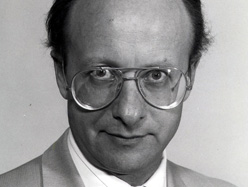
Valery Fabrikant
Mass murderer Marc Lepine
Mass murderer · Canada · 1989
Marc Lépine committed a shooting at the École Polytechnique engineering school…
14 victims
Marc Lepine
Mass murderer · Canada · 1989
Marc Lépine committed a shooting at the École Polytechnique engineering school…
14 victims
 Roger Warren
Mass murderer · Canada · 1992
Roger Warren was convicted of 9 counts of second-degree murder in connection to…
9 victims
Roger Warren
Mass murderer · Canada · 1992
Roger Warren was convicted of 9 counts of second-degree murder in connection to…
9 victims
 David Shearing
Mass murderer · Canada · 1982
David Shearing was arrested after police received a caller tip about him in a c…
6 victims
David Shearing
Mass murderer · Canada · 1982
David Shearing was arrested after police received a caller tip about him in a c…
6 victims
 Pierre Lebrun
Mass murderer · Canada · 1999
Pierre Lebrun committed suicide by shooting himself on April 6 1999, after carr…
4 victims
Pierre Lebrun
Mass murderer · Canada · 1999
Pierre Lebrun committed suicide by shooting himself on April 6 1999, after carr…
4 victims
 Eugene Aram
Murderer · United Kingdom · 1744
Eugene Aram (1704 - August 6, 1759) was an English philologist who also became…
1 victim
Eugene Aram
Murderer · United Kingdom · 1744
Eugene Aram (1704 - August 6, 1759) was an English philologist who also became…
1 victim
 Genzo Kurita
Serial killer · Japan · 1948
Genzo Kurita ( 栗田 源蔵 , Genzo Kurita , 1926 - October 14, 1959) was a Japanese s…
8 victims
Genzo Kurita
Serial killer · Japan · 1948
Genzo Kurita ( 栗田 源蔵 , Genzo Kurita , 1926 - October 14, 1959) was a Japanese s…
8 victims
 Arthur Lee Burton
Murderer · 1997
Arthur Lee Burton was born on 3/29/70. He received a TDCJ number of 999283. He…
1 victim
Arthur Lee Burton
Murderer · 1997
Arthur Lee Burton was born on 3/29/70. He received a TDCJ number of 999283. He…
1 victim
 Anibal Canales
Murderer · USA · 1997
Anibal Canales, Jr. was convicted in Texas of capital murder and was sentenced…
1 victim
Anibal Canales
Murderer · USA · 1997
Anibal Canales, Jr. was convicted in Texas of capital murder and was sentenced…
1 victim
 Peter Howse
Murderer · New Zealand · 1982
Peter Howse was a convicted murderer and rapist who was sentenced to life in pr…
1 victim
Peter Howse
Murderer · New Zealand · 1982
Peter Howse was a convicted murderer and rapist who was sentenced to life in pr…
1 victim
 Susan Grund
Murderer · USA · 1992
Susan Grund was convicted of murdering her husband, James Grund, and the trial…
1 victim
Susan Grund
Murderer · USA · 1992
Susan Grund was convicted of murdering her husband, James Grund, and the trial…
1 victim
- Gender
- male
- Country
- Canada
- Location
- Montreal, Canada
- Date of birth
- January 28, 1940
- Age at first offence
- 52
- Characteristics
- revenge
- Victim profile
- Department Chair Phoivos Ziogas and professors Matthew Douglass, Michael Hogben, and Jaan Saber
- Method of murder
- Shooting (.38 calibre pistol)
- Date(s) of murder
- August 24, 1992
- Years active
- 1992
- Date of arrest
- Same day
- Status
-
Life imprisonment
Sentenced to life in prison; no possibility of parole until 2017
Case record: Valery Fabrikant
Background
Valery Fabrikant was a former associate professor of mechanical engineering at Concordia University. He was born in 1940 in Minsk, USSR, and immigrated to Canada in 1979, beginning teaching at Concordia in 1980.
Fabrikant blamed colleagues for his being denied tenure on four successive occasions and for attempts to have his employment terminated. He also accused the university of tolerating academics being listed as co-authors on papers to which they had not contributed. In 1992, he went to court to try to have the names of several colleagues removed from works he had written in the 1980s. That case was not concluded until November 2007, when it was dismissed by Quebec Superior Court Judge Nicole Morneau, who used a provision of the Quebec Code of Civil Procedures to dismiss cases that were found to be frivolous or unfounded.
Fabrikant also faced a contempt of court charge due to his behavior during his suit. He conducted an email campaign against numerous members of the university and claimed fears of being killed in jail.
The offence
On August 24, 1992, Fabrikant took concealed weapons and ammunition with him to the Engineering Department of the university, where he went on a shooting spree on the ninth floor of the Henry F. Hall Building.
He killed Departmental Chair Phoivos Ziogas and Professors Matthew Douglas, Michael Hogben, and Aaron Jaan Saber. A departmental staff secretary, Elizabeth Horwood, was injured.
Phoivos Ziogas lived for a month in a coma before he died of massive internal injuries from the bullet ricocheting within his body. Fabrikant called 911 at 2:35 p.m. to inform them that he had committed several murders and wanted to explain his motives. An hour later, as he tried to adjust the phone, he let go of his gun, giving a professor and security guard the chance to overtake him.
Fabrikant fired at least two people in the halls before reaching additional targets. He shot Michael Hogben three times with his .38-calibre pistol. He crossed the hallway and shot Jaan Saber twice. He shot Elizabeth Horwood in the thigh. He then shot Professor Matthew Douglass four times. Another professor and a security guard, Daniel Martin, were taken hostage.
Investigation
Concordia’s Board of Governors had earlier adopted a policy banning firearms on the university campus.
After Fabrikant’s murders, the university joined the Coalition for Gun Control and gathered signatures for a petition calling for tougher national gun laws. In March 1994 Concordia representatives presented members of Parliament with a 200,000-signature petition to ban the private ownership of handguns in Canada.
Concordia commissioned two independent inquiries into events surrounding the murders. The first inquiry, released as “Lessons from the Fabrikant Files,” studied Fabrikant’s employment history. The report was frequently referred to as the Cowan Report. The second inquiry was called “Integrity in Scholarship,” investigated academic and scientific integrity among professors, and was frequently referred to as the Arthurs Report.
The Cowan Report found that “The warnings and strictures placed upon him [Fabrikant] which directly related to his behavior, (when they existed at all), were too mild, too vague, or (finally) too slow and ponderous.”
Arrest
Fabrikant was arrested on August 24, 1992.
Trial
Fabrikant represented himself at his trial.
After several weeks of eccentric behaviour, the judge suspended the proceedings to conduct a hearing into Fabrikant’s mental fitness to stand trial. He was eventually found fit. After five months of proceedings, the judge stopped his defense so the jury had no choice but to find him guilty. Another account described three months of proceedings by two psychiatrists before the judge stopped his defense and Fabrikant was found guilty of first-degree murder.
Fabrikant was found guilty of first-degree murder and sentenced to life in prison. He continued to claim innocence and stated that he had acted in self-defense.
At trial, Fabrikant was cited six times for contempt of court. He called the procedures a “monkey trial,” called the judge a “biased crook,” and welcomed the jury “to the Muppet Show.”
Fabrikant said:
“I was the victim, not a perpetrator, I acted in self-defense”
He also said:
“I was never insane, I knew perfectly well what I was doing and I knew why I was shooting each individual. There was not a single innocent person harmed. I did not hear voices and did not imagine devils.”
Psychiatrists determined that he was not insane, and Fabrikant agreed.
A psychiatrist named Dr. Louis Morisette spent several hours over a few days with Fabrikant at the Philippe-Pinel Institute, which specialized in legal psychiatry. Morisette said:
“Fabrikant wanted my help to counter argue the two psychiatrists opinion on him in court, and to help him argue that psychology has no scientific basis and proves nothing.”
Morisette noted:
“Mr. Fabrikant suffers, in my opinion, from more than a simple personality disorder, […] he could be treated by pharmaceutical products, a treatment he always refused.”
Morisette also said:
“We often push the trial dates of people who suffer from complications because of heart attacks. In my opinion Fabrikant is not fit to stand trial.”
Fabrikant did not agree with the two psychiatrists who ruled in his favor and thought he was insulted by them.
Sentencing
Fabrikant was sentenced to life imprisonment. One account said he had no possibility of parole until 2017, and another account said he had no possibility of parole until 2014.
Fabrikant served his sentence at Archambault Prison in Sainte-Anne-Des-Plaines and later at Archambault Institution in Sainte-Anne-des-Plaines, Quebec.
Appeals
Fabrikant filed numerous legal proceedings with the court system until 2000, when the Quebec Superior Court declared him a vexatious litigant. The Court dismissed his bid to clear that status in 2007.
Aftermath
An investigation of faculty research in Fabrikant’s department revealed that many of Fabrikant’s claims were indeed true. The three researchers who were the primary target of Fabrikant’s allegations had their research accounts frozen by NSERC for misappropriating research funds and were forced to take early retirement. One was re-hired as a research professor, and two were temporarily suspended.
The Internal Audit function was restructured. In 1995, the university adopted “The Code of Rights & Responsibilities” and named an Advisor on the Code, setting standards of conduct for all members of the University. Further work on a new code of ethics led to adoption in 1995 of “The Code of Ethics: Guidelines for Ethical Actions” in a partial version, and in 1997 the full version was adopted. The university also created initiatives related to civil behaviour and conflict resolution, including the Peace and Conflict Resolution Series that began in 2003.
The Cowan report also described that “there is no institutional memory … universities are vastly more decentralized than other enterprises. There is no central clearing house for important information.” It further stated that “members of the administration, who in the past never had much information about Dr. Fabrikant’s bad behaviour outside the faculty, were learning more and becoming more fearful” during an emergency meeting on October 30, 1992.
A letter to Fabrikant was sent out one week before the shooting warning him to cease his harassment campaign via email, and Cowan indicated that it was uncertain whether he ever received it.
The Arthurs report looked into Fabrikant’s allegations against Dean Srikanta Swamy and professors Tom Sankar and Sheshadri Sankar. Arthurs stated:
“Prof. Sankar could not have made a substantive scientific contribution”
in all cases.
Arthurs also admitted:
“that those pressures may in turn lead to the adoption of strategies for being as prolific as possible, and that some of these strategies may promote undesirable behaviour.”
Arthurs criticized Concordia’s scientific and academic integrity, stating:
“Concordia appears to have no policies or standards of scientific and academic integrity.”
The Arthurs report described a taped conversation involving Tom Sankar:
“Did I ask you to put my name on any of your papers? You did it voluntarily.”
Fabrikant described himself as:
“a scientific prostitute,”
saying he was forced to put Prof. Tom Sankar’s name on several articles from 1980 to 1985.
Catherine Mackenzie, identified as executive assistant to the rector in 1989, was quoted as saying Fabrikant threatened:
“the only way to get what you want in North America is to buy a gun and shoot a lot of people.”
One quoted statement from Sam Osman, chair of the mechanical engineering department at the time, said: Fabrikant was considered “one of the top ten international researchers in his area.”
Fabrikant wrote:
“Clearly, these people did so much harm to me, that killing them was more important, than the threat of dying in jail,”
and wrote:
“I am no longer afraid of anything or anybody. We all have to die one day. Whenever I die, I shall die an honest person... I cannot fight all the crooks in the world, but I shall not rest until the bogus scientists in this university are exposed.”
He wrote:
“I was abused for 12 years, and when my life was threatened, the abusers succeeded in provoking me,”
and wrote:
“I lived so far 62 years, during which I never displayed any violent behavior, I never had even a speeding ticket. There were three minutes in my life when I killed four people. Should I be judged by these three minutes or [the] remaining 62 years?"
After the shooting, Peter Cote, director of Concordia’s Rights and Responsibility Department, said:
“In hindsight, there were a lot of warning signs,”
and added: “They were not properly and effectively acted on.”
In later discussion of violence risk, it was stated that “Fabrikant often displayed classic behavioral warning signs indicating potential violence.”
Other details
Fabrikant was described as firing 10 lawyers before deciding to defend himself.
He used Usenet and posted in newsgroups, particularly can.general and can.politics, and claimed he was the innocent victim of a conspiracy. He also maintained a website containing trial transcripts and his version of events, and from prison he managed to circumvent restrictions on communications to argue his case through a website and other media.
The case led to a series of investigations and a formalization of research ethics guidelines by Canada’s research funding agencies.
Timeline
- August 24, 1992 — Fabrikant shot and killed four colleagues and wounded Elizabeth Horwood at Concordia University.
- August 24, 1992 — Fabrikant called 911 at 2:35 p.m. to inform authorities that he had committed several murders and wanted to explain his motives.
- August 24, 1992 — Fabrikant was arrested.
- September 23 — Phoivos Ziogas died of injuries.
- March 1994 — Concordia representatives presented members of Parliament with a 200,000-signature petition to ban the private ownership of handguns in Canada.
- October 30, 1992 — An emergency meeting recorded members of the administration learning more about Fabrikant’s bad behaviour outside the faculty.
- 1995 — Concordia adopted “The Code of Rights & Responsibilities” and named an Advisor on the Code; it adopted a partial version of “The Code of Ethics: Guidelines for Ethical Actions”.
- 1997 — Concordia adopted the full version of “The Code of Ethics: Guidelines for Ethical Actions”.
- 2000 — The Quebec Superior Court declared Fabrikant a vexatious litigant.
- 2003 — The Peace and Conflict Resolution Series began.
- 2007 — The Quebec Superior Court dismissed Fabrikant’s bid to clear his vexatious litigant status; his dismissed Quebec court case was finalized in November 2007 by Judge Nicole Morneau.
Victims and injuries
Phoivos Ziogas, Departmental Chair, was shot twice, lived for a month in a coma, and died of massive internal injuries from the bullet ricocheting within his body. Matthew Douglas was shot four times and died. Michael Hogben was shot three times and died. Aaron Jaan Saber was shot twice and died. Elizabeth Horwood, a departmental staff secretary, was shot in the thigh and survived and was later discharged from hospital. Daniel Martin was taken hostage.
Spotted an error, or have more information about this case?