Jason Fairbanks
Murderer Clinton Lee Young
Murderer · USA
Clinton Lee Young (born July 19, 1983) was convicted of murdering two men in No…
2001 victims
Clinton Lee Young
Murderer · USA
Clinton Lee Young (born July 19, 1983) was convicted of murdering two men in No…
2001 victims
 Ivan Abner Cantu
Murderer · USA
Name: Ivan Abner Cantu · TDCJ number: 999399 · Date of birth: 06/14/1973 · Age…
2000 victims
Ivan Abner Cantu
Murderer · USA
Name: Ivan Abner Cantu · TDCJ number: 999399 · Date of birth: 06/14/1973 · Age…
2000 victims
 Michael John Yowell
Murderer · USA
Name: Michael John Yowell · TDCJ number: 999334 · Date of birth: 01/25/1970 · P…
1998 victims
Michael John Yowell
Murderer · USA
Name: Michael John Yowell · TDCJ number: 999334 · Date of birth: 01/25/1970 · P…
1998 victims
 Michael Duane Zack
Murderer · USA
Michael Duane Zack was convicted and sentenced to death for the 06/13/96 murder…
1996 victims
Michael Duane Zack
Murderer · USA
Michael Duane Zack was convicted and sentenced to death for the 06/13/96 murder…
1996 victims
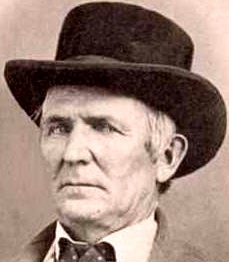 John Doyle Lee
Murderer · USA · 1857
Name: John Doyle Lee Lifespan: September 12, 1812 - March 23, 1877 Legal outcom…
120 victims
John Doyle Lee
Murderer · USA · 1857
Name: John Doyle Lee Lifespan: September 12, 1812 - March 23, 1877 Legal outcom…
120 victims
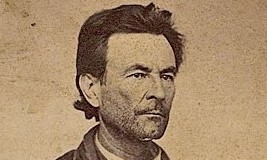 Champ Ferguson
Murderer · USA · 1861
Champ Ferguson was born November 29, 1821 in Clinton County, Kentucky, near the…
100 victims
Champ Ferguson
Murderer · USA · 1861
Champ Ferguson was born November 29, 1821 in Clinton County, Kentucky, near the…
100 victims
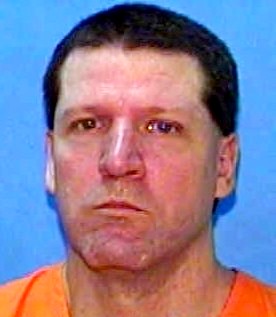 Daniel Lee Doyle
Murderer · USA · 1981
Daniel Lee Doyle was sentenced to death on May 13, 1982. He was convicted of fi…
1 victim
Daniel Lee Doyle
Murderer · USA · 1981
Daniel Lee Doyle was sentenced to death on May 13, 1982. He was convicted of fi…
1 victim
 Thomas Hamilton
Mass murderer · United Kingdom · 1996
Thomas Hamilton committed suicide by shooting himself on 13 March 1996. · 13 Ma…
17 victims
Thomas Hamilton
Mass murderer · United Kingdom · 1996
Thomas Hamilton committed suicide by shooting himself on 13 March 1996. · 13 Ma…
17 victims
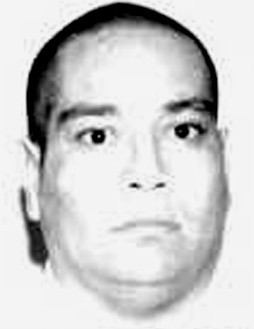 Charles Don Flores
Murderer · USA · 1998
Charles Don Flores (Hispanic male) was sentenced to death on April 2, 1999. He…
1 victim
Charles Don Flores
Murderer · USA · 1998
Charles Don Flores (Hispanic male) was sentenced to death on April 2, 1999. He…
1 victim
 Mark Allen Davis
Murderer · USA · 1985
Mark Allen Davis was indicted in the Sixth Judicial Circuit, Pinellas County. T…
1 victim
Mark Allen Davis
Murderer · USA · 1985
Mark Allen Davis was indicted in the Sixth Judicial Circuit, Pinellas County. T…
1 victim
 Michael Nawee Blair
Murderer ? · USA · 1993
Michael Nawee Blair was sentenced to death for the 1993 murder of 7-year old As…
1 victim
Michael Nawee Blair
Murderer ? · USA · 1993
Michael Nawee Blair was sentenced to death for the 1993 murder of 7-year old As…
1 victim
 Andrew Randall
Murderer · United Kingdom · 2005
Andrew Randall (born 1974) was a British murderer. He murdered his seven-week-o…
1 victim
Andrew Randall
Murderer · United Kingdom · 2005
Andrew Randall (born 1974) was a British murderer. He murdered his seven-week-o…
1 victim
- Gender
- male
- Country
- USA
- Location
- Dedham, Massachusetts, USA
- Date of birth
- September 25, 1780
- Age at first offence
- 21
- Characteristics
- murder-suicide, to collect insurance money, motive unknown, mentally ill
- Victim profile
- Elizabeth Fales, 19
- Method of murder
- St abbing with knife
- Date(s) of murder
- May 18, 1801
- Years active
- 1801
- Date of arrest
- —
- Status
-
Executed
Executed by hanging in Massachusetts on September 10, 1801
Case record: Jason Fairbanks
Background
Jason Fairbanks (September 25, 1780 – September 10, 1801) was an early American murderer.
Fairbanks came from a prominent family in Dedham, Massachusetts. He lived in the Fairbanks House, today the oldest house in the country. He was the son of Ebenezer and Prudence Farrington Fairbanks. He was born with a lame arm.
Fairbanks had been courting Elizabeth Fales, the daughter of Nehemiah Fales, for a long while, but she would not consent to marry him. His sixth cousin, once removed, was Vice President Charles Fairbanks.
Fairbanks was born with a lame arm, and during the trial witnesses described him as a sickly young man of about twenty-one years of age with a crippled arm.
Elizabeth (or Betsey) Fales was described at trial as a healthy young woman of about eighteen.
The offence
On the afternoon of Monday, May 18, 1801, Fairbanks met with Fales in a birch grove next to “Mason's pasture” in Dedham. The exact location today was not known.
Sometime later, at about three o’clock, Fairbanks appeared at her parents’ house covered with blood and holding a knife. He told them that their daughter had committed suicide and that he had tried to do the same but was unable to.
Relatives rushed to the grove of birches and found Elizabeth lying on the ground with her throat cut and her body lacerated by multiple stab wounds. The account stated that the young woman died after “a few struggles and gasps.”
Fairbanks had serious wounds as well. He had a cut throat and various other knife wounds.
Fairbanks’s own statement described the fatal meeting as involving a “long conversation upon the subject of marriage,” during which he recalled the fictitious marriage certificate prepared by his niece the previous day. He showed Betsey the spurious document, commented that it was as close to marriage as they would ever get, and tore the certificate to pieces. He assured her of his willingness to marry her instantly, but acknowledged she would have to continue living at her father’s house since he, Jason, had “no means, nor any place of ... [his] own to carry her to.”
Betsey wept bitterly and said such an arrangement would be impossible because her mother would immediately “turn her out” of the house. She questioned his sincerity and said her sisters had told her Fairbanks did not really love her.
Fairbanks’s statement then described an exchange about whether he had told anyone their secret. It included the following verbatim passage:
And now with all sorrow, and blame to myself, do I pursue the remainder of this melancholy history; for I replied angrily and roughly, that if she were capable, and willing to believe all that her sisters . . . said upon the subject, she might go to the devil with them, since she so well knew that I had already possessed her person, and received the pledge of her most tender attachment! She then, with great quickness, demanded of me - " if I had ever told any one of our connection? ' I rashly, but sincerely, answered, that I had indeed entrusted our secret to my intimate friends, Reuben Farrington and Isaac Whiting . - Upon which she violently exclaimed, Oh! you are a monster!" - and looking on me, as I sat whittling a smallpiece of wood with a pen-knife, she cried out, " give me that knife, I will put an end to my existence, you false-bearted man! - for I had rather die than live !" At the same time, stretching out her hand, she took the knife, and began, as if in a state of distraction, to stab her breast and body - screaming out, and walking violently from me - . . ; while I, struck with astonishment, remained without power, and in a cold state of insensibility; but was too - too soon awakened from this dreadful stupefaction, by her coming, and either falling or sitting down by me. - Her throat was cut - which seeing, I immediately seized that cruel knife which had robbed me of all my fond heart held dear! and while it yet remained wet with her blood, stabbed myself in many and repeated places; only leaving off when I had finished cutting my own throat,and when I believed all was over with me!
The same account described the struggle at the grove as involving Fairbanks’s claim about stabbing himself and Elizabeth’s throat being cut, as part of his narrative.
Competing accounts presented at trial
Sullivan, the prosecutor, insisted that Betsey could not possibly have inflicted the more than a dozen knife wounds on her throat, arms, breasts, side, and even back, describing the wound on the back as a particular problem for the defense.
The defense lawyers argued that Fairbanks, described as crippled and sickly with a shrunken right arm that was completely stiff at the elbow, could not possibly have subdued the healthy and athletic Betsey Fales.
During closing arguments, the defense presented a reconstructed scenario attributed to Harrison Gray Otis, which suggested that Betsey had seized Jason’s knife and taken her own life. Otis invoked literature. He also gave verbatim statements during this argument, including:
This is his simple tale - Is it impossible? Is it improbable? Has disappointed love never produced despair? Has despair never induced Suicide? Has the softer sex been peculiarly exempt from these feelings and these results? No - Every annal, and every novel writer will establish the assertion, that no passion has so often terminated fatally as love, and no circumstances have so frequently given it a fatal direction as injudicious restraint.
Otis also gave a description in which he said:
When their conversation turned upon their future prospects, and the small hopes which they entertained of a happy union, Jason produced this certificate, and after relating the history of its origin, with a desperate and melancholy look, correspondent to their feelings, he observed, "I fear we shall never be nearer to the gratification of our fond expectations; I fear that this little fiction is the highest consummation of our bliss, which we shall ever realize;" and tearing in pieces the scroll on which their names were united, "thus, said he, our tenderest hopes are scattered to the winds."
The argument continued:
Perhaps this little incident , more than all others, contributed to rouse that phrenzy and despair, which induced her rashly to terminate, by her own hand, her own existence.
Sullivan, the prosecutor, presented a competing reconstructed scene for the jury. The argument included the following verbatim remarks:
I now again call your imaginations to an image from whence the eye turns with horror, and of which language refuses a description. When he [Fairbanks] had produced the false certificate, and she had with a virtuous indignation torn the imposition in pieces, he became enraged: - Perhaps the knife was first exhibited to obtain by terror, what he feared he could not obtain by force. She turned on her face, the stab on her back altered her position; her shoes and shawl were thrown off in the struggle. When her arms defended her throat the wounds were given in her bosom to remove the obstruction, and her arms and hands mangled to gain access to the neck. Thus far led on, he found no retreat; but gave the ghastly wound, which more immediately produced her death. - But I quit the horrid and distressing scene.
Investigation
After Fairbanks appeared with blood and a knife, the relatives found Elizabeth with her throat cut and multiple stab wounds, and Fairbanks’s wounds were described as serious.
Fairbanks directed Elizabeth’s relatives to the spot where she lay. His bloody jack-knife was in his hand.
Witnesses found Fairbanks’s overcoat and wallet near Betsey’s body, along with fragments of the marriage certificate that his niece had given him the previous day.
Although Fairbanks’s claim that Betsey had committed suicide was excluded from trial testimony, it seemed clear to the narrative that she had either taken her own life or been murdered by Fairbanks.
Trial
Fairbanks was brought to trial in August before the Supreme Court of Massachusetts on the charge of murdering Elizabeth Fales. So many spectators flocked to the trial at Dedham that the judges moved the proceedings from the usual courthouse chamber to a nearby meetinghouse.
James Sullivan, the Republican attorney general of Massachusetts, handled the prosecution. Harrison Gray Otis and John Lowell, Jr., two prominent Federalist lawyers, stood for the defense.
During the trial, witnesses provided background and immediate circumstances:
- The two principals were Jason Fairbanks and Elizabeth (or Betsey) Fales.
- Fairbanks was described as sickly and about twenty-one years old with a crippled arm.
- Betsey was described as healthy and about eighteen.
- Witnesses testified that they had been courting over several years despite opposition of Betsey’s family and friends.
- At times Fairbanks became frustrated, and witnesses testified he had made threats against both Betsey and her mother.
- The account stated that members of the Fales family denied it under oath, but other witnesses testified the attachment seemed strong and mutual.
- The pair met together at Fairbanks’s residence, at the houses of friends, and out-of-doors, sometimes spending the night together alone.
Events preceding the killing
On Sunday, May 17, the day before the tragedy, Fairbanks’s niece playfully forged a marriage certificate for Fairbanks and Fales.
That same day, Fairbanks told a friend, Reuben Farrington, that he “planned to meet Betsey, in order to have the matter settled,” and explained he “either intended to violate her chastity, or carry her to Wrentham [a nearby town], to be married, for he had waited long enough.”
Farrington saw Fairbanks twice the next morning; Fairbanks seemed “cheerful, and merry as usual,” but claimed to be too weak to help with some gardening. At one-thirty that afternoon, Fairbanks told Farrington he would let him know in about an hour what he had decided to do about his courtship.
In the meantime, Betsey Fales spent Monday morning helping with household chores. Both her mother and sister claimed she too had appeared “cheerful and merry as usual.”
After drinking milk for lunch, she went between twelve and one o’clock to a neighbor’s house to retrieve a novel entitled Julia Mandeville. She stayed there for more than an hour reading it. After laying the novel aside, Betsey played for a few minutes with a little child and left.
At about three o’clock, two of her friends repeatedly heard Betsey’s voice from nearby woods. One thought she was laughing, but later both thought they heard cries of distress. Fifteen minutes later, they learned Betsey was dead.
Indictment and imprisonment
After a three day trial and Elizabeth’s funeral on May 20, a jury indicted Fairbanks as an accessory to Elizabeth’s death and jailed him.
Prosecution and defense conduct in argument
The defense and prosecution chose to present reconstructions due to contradictory and inconclusive testimony. The defense lawyer’s reconstruction was described as centering on a portrait of Betsey as passionate and driven by “melancholy romances and legendary tales.” The prosecutor’s reconstruction portrayed Fairbanks as lazy, pampered, and lustful, and Betsey as virtuous.
Sullivan argued that Fairbanks first tried to hoodwink or seduce Betsey by presenting the forged marriage certificate. When she refused, Sullivan suggested Fairbanks may have tried to rape her, and then killed her when he proved unable to consummate a sexual assault.
Sullivan also replied to defense claims about fictional authors by stating that when women decided to kill themselves, they did so by drowning or poisoning or strangling, rather than stabbing.
Sentencing
Fairbanks was sentenced to death by hanging. He was found guilty of Elizabeth’s murder and was sentenced to death by hanging.
Escape
Before execution could take place, Fairbanks escaped with the help of his brother, a cousin, a friend, and his nephew Nathaniel Davis. A $1,000 bounty was placed on his head, and a newspaper headline screamed “Stop the Murderer!”
The group attempted to make their way to Canada, but stopped to eat in Skenesboro (ugh), now known as Whitehall, New York, just south of the Canadian border.
Fairbanks was recaptured. He was returned to the Boston jail because authorities no longer trusted the Dedham jail.
Outcome
On September 10, 1801, Fairbanks was hanged. The execution was described as a massive event. Two Army cavalry companies and a volunteer militia unit made sure he did not escape again. Ten thousand people attended at the Town Common to witness the execution, described as five times the town’s population at the time.
Aftermath
Within two days of his execution, the Report of the Trial of Jason Fairbanks was published. The entire story was also written up in a pamphlet titled A Deed of Horror! Trial of Jason Fairbanks for the Murder of His Sweetheart in 1801, which became the basis for a novel titled The Life of Jason Fairbanks: A Novel Founded on Fact. The novel was believed to no longer exist.
The case also generated multiple publications and broadsides, including one titled The SOLEMN DECLARATI0N of tbe Late Unfortunate Jason Fairbanks, which included:
- an autobiographical statement by Jason himself, supposedly made in prison while awaiting execution; and
- a longer sentimental and very sympathetic biography of Fairbanks, probably written by Sarah Wentworth Morton, a well-known Boston socialite and sentimental poet.
Timeline
- May 17, 1801 — Fairbanks’s niece forged a marriage certificate for Fairbanks and Fales; Fairbanks told Reuben Farrington he planned to meet Betsey to “have the matter settled.”
- May 18, 1801 — Fairbanks met Fales in a birch grove next to “Mason’s pasture” in Dedham; Fairbanks later appeared at her parents’ house covered with blood holding a knife; Betsey was found dead with her throat cut and multiple stab wounds.
- May 20, 1801 — Elizabeth’s funeral occurred.
- August 8, 1801 — After a three day trial, a jury indicted Fairbanks as an accessory to Elizabeth’s death and he was jailed.
- September 10, 1801 — Fairbanks was hanged in Massachusetts.
Other details
During the trial, references were made to the marriage certificate fragments found at the scene.
A trial report was described as being issued by the Boston publishing firm of Russell and Cutler in September 1801, within a day or two of Fairbanks’s execution, and it ran to eighty-seven pages with verbatim transcripts of trial testimony, synopses of lawyers’ arguments, detailed summaries of the charge, verdict, and sentence, and supplementary accounts of Fairbanks’s escape, recapture, and execution. The compilation appeared in at least four editions within several months.
Herman Mann, the editor of a weekly newspaper in Dedham, Massachusetts, was called to the scene of a local tragedy and later described the affair under the headline “MELANCHOLY CATASTROPH[E]!” The account included that Fairbanks was “still alive, but in a most deplorable situation.”
Mann’s report included invitations to readers. He wrote: “Ye who have experienced, or learned from your natural sympathy - come, and with me, drop a tear.”
The narrative also included that in addition to escape-related participants, authorities used “two Army cavalry companies and a volunteer militia unit” to prevent any further escape attempts.
The large crowd at the Town Common was estimated at 10,000 people and was stated to be five times the town’s population at the time.

Spotted an error, or have more information about this case?