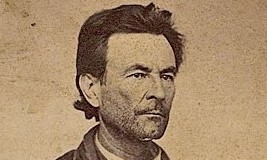
Champ Ferguson
Murderer John Doyle Lee
Murderer · USA · 1857
Name: John Doyle Lee Lifespan: September 12, 1812 - March 23, 1877 Legal outcom…
120 victims
John Doyle Lee
Murderer · USA · 1857
Name: John Doyle Lee Lifespan: September 12, 1812 - March 23, 1877 Legal outcom…
120 victims
 John Wesley Hardin
Murderer · USA · 1867
John Wesley (Wes) Hardin (1853-1895) was an American outlaw, gunfighter, and co…
42 victims
John Wesley Hardin
Murderer · USA · 1867
John Wesley (Wes) Hardin (1853-1895) was an American outlaw, gunfighter, and co…
42 victims
 Henry Wirz
Murderer · USA · 1864
Henry Wirz (also known as Heinrich Hartmann Wirz) (November 25, 1823 – November…
11 victims
Henry Wirz
Murderer · USA · 1864
Henry Wirz (also known as Heinrich Hartmann Wirz) (November 25, 1823 – November…
11 victims
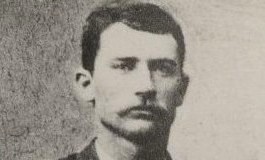 Henry Newton Brown
Murderer · USA · 1870
Henry Newton Brown — 19th century gunman; orphan; raised by relatives in Rolla,…
6 victims
Henry Newton Brown
Murderer · USA · 1870
Henry Newton Brown — 19th century gunman; orphan; raised by relatives in Rolla,…
6 victims
 Isaac Wood
Murderer · USA · 1855
Isaac L. Wood was a Livingston Republican mentioned in July 1858 execution cove…
2 victims
Isaac Wood
Murderer · USA · 1855
Isaac L. Wood was a Livingston Republican mentioned in July 1858 execution cove…
2 victims
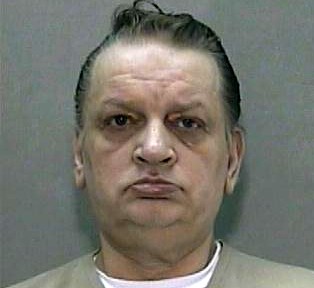 James Allen Paul
Murderer · USA · 1984
James Allen Paul was sentenced to life imprisonment in New Jersey on July 27, 1…
3 victims
James Allen Paul
Murderer · USA · 1984
James Allen Paul was sentenced to life imprisonment in New Jersey on July 27, 1…
3 victims
 Anthony Joe LaRette
Serial killer · USA · 1977
Anthony Joe LaRette was convicted of capital murder and sentenced to death for…
3 victims
Anthony Joe LaRette
Serial killer · USA · 1977
Anthony Joe LaRette was convicted of capital murder and sentenced to death for…
3 victims
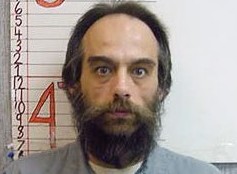 Charles Lee Mathenia
Murderer · USA · 1984
Charles Lee Mathenia · September 1983 — Louanna Bailey reported that Mathenia a…
2 victims
Charles Lee Mathenia
Murderer · USA · 1984
Charles Lee Mathenia · September 1983 — Louanna Bailey reported that Mathenia a…
2 victims
 Christopher Flannery
Murderer · Australia · 1979
Christopher Dale Flannery (1949 - missing and believed murdered ca. May 9, 1985…
12 victims
Christopher Flannery
Murderer · Australia · 1979
Christopher Dale Flannery (1949 - missing and believed murdered ca. May 9, 1985…
12 victims
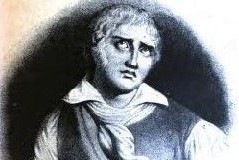 Joseph Lesurques
Murderer? · France · 1796
Joseph Lesurques was executed by guillotine on October 3, 1796. In late eightee…
2 victims
Joseph Lesurques
Murderer? · France · 1796
Joseph Lesurques was executed by guillotine on October 3, 1796. In late eightee…
2 victims
- Gender
- male
- Country
- USA
- Location
- Kentucky/Tennessee, USA
- Date of birth
- November 29, 1821
- Age at first offence
- 40
- Characteristics
- torture, serial rapist, rape
- Victim profile
- Men ( soldiers and civilians )
- Method of murder
- Shooting
- Date(s) of murder
- 1861 - 1865
- Years active
- 1861–1865
- Date of arrest
- May 23, 1865
- Status
-
Executed
Executed by hanging in Tennessee on October 20, 1865
Case record: Champ Ferguson
Background
Champ Ferguson was born November 29, 1821 in Clinton County, Kentucky, near the Tennessee border. He was the oldest of ten children. He worked as a farmer.
Ferguson moved with his wife and family from southern Kentucky into the Calfkiller River Valley in White County, Tennessee. The source described his development of “a fierce hatred for the Union cause” for reasons that were debated.
Local tradition said that Federal soldiers may have raped his wife and daughter. Another theory said that he maintained grudges against individuals in the area who supported the Union.
Ferguson later claimed that Confederate officials had promised that they would ignore a previous murder charge if he agreed to support the southern effort.
The offence
During the American Civil War, Ferguson acted as a Confederate guerrilla. The source described East Tennessee as being divided about secessionism and described the Cumberland Plateau as having substantial numbers of recorded incidents of guerrilla and revenge attacks.
Ferguson organized a unit of men at the start of the war and began attacking civilians in the region believed to support the Union. The source described him as having a reputation for fighting and violence.
The source included descriptions of violence and alleged sadism. It said that legends claimed Ferguson decapitated prisoners and rolled the heads down the hillsides and was willing to kill elderly and bedridden men.
The source described incidents in which Ferguson and his men killed named individuals and others:
- The source stated that Ferguson shot Frogg dead where he lay; William Frogg was ill with the measles.
- The source stated that Ferguson encountered 16-year-old Fount Zachery in Fentress County on April 1, 1862, that Zachery surrendered the weapon, and that Ferguson shot him anyway, then used a Bowie knife as Zachery was on the ground. The source described Fount Zachery as the first of four Zachery males to fall to Ferguson.
- The source stated that Ferguson’s men killed their leader’s cousin Alexander Huff in Fentress County.
- The source stated that Ferguson’s men killed Union guerrilla Elijah Kogier in Clinton County as his young daughter clung to him.
- The source stated that Ferguson killed James Zachery, and that Esther Zachery later testified she saw Ferguson chasing her father through the family orchard, yelling to his men, “Shoot him, damn him, shoot him!”
The source also described that Ferguson killed Lieutenant Elza C. Smith of the 13th Kentucky Cavalry while Smith lay a helpless prisoner, and that Ferguson was heard saying while searching for Smith’s bed: “I have a begrudge against Smith. ‘We’ll find him.’”
The source characterized killings at Saltville and described them as going down in history as the Saltville Massacre.
The source stated that Ferguson accepted that he killed many of the victims named and admitted killing “over 100 men personally,” while maintaining that this was part of his military activities.
The source stated that the number of wounded and prisoners he (and his men) killed from the Battle of Saltville was and was a matter of dispute. It said the individuals were primarily members of the black 5th U.S. Colored Cavalry and their white officers.
The source also said that at various times, Ferguson’s group had contact with Confederate military units led by Brig. Gen. John Hunt Morgan and Maj. Gen. Joseph Wheeler. It said that some documentary evidence indicated that he was authorized to be an official military captain by Morgan, while also stating they were not always subject to military discipline and often engaged in clear violations of normal military rules.
Investigation and arrest
Before the end of the war, Ferguson was arrested for the murder of a government officer by Confederate officials and detained for two months in Wytheville, Virginia, but was then released.
After the war, Ferguson was arrested and tried in Nashville. The source described the trial as a major media event.
At war’s end, the source described that on “23 May, 1865” Ferguson and his men were induced by promise of parole to surrender themselves to federal military authorities, and that all except Ferguson were released on oath. It stated that Ferguson was summarily arrested and charged with over 50 counts of murder.
The source described that Ferguson surrendered under verbal promise of parole on May 23, 1865, that Federal cavalry captured him at home on May 26, 1865, and that he was taken to Nashville, Tennessee for trial.
The source described that Ferguson was taken to prison in Nashville and soon became the focus of a sensational military trial.
Trial
Ferguson was tried in Nashville by a military tribunal. The source described a trial timeline as “lasting from 11 July through 26 September, 1865,” and described witness testimony and the denial of counsel’s opportunity to present a competent case in his defense.
The source stated that Ferguson was charged with being a guerrilla and a murderer. It said a long line of witnesses appeared against him, including one of his main adversaries during the conflict, “Tinker Dave” Beaty, who testified against him.
Ferguson accepted that he killed many of the victims named and admitted killing over 100 men personally, while maintaining that this was part of his military activities.
The source described Ferguson’s statement after the verdict:
“I am yet and will die a Rebel ... I killed a good many men, of course, but I never killed a man who I did not know was seeking my life. ... I had always heard that the Federals would not take me prisoner, but would shoot me down wherever they found me. That is what made me kill more than I otherwise would have done. I repeat that I die a Rebel out and out, and my last request is that my body be removed to White County, Tennessee, and be buried in good Rebel soil.”
The source stated that on October 10, 1865, Ferguson was found guilty and sentenced to hanging.
The source included additional verbatim material recorded at execution:
“I was a Southern man at the start ... I am yet, and will die a Rebel. I believe I was right in all I did.” and “I repeat that I die a Rebel out and out, and my last request is that my body be removed to White County, Tennessee, and be buried in good Rebel soil.”
The source also included a quote attributed to Ferguson:
“Well, there are meaner men than Tinker Dave ... He fought me bravely and gave me some heavy licks, but I always gave him as good as he sent. I have nothing against Tinker Dave…. We both tried to get each other during the War, but we always proved too cunning for each other.”
It also included a quote attributed to Ferguson regarding his killings:
“I was induced to join the army on the promise that all prosecution in that case would be abandoned. This is how I came to take up arms.” and “We were having a sort of miscellaneous war up there, through Fentress County, Tennessee, and Clinton County, Kentucky, and all through that region. Every man was in danger of his life; if I hadn't killed my neighbor he would have killed me. Each of us had from twnety to fifty proscribed enemies, and it was regarded as legitimate to kill them at any time, at any place, under any circumstances, even if they were wounded or on a sick-bed.” and “I told the boys that I would settle the matter by going direct to Frogg’s house and killing him,”
The source included verbatim material attributed to Ferguson during events involving Reuben Wood:
“Don’t you beg,” Ferguson told the older man, “and don’t you dodge.” “You have always treated me like a gentleman,” Ferguson said, “but you have been to Camp Robinson, and I intend to kill you.”
The source included verbatim material attributed to Ferguson about Reuben Wood:
“Reuben Wood and I were always good friends before the War,” Ferguson said, “but after that he was connected with the same company in which my brother, Jim, was operating. I knew that he intended killing me if he ever got a chance. They both hunted me down, and drove me fairly to desperation. ‘On the day that he was killed, we met him in the road and he commenced on me, and I believe he intended to shoot me. The touching story about his piteous appeals to me — that he had nursed me when a babe, and tossed me on his knee — are false, and were gotten up expressly to create sympathy, and set me forth as a heartless wretch. If I had not shot Reuben Wood, I would not likely have been here, for he would have shot me. I never expressed a regret for committing the act, and never will. He was in open war against me.”
The source included verbatim material attributed to Ferguson to prisoner George Thrasher:
“I’m not in favor of killing you, Thrasher, you have never been bushwhacking or stealing horses. I have killed old Wash Tabor, a damned good Christian, and I don’t reckon he minds dying.”
Sentencing and execution
Ferguson was sentenced to hang on October 10, 1865.
The source stated that on Friday, October 20, 1865, the order of execution was carried out and that Ferguson’s wife and sixteen-year-old daughter Ann watched. The source described him being hanged on October 20, 1865.
The source included a quote attributed to his wife:
“Die like a man, Champ”.
Appeals
No appeals outcome was included in the source.
Outcome
The source described that Ferguson was executed on October 20, 1865 by hanging in Tennessee.
The source described his burial:
- The source stated that Ferguson was buried in the France Cemetery on Highway 84 (Monterey Highway) north of Sparta, Tennessee.
- The source also stated that Martha Owen Ferguson buried Champ on the Calfkiller, near Sparta, in White County Tennessee, as per his request.
- The source stated that Ferguson’s last request was that his body be removed to White County, Tennessee, and be buried in good Rebel soil.
Aftermath and related accounts
The source described differing regional memory of Ferguson through historical markers.
The source included an “Afterword” describing a conspiracy theory involving Champ being saved when the hangman cut the rope. It stated that a story said the military enclosed the undersection of the scaffold, that a ring of soldiers completely encircled it, that Champ dropped through a trap door, and that they quickly untied the loose knot and placed Champ in the casket alive. It further stated that the casket was placed on a waiting wagon which Champ’s wife and daughter drove out of town, and that Champ climbed out of the casket after they were out of Nashville and that the three rode to Indian Territory in Oklahoma, where they took new names and took up farming and ranching.
The source included verbatim questions attributed to the writer:
“It’s an interesting story. But if it’s true, who is buried in the grave I found marked "Capt. C. Furguson"? Are we to assume that his wife Martha didn’t know how to spell his name? Or that someone else in on the conspiracy misspelled it and put up a stab of limestone at a fake grave so that everybody would think Champ had really been hanged? What did Colonel Shafter whisper to Champ in a low undertone that made Champ's face light up noticeably? Did he tell him about the conspiracy and that he would be saved by the military?” and: “We’ll never know, and the legend lives on...”
The source also described photographs:
- It said that photographs were taken at the same sitting by Nashville photographer C. C. Hughes, whose studios were on Church Street.
- It said it was unknown whether the images were taken at Hughes’s studios or whether Hughes came to the prison where Ferguson was held.
- It stated that at least four images from this session survived as Cartes de Vistes (CDVs).
- It stated that one of the three was reproduced in the book “Champ Ferguson, Confederate Guerilla” by Thurman Sensing, originally published in 1942, and currently in print from Vanderbilt University Press.
The source included content attributed to Harper’s Weekly:
- On September 23, 1865, it quoted a passage describing Ferguson and his religious notions and including Ferguson’s reported opinion in quotation marks: “the Old Man” and “the Old Man” had been on his side thus far in life, and “the Old Man” had been on his side thus far in life, and “that there had never been any war” was expressed in his wish “that there had never been any war.”
- It included a passage describing he was being tried at Nashville by a court-martial on the charge of committing murders and other acts in violation of the laws of war, and included: “The verdict has not yet been given, but there is no doubt that he will be punished with death for his many atrocities.”
- It included: “Before the war he was arrested for the murder of Read, the constable, and confined in jail.”
- It included: “He claims that he had been previously a Union man.”
- It included: “He then commenced his career of murder and robbery which made his name a terror in Kentucky.”
- It included: “He acted under the orders of John Morgan in most of his raids in Kentucky and Tennessee.”
- It included: “He surrendered at the close of the war, supposing that he would be let off with the oath of allegiance.”
- On November 11, 1865, it stated: “Champ Ferguson, the notorious guerilla, suffered the death penalty on the 20th of October.”
The source included additional quoted material attributed to a Western paper and to a reporter question:
- It included: “He appeared ... as braced against every feeling of humanity, as when, with his own hand, he murdered the venerable old man who had cradled him on his knee, and to whom he was indebted for a thousand favors.”
- It included: “I thought I'd found Champ back in 1941 when my father and I went looking for him in that old graveyard on the Calfkiller River.”
Timeline
- November 29, 1821 — Champ Ferguson was born in Clinton County, Kentucky, near the Tennessee border.
- November 1, 1861 — Esther Frogg saw Champ Ferguson at her front door, and Ferguson shot William Frogg dead.
- April 1, 1862 — Ferguson encountered 16-year-old Fount Zachery in Fentress County; Zachery surrendered the shotgun and Ferguson shot him anyway, then killed him with a Bowie knife.
- July 1862 — General Basil W. Duke encountered Ferguson when Ferguson reported at Sparta, Tenn., as a guide for Morgan’s Cavalry on its first raid into Kentucky.
- October 7, 1864 — Orange Sells saw Ferguson on October 07, 1864 and later testified at Ferguson’s post-war trial.
- February 18, 1864 — Stokes took possession of Sparta.
- February 22, 1864 — Ferguson fought at Calfkiller in White County.
- March 11, 1864 — Ferguson was wounded in another engagement.
- July 15, 1864 — Major Thomas H. Reeves declared martial law in Sparta and arrested every man he found.
- October 2, 1864 — Ferguson and men were with a small Confederate force at Saltville, Virginia, when a Federal cavalry attacked.
- May 26, 1865 — Federal cavalry captured Ferguson at home and took him to Nashville, Tennessee for trial.
- October 10, 1865 — Ferguson was found guilty and sentenced to hang.
- October 20, 1865 — Ferguson was executed by hanging in Tennessee; his wife and sixteen-year-old daughter Ann watched.
Other details
Family and relationships
The source described Ferguson’s marriages:
- On May 12, 1844, Champ Ferguson married Eliza Smith, daughter of Jesse Bowen Smith; they had one child, a boy. Both Eliza and the boy died about three years after the marriage.
- On July 23, 1848, he married Martha Owen, daughter of Samuel Owen; to this union a girl, Ann Elizabeth, was born.
The source described family circumstances:
- It said Ferguson’s brother was killed as a member of the Union 1st Kentucky Cavalry.
- It said Ferguson’s wife Martha and sixteen-year-old daughter Ann watched his execution.
- It said Ann Elizabeth Ferguson married George Metcalf in Sparta, Tenn. on May 08, 1867.
- It said all three left around 1872 and eventually settled near Independence, Kansas.
- It said all three are buried in Oak Hill Cemetery.
- It said Martha never remarried.
- It said Ann Elizabeth had children, and it was reported that somewhere near Chicago, “gg grandchildren” existed.
Education and personal habits described
The source stated that Ferguson’s education was extremely limited and included Ferguson’s quote:
“I never had much schooling, but I recollect of going to school about three months, during which time I learned to read, write, and cipher right smart.”
It stated he grew up on a farm and that his vocation before the war was farming.
It described him as liking to hunt and being an expert shot, including his quote:
“Tinker Dave” Beatty! and his claim: “the only thing he ever shot at and missed was "Tinker Dave" Beatty!”
Military roles and associations described
The source described Ferguson as nominally holding the rank of Captain in the Confederate Army and leading his own company of independent cavalry.
It described that when not harassing and intimidating Unionists, Ferguson acted as a scout for Genl. John Hunt Morgan and was at times attached to the command of Genl. Joseph Wheeler. It stated that Ferguson’s company was under Wheeler’s command when they took part in the Battle of Saltville (Virginia).
It stated that Ferguson was a guide for Morgan’s cavalry raid into Kentucky and that he attached to Morgan’s cavalry as scouts in June 1862.
It described that Duke warned Ferguson there would be no abusing of prisoners, that Ferguson assured Duke he would never harm regularly commissioned officers captured in combat because he had nothing personally against them except that they were wrong, and that he would kill “hounds” if he came across them.
It also described that Ferguson enlisted after the “Camp Meeting Fight” and just prior to the Battle of Mill Springs; it did not provide an exact date for the enlistment.
The source described that Ferguson was a private in the independent cavalry command of Captain Scott Bledsoe around the time of the Battle of Mill Springs, and that testimony claimed Ferguson was raising an independent company in April 1862 and was commissioned by the Secretary of War as Captain.
Witness descriptions and contemporaries
Major John A. Brents described Ferguson as:
“is between thirty five and forty years old, about six feet high, and weighs one hundred and eighty pounds without any surplus flesh. He has a large foot, and gives his legs a loose sling in walking, with his toes turned out -- is a little stooped, with his head down. He has long arms and large hands, broad round shoulders, skin rather dark, black hair a little curled, a broad face, a large mouth, and a tremendous voice, which can be heard at a long distance when in a rage.”
General Basil W. Duke described Ferguson in “Reminiscences” as:
“He was a rough-looking man but of striking and rather prepossessing appearance, more than six feet in height and powerfully built. His complexion was florid, and his hair jet black, crowning his head with thick curls. He had one peculiarity of feature which I remember to have seen in only two or three other men, and each of these was, like himself, a man of despotic will and fearless, ferocious temper. The pupil and iris of the eye was of nearly the same color and, except to the closest inspection, seemed perfectly blended. His personal adventures, combats, and encounters were innumerable. Some of his escapes, when assailed by great odds, were almost incredible and could be explained only by his great bodily strength, activities, adroitness in the use of his weapons, and savage energy.”
Orange Sells testified Ferguson wore:
“had on a dark lindsey frock coat, buttoned up in front, and tolerably short waisted. He had on a black plug hat. His hair and beard were both longer than now. His beard was full and made his face look full. He also had a moustache. I cant say how long his hair was, but it was much longer than now and was straight around the back of his neck. I dont think it came down to his shoulders.... He was a large man, a great deal fleshier than he is now. I know him by his mouth and by his features generally.”
Harry Shocker described Ferguson:
“the man I saw on the hill and who shot my partner, had on a butternut suit. I had never seen him before that time. His beard was long and dark. I didnt notice whether his moustache was trimmed. He had the appearance of not shaving at all.”
Additional named individuals and events mentioned
The source mentioned Scott Bledsoe, who headed a pro-Southern guerrilla band Ferguson joined, and Captain Scott Bledsoe, in whose independent cavalry command Ferguson was a private.
The source mentioned David Beaty (also spelled Beatty), referred to as “Tinker Dave,” and stated he fought Ferguson and became Ferguson’s greatest enemy.
The source mentioned William Clift as commander of the 7th Tennessee Infantry (Union) and stated he issued a quote:
“I deem it highly indispensable to break up these guerrilla companies as speedily as possible, as there can be no safety to the peace of the country while they are permitted to exist,”
The source mentioned Major General William Rosecrans and quoted his order via a passage describing: “Colonel Wolford has permission to pursue and capture Hamilton and Ferguson,” and adding “but let him be careful not to get caught himself.”
The source mentioned Oliver Hamilton of Overton County.
The source mentioned Confederate leaders Brig. Gen. John Hunt Morgan and Maj. Gen. Joseph Wheeler, plus Major Basil W. Duke.
The source mentioned Lieutenant Rains Philpot and Major Thomas H. Reeves.
The source mentioned Major General Joseph Blackburn as a captor of Ferguson in one passage as “Colonel Joseph Blackburn of the 5th Tennessee Mounted Infantry,” and also mentioned Joseph Wheeler as a character witness in the trial.
The source stated that Ferguson’s trial included support from Joseph Wheeler “but support from even this well-respected general was not enough to sway the court.”
Afterword and burial name
The source described a grave marked:
“Capt. C. Furguson”
Charges and court procedures described
The source described Ferguson as being charged with over 50 counts of murder and later being charged with being a guerrilla and a murderer.
It described that General Orders were issued affirming conviction and sentencing him to death by hanging, and that on October 10, 1865: “General Orders affirming his conviction and sentencing him to death by hanging were issued.”
It described “On 10 October, General Orders affirming his conviction and sentencing him to death by hanging were issued.”
Harper’s Weekly quoted passages
The source included the Harper’s Weekly quote dated September 23, 1865 beginning:
“Among the guerillas who infested Kentucky during the war Champ Ferguson and his men were the most notorious. Their outrages were chiefly confined to Wayne and Clinton Counties. Champ Ferguson himself is quite a character, though the bloodiest of rascals and murderers. His religious notions are, to the least, rather queer. Whether he takes a hint from Theodore Parker, who used to call God "Our Father and Mother" is uncertain, but Champ is in the habit of speaking of the Father of All as "the Old Man." He, in a recent interview with the editor of a Western paper, expressed his opinion that "the Old Man" had been on his side thus far in life, and he believed he would stay with him and bring him out of his present trouble all right. He thought the Campbellites were about as good as any of the religious denominations, and a little better.”
It also included the Harper’s Weekly quote dated November 11, 1865 beginning:
“Champ Ferguson, the notorious guerilla, suffered the death penalty on the 20th of October.”
And the Harper’s Weekly quote including:
“He appeared,” says a Western paper, “as braced against every feeling of humanity, as when, with his own hand, he murdered the venerable old man who had cradled him on his knee, and to whom he was indebted for a thousand favors.”
It also included a statement attributed to a Western paper:

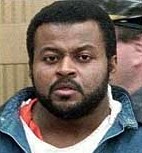
Spotted an error, or have more information about this case?