
Michael John Yowell
Murderer Clinton Lee Young
Murderer · USA
Clinton Lee Young (born July 19, 1983) was convicted of murdering two men in No…
2001 victims
Clinton Lee Young
Murderer · USA
Clinton Lee Young (born July 19, 1983) was convicted of murdering two men in No…
2001 victims
 Ivan Abner Cantu
Murderer · USA
Name: Ivan Abner Cantu · TDCJ number: 999399 · Date of birth: 06/14/1973 · Age…
2000 victims
Ivan Abner Cantu
Murderer · USA
Name: Ivan Abner Cantu · TDCJ number: 999399 · Date of birth: 06/14/1973 · Age…
2000 victims
 Michael Duane Zack
Murderer · USA
Michael Duane Zack was convicted and sentenced to death for the 06/13/96 murder…
1996 victims
Michael Duane Zack
Murderer · USA
Michael Duane Zack was convicted and sentenced to death for the 06/13/96 murder…
1996 victims
 John Doyle Lee
Murderer · USA · 1857
Name: John Doyle Lee Lifespan: September 12, 1812 - March 23, 1877 Legal outcom…
120 victims
John Doyle Lee
Murderer · USA · 1857
Name: John Doyle Lee Lifespan: September 12, 1812 - March 23, 1877 Legal outcom…
120 victims
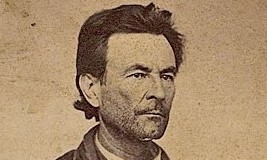 Champ Ferguson
Murderer · USA · 1861
Champ Ferguson was born November 29, 1821 in Clinton County, Kentucky, near the…
100 victims
Champ Ferguson
Murderer · USA · 1861
Champ Ferguson was born November 29, 1821 in Clinton County, Kentucky, near the…
100 victims
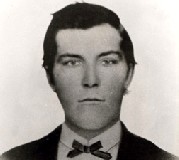 John Wesley Hardin
Murderer · USA · 1867
John Wesley (Wes) Hardin (1853-1895) was an American outlaw, gunfighter, and co…
42 victims
John Wesley Hardin
Murderer · USA · 1867
John Wesley (Wes) Hardin (1853-1895) was an American outlaw, gunfighter, and co…
42 victims
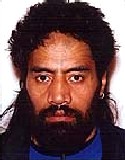 Taffy Hotene
Murderer · New Zealand · 2000
Taffy Hotene was born in Murupara in 1970. He was brought up in a chaotic and a…
1 victim
Taffy Hotene
Murderer · New Zealand · 2000
Taffy Hotene was born in Murupara in 1970. He was brought up in a chaotic and a…
1 victim
 Banita Jacks
Murderer · USA · 2007
Banita Jacks was a Washington, DC resident convicted of murdering her four daug…
4 victims
Banita Jacks
Murderer · USA · 2007
Banita Jacks was a Washington, DC resident convicted of murdering her four daug…
4 victims
 Mohammed Merah
Spree killer · France · 2012
Mohammed Merah was a French-Algerian Islamist terrorist who had previously been…
7 victims
Mohammed Merah
Spree killer · France · 2012
Mohammed Merah was a French-Algerian Islamist terrorist who had previously been…
7 victims
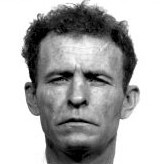 G. W. Green
Murderer · USA · 1976
G. W. Green was executed by lethal injection in Texas on November 12, 1991. · 1…
1 victim
G. W. Green
Murderer · USA · 1976
G. W. Green was executed by lethal injection in Texas on November 12, 1991. · 1…
1 victim
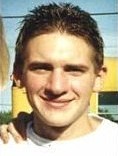 Adam Moss
Mass murderer · USA · 2001
Adam Moss Adam Moss killed Leticia Aguilar, 31; her five children, and Ron Fish…
7 victims
Adam Moss
Mass murderer · USA · 2001
Adam Moss Adam Moss killed Leticia Aguilar, 31; her five children, and Ron Fish…
7 victims
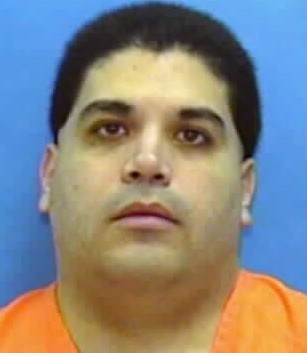 Martin Edward Grossman
Murderer · USA · 1984
Martin Edward Grossman (also known as Martin Grossman, Martin E Grossman, Marti…
1 victim
Martin Edward Grossman
Murderer · USA · 1984
Martin Edward Grossman (also known as Martin Grossman, Martin E Grossman, Marti…
1 victim
- Gender
- male
- Country
- USA
- Location
- Lubbock County, Texas, USA
- Date of birth
- January 25, 1970
- Characteristics
- parricide, arson, rape
- Victim profile
- John Yowell, 55, and Carol Yowell, 53 (his parents) and Viola Davis , 89 (his grandmother)
- Method of murder
- Shooting / Strangulation / Fire
- Date(s) of murder
- —
- Years active
- —
- Date of arrest
- —
- Status
-
Executed
Sentenced to death on November 23, 1999; executed by lethal injection on October 9, 2013 in Texas
Case identifiers
- Name: Michael John Yowell
- TDCJ number: 999334
- Date of birth: 01/25/1970
- Prior prison record: #505775
- Age at receipt: 29
- Education level at receipt: 12
Background and personal details
Michael John Yowell was a white male with brown hair, 5' 9" height, and 188 weight. His eye color was Hazel. He was a native of Lubbock, Lubbock County, Texas. His native state was Texas.
He had prior occupation in steel fabrication, cooking, and labor work.
He had an extensive history of ongoing mental illness and drug abuse. During the punishment phase, jurors heard evidence that he had been recently reported to be in violation of the terms of his parole based on new offenses in March 1998, including forgery, stolen checks, and illegal use of credit cards. Jurors also learned that he had used his mother’s credit card to purchase prohibited firearms from three different stores and falsified information to purchase or pawn the weapons. Five days before the capital crime, he signed a statement admitting that he stole from his mother by forging checks and illegally used her credit cards.
Yowell drifted in and out of drug dependency for at least 10 years and stole from his parents and grandmother to support his $200-a-day habit. Evidence showed he had a $200-a-day drug habit supported by stealing.
Prior criminal history and imprisonment
Under Texas law, jurors could not be presented certain prior criminal acts during the guilt-innocence phase, but they could be presented during the second phase when jurors determined punishment.
During the punishment phase of Yowell’s capital murder trial, the prosecution presented evidence establishing his felony convictions for burglary of a building and possession of a controlled substance.
His prior record included:
- An 8-year sentence for 1 count of Possession of a Controlled Substance
- Released on Pre-Parole on 06/16/89
- Release on Parole on 09/19/89
- Received Clemency Discharge on 02/22/97
A probation officer testified that Yowell was released from prison to a halfway house, had attempted various programs over the years for drug treatment and mental disorders, and had been recently reported for parole violations based on new offenses in March 1998.
Yowell was also arrested on federal firearms charges and charged with his parents’ slayings after authorities determined his mother had been beaten and strangled and his father was shot.
Victims
Victims were:
- Johnny Yowell (white male, age 55)
- Carol Yowell (white female, age 53)
- Viola Davis (89-year-old grandmother of the Yowells)
The offence
On 05/19/98 in Lubbock, Texas, Yowell shot his father, strangled his mother with a cord, and set fire to their house.
The killings involved opening a natural gas line in the kitchen. When Viola Davis opened her bedroom door, the gas combusted, fatally injuring her and charring the remains of Johnny and Carol Yowell.
The house later exploded, and Davis was fatally injured, dying 12 days later from burns and complications from smoke inhalation. Prosecutors said neighbors rescued Davis from her burning bedroom and she slowly suffocated over the next two weeks from internal burn injuries.
Two bodies burned beyond recognition were removed from the ruins. John Yowell’s body was so badly burned that his gender wasn’t readily apparent.
Carol Yowell’s body was found face down with a lamp cord around her neck and the lamp on her back. Crime scene photos showed the lamp resting on the back of Carol Yowell’s charred body.
Yowell told investigators and authorities details about what happened:
- He initially planned to take a few cigarettes when he entered his parents’ bedroom early on the morning of May 9, 1998—the day before Mother’s Day.
- He shot his father in the head.
- He beat his mother before strangling her with a lamp cord.
- After his father was shot and he struggled with his mother, Yowell said he got his coat, closed his grandmother’s bedroom door, and opened a natural gas jet in the kitchen.
- Yowell said his mother woke up, apparently startled, and grabbed his arm; the gun he had in his pocket went off, and the bullet struck his father.
- Later, Yowell stated he didn’t remember what he did to his mother, but he heard her gurgle and then become quiet.
- Yowell confessed to shooting his father after his father caught him trying to steal his wallet to buy drugs, and confessed to struggling with his mother before bludgeoning her and strangling her.
- Yowell later told a taped confession that afterward, in a panic, he ran to the kitchen and opened a gas jet.
Yowell was charged with felony murder of his grandmother, Viola Davis.
Timeline
- 05/09/1998 — Yowell shot and killed his father, strangled his mother, and opened a natural gas line in the kitchen; Viola Davis died from injuries from the gas combustion and the resulting explosion.
- 05/10/1998 — Authorities found a couple’s badly burned remains after an early-morning explosion; autopsies were to be performed on the victims identified as Johnny and Carol Yowell; police were searching for Michael Yowell to ask questions and to inform him of the explosion.
- 07/23/1998 — A Lubbock County grand jury indicted Yowell for the May 9, 1998, Mother's Day weekend capital murder of Johnny and Carol Yowell.
- 11/23/1999 — Yowell’s execution was set for Wednesday, Oct. 9, 2013; he had been sentenced to death on November 23, 1999 (as stated in the status field).
- 10/04/1999 — A Lubbock County jury convicted Yowell of the capital murder of Johnny and Carol Yowell.
- 10/06/1999 — Following two days of punishment phase proceedings, the convicting court sentenced Yowell to death.
- 10/03/2012 — The federal district court denied both pretermitted claims on the merits, dismissed Yowell’s habeas petition with prejudice, denied a certificate of appealability, and entered final judgment.
- 04/16/2013 — The Fifth Circuit court denied Yowell a certificate of appealability.
- 06/03/2013 — The 140th District Court of Lubbock County, Texas, set Yowell’s execution for Wednesday, Oct. 9, 2013.
- 07/12/2013 — Yowell petitioned the U.S. Supreme Court for certiorari review and applied for a stay of execution.
- 10/01/2013 — Attorneys for Michael Yowell, Thomas Whitaker, and Perry Williams filed a class action lawsuit in Houston U.S. district court challenging the constitutionality of Texas execution protocol.
- 10/05/2013 — A U.S. Houston U.S. district court denied Yowells’ request for injunctive relief and emergency request for stay of execution.
- 10/07/2013 — The U.S. Supreme Court denied Yowell’s petition for certiorari review.
- 10/07/2013 — Yowell filed notice appealing the Houston U.S. district court’s order denying injunctive relief.
- 10/08/2013 — Yowell filed an appeal in the United States Court of Appeals for the Fifth Circuit asking that his execution be stayed.
- 10/08/2013 — The Fifth Circuit affirmed the federal district court’s denial of injunctive relief and denied a motion for stay of execution.
- 10/09/2013 — Yowell petitioned the Fifth Circuit for certiorari review and a stay of execution.
- 10/09/2013 — Yowell was executed by lethal injection at 7:11 p.m. in Texas.
Investigation and arrest
After the explosion, Lubbock police considered Michael Yowell what they called a “person of interest.” Police indicated they were looking for an unnamed relative to ask questions and to tell them about the explosion if the person did not already know.
Two days later, Yowell approached police at the wrecked house and was arrested on a federal warrant on a charge of being a felon in possession of a firearm.
Yowell confessed to a Lubbock detective and a federal agent he initially entered his parents’ bedroom to get some cigarettes, attempted to grab his father’s wallet, and that his mother grabbed his arm and the gun went off striking his father. He also provided details about opening a natural gas jet after closing his grandmother’s bedroom door.
Trial
Indictment and charges
On July 23, 1998, a Lubbock County grand jury indicted Yowell for the May 9, 1998, Mother's Day weekend capital murder of Johnny and Carol Yowell.
Yowell was also charged with felony murder of his grandmother, Viola Davis.
Jury conviction
On Oct. 4, 1999, a Lubbock County jury convicted Yowell of capital murder for having intentionally and knowingly shot his father to death during the same criminal episode in which he strangled his mother with an electrical cord.
The jury deliberated 45 minutes and returned a guilty verdict. It later deliberated about 2.5 hours and chose death.
Punishment phase
Following a separate punishment hearing, on Oct. 6, 1999, the jury answered affirmatively the special sentencing issue on future dangerousness and answered negatively the issue on mitigation. In accordance with the jury’s answers, the trial court sentenced Yowell to death.
Defence and disputed mental health presentation
Defense attorneys unsuccessfully tried to show Yowell was insane.
Jack Stoffregen tried to press an insanity defense based on Yowell’s history of drug abuse and treatment for mental disorders. Stoffregen argued Yowell’s drug addiction rendered him incapable of working out moral and ethical questions and presented testimony from mental health records from Lubbock MHMR indicating he was also suicidal and homicidal.
In closing arguments, prosecutor Matt Powell attacked the insanity defense as another manipulation by Yowell.
Stoffregen’s plan included an intended witness, psychologist Philip Davis, but District Judge Jim Bob Darnell refused to let Davis testify as an expert witness because Davis had not examined Yowell. Court records indicated Stoffregen argued the defense did not let Davis examine Yowell so prosecution experts wouldn’t be able to examine him either. Darnell allowed Davis to read Yowell’s mental health history into the trial record without offering analysis or discussion.
During the punishment phase, after the jury returned a guilty verdict, Yowell told his defence team to not put on a case during the punishment phase. Yowell debated the point with Darnell, asking the judge to keep Stoffregen from playing the tape recording of his confession as part of his closing argument. Darnell refused, saying:
- “will make the decision how to proceed, whether you like it or not.” Yowell replied:
- “It’s my life, and I should be making the decisions.”
Stoffregen played the tape and finished by telling the jury he believed the confession reflected remorse and asked the jury to “step back from the death penalty.”
Jury and courtroom statements and described evidence
Prosecutor Matt Powell told the jury that 2114 39th St. “looked like a war zone.”
In sentencing arguments:
- Powell told the jury during sentencing arguments, “Most people look at that picture and they turn away; it's a horrible thing.”
- Powell continued: “Can you imagine living through it and dying through it?”
Defense attorney Jack Stoffregen said in court that Yowell was insane and incapable of sorting out moral or ethical questions because of his drug addiction.
Prosecutors’ account of intent and struggle
Prosecutor Matt Powell recalled that “At some point he’s looking his mom in the face, beating her and wrapping a lamp cord around her neck.” He also said: “I think always there are some unanswered questions. You want to know how somebody is capable of doing that to their parents.”
Powell argued to the jury that Yowell really intended to shoot his parents, but the handgun malfunctioned.
A defense attorney said Yowell’s gun broke during the confrontation and instead Yowell attacked his mother with a knife and then wrapped a lamp cord around her neck and strangled her for at least five minutes.
During sentencing, Powell argued that Yowell blamed his parents for his problems. Powell said Yowell reportedly told a friend: “All of my problems would be solved if I just blew up my parents.”
Sentencing
On Oct. 6, 1999, the jury’s answers led the trial court to sentence Yowell to death.
Appeals
Direct appeal and state habeas
On Feb. 13, 2002, the Texas Court of Criminal Appeals affirmed Yowell’s conviction and sentence on direct appeal.
Yowell filed a state habeas corpus application raising 10 claims on July 25, 2001.
On March 13, 2005, the trial court commenced an evidentiary hearing on Yowell’s claims.
On Nov. 22, 2006, the Texas Court of Criminal Appeals adopted the trial court's findings of fact and conclusions of law and denied habeas corpus relief.
Federal habeas
On Sept. 10, 2007, Yowell filed a federal habeas petition raising many of the same arguments as in his state habeas proceedings.
On Aug. 26, 2010, the U.S. District Court for the Northern District of Texas conditionally granted punishment-phase relief for a claim of ineffective assistance of counsel, declined to rule on two claims, and denied the remaining claims for lack of merit. The same day, final judgment issued vacating Yowell’s sentence and remanding for re-sentencing or imposition of a life sentence.
On Sept. 12, 2011, the United States Court of Appeals for the Fifth Circuit reversed the grant of habeas corpus relief and remanded the case for consideration of the two pretermitted claims.
On remand, on Oct. 3, 2012, the federal district court denied both claims on the merits, dismissed Yowell’s habeas petition with prejudice, denied Yowell a certificate of appealability (COA), and entered final judgment.
On April 16, 2013, the Fifth Circuit court denied Yowell a certificate of appealability.
Specific quoted judicial reasoning on mitigation
U.S. District Judge Sam R. Cummings granted punishment-phase relief and wrote:
“The evidence in the records of childhood abuse and neglect, sexual abuse, an alcoholic father and brother, and exposure to drugs at an early age, as well as Yowell’s extensive history of ongoing mental illness and drug abuse, is exactly the kind of evidence that is relevant to mitigation.”
Execution litigation
On June 3, 2013, the 140th District Court of Lubbock County, Texas, set Yowell’s execution for Wednesday, Oct. 9, 2013.
On July 12, 2013, Yowell petitioned the U.S.
On October 1, 2013, attorneys for Michael Yowell, Thomas Whitaker, and Perry Williams filed a class action lawsuit in Houston U.S.
On October 5, 2013, a U.S. Houston U.S.
On October 7, 2013, the U.S.
On October 7, 2013, Yowell filed notice appealing the Houston U.S.
On Oct. 8, 2013, Yowell filed an appeal in the United States Court of Appeals for the Fifth Circuit asking that his execution be stayed pending adjudication of the means the state planned to use to carry out his execution.
On Oct. 8, 2013, the Fifth Circuit court affirmed the federal district court’s denial of injunctive relief and denied Yowell’s motion for stay of execution.
On Oct. 9, 2013, Yowell petitioned the Fifth Circuit court for certiorari review and a stay of execution.
Outcome
Yowell was executed by lethal injection on October 9, 2013 in Texas. He was taken from a holding cell at 6:42 p.m. The lethal dose of pentobarbital was injected into the intravenous catheters at 6:52 p.m. A prison physician checked for pulse and breathing and pronounced death.
The final last statement attributed to Yowell was: “I love you. To Gerald, you’re a zero. I love you Mandy; Tiffany, I love you, too.” He paused for a moment, then said: “Punch the button. We are ready.”
Aftermath and final days
Yowell’s case included execution drug litigation involving pentobarbital, also known as Nembutal, obtained from a compounding pharmacy.
Yowell’s lawyers characterized the execution as “a dramatic change from prior practice — making the need for oversight, now and in the future — that much more important.”
They said: “Surely this is not the way we want our government to carry out its most solemn duty,” Maurie Levin and Bobbie Stratton said in a statement.
A death watch timetable distributed by the Texas Department of Criminal Justice described Yowell as spending his final days talking with friends, his ex-wife and his daughters. His breakfast, served shortly after 3 a.m., was fried eggs, country gravy, cereal and applesauce. He took photographs with his daughters and friends who visited in the morning.
In the execution account, Mandy and Tiffany referred to his daughters, who attended the execution. Gerald may have been in reference to a witness, Gerald Harder, who attended the execution with the daughters and Yowell’s ex-wife, Amanda Weathers.
A prison physician made the pronouncement of death after checking for pulse and breathing.
Other details
People named in relation to prosecution and proceedings
- Matt Powell (Lubbock County District Attorney, who prosecuted the case)
- Rusty Ladd (prosecutor; referenced in relation to post-verdict and sentencing arguments)
- Bill Sowder (Criminal District Attorney, referenced in relation to prosecutors seeking the death penalty)
- Jack Stoffregen (defence attorney)
- Jim Bob Darnell (District Judge)
- Philip Davis (psychologist; intended witness)
- Roy Pierce (Lubbock detective, interviewed Yowell)
- Felix Garcia (federal Bureau of Alcohol, Firearms and Tobacco agent, interviewed Yowell)
- Sam R. Cummings (U.S. District Judge)
- Thomas Whitaker (co-appellant in execution-protocol class action)
- Perry Williams (co-appellant in execution-protocol class action)
- Gerald Harder (witness who attended the execution)
- Amanda Weathers (Yowell’s ex-wife)
- Walt Nett (named as author of the execution-related report)
- Elizaabeth Langton (named as author of the 1999 trial coverage)
- Mark Babineck (named as author of the Associated Press report)
- Charles McMillan (neighbor who rescued Viola Davis)
- Greg Songer (neighbor who raced into the rubble and rescued Ms. Davis)
- Viola Davis (89-year-old grandmother; victim)
People named in execution day reporting
Execution-related reporting stated:
- “The United States Court of Appeals For the Fifth Circuit Michael John Yowell v. Rick Thaler, Director”
- Huntsville prison is where the death chamber is known as “The Walls”
Quotes attributed to other participants
- Defense attorney Jack Stoffregen said:
- “He was expecting it,”
- “And as you heard yesterday, that's really kind of what he wanted.”
- Yowell told the judge during sentencing proceedings:
- “Having them hear that again is not going to help me in any way,”
- “It's my life.”
- Prosecutor Matt Powell said:
- “I think there were mixed emotions among the family,”
- “But they have supported us from start to finish.”
- Another prosecutor statement by Matt Powell was:
- “We feel that was justice, but it was nothing to be happy about,”
- Criminal District Attorney Bill Sowder said:
- “We don't pursue it on every case that's available; we really look hard at the case and the background,”
- “The effort was to see that justice was done. We're not about ... going after the death penalty without good reason.”
- Prosecutor Rusty Ladd said:
- “The evidence in this case demanded that we seek the death penalty.”
- Defense attorney Jack Stoffregen told the courtroom:
- “Another manipulation, another lie by Michael Yowell,” Powell said.
- “You think he didn't know he was doing something wrong?”
- Police Sgt. John Gomez said:
- “There's some suspicion surrounding their cause of death,”
- “Hopefully, the autopsy will provide more information.”
- “It may take several days or weeks before we find what the cause was,”
- “They will do tests to see if there was some type of accelerant.”
- Neighbor Charles McMillan said:
- “Anytime you lose a friend, it doesn't have to be kinfolk, it hurts,”
- “But they were like kinfolk, they were neighbors. We saw them all the time.”

Spotted an error, or have more information about this case?