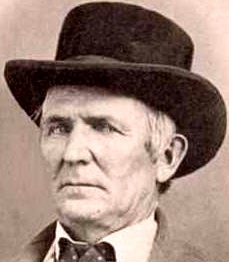
John Doyle Lee
Murderer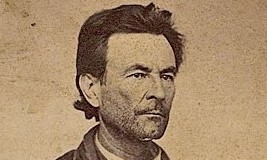 Champ Ferguson
Murderer · USA · 1861
Champ Ferguson was born November 29, 1821 in Clinton County, Kentucky, near the…
100 victims
Champ Ferguson
Murderer · USA · 1861
Champ Ferguson was born November 29, 1821 in Clinton County, Kentucky, near the…
100 victims
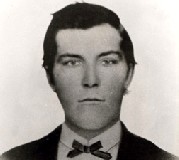 John Wesley Hardin
Murderer · USA · 1867
John Wesley (Wes) Hardin (1853-1895) was an American outlaw, gunfighter, and co…
42 victims
John Wesley Hardin
Murderer · USA · 1867
John Wesley (Wes) Hardin (1853-1895) was an American outlaw, gunfighter, and co…
42 victims
 Henry Wirz
Murderer · USA · 1864
Henry Wirz (also known as Heinrich Hartmann Wirz) (November 25, 1823 – November…
11 victims
Henry Wirz
Murderer · USA · 1864
Henry Wirz (also known as Heinrich Hartmann Wirz) (November 25, 1823 – November…
11 victims
 Isaac Wood
Murderer · USA · 1855
Isaac L. Wood was a Livingston Republican mentioned in July 1858 execution cove…
2 victims
Isaac Wood
Murderer · USA · 1855
Isaac L. Wood was a Livingston Republican mentioned in July 1858 execution cove…
2 victims
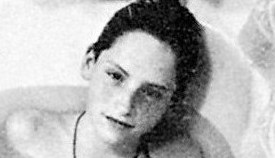 Antony Baekeland
Murderer · United Kingdom · 1972
Antony Baekeland lived with his mother, Barbara Baekeland, in a penthouse flat…
1 victim
Antony Baekeland
Murderer · United Kingdom · 1972
Antony Baekeland lived with his mother, Barbara Baekeland, in a penthouse flat…
1 victim
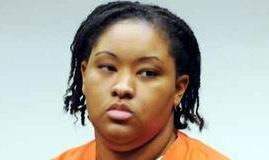 Carman Jenkins
Murderer · USA · 2008
Carman Jenkins pleaded guilty to murder in the death of Mekole Harris and was s…
1 victim
Carman Jenkins
Murderer · USA · 2008
Carman Jenkins pleaded guilty to murder in the death of Mekole Harris and was s…
1 victim
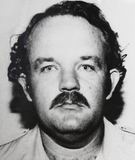 David Gore
Serial killer · USA · 1981
David Alan Gore (also known as DAVID A GORE, DAVID ALAN GORE, DAVID ALLAN GORE)…
6 victims
David Gore
Serial killer · USA · 1981
David Alan Gore (also known as DAVID A GORE, DAVID ALAN GORE, DAVID ALLAN GORE)…
6 victims
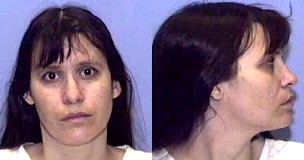 Andrea Yates
Homicide · USA · 2001
Andrea Pia Yates (born Andrea Pia Kennedy on July 2, 1964) was a former Houston…
5 victims
Andrea Yates
Homicide · USA · 2001
Andrea Pia Yates (born Andrea Pia Kennedy on July 2, 1964) was a former Houston…
5 victims
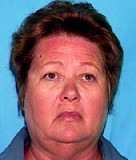 Linda Jones
Murderer · USA · 1995
Linda Jones and Jack Jones had been married for nearly 30 years. They had two d…
1 victim
Linda Jones
Murderer · USA · 1995
Linda Jones and Jack Jones had been married for nearly 30 years. They had two d…
1 victim
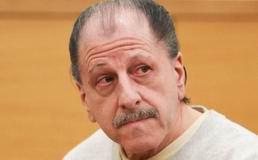 Salvatore Perrone
Serial killer · USA · 2012
Salvatore Perrone was sentenced to 75 years to life in prison on March 4, 2016.…
3 victims
Salvatore Perrone
Serial killer · USA · 2012
Salvatore Perrone was sentenced to 75 years to life in prison on March 4, 2016.…
3 victims
- Gender
- male
- Country
- USA
- Location
- Utah, USA
- Date of birth
- September 12, 1812
- Age at first offence
- 45
- Characteristics
- murder for hire, fugitive, mentally ill, abuse
- Victim profile
- Men, women, and children ( emigrant group known as the Fancher party)
- Method of murder
- Shooting - St abbing with knife
- Date(s) of murder
- September 1857
- Years active
- 1857
- Date of arrest
- 1874
- Status
-
Executed
Executed by firing squad on March 23, 1877 on the site of the 1857 massacre
Case information
Name: John Doyle Lee Lifespan: September 12, 1812 - March 23, 1877 Legal outcome status: Executed by firing squad on March 23, 1877 on the site of the 1857 massacre
Characteristics
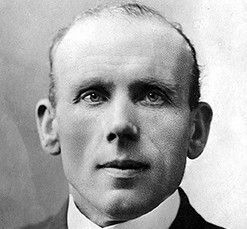
John Doyle Lee was a prominent, early Latter-day Saint (LDS or Mormon) and came to be known as the central figure in the Mountain Meadows Massacre. He was also described as the most controversial figure in Mormon history.
Background
John D. Lee was born in Illinois Territory. He joined The Church of Jesus Christ of Latter-day Saints (LDS Church) in 1838.
He served a Mormon mission with his boyhood friend, Levi Stewart. Together they preached in Illinois, Ohio, Kentucky, and Tennessee. During this mission, Lee converted and baptized “Wild Bill” Hickman. Lee was a friend of Joseph Smith, Jr., founder of the LDS Church.
Lee practiced plural marriage and had nineteen wives and sixty-seven children.
Lee was allegedly a member of the Danites, although some argued there was little or no evidence for his involvement in the group.
Lee was an official scribe for the Council of 50, a group of men who, in the days of Joseph Smith, Jr and Brigham Young, worked together to provide expert guidance in practical matters to the church, specifically the move westward out of the United States of America and to the Rocky Mountains.
After Smith's murder, Lee joined the bulk of the LDS Church's members in what is now Utah, and worked toward establishing several new communities.
In 1856, Lee became a U.S. Indian Agent in the Iron County area, assigned to help Native Americans establish farms.
In 1858, Lee served a term as a member of the Utah Territorial Legislature.
In 1872, Lee moved from Iron County and established a ferry crossing on the Colorado River. It was still called Lee's Ferry.
Personal life details
John D. Lee had a tumultuous childhood. At age three, his mother died after years of lingering illnesses, leaving Lee to his alcoholic father. From age seven to sixteen Lee was raised in an uncle's family. He worked for a time as a mail carrier before assuming managerial responsibility for his uncle's farm, then worked several years as a store clerk in Galena, Illinois. Finally, Lee moved to Vandalia, Illinois, where he met and married Agatha Ann Woolsey in 1833. In 1837 a Mormon missionary converted the couple to the young religion.
The offence
Mountain Meadows Massacre
The pivotal event in Lee's later life occurred in September 1857. An emigrant group traveling from Arkansas, known as the Fancher party, was camped in southern Utah at the Mountain Meadows. The Mountain Meadows area was described as a staging area for groups traveling to California to prepare for the long crossing of the Mohave desert.
There was definite controversy as to who initiated the attack—whether it was the local Mormons or indians—but the party was attacked in a four-day siege that later came to be known as the Mountain Meadows Massacre.
Lee was among the leaders of the final attack. Approximately 120 of the Fancher party were killed, leaving only very small children as survivors. For the remainder of his life, Lee maintained that he had acted under orders from his military leaders and under protest.
Lee was executed on March 23, 1877 on the site of the 1857 massacre.
Summary of the massacre as described
The Mountain Meadows massacre was described as a mass slaughter of the Fancher-Baker emigrant wagon train at Mountain Meadows, Utah Territory, by the local Mormon militia.
It began as an attack, quickly turned into a siege, and eventually culminated in the execution of the unarmed emigrants after their surrender. All of the party except for seventeen children under eight years old—about 120 men, women, and children—were killed.
After the massacre, the corpses of the victims were left decomposing for two years on the open plain, their children were distributed to local Mormon families, and many of their possessions were auctioned off at the Latter Day Saint Cedar City tithing office.
The Arkansas emigrants were traveling to California shortly before the Utah War started. Mormon leaders were described as mustering militia throughout Utah Territory to fight the United States Army, which was sent to Utah to restore US authority in the territory.
The emigrants stopped to rest and regroup their approximately 800 head of cattle at Mountain Meadows, described as a valley within the Iron County Military District of the Nauvoo Legion (the popular designation for the Mormon militia of the Utah Territory).
Initially intending to orchestrate an Indian massacre, local militia leaders including Isaac C. Haight and John D. Lee conspired to lead militiamen disguised as Native Americans along with a contingent of Paiute tribesmen in an attack. The emigrants fought back and a siege ensued. When the Mormons discovered they had been identified as the attacking force by the emigrants, Col. William H. Dame ordered their annihilation. The militiamen induced the emigrants to surrender and give up their weapons. After escorting the emigrants out of their hasty fortification, the militiamen and their tribesmen auxiliaries executed the emigrants.
Early interaction with Mormons
In early 1857, several groups of emigrants from the northwestern Arkansas region started their trek to California, joining up on the way to form the Fancher-Baker party.
The groups were mostly from Marion, Crawford, Carroll, and Johnson counties in Arkansas, and had assembled into a wagon train at Beller's Stand, south of Harrison, Arkansas. The group was referred to as both the Baker train and the Perkins train, but after being joined by other Arkansas trains and making its way west, it was soon called the Fancher train (or party) after “Colonel” Alexander Fancher.
By contemporary standards, the Fancher party was described as prosperous, carefully organized, and well-equipped. They were subsequently joined along the way by families and individuals from other states, including Missouri.
The party was relatively wealthy and planned to restock supplies in Salt Lake City. The party reached Salt Lake City with about 120 members.
At the time the Fanchers arrived, Utah Territory was described as an ostensible theocratic democracy under the lead of Brigham Young, who had established colonies along the California Trail and Old Spanish Trail.
The Fanchers chose to take the southern Old Spanish Trail, which passed through southern Utah. In August 1857, Mormon apostle George A. Smith of Parowan set out on a tour of southern Utah instructing Mormons to stockpile grain. Smith camped near the Fancher party on the 25th at Corn Creek, near present-day Kanosh, Utah, 70 miles north of Parowan. Jacob Hamblin suggested that the Fanchers stop and rest their cattle at Mountain Meadows, adjacent to his homestead.
Brevet Major Carleton's report recorded Jacob Hamblin's account that the train was alleged to have poisoned a spring near Corn Creek, near present-day Kanosh, that killed 18 head of cattle and resulted in the deaths of two or three people, including the son of Mr Robinson, who ate the dead cattle.
Most witnesses said the Fanchers were a peaceful party whose members behaved well along the trail. Among Smith’s party were a number of Paiute Indian chiefs from the Mountain Meadows area.
Conspiracy and siege details
The Fancher party left Corn Creek and continued the 125 miles to Mountain Meadow, passing Parowan and Cedar City, southern Utah communities led respectively by Stake Presidents William H. Dame and Isaac C. Haight. Haight and Dame were described as the senior regional military leaders of the Mormon militia.
As the Fancher party approached, several meetings were held in Cedar City and nearby Parowan by local LDS leaders pondering how to implement Young's declaration of martial law. They decided, over objections of some present, to “eliminate” the Fancher wagon train. Those who objected were placated with the promise of sending a rider, James Haslam, to Salt Lake City with a message to Brigham Young asking for confirmation of the decision.
The Fancher party found water and fresh grazing after reaching Mountain Meadows in early September. They anticipated several days of rest and recuperation there before the next 40 miles would take them out of Utah.
On September 7, the party was attacked by a group of Native American Paiutes and Mormon militiamen dressed as Native Americans.
The Fancher party defended itself by encircling and lowering their wagons with wheels chained together, digging shallow trenches, and throwing dirt both below and into the wagons, creating a barrier. Seven emigrants were killed during the opening attack and buried somewhere within the wagon encirclement. Sixteen more were wounded.
Nearly 12 hours after the attack was initiated, Haslam was sent to Salt Lake City to inform Brigham Young. The attack continued for five days. During this time, the besieged families had little or no access to fresh water or game food and their ammunition was depleted. Organization among local Mormon leadership reportedly broke down.
Killings and aftermath as described
On Friday, September 11, 1857, two Mormon militiamen approached the Fancher party wagons with a white flag and were soon followed by Indian agent and militia officer John D. Lee.
Lee told the battle-weary emigrants he had negotiated a truce with the Paiutes, whereby they could be escorted safely 36 miles back to Cedar City under Mormon protection in exchange for turning all livestock and supplies over to the Native Americans.
Accepting this, the emigrants were led out of their fortification. When a signal was given, Mormon militiamen turned and executed the male members of the Fancher party standing by their side.
According to Mormon sources, the militia let a group of Paiute Indians execute the women and children.
The bodies of the dead were gathered and looted for valuables and were left in shallow graves or on the open ground. Members of the Mormon militia were sworn to secrecy. A plan was set to blame the massacre on the Indians.
The militia did not kill 18 small children deemed too young to relate the story. These children were taken by local Mormon families.
Seventeen of the children were later reclaimed by the U.S. Army and returned to relatives, while one girl was not returned and lived out her life among the Mormons.
Leonard J. Arrington reported that Brigham Young received the rider at his office on the same day. When Young learned what was contemplated by members of the Mormon Church in Parowan and Cedar City, he sent back a letter that the Fancher party be allowed to pass through the territory unmolested. Young's letter supposedly arrived two days too late, on September 13, 1857.
Some property of the dead was reportedly taken by the Native Americans involved, while large amounts of cattle and personal property were taken by the Mormons in Southern Utah.
John D. Lee took charge of the livestock and other property collected at the Mormon settlement at Pinto. Some cattle was taken to Salt Lake City and traded for boots. Some reportedly remained in the hands of John D. Lee. The remaining personal property of the Fancher party was taken to the tithing house at Cedar City and auctioned off to local Mormons.
Brigham Young, appalled at what had taken place, initially ordered an investigation but was described as contributing, through unwillingness to work with Federal authorities, to a blunder of justice and the reason for two trials.
Investigation
Early investigations
An early investigation was conducted by Brigham Young, who interviewed John D. Lee on September 29, 1857.
In 1858, Young sent a report to the Commissioner of Indian Affairs stating that the massacre was the work of Native Americans.
The Utah War delayed any investigation by the U.S. federal government until 1859. In 1859, Jacob Forney and U.S. Army Brevet Major James Henry Carleton conducted investigations.
In Carleton's investigation at Mountain Meadows, women's hair tangled in sage brush and the bones of children still in their mothers' arms were found. Carleton later said: "a sight which can never be forgotten."
After gathering skulls and bones, Carleton's troops buried them and erected a cairn.
Carleton interviewed local Mormon settlers and Paiute Indian chiefs and concluded there was Mormon involvement. He issued a report in May 1859 addressed to the U.S. Assistant Adjutant-General setting forth his findings.
Jacob Forney conducted an investigation that included visiting the region in the summer of 1859. Forney retrieved many of the surviving children of massacre victims who had been housed with Mormon families and gathered them in preparation for transporting them to relatives in Arkansas.
Forney concluded that the Paiutes did not act alone and the massacre would not have occurred without white settlers.
Carleton’s report to the U.S. Congress called the mass killings a "heinous crime", blaming both local and senior church leaders for the massacre.
Federal judicial actions
A federal judge brought into the territory after the Utah War, Judge John Cradlebaugh, in March 1859 convened a grand jury in Provo, Utah concerning the massacre, but the jury declined any indictments.
Cradlebaugh toured the Mountain Meadows area with a military escort. Cradlebaugh attempted to arrest John D. Lee, Isaac Haight, and John Higbee, but these men fled before they could be found.
Cradlebaugh publicly charged Brigham Young as an instigator to the massacre and therefore an "accessory before the fact."
Mormon territorial probate court judge Elias Smith arrested Young under a territorial warrant, described as possibly a protective measure intended to divert any trial into a friendly Mormon territorial court. When no federal charges ensued, Young was apparently released.
Further investigations proceeded in 1871 when prosecutors obtained the affidavit of militia member Phillip Klingensmith. Klingensmith had been a bishop and blacksmith from Cedar City, and by the 1870s had left the church and moved to Nevada.
During the 1870s, Lee, Dame, Philip Klingensmith, and two others (Ellott Willden and George Adair, Jr.) were indicted and arrested. Warrants were obtained to pursue arrests of four others (Haight, Higbee, William C. Stewart and Samuel Jukes) who had gone into hiding.
Klingensmith escaped prosecution by agreeing to testify.
Arrest
Lee went into hiding after the early federal investigation was attempted. He was captured by a sheriff in November 1874.
Trial
Indictments and arrests
In the 1870s, various indictments were described, including that during the Utah War period investigations resulted in nine indictments in 1874 and only John D. Lee was tried in a court of law.
In 1870, Brigham Young removed some participants including Haight and Lee from the LDS church and excommunicated Lee.
The U.S. posted bounties of $500 each for the capture of Haight, Higbee and Stewart while prosecutors chose not to pursue cases against Dame, Willden and Adair.
Trial 1
Lee's first trial began on July 23, 1875 in Beaver, Utah before a jury of eight Mormons and four non-Mormons.
The first trial ended in a hung jury on August 5, 1875.
Trial 2
Lee's second trial began September 13, 1876 before an all-Mormon jury.
The prosecution called Daniel Wells, Laban Morrill, Joel White, Samuel Knight, Samuel McMurdy, Nephi Johnson, and Jacob Hamblin.
Lee stipulated, against advice of counsel, that the prosecution be allowed to re-use the depositions of Young and Smith from the previous trial.
Lee called no witnesses in his defense.
The jury convicted Lee.
Sentencing at trial
At his sentencing in 1877, as required by Utah Territory statute, he was given the option of being hung, shot, or beheaded, and he chose to be shot.
Appeals
No appeal-specific outcome was included in the provided material. The material described the trial ending with conviction and the sentencing choice.
Outcome
Lee never denied his own complicity but stated he was a vocally reluctant participant and later a scapegoat meant to draw attention away from other Mormon leaders also involved.
Lee specifically stated that LDS President Brigham Young had no knowledge of the event until after it had happened.
There was also an additional account described that attributed to Lee the statement: "I have always believed, since that day, that General George A. Smith was then visiting Southern Utah to prepare the people for the work of exterminating Captain Fancher's train of emigrants, and I now believe that he was sent for that purpose by the direct command of Brigham Young."
At the end of his life, Lee made last words referring to efforts to persuade him to finger Brigham Young as responsible for the massacre: "There's no man I hate worse than a traitor. Especially I could not betray an innocent man."
Lee was executed by firing squad on March 23, 1877 on the site of the 1857 massacre.
Lee’s final speech included:
I have but little to say this morning. Of course I feel that I am at the brink of eternity, and the solemnities of eternity should rest upon my mind at the present... I am ready to die. I trust in God. I have no fear. Death has no terror.
Aftermath
Excommunication and reinstatement
Lee was excommunicated from the LDS Church in 1870 for his part in the massacre.
In May 1961, The Church of Jesus Christ of Latter-day Saints posthumously reinstated Lee's membership in the church.
Descriptions of investigators and public attention
The massacre was described as attracting nation-wide publicity beginning around 1872 after investigators obtained the confession of Philip Klingensmith, a Mormon bishop at the time of the massacre and a private in the Utah militia.
Media coverage about the event included the first published report made in 1859 by Brevet Major J.H. Carleton, who had been tasked by the U.S. Army to investigate and bury exposed corpses.
Additional publication and discussion included:
- In 1867 C.V. Waite published "An Authentic History Of Brigham Young" describing the events.
- In 1872 Mark Twain commented on the massacre in an appendix to his travel book Roughing It.
- In 1873 the massacre was a prominent feature in a history by T.B.H. Stenhouse, The Rocky Mountain Saints.
- National newspapers covered the Lee trials closely from 1874 to 1876, and his execution in 1877 was widely covered.
Other details
Lee’s role and statements after the massacre
For the remainder of his life, Lee maintained he had acted under orders from his military leaders, and under protest.
He wrote a letter to Brigham Young shortly after the massacre laying blame squarely on the Paiute Indians.
Lee also was described as maintaining that he was a scapegoat meant to draw attention away from other Mormon leaders involved.
Details about disputed initiation of the attack
There was definite controversy as to who initiated the attack, whether it was the local Mormons or indians.
Trials and the massacre investigators being cut short and later resumed
Investigations were described as interrupted by the U.S. Civil War, with further investigations resuming in 1871.
Bystander details about monuments
Starting in 1988, descendants of both the Fancher party victims and Mormon participants collaborated to design and dedicate a monument to replace a neglected and crumbling marker on the site. It was stated there were now three monuments to the massacre.
- A monument at Mountain Meadows built by the Mormon Church was built and maintained in 1999.
- A monument at Mountain Meadows built by the Mountain Meadows Association was built in 1990 and maintained by the Utah State Division of Parks and Recreation.
- A monument placed in the central square of Harrison, Arkansas was described as a replica of Carleton’s original marker maintained by the Mountain Meadows Massacre Monument Foundation.
Historical interpretations and scholars
Historians attributed the massacre to factors including strident Mormon teachings, war hysteria, and alleged involvement of Brigham Young.
The material described debate over whether Brigham Young had direct involvement, and noted that Brigham Young was never officially charged and denied wrongdoing.
The material also described a predominant academic position that Young and other church leaders helped provide conditions that made the massacre possible.
Doctrinal context described
The material described that Mormons believed they were justified by Mormon teachings during the 1850s.
It described Utah Territory as a “theodemocracy” led by Brigham Young and described a Mormon Reformation intended to "lay[ing] the axe at the root of the tree of sin and iniquity", while preserving individual rights.
It described official expulsion from Missouri during the 1838 Mormon War, the assassination of Joseph Smith, Jr and his brother Hyrum Smith in 1844, and the killing of apostle Parley P. Pratt in April 1857 in Arkansas by Hector McLean, the estranged husband of one of Pratt's plural wives, Eleanor McLean Pratt.
It described that Mormon leaders proclaimed Pratt a martyr, and that Mormon leaders taught punishment against the United States for persecuting Mormons and martyring prophets.
It described an Endowment ceremony including an Oath of Vengeance against murderers of the prophets, and sermons and private counsel encouraging private individuals to execute God's judgment.
Additional named people in the historical discussion
The material named the following individuals in relation to the massacre and surrounding events: Levi Stewart, “Wild Bill” Hickman, Joseph Smith, Jr, Brigham Young, Agatha Ann Woolsey, Isaac C. Haight, John Higbee, William C. Dame, Daniel Wells, Laban Morrill, Joel White, Samuel Knight, Samuel McMurdy, Nephi Johnson, Jacob Hamblin, Jacob Forney, James Henry Carleton, Elias Smith, Phillip Klingensmith, Ellott Willden, George Adair, Jr., Haight, William C. Stewart, Samuel Jukes, James Haslam, Chief Jackson (leader of a band of Pah-Utes), George A. Smith, Parley P. Pratt, Hector McLean, Eleanor McLean Pratt, Leonard J. Arrington, C.V. Waite, Mark Twain, T.B.H. Stenhouse, Josiah F. Gibbs, Juanita Brooks, MacKinnon, James Buchanan, Samuel Jukes, and John Wesley Powell.
References listed in the provided material
Brooks, Juanita and Cleland, Robert Glass, editors. A Mormon Chronicle: The Diaries of John D. Lee. Huntington Library Press, Reissued June 2004 (Paperback, 868pp), 3 Volumes in 1 book. ISBN 0873281780. First published in ( ).
Brooks, Juanita. John Doyle Lee: Zealot, Pioneer Builder, Scapegoat . Utah State University Press, reissue November 1992 (paperback, 404pp). ISBN 087421162X. First published in 1961.
Wikipedia.org
Spotted an error, or have more information about this case?