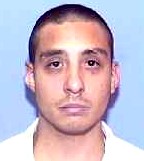
Ivan Abner Cantu
Murderer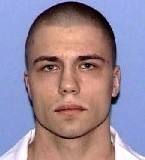 Clinton Lee Young
Murderer · USA
Clinton Lee Young (born July 19, 1983) was convicted of murdering two men in No…
2001 victims
Clinton Lee Young
Murderer · USA
Clinton Lee Young (born July 19, 1983) was convicted of murdering two men in No…
2001 victims
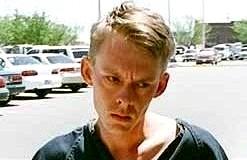 Michael John Yowell
Murderer · USA
Name: Michael John Yowell · TDCJ number: 999334 · Date of birth: 01/25/1970 · P…
1998 victims
Michael John Yowell
Murderer · USA
Name: Michael John Yowell · TDCJ number: 999334 · Date of birth: 01/25/1970 · P…
1998 victims
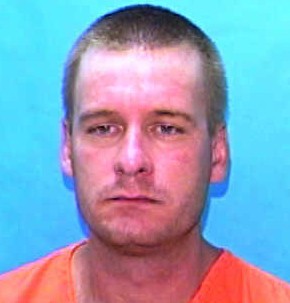 Michael Duane Zack
Murderer · USA
Michael Duane Zack was convicted and sentenced to death for the 06/13/96 murder…
1996 victims
Michael Duane Zack
Murderer · USA
Michael Duane Zack was convicted and sentenced to death for the 06/13/96 murder…
1996 victims
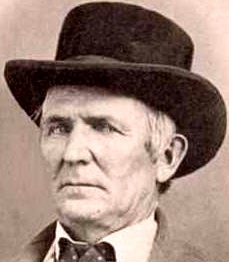 John Doyle Lee
Murderer · USA · 1857
Name: John Doyle Lee Lifespan: September 12, 1812 - March 23, 1877 Legal outcom…
120 victims
John Doyle Lee
Murderer · USA · 1857
Name: John Doyle Lee Lifespan: September 12, 1812 - March 23, 1877 Legal outcom…
120 victims
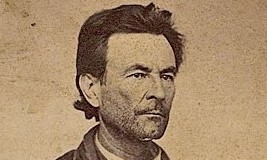 Champ Ferguson
Murderer · USA · 1861
Champ Ferguson was born November 29, 1821 in Clinton County, Kentucky, near the…
100 victims
Champ Ferguson
Murderer · USA · 1861
Champ Ferguson was born November 29, 1821 in Clinton County, Kentucky, near the…
100 victims
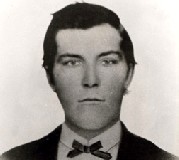 John Wesley Hardin
Murderer · USA · 1867
John Wesley (Wes) Hardin (1853-1895) was an American outlaw, gunfighter, and co…
42 victims
John Wesley Hardin
Murderer · USA · 1867
John Wesley (Wes) Hardin (1853-1895) was an American outlaw, gunfighter, and co…
42 victims
 Paula Sims
Murderer · USA · 1986
Paula Sims gave birth to three children, but only one survived. A son was born…
2 victims
Paula Sims
Murderer · USA · 1986
Paula Sims gave birth to three children, but only one survived. A son was born…
2 victims
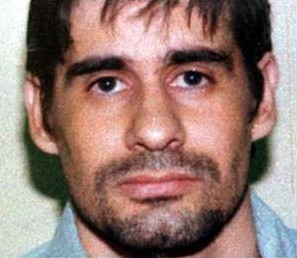 Angel Francisco Breard
Murderer · USA · 1992
Angel Francisco Breard was the petitioner-appellant. Samuel v. Pruett, Warden,…
1 victim
Angel Francisco Breard
Murderer · USA · 1992
Angel Francisco Breard was the petitioner-appellant. Samuel v. Pruett, Warden,…
1 victim
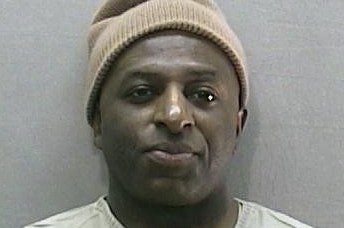 Ambrose Harris
Murderer · USA · 1992
Ambrose Harris was sentenced to death by lethal injection in 1996 after kidnapp…
2 victims
Ambrose Harris
Murderer · USA · 1992
Ambrose Harris was sentenced to death by lethal injection in 1996 after kidnapp…
2 victims
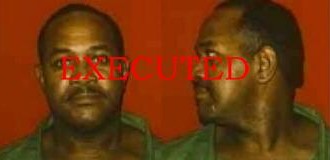 J. D. Gleaton
Murderer · USA · 1977
J. D. Gleaton was executed by lethal injection in South Carolina on December 4,…
1 victim
J. D. Gleaton
Murderer · USA · 1977
J. D. Gleaton was executed by lethal injection in South Carolina on December 4,…
1 victim
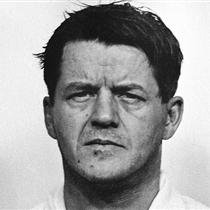 Joseph Stanley Faulder
Murderer · USA · 1975
Joseph Stanley Faulder was executed by lethal injection in Texas on June 17, 19…
1 victim
Joseph Stanley Faulder
Murderer · USA · 1975
Joseph Stanley Faulder was executed by lethal injection in Texas on June 17, 19…
1 victim
- Gender
- male
- Country
- USA
- Location
- Collin County, Texas, USA
- Date of birth
- June 14, 1973
- Characteristics
- robbery
- Victim profile
- James Mosqueda, 27 (his cousin) and Amy Kitchens , 21
- Method of murder
- Shooting
- Date(s) of murder
- —
- Years active
- —
- Date of arrest
- 4 days after
- Status
-
Sentenced to death
Sentenced to death on November 8, 2001
Case details
- Name: Ivan Abner Cantu
- TDCJ number: 999399
- Date of birth: 06/14/1973
- Age (when received): 12
- Education level: 11/08/2001
- County: Collin
- Race: Native
- State: Dallas, Texas
- Prior occupation: clerical, laborer
- Prior prison record: None
- Gender: Hispanic male
- Hair color: black
- Height: 5 ft 7 in
- Weight: 176
- Eye color: brown
- Native county: Dallas
- Date of offense: 11/04/2000
- Age at the offense: 27
Timeline
- 11/04/2000 — Ivan Abner Cantu shot and killed a 27 year old Hispanic male (his cousin) and a 21 year old white female in Dallas; he took jewelry and a vehicle from the victims' residence.
- 11/08/2001 — Ivan Abner Cantu was sentenced to death.
- June 30, 2004 — The Court of Criminal Appeals of Texas delivered its opinion on direct appeal.
The offence
On 11/04/2000, in Dallas, Ivan Abner Cantu shot and killed:
- a 27 year old Hispanic male, his cousin; and
- a 21 year old white female.
In addition to the killings, Ivan Abner Cantu took jewelry and a vehicle from the victims' residence.
Investigation
Ivan Abner Cantu and Amy Boettcher shared an apartment not far from the victims, James Mosqueda and Amy Kitchens. Mosqueda was Cantu's cousin.
Arrest
Ivan Abner Cantu was arrested on November 8, 2000. He argued on appeal that the arrest was illegal in violation of his rights under the Fourth and Fourteenth Amendments to the United States Constitution and Article 1 §§ 9, 10 of the Texas Constitution, and that it was a fruit of allegedly illegal searches.
The Court of Criminal Appeals stated that Ivan Abner Cantu entered into an agreement with the State at trial that any statements or other evidence stemming from the allegedly illegal arrest would not be offered into evidence. The Court held there was no indication in the record that the agreement was breached and Cantu did not claim it was.
Trial
Conviction and sentencing
Ivan Abner Cantu was convicted in October 2001 of capital murder.
Pursuant to the jury's answers to the special issues set forth in Texas Code of Criminal Procedure Article 37.071, §§ 2(b) and 2(e), the trial judge sentenced appellant to death.
Special issues and points of error
Ivan Abner Cantu raised thirteen points of error. The Court of Criminal Appeals affirmed the judgment.
Guilt
Point of error six (legal sufficiency): Ivan Abner Cantu claimed the evidence was legally insufficient to support his conviction for capital murder. He argued that, apart from evidence resulting from the unlawful search of his apartment, the only convincing evidence connecting him to the murders was Amy Boettcher’s testimony, and because Boettcher was an accomplice, her testimony required corroboration under Article 38.14. He also argued that the only evidence corroborating her testimony was illegally obtained and therefore could not be considered.
The Court explained what made a person an accomplice and found there was no evidence that Boettcher intended to promote the offense or assisted in its commission. The Court therefore held Boettcher was not an accomplice and her testimony needed no corroboration.
The Court described Boettcher’s testimony:
- On the night of the offense, Cantu told Boettcher he was going to Mosqueda and Kitchens' house to kill them, but Boettcher did not believe him.
- Cantu spoke with Mosqueda on the phone before leaving at about 11:30 p.m.
- While Cantu was gone, Boettcher talked on the phone with her stepfather, with whom she and Cantu were going to visit in Arkansas the next day.
- When Cantu returned around 12:20 a.m., his face was swollen and he had what looked like blood on his jeans and in his hair.
- Cantu told Boettcher that "it wasn't pretty" and began unloading his gun, complaining that it had jammed on him.
- Cantu had the victims' identification and car keys.
- Boettcher testified that she threw Cantu's bloody jeans in the kitchen trash can.
- After he cleaned up, Cantu made Boettcher return with him to the victims' house to see what he had done.
- They drove Kitchens' Mercedes.
- Boettcher testified that she could see the victims' bodies through the doorway to the master bedroom.
- They parked the Mercedes in the garage and left in Mosqueda's Corvette.
- Cantu gave Boettcher a diamond engagement ring that had belonged to Kitchens.
- Boettcher did not attempt to elude Cantu or turn him in after learning of the murders; she testified that she was terrified of him and thought he might kill her.
- The Court stated that Cantu had shot at Boettcher with a pistol the night before the murders and slammed the door on her hand as she tried to leave.
The Court held that viewing the murder scene after the fact, failing to report the offense, assisting Cantu in returning Kitchens' car to the scene, and failing to extricate herself from Cantu after becoming aware that he had committed the offense were not acts that rendered Boettcher an accomplice to the offense.
Outcome of point of error six: The Court overruled point of error six.
Point of error seven (factual sufficiency): Ivan Abner Cantu claimed the evidence was factually insufficient to support his conviction for capital murder. He argued again that Boettcher was an accomplice, that her testimony was unreliable and required corroboration, and that there was no other admissible evidence linking him to the crime.
The Court held Boettcher was not an accomplice. It concluded her testimony clearly showed Cantu's involvement. It also stated that credibility determinations were for the jury and generally should not be disturbed in a factual sufficiency review.
The Court then listed additional evidence of guilt, including:
- The murder weapon was found at the home of one of Cantu's friends, with whom Cantu and Boettcher had stayed in the days following the offense.
- Cantu's fingerprints were found on the magazine of the gun, and Mosqueda's blood was found on the gun barrel.
- Cantu's fingerprints were found on Kitchens' Mercedes.
- Evidence that Cantu showed off the engagement ring he gave to Boettcher to numerous people on the night of the offense and to Boettcher's family in the days after the offense.
- Cantu was seen wearing Mosqueda's bracelet in the days after the murders, and the bracelet was found at Boettcher's parents' house in the room where Boettcher and Cantu stayed following the offense.
- Testimony by Jeff Boettcher that Cantu told him less than a month before the murders that Cantu wanted to kill Mosqueda, and that after the offense Cantu called Jeff and told him to check out the newspaper.
- Records from the toll road reflecting the comings and goings of the Mercedes and Corvette on the night of the offense corroborated Amy Boettcher's version of events.
The Court concluded it could not say the jury's verdict lacked support or was outweighed by contrary proof.
Outcome of point of error seven: The Court overruled point of error seven.
Punishment
Point of error eight (future dangerousness—legal sufficiency): Ivan Abner Cantu argued the evidence was legally insufficient to support the jury's finding that he would be a continuing threat to society.
The Court considered all evidence presented at both phases of trial and asked whether, viewed in the light most favorable to the verdict, any rational trier of fact could have found beyond a reasonable doubt that there was a probability that Cantu would commit criminal acts of violence that would constitute a continuing threat to society.
The Court stated that the facts showed the depravity of Cantu's character and described evidence that included:
- Cantu and Mosqueda grew up together and shared apartments over the years, and they worked together in various business enterprises.
- Mosqueda trusted Cantu enough to allow him into his house at nearly midnight to "talk."
- Witnesses testified Cantu was jealous of Mosqueda's material wealth and success in business.
- The Court stated that Cantu searched the house for drugs and money after the murders and stole Mosqueda's watch and bracelet and Kitchens' diamond engagement ring.
- Later that night, Cantu gave Kitchens' ring to Boettcher as he proposed marriage.
- Cantu and Boettcher drove Mosqueda's Corvette and went out partying at several places where Cantu showed off the ring and announced that they were engaged.
- The Court stated Cantu showed no remorse the night of the offense, taking Boettcher back to the scene to show her what he had done, gathering some things left, and continuing to look for drugs and money.
- The Court stated that when visiting Boettcher's parents in the days following the offense, Cantu acted as though nothing was wrong.
- The Court stated Cantu made several self-serving phone calls to friends, in which he told a story about a man who had appeared at his apartment on the night of the offense and had threatened his and Mosqueda's lives.
- In addition to the murders, the Court summarized evidence of abusive conduct during Cantu's two marriages and toward Boettcher:
- Boettcher testified that the night before the offense she and Cantu had an argument.
- In his anger, Cantu retrieved a pistol and shot it at her head.
- When Boettcher tried to leave the apartment, Cantu slammed the door on her hand and "smacked" her across the face.
- The Court stated Cantu held the gun to her head and told Boettcher he was "serious."
- The Court stated he told Boettcher that going to the police would be futile because the police all worked for him and would not help her.
- Cantu's first wife, Michelle Traister, described episodes in which Cantu threw her to the floor, beating her face and slamming her head repeatedly against concrete and tile surfaces; in one instance, as Cantu choked her, he stated that he wanted to kill her; when Traister blacked out and came to, Cantu ripped her clothes off and forced her to have sex with him; in another instance, Cantu beat Traister's head and face so severely that she still exhibited bruises days later when she returned to work.
- The Court summarized police testimony about responding to domestic disturbance calls from Cantu's second wife, Jennifer; officers witnessed bruises Jennifer said were caused by Cantu's beating; Jennifer told one officer that Cantu had told her he wanted to kill her.
- A friend of Jennifer testified she saw Jennifer's bruises and advised Jennifer to leave Cantu.
- There was testimony about incidents between Cantu and his mother in which Cantu flew into a violent rage and others had to intervene on behalf of his mother.
- The Court stated there was evidence of Cantu's continued drug abuse, reckless driving, convictions for a DWI, a public intoxication, evading arrest, a controlled substance charge, and failed probation.
The Court held that the evidence taken together supported the jury's finding beyond a reasonable doubt of a probability of future violent criminal acts.
Outcome of point of error eight: The Court overruled point of error eight.
Point of error nine (future dangerousness—factual sufficiency): Ivan Abner Cantu challenged the factual sufficiency of the jury's affirmative answer to the future dangerousness issue. The Court stated it did not conduct a factual sufficiency review of the future dangerousness special issue.
Outcome of point of error nine: The Court overruled point of error nine.
Point of error ten (mitigation—legal and factual sufficiency): Ivan Abner Cantu argued the evidence was insufficient to support the jury's answer to the mitigation special issue. The Court stated it did not review the sufficiency of the evidence to support the jury's answer to the mitigation special issue.
Outcome of point of error ten: The Court overruled point of error ten.
Motion to suppress and evidentiary rulings
Points of error one through three (motion to suppress—searches): Ivan Abner Cantu argued the trial court abused its discretion by denying his motion to suppress evidence obtained by allegedly illegal searches of his apartment on November 4, 7, and 29, 2000, alleging violations of Articles 18.02(10) and 38.23, the Fourth Amendment to the United States Constitution, and Article I § 9 of the Texas Constitution.
The Court assumed without deciding that the searches were illegal and held the admission of the evidence was harmless beyond a reasonable doubt.
The Court stated that as a result of the searches, the police recovered:
- a pair of jeans;
- a pair of socks;
- a box of .380 bullets;
- a Dooney & Burke key ring with keys;
- a set of assorted keys;
- a silver Mercedes Benz key;
- a black Mercedes Benz key; and
- a bullet found in the wall of appellant's apartment.
The Court stated that blood on the jeans and socks was analyzed and determined to match the victims' DNA. It also stated Boettcher’s testimony wholly incriminated Cantu and her version was corroborated by other evidence, and that there was a substantial amount of circumstantial evidence linking Cantu obtained from sources other than the searches at issue.
The Court concluded that the evidence did not contribute to appellant's conviction or punishment.
Outcome of points of error one through three: The Court overruled points of error one through three.
Point of error four (motion to suppress—arrest): Ivan Abner Cantu argued his arrest on November 8, 2000 was illegal and that evidence from that arrest should have been suppressed. The Court overruled point of error four, based on the trial agreement that statements or other evidence stemming from the allegedly illegal arrest would not be offered into evidence and finding no record breach.
Outcome of point of error four: The Court overruled point of error four.
Point of error five (accomplice witness jury instruction): Ivan Abner Cantu argued the trial court abused its discretion by denying his request to instruct the jury that Amy Boettcher was an accomplice as a matter of law. The Court held it had already found Boettcher was not an accomplice as a matter of law, so the trial court did not abuse its discretion in denying the instruction.
Outcome of point of error five: The Court overruled point of error five.
People and relationships
- Ivan Abner Cantu — appellant, defendant
- James Mosqueda — victim, Hispanic male, described as Cantu’s cousin
- Amy Kitchens — victim, white female
- Amy Boettcher — girlfriend; witness who testified about the offense and Cantu’s actions before and after
- Jeff Boettcher — witness who testified about Cantu telling him about wanting to kill Mosqueda before the murders and about telling him to check out the newspaper after the offense
- Michelle Traister — Cantu's first wife
- Jennifer — Cantu's second wife
- Cantu's mother — referenced in testimony about incidents involving violent rage
Other details
The Court affirmed the trial court’s judgment and held:
- The trial judge sentenced Ivan Abner Cantu to death pursuant to jury findings under Texas Code of Criminal Procedure Article 37.071, §§ 2(b) and 2(e).
- Direct appeal was automatic.
- The Court’s opinion was delivered by KELLER, P.J. and joined by MEYERS, KEASLER, HERVEY and COCHRAN, JJ.
- WOMACK, J. filed a dissenting opinion in which PRICE and JOHNSON, JJ. joined.
- HOLCOMB, J. concurred in the result.
Verbatim quotations included in the decision:
- Cantu told Boettcher: "it wasn't pretty"
- The Court stated that Cantu "smacked" Boettcher across the face
- Cantu told Boettcher he was "serious."
- The Court stated Cantu told Boettcher that going to the police would be futile because the police all worked for him and would not help her.

Spotted an error, or have more information about this case?