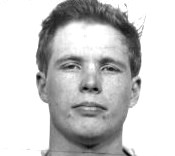
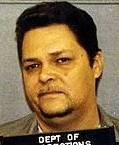
Danny Lee Barber
Serial killer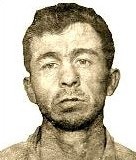 Donald Henry Gaskins
Serial killer · USA · 1969
Donald Henry Gaskins, also known as Donald “Pee Wee” Gaskins, was a serial kill…
200 victims
Donald Henry Gaskins
Serial killer · USA · 1969
Donald Henry Gaskins, also known as Donald “Pee Wee” Gaskins, was a serial kill…
200 victims
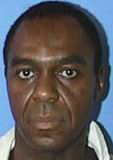 Carl Eugene Watts
Serial killer · USA · 1974
Carl Eugene Watts (born November 7, 1953; died September 21, 2007), also known…
100 victims
Carl Eugene Watts
Serial killer · USA · 1974
Carl Eugene Watts (born November 7, 1953; died September 21, 2007), also known…
100 victims
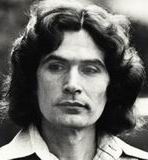 Rodney Alcala
Serial killer · USA · 1977
Rodney James Alcala (born August 23, 1943) was also known as Rodrigo Jacques Al…
100 victims
Rodney Alcala
Serial killer · USA · 1977
Rodney James Alcala (born August 23, 1943) was also known as Rodrigo Jacques Al…
100 victims
 Donald Harvey
Serial killer · USA · 1970
Donald Harvey was known as an American serial killer and a self-professed “Ange…
87 victims
Donald Harvey
Serial killer · USA · 1970
Donald Harvey was known as an American serial killer and a self-professed “Ange…
87 victims
 Donald Leroy Evans
Serial killer · USA · 1975
Donald Leroy Evans (born July 5, 1957) was an American serial killer who murder…
60 victims
Donald Leroy Evans
Serial killer · USA · 1975
Donald Leroy Evans (born July 5, 1957) was an American serial killer who murder…
60 victims
 Michael Swango
Serial killer · USA · 1981
Michael Swango (Joseph Michael Swango) was a physician and American serial kill…
60 victims
Michael Swango
Serial killer · USA · 1981
Michael Swango (Joseph Michael Swango) was a physician and American serial kill…
60 victims
 Jarvis Jay Masters
Murderer · USA · 1985
Jarvis Jay Masters (born 1962) was an African American man from Long Beach, CA.…
1 victim
Jarvis Jay Masters
Murderer · USA · 1985
Jarvis Jay Masters (born 1962) was an African American man from Long Beach, CA.…
1 victim
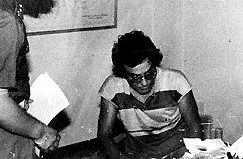 Giancarlo Giudice
—
Defendant: Giancarlo Giudice · Victim profile: Prostitutas italianas (incluyend…
Giancarlo Giudice
—
Defendant: Giancarlo Giudice · Victim profile: Prostitutas italianas (incluyend…
 Elain Kay Young
Murderer · USA · 2006
Defendant: Elain Kay Young, 57, of Novinger, MO · Co-defendant: Katherine A. Mo…
1 victim
Elain Kay Young
Murderer · USA · 2006
Defendant: Elain Kay Young, 57, of Novinger, MO · Co-defendant: Katherine A. Mo…
1 victim
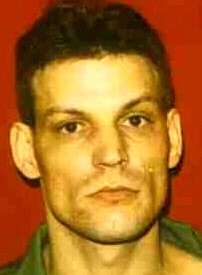 Jason Scott Byram
Murderer · USA · 1993
Jason Scott Byram — defendant · Julie Johnson — victim; elementary school teach…
1 victim
Jason Scott Byram
Murderer · USA · 1993
Jason Scott Byram — defendant · Julie Johnson — victim; elementary school teach…
1 victim
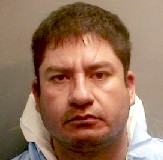 Jaime Cole
Murderer · USA · 2010
Jaime Piero Cole was a Hispanic male who was 41 when received. He was recorded…
2 victims
Jaime Cole
Murderer · USA · 2010
Jaime Piero Cole was a Hispanic male who was 41 when received. He was recorded…
2 victims
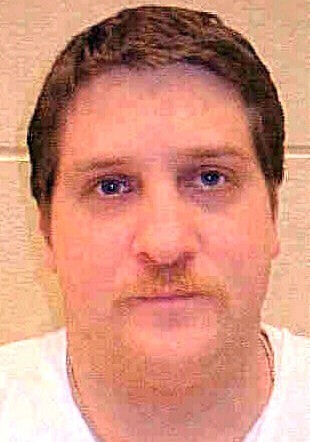 Clay King Smith
Mass murderer · USA · 1998
Clay King Smith was executed by the State of Arkansas for the March 25, 1998 mu…
5 victims
Clay King Smith
Mass murderer · USA · 1998
Clay King Smith was executed by the State of Arkansas for the March 25, 1998 mu…
5 victims
- Gender
- male
- Country
- USA
- Location
- Dallas County, Texas, USA
- Date of birth
- May 8, 1955
- Age at first offence
- 23
- Characteristics
- robbery, rape, alcohol
- Victim profile
- 4 female
- Method of murder
- St abbing with knife / Shooting
- Date(s) of murder
- 1978 - 1980
- Years active
- 1978–1980
- Date of arrest
- May 6, 1980
- Status
-
Executed
Executed by lethal injection in Texas on February 11, 1999
Case details
Danny Lee Barber was condemned and executed by lethal injection in Texas on February 11, 1999.
Victim and offence
Janice Louise Ingram was murdered on October 8, 1979, at her home in Balch Springs, a suburb southeast of Dallas in Dallas County. Her mother, Ruth Clowers, found the naked, beaten and dead body of her daughter.
Barber was condemned for the October 1979 beating and stabbing death of Janice Louise Ingram during a burglary of her home. Barber described it as “a burglary that went wrong.”
Barber confessed to killing Janice with a piece of pipe as he tried to rob her home.
Barber gave various accounts. In his confession, he told authorities that he found a piece of pipe in her back yard, where he had previously done lawn work, and planned to use it to break a window. He instead found a door open and walked in, startling Mrs. Ingram, who began screaming. When she wouldn’t be quiet, he began clubbing her with the pipe.
Barber was charged with the murder while being held in the Dallas County Jail on charges of breaking into a flea market.
Investigation and arrest
Ruth Clowers found the body after the murder.
In the 2 days after his arrest for Janice’s death, Barber confessed to killing 3 other Dallas-area residents in a 2-year period.
Barber also confessed to 3 other murders committed in Dallas County over an 18-month period between 1977 and 1979.
Other offences and sentences
Barber was from Los Angeles.
Barber was given life sentences for the three other Dallas County murders:
- A murder committed on June 18, 1978, of Mercedes Mendez (48).
- A murder committed on Jan. 17, 1979, of Mercedes Mendez (48).
- A murder committed on April 21, 1980, of Mary Caperton.
Trial
In August 1980, Barber was found guilty of capital murder and sentenced to death.
Prior to trial, Barber sought a competency examination by Dr. Charles Lett. The court granted the request and, sua sponte, directed that a second psychiatrist, Dr. Clay Griffith, examine Barber and report thereon.
The court found Barber competent to stand trial essentially on the basis of the testimony of Dr. Griffith.
The Texas Court of Criminal Appeals affirmed in part but remanded with directions to conduct an evidentiary hearing to determine whether Barber had been competent to stand trial. After the hearing was conducted, the trial court found Barber competent, and the Texas Court of Criminal Appeals affirmed.
Barber petitioned for state habeas relief, challenging the testimony of Dr. Griffith. The Texas Court of Criminal Appeals denied that relief and concluded that admission of Dr. Griffith’s testimony about future dangerousness was error, but that it was harmless error in light of other overwhelming evidence.
Dr. Griffith testified during the punishment phase that Barber did not suffer from any form of mental illness, but did have a sociopathic anti-social personality disorder. Dr. Griffith testified that a sociopathic personality was characterized by:
- repeated confrontations with authority;
- mental laziness preventing success in school;
- inability to plan for the future;
- inability to develop useful skills necessary to retain employment;
- inability to develop personal relationships;
- inability to feel or show remorse;
- lack of concern for others;
- a tendency to derive pleasure from hurting others;
- inability to learn from experience or punishment;
- the ability to manipulate others; and
- the development of extremely strong sex drives with a tendency toward sexual deviancy.
Dr. Griffith also testified that Barber’s behavior was becoming increasingly violent and that he would continue to pose a threat to the safety of others even if he were to be incarcerated.
Barber was sentenced based on a finding of future dangerousness testimony.
Appeals
Barber invoked 28 U.S.C. § 2254 and sought a writ of habeas corpus challenging his conviction and death sentence for capital murder. The district court rejected his petition.
Certificate of probable cause; application denied
Barber sought appellate review and argued that penalty phase testimony by Dr. Clay Griffith relating to the future dangerousness issue violated his fourth, fifth, and fourteenth amendment rights and also violated the rules of Estelle v. Smith and Satterwhite v. Texas.
The competency examination of Barber prior to trial involved Dr. Griffith, who provided no Miranda warnings and did not obtain consent of Barber’s counsel for the examination.
The request for a certificate of probable cause was denied.
Background on competence and testimony
In the background section of the appellate decision, Barber was indicted for the October 8, 1979 murder of Janie Ingram during the burglary of her home.
The court granted Barber’s request for a competency examination by Dr. Charles Lett, then sua sponte directed that a second psychiatrist, Dr.
The district court dismissed Barber’s petition for a writ of habeas corpus. The district court concluded that admission of Dr. Griffith’s testimony as to future dangerousness was erroneous but did not result in actual prejudice. The district court denied Barber’s request for CPC, and Barber timely sought appellate review.
Appellate analysis of harmless error standards
Barber argued that neither the Texas Court of Criminal Appeals nor the district court applied the correct harmless error analysis, urging that the Chapman standard should apply, even though this was a habeas proceeding, because his Estelle claim was not addressed on direct review and therefore never received scrutiny under the more stringent Chapman standard.
The appellate panel referenced Hogue v. Johnson (131 F.3d 466) as deciding the issue in December 1997. In that decision, Hogue had contended that his death sentence was unconstitutional because a guilty plea rape conviction from 1974, set aside because of ineffective assistance of counsel, was admitted during sentencing. The panel concluded that the claim was procedurally barred and, even if error occurred, the conviction did not have a “substantial and injurious effect” on the jury.
The panel stated: “Brecht rather than Chapman, enunciates the appropriate standard for determining whether a constitutional error was harmless in a federal habeas challenge to a state conviction or sentence even though no state court ever made any determination respecting whether or not the error was harmless.”
The panel’s analysis cited Brecht as having divided cases by structural errors versus non structural errors and by direct versus collateral review, and noted that no third classification existed for cases where a state court determined the error was harmless and the state did not address it.
The panel observed it could be viewed as inconsistent with Brecht’s underlying reasoning that, in this capital case, unlike in Brecht, a federal district court and a federal court of appeals had reviewed the error under Chapman in the earlier Brecht scenario, while in Barber’s case no court had reviewed the constitutional error under the Chapman standard at state or federal level.
The panel held it could not ignore Hogue, and it denied the application for CPC on these issues.
Other constitutional claims; no basis found
Barber also alleged numerous other constitutional errors, including:
- a claim that the inordinate delay in carrying out his execution violates the eighth amendment;
- a claim that the retrospective competency hearing violated his due process rights;
- a claim of ineffective assistance of counsel; and
- a claim of prosecutorial misconduct.
After reviewing these claims, the appellate court found no basis for appellate review. Barber’s request for a certificate of probable cause was DENIED.
Special concurrence
DENNIS, Circuit Judge, specially concurred. The concurrence stated that the panel was bound by Hogue v. Johnson but expressed a belief that the Supreme Court’s holding in Chapman requires that when state courts on direct review have disregarded their constitutional duty to apply the rigorous “beyond-a-reasonable-doubt” standard to constitutional error, federal courts on collateral review must apply the Chapman harmless-error standard.
The concurrence quoted from Chapman v. California: “[W]e hold ... that before a federal constitutional error can be held harmless, the court must be able to declare a belief that it was harmless beyond a reasonable doubt.”
The concurrence also cited Brecht v. Abrahamson for the State’s burden: “The State bears the burden of proving that an error passes muster under this standard.”
The concurrence included the following statements:
- “The Chapman standard protects those rights that are ‘rooted in the Bill of Rights, offered and championed in the Congress by James Madison, who told the Congress that the 'independent' federal courts would be the 'guardians of those rights.' ”
- “Therefore, the Chapman harmless-error rule is of constitutional magnitude because it is the "necessary rule" fashioned by the Supreme Court to fulfill its responsibility "to protect people from infractions by the States of federally guaranteed rights." ”
- “The Supreme Court's subsequent holding in Brecht v. Abrahamson did not lessen that requirement, but only relieved federal habeas courts of the obligation of duplicating the Chapman analysis when state courts on direct review already have satisfied this constitutionally mandated harmless-error review.”
The concurrence argued that in Barber’s case “Barber will be executed with no state court ever having demanded that the State prove beyond a reasonable doubt that the constitutional error did not contribute to the verdict obtained,” and concluded: “By repeating the state court's error, this court will have failed in its obligation to "protect people from infractions by the States of federally guaranteed rights." ” The concurrence concluded: “For these reasons, I conclude that this court in Hogue, by adopting a per se rule that all constitutional error on federal collateral review shall be analyzed under the lenient Brecht/Kotteakos standard, regardless of whether the state court applied the correct harmless-error standard on direct review, mistakenly failed to recognize its federal duty to determine whether there has been a good-faith State effort to protect constitutional rights by applying the Chapman standard.”
Execution details and last statement
Barber’s last statement was:
Hello, Ms. Ingram, it is good to see you. I said I could talk but I don’t think I am gonna be able to. I heard one of your nieces had some angry words. I didn’t have anything to do with the stay. I spent the last twenty years waiting to figure out what’s going on. I pray that you get over it and that’s the only thing I can think to say. I’m regretful for what I done, but I’m a different person from that time. If you could get to know me over the years, you could have seen it. I’ve got some people over here that believes that. I want to talk to my friends over here for a second. Well, it’s good to see you guys. Look after Mary Lynn for me. Like I said, I’ve called my mother already, so she knows. Goodbye.
The lethal injection was started, and Barber was pronounced dead at 6:26 p.m., 6 minutes after the lethal injection was started, and less than an hour after the U.S. Supreme Court denied his final application for a stay.
Barber greeted 6 members of his victims’ families and apologized for his crimes. During the execution, he uttered a gasp and a snore before he stopped moving.
Among the witnesses was 93-year-old Ruth Clowers, who found the body of her daughter, Janice Louise Ingram, after the murder for which Barber was sentenced to die.
Events around the execution
A woman down the street chanted her opposition to capital punishment into a bullhorn as the witnesses emerged from the death house. The witnesses stopped, turned and started clapping. Otto Lowrance, Janice’s cousin, said: “The fat lady has finally sung.”
Barber was executed for the murder of Janice Louise Ingram, whom the account described as 50-year-old.
Barber described the murder as a burglary that went wrong and blamed it on alcoholism and depression.
It was one of four murder convictions for Barber, who was within an hour of lethal injection on Dec. 9 when a federal judge halted the punishment. Barber’s attorneys raised questions about the legality of the Texas clemency process.
U.S. District Judge Sam Sparks in Austin issued a stay but later upheld the clemency procedures, and the execution was reset.
Several relatives of his victims came to Huntsville in December to watch him die and were irate and in tears when they were told of the last-minute reprieve. They returned to Huntsville Thursday. Sue Korioth, a Dallas County assistant district attorney who handles capital case appeals, said: “It’s just heartbreaking,” and “It’s very difficult for them. You know, they never volunteered for this assignment.”
Barber refused to speak with reporters since the December reprieve. Earlier he said he was bitter that his good behavior while on death row meant nothing in his appeals, and stated:
- “I’m upset that I spent 15 years in the work program, counseled other inmates, gone to school and I’m not getting any credit for it.”
- “I’ve apologized to everyone I could.”
- “I’ve learned to read and write.”
- “I’ve done all I could from in here.”
- “I don’t feel I’m a threat to anybody.”
- “I’ve learned my lesson.”
- “I believe I’ve earned a right to live.”
Prosecutors termed him deserving of the death penalty, especially considering the brutality of Mrs. Ingram’s death.
In an interview last year, Barber said:
- “I don’t recall striking her, though there's a lot that I've blocked out.”
- “Things were hell, and when I gave the confession it eased things.”
In another statement, Barber said:
- “I just regret what happened that night,” before his December death date.
- “I can't undo the crimes I've done in the past.”
Other details
Barber sold cross-stitch crafts he made on death row via a web page.
The account stated Barber was 43 years old at execution and used the notation “99-2-11 - Texas Associated Press In Huntsville, condemned killer Danny Lee Barber was executed Thursday evening for fatally beating a Dallas County woman almost 20 years ago.”
Spotted an error, or have more information about this case?