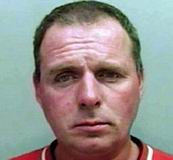
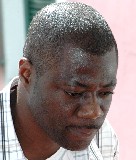
Stephen Farrow
Murderer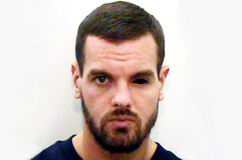 Dale Cregan
Murderer · United Kingdom · 2012
Dale Christopher Cregan (born 6 June 1983) was convicted in the United Kingdom…
4 victims
Dale Cregan
Murderer · United Kingdom · 2012
Dale Christopher Cregan (born 6 June 1983) was convicted in the United Kingdom…
4 victims
 Rahan Arshad
Murderer · United Kingdom · 2006
Rahan Arshad (born 1970) was a taxi driver. He lived at Turves Road, Cheadle Hu…
4 victims
Rahan Arshad
Murderer · United Kingdom · 2006
Rahan Arshad (born 1970) was a taxi driver. He lived at Turves Road, Cheadle Hu…
4 victims
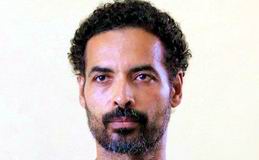 Arthur Simpson-Kent
Murderer · United Kingdom · 2015
Name: Arthur Simpson-Kent · Age at sentencing: 49 · Age at time of offence (as…
3 victims
Arthur Simpson-Kent
Murderer · United Kingdom · 2015
Name: Arthur Simpson-Kent · Age at sentencing: 49 · Age at time of offence (as…
3 victims
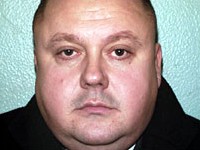 Levi Bellfield
Murderer · United Kingdom · 2003
Levi Bellfield (born 17 May 1968) was a British murderer. He was described by p…
3 victims
Levi Bellfield
Murderer · United Kingdom · 2003
Levi Bellfield (born 17 May 1968) was a British murderer. He was described by p…
3 victims
 Mark Martin
Murderer · United Kingdom · 2004
Mark Martin (born 1981 in Nottingham, England) was a British murderer. He kille…
3 victims
Mark Martin
Murderer · United Kingdom · 2004
Mark Martin (born 1981 in Nottingham, England) was a British murderer. He kille…
3 victims
 Pierre Williams
Murderer · United Kingdom · 2007
Pierre Williams was described by neighbours as the mother’s boyfriend and as a…
3 victims
Pierre Williams
Murderer · United Kingdom · 2007
Pierre Williams was described by neighbours as the mother’s boyfriend and as a…
3 victims
 Kersean Ramey
Murderer · USA · 2005
01/31/2007 — Kersean Ramey was sentenced to death; TDCJ Number: 999519. · 08/24…
3 victims
Kersean Ramey
Murderer · USA · 2005
01/31/2007 — Kersean Ramey was sentenced to death; TDCJ Number: 999519. · 08/24…
3 victims
 Mia Gonzales
Homicide · USA · 2007
Mia Gonzales, age 36, was charged in connection with the Oct. 27, 2007 shooting…
1 victim
Mia Gonzales
Homicide · USA · 2007
Mia Gonzales, age 36, was charged in connection with the Oct. 27, 2007 shooting…
1 victim
 Eugene Leo Gambetta
Murderer · USA · 1948
Eugene Leo Gambetta Eugene Leo Gambetta was executed in Nevada State Prison on…
1 victim
Eugene Leo Gambetta
Murderer · USA · 1948
Eugene Leo Gambetta Eugene Leo Gambetta was executed in Nevada State Prison on…
1 victim
 Raymond Clark
Murderer · USA · 2009
Annie Marie Le (July 3, 1985 – September 8, 2009) was a 24-year-old American do…
1 victim
Raymond Clark
Murderer · USA · 2009
Annie Marie Le (July 3, 1985 – September 8, 2009) was a 24-year-old American do…
1 victim
 Thomas Lee Royal
Murderer · USA · 1991
Thomas Lee Royal was sentenced to death for the February 21, 1994 capital murde…
2 victims
Thomas Lee Royal
Murderer · USA · 1991
Thomas Lee Royal was sentenced to death for the February 21, 1994 capital murde…
2 victims
- Gender
- male
- Country
- United Kingdom
- Location
- Bewdley, Worcestershire / Thornbury, Gloucestershire, England, United Kingdom
- Date of birth
- 1964
- Age at first offence
- 48
- Characteristics
- abuser, drugs, attempted rape, torture, hate crime, burglary, rape
- Victim profile
- Retired teacher Betty Yates, 77 / Reverend John Suddards, 59
- Method of murder
- Stabbing with knife
- Date(s) of murder
- January 4/February 14, 2012
- Years active
- 2012
- Date of arrest
- February 19, 2012
- Status
-
Life imprisonment
Sentenced to life in prison with no chance of release on November 2, 2012
Case record: Stephen Farrow
Overview
Stephen Farrow (born c. 1964) was an English vagrant who served a whole-life tariff for two murders committed in early 2012. He was diagnosed with psychopathic personality disorder by psychiatrists. Farrow had an obsessive hatred of Christianity, which he attributed to sexual abuse from a priest.
Farrow stabbed to death 77-year-old retired teacher Betty Yates in Bewdley, Worcestershire, and 59-year-old Reverend John Suddards in Thornbury, Gloucestershire.
Timeline
- 4 January 2012 — A murder investigation began after the body of an elderly woman was found at a cottage in Bewdley, Worcestershire.
- 6 January 2012 — Betty Yates, 77-year-old retired teacher, was named as the victim; post-mortem examination revealed she died of a stab wound after she was attacked with a knife.
- 9 January 2012 — Police said a knife found near Yates’s cottage was believed to be the murder weapon.
- 12 January 2012 — An inquest was opened into Yates’s death; it was revealed she had been stabbed in the neck.
- 16 January 2012 — Detectives said they thought Yates was assaulted with her walking stick before she was stabbed.
- 20 January 2012 — Two anonymous letters were sent to police investigating Yates’s murder, giving new lines of inquiry.
- 23 January 2012 — Crimestoppers offered a £10,000 reward for information leading to the conviction of Yates’s killer.
- 26 January 2012 — Police received “a handful” of calls after an appeal on BBC One’s Crimewatch; officers were looking for the owner of a silver Audi estate seen nearby on 2 January.
- 30 January 2012 — The family of Betty Yates appealed for help to find her killer.
- 4 February 2012 — Police arrested a man in connection with the murder of Yates; he was later released on bail.
- 8 February 2012 — Police released descriptions of two men they wanted to speak to who were seen separately on 2 January between Riverside Caravan Park and Yates’s cottage.
- 13 February 2012 — Police appealed to trace a man seen sat outside Suddards’s church between 18:00 GMT and 20:00 GMT on this date.
- 14 February 2012 — Police treated the death of the Reverend John Suddards at his vicarage in Thornbury as suspicious.
- 15 February 2012 — A 43-year-old man was arrested on suspicion of the murder of Mr Suddards; post-mortem examination revealed he died from multiple stab wounds.
- 17 February 2012 — Hundreds of people took part in a church service to mark the death of the vicar.
- 18 February 2012 — Stephen Farrow (47 at the time) was named as a suspect in the murder of Mr Suddards; a 43-year-old man arrested on suspicion of murder was released on police bail.
- 19 February 2012 — Farrow was arrested in Folkestone, Kent; police said they were working with West Mercia Police to explore links to Yates’s murder.
- 22 February 2012 — Farrow was charged with murdering both Mr Suddards and Mrs Yates; he was also charged with burglary of a property in Thornbury between 21 December and 3 January.
- 29 February 2012 — The first man arrested on suspicion of the murder of Mr Suddards was eliminated from the police investigation.
- 29 June 2012 — Farrow pleaded not guilty to both murders but admitted the burglary charge.
- 4 October 2012 — Farrow went on trial at Bristol Crown Court for the murder of Mr Suddards and Mrs Yates.
- 2 November 2012 — Farrow was found guilty of murdering both Mr Suddards and Mrs Yates.
- November 2, 2012 — Farrow was sentenced to life in prison with no chance of release.
The offence
Murder of Betty Yates
On 4 January 2012, Farrow broke into Yates’s isolated cottage and killed her by stabbing her in the neck. Detectives suspected that she had been beaten with her walking stick before her death.
Yates’s body was found lying in her hallway, with her head resting on a cushion. She had been beaten with a walking stick and stabbed four times in the head, with the knife still embedded in her neck. Investigators later said she had blunt trauma to the head that the prosecution said was caused by one of her own walking sticks.
Yates and Farrow were acquainted.
Farrow was later linked to the burglary and the murder through DNA evidence and a boot print, which was also found at Yates’s home in Bewdley.
Farrow told a psychiatrist that he visited and that he had not killed Yates.
Crimestoppers offered a reward of £10,000 for information on the murder, and new leads were investigated after the crime was featured on BBC One’s Crimewatch.
Murder of Reverend John Suddards
On 14 February 2012, Reverend John Suddards was found dead at his vicarage in Thornbury. Police declared the death suspicious after his body was found by builders.
Builders found Suddards’s body when they arrived for a planned job and were given a key by a caretaker.
He died from multiple stab wounds. Police said he was stabbed to death and was discovered lying on his back in the hallway of his vicarage. The stabbing wounds included wounds to his shoulder, chest, abdomen and neck, including a stab wound to the neck that penetrated the spinal cord and would have been fatal without immediate medical attention.
After stabbing Suddards to death, Farrow drank Suddards’s beer and watched a DVD, before stealing Suddards’s mobile phone and watch. Farrow sent a text message after leaving the vicarage early the next morning that read: “RIP Mr Suddards. Pervert.”
A copy of the New Testament was found on Suddards’s chest with an A3-sized calendar of a semi-naked male model covering the lower half of his body. Items around the body included pornographic DVDs, pornography, condoms, underwear, party poppers streamers, and a canvas of Jesus Christ and a mirror. A men’s magazine, a condom package, underwear, a calendar, and a parking fixed-penalty notice were among the items described.
Evidence included that Farrow placed a picture of Jesus and a mirror on the floor by Suddards’s body, placed a Bible opened at the Letter of Jude on Suddards’s chest, and attempted to humiliate him. A judge later said Farrow was sure he had done this “to humiliate the reverend and to desecrate his memory”.
Suddards’s death followed a burglary at Vine Cottage, near the vicarage in Thornbury, over the Christmas and New Year period.
Investigation
Naming and linking evidence
On 18 February 2012, police named Farrow as a suspect in Suddards’s murder and warned the public not to approach him.
Farrow was arrested the following day in Folkestone, Kent, where he was questioned about Yates’s murder as well. He was later charged with both murders and the burglary.
Detectives said tracking Farrow was difficult due to his nomadic lifestyle. Police said an anonymous phone call from a woman in Kent led to his arrest.
Forensic evidence was presented in court:
- Spots of blood on Farrow’s clothing matched those of Suddards.
- Blood was found on Farrow’s walking boot, and blood on the sole of his left boot matched that of Suddards.
- Farrow’s DNA was found on the cap of an empty beer bottle found at the vicarage in Thornbury.
- Footprints similar in shape and size to boots seized from Farrow were found at Yates’s home.
- A footprint found on a magazine at the scene of the burglary at Vine Cottage matched the shape and size of Farrow’s boots.
- Farrow was linked to the burglary at Vine Cottage in Thornbury by DNA evidence and a boot print that was also found at Yates’s home in Bewdley.
Witness and public involvement
A couple, Julia Sealey and Linda Probert, saw a man “on a mission” on the day Yates was killed. Probert identified Farrow as the man who had passed them.
Avon and Somerset Police and other forces investigated similarities between the deaths and conducted nationwide searches.
Arrest and police interviews
Arrest
Farrow was arrested in Folkestone, Kent, after a tip-off from the public. Police launched a nationwide search after the body of Suddards was found.
A West Mercia Police statement described Farrow as a 47-year-old man arrested in Kent on behalf of West Mercia Police, transferred into the custody of Avon and Somerset Police.
Interview stance
Farrow repeatedly answered “no comment” when questioned by police following his arrest.
During one police interview, Farrow told officers: “There is no way you will find anything on me. I just want to find out what you think I have done. I am buzzing off this.”
Farrow also said he had felt “kind of strange” and “different” on the day after a further interview, adding: “I just feel different today. I don’t know what's wrong.”
Trial
Pleas and charges
Farrow pleaded not guilty to both murders on 29 June 2012, but admitted the burglary charge.
At trial, Farrow admitted Suddards’s manslaughter on the grounds of diminished responsibility but denied murdering both victims, including denying stabbing Yates.
His trial at Bristol Crown Court began on 4 October 2012 and lasted four weeks.
Jury findings
The jury were unanimous in finding Farrow guilty of killing Reverend John Suddards.
An 11–1 majority found Farrow guilty of the murder of Betty Yates.
Refusal to attend
Farrow refused to leave Long Lartin prison in Worcestershire and was not present in court for parts of the trial. The trial judge stated that his right not to be present should not be held against him.
Sentencing
Judge’s remarks
The judge sentenced Farrow to spend the rest of his life in prison. The judge called Farrow “sadistic” and said: “In each of these dreadful killings you acted sadistically.” “To put a knife deep into the body of Betty Yates as she lay helpless on the floor, was an act of obvious sadism.” “She was not threatening you. You put the knife into her to have the pleasure of doing so.” “As for Reverend Suddards, you killed him – having kicked him down, having told him to “****ing hurry up and die” – with seven deep knife wounds.” “He was helpless. That conduct was clearly sadistic.”
The judge also said he was satisfied that a whole life sentence was appropriate.
Sentence
Farrow was sentenced to a whole life tariff: life in prison with no chance of parole, on November 2, 2012.
Appeals
A European Court of Human Rights decision rejected Farrow’s claim that a life-sentence with no chance of release breached the article prohibiting “inhuman or degrading treatment or punishment.” The European Court ruled it did not, putting an end to the legal challenge.
Justice Secretary Liz Truss said: “It is right that those who commit the most heinous crimes spend the rest of their lives behind bars. ‘It is also wholly right that judges are able to hand down whole-life sentences to the very worst offenders in our society.’”
Other details
Burglary and threat message
Farrow admitted burglary at Vine Cottage in Thornbury between 21 December and 3 January. A handwritten note was left pinned to the kitchen table with two knives. The note read: “Be thankful you did not come back or we would have killed you Christian scum. I... hate God.”
Different accounts described the note as scribbled in red ink and that it was produced in a “curious, disguised style of writing” with a “squirly symbol” in one corner. Prosecutors said it meant nothing to the owners because they were not religious.
Text messages associated with the case included one on New Year’s Eve warning a friend: “Ky, you don’t give a st and never have. So as you reject me you will suffer. I will be just around the corner and you will never know when I will be there. I’ve already started my work and won’t stop until I’m caught. You don’t and never knew just how disturbed I am. You will soon know the truth and the church will be the first to suffer. And I don’t lie about what is about to happen. As I say it was always going to end like this. I’m surprised the police have not been to see you but they soon will. So fk you, the church and the system. You can all go to hell. Watch the news piggy because you will know it was me.”
An earlier text message that night read: “Piggy, please answer. Even though it’s all gone wrong for me you’ve been good to me for so long. I’m sorry for all what I’ve said and done but please talk to me because I am a long way from you and just want you to make me happy by saying something. If not, happy new year.”
Farrow also sent the message “Church will be the first to suffer” to Michaela Rowsell, who told the court she was “petrified” and phoned the police.
Statements attributed to individuals
Suddards’s sister Hilary Bosworth questioned whether the murders could have been avoided and asked: “Do we, as a society, need to think again about how we might better monitor those in the community?”
Hilary Bosworth also said: “My brother John was a good man, who dedicated his life to serving God and helping other people. He was a much loved uncle to my three children, and a dear friend to so many, and he is greatly missed.”
Suddards’s sister-in-law, Janet Roe, was described as saying she was “floored” and “very angry” after information about his case.
Mrs Yates’s children Hazel and David said in a joint statement: “We should all be relieved and thankful that Stephen Farrow is off the streets of Britain today.” “For us it is important that our mum does not become defined by the brutality of her death but is celebrated for the 77 years of her life.”
Detective Chief Inspector Simon Crisp said: “There is no doubt in my mind that this swift arrest prevented further offences being committed.” “That person knows who she is and I would offer my sincere thanks to her.”
Psychiatric evidence
Psychiatrists said Farrow had psychopathic personality disorder. Two psychiatrists assessed him and said he had psychopathic personality disorder. Evidence also described Farrow as hearing “inner voices” and accusing Suddards of abusing him.
Dr Tim Rogers told the jury it was not possible to be sure when Farrow was telling the truth and when he was lying, but he said Farrow passed the threshold of psychopathy and lacked the normal ability to experience empathy.
Farrow told Dr Tim Rogers: “It was there in my head. I spent five days preparing when to go, what buses to catch. It was a Monday and I arrived in Thornbury at exactly the time I thought. I knew that the reverend was in at the time and the reverend had opened the door.”
Farrow told Dr Rogers: “I watched a man die - I have never seen that before - life ebbing away. It was always like it was meant to happen. He didn't fight, argue or nothing. My head wasn't there. I kicked the reverend to keep him down.”
Farrow told a mental health nurse Richard Evans: “I then stabbed the vicar.”
Farrow told the nurse he was hearing “inner voices” and accused the vicar of abusing him.
Prosecutor Michael Fitton QC told the court: “He is not insane. He knows the difference between right and wrong. He did what he did as a matter of choice.”
When sentencing, the judge also remarked on sadism in both killings.
Prior convictions and background facts included at trial
In 1994, Farrow was convicted of aggravated burglary at the home of an elderly woman in Stourbridge. He told a forensic psychiatrist that he had fantasies of committing rape in home invasions.
A consultant forensic psychiatrist assessed Farrow after this conviction. Farrow told Dr Bond he was unable to establish meaningful relationships and described violent sexual fantasies involving raping young girls and breaking into homes of old women and killing after rape.
Another psychiatrist examined him because a question had arisen whether he should remain in an ordinary prison for the aggravated burglary or be moved into a hospital environment. Farrow told the psychiatrist he had wanted to kill from his teenage years and claimed he had already murdered a backpacker in Devon six years prior.
Farrow told a psychiatrist from Ashworth Hospital that he had wanted to kill from his teenage years and had already murdered a backpacker in Devon six years prior.
Farrow claimed to have been sexually abused by someone connected with the Church while he was a schoolboy.
Early life and other personal details
Farrow was hyperactive from a young age and was sent home from his first day at school.
At the age of 10, he set a church altar on fire and watched it burn.
He was described as a heavy smoker of cannabis.
He had love for his mother and hated his strict father.
He was expelled from school on his first day and experienced bullying, fighting, using weapons, setting fires, and robbery.
It was said he had a long history of violence from the age of ten, including firing-setting and aggression.
Farrow was said to be 6ft 4in tall and to claim £270 a week in state benefits.
He was homeless and drifter and had a nomadic lifestyle, with limited stable employment.
During his imprisonment, he sent letters and poems to relatives.
Circumstances after arrest
A 43-year-old man previously arrested on suspicion of Suddards’s death was eliminated from the investigation.
After leaving the vicarage, Farrow used the dead man’s mobile phone to text “RIP Mr Suddards. Pervert.”
Detective and prosecution remarks
Detective Chief Inspector Simon Crisp described Farrow as a “sadistic and remorseless killer” and said the arrest prevented further offences.
A Crown Prosecution Service representative, Sian Sullivan, said: “The sentence today reflects the brutal nature of these crimes and the devastating effect they had on the victims' families and the community in which they each played such an active role.”
Spotted an error, or have more information about this case?