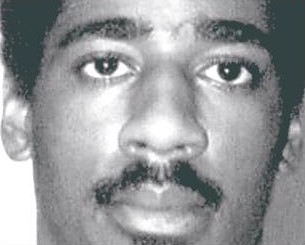
Thomas Lee Royal
Murderer Brian Kevin Rosenfeld
Murderer · USA · 1985
Brian Kevin Rosenfeld Brian Kevin Rosenfeld was sentenced to three concurrent l…
23 victims
Brian Kevin Rosenfeld
Murderer · USA · 1985
Brian Kevin Rosenfeld Brian Kevin Rosenfeld was sentenced to three concurrent l…
23 victims
 Russell Ellwood
Murderer · USA · 1991
Russell Ellwood was a former taxi driver. Authorities suspected him of killing…
20 victims
Russell Ellwood
Murderer · USA · 1991
Russell Ellwood was a former taxi driver. Authorities suspected him of killing…
20 victims
 Robert Martines Perez
Murderer · USA · 1994
Name: Robert Martines Perez · Other name used in proceedings: Robert Martinez P…
15 victims
Robert Martines Perez
Murderer · USA · 1994
Name: Robert Martines Perez · Other name used in proceedings: Robert Martinez P…
15 victims
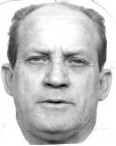 Billy Frank Vickers
Murderer · USA · 1993
Billy Frank Vickers Vickers was executed by lethal injection in Texas on Januar…
14 victims
Billy Frank Vickers
Murderer · USA · 1993
Billy Frank Vickers Vickers was executed by lethal injection in Texas on Januar…
14 victims
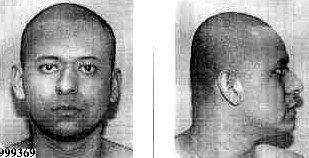 Bernardo Tercero
Murderer · USA · 1997
Bernardo Aban Tercero was born on 8/20/1977. He was a 23-year-old at the time o…
1 victim
Bernardo Tercero
Murderer · USA · 1997
Bernardo Aban Tercero was born on 8/20/1977. He was a 23-year-old at the time o…
1 victim
 John Glenn Roe
Murderer · USA · 1984
John Glenn Roe was executed by lethal injection in Ohio on February 3, 2004. ·…
1 victim
John Glenn Roe
Murderer · USA · 1984
John Glenn Roe was executed by lethal injection in Ohio on February 3, 2004. ·…
1 victim
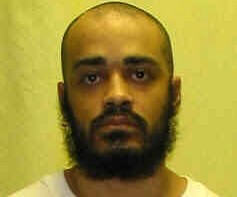 Vernon Lamont Smith
Murderer · USA · 1993
Vernon Lamont Smith n/k/a Abdullah Sharif Kaazim Mahdi was convicted in Lucas C…
1 victim
Vernon Lamont Smith
Murderer · USA · 1993
Vernon Lamont Smith n/k/a Abdullah Sharif Kaazim Mahdi was convicted in Lucas C…
1 victim
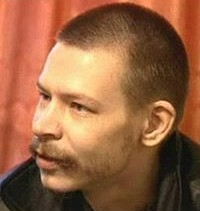 Alexander Spesivtsev
Serial killer · Rusia · 1991
Alexander Nikolayevich Spesivtsev (Russian: Александр Николаевич Спесивцев ), a…
19 victims
Alexander Spesivtsev
Serial killer · Rusia · 1991
Alexander Nikolayevich Spesivtsev (Russian: Александр Николаевич Спесивцев ), a…
19 victims
 Earl Matthews
Murderer · USA · 1984
Earl Matthews, Jr. was convicted and sentenced to death for the 1985 killing of…
1 victim
Earl Matthews
Murderer · USA · 1984
Earl Matthews, Jr. was convicted and sentenced to death for the 1985 killing of…
1 victim
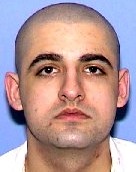 Juan Edward Castillo
Murderer · USA · 2003
Juan Edward Castillo (TDCJ Number 999502) was convicted of capital murder and s…
1 victim
Juan Edward Castillo
Murderer · USA · 2003
Juan Edward Castillo (TDCJ Number 999502) was convicted of capital murder and s…
1 victim
- Gender
- male
- Country
- USA
- Location
- Hampton, Virgina, USA
- Date of birth
- ???
- Characteristics
- revenge, police officer
- Victim profile
- James Smith Jr. / Kenneth Wallace ( Hampton police officer )
- Method of murder
- Shooting
- Date(s) of murder
- 1991 / 1994
- Years active
- 1991–1994
- Date of arrest
- —
- Status
-
Executed
Executed by lethal injection in Virginia on November 9, 1999
Case overview
Thomas Lee Royal was sentenced to death for the February 21, 1994 capital murder of police officer Kenneth Wallace. Royal later pled guilty to murdering Officer Kenneth Wallace, and a Virginia court sentenced him to death. His death sentence was affirmed by the Virginia Supreme Court, and after exhausting state remedies he filed a federal habeas petition. The United States Court of Appeals for the Fourth Circuit affirmed the district court’s denial of habeas relief. Royal was executed by lethal injection in Virginia on November 9, 1999.
Timeline
- February 21, 1994 — Thomas Lee Royal, Yancy Mitchener, Willie Cardell Sanders, and Eldred Acklin gathered in the parking lot of a shopping center in Hampton, Virginia, after drinking and smoking marijuana, and later encountered Officer Kenneth Wallace in his police cruiser; Royal shot Officer Wallace twice in the head.
- February 25, 1994 — Officer Kenneth Wallace died four days after being shot.
- 1995 — The Virginia Supreme Court affirmed Royal’s death sentence.
- 1996 — The United States Supreme Court denied a petition for certiorari.
- April 1997 — After a federal court stayed his execution, Royal filed a federal habeas petition.
- May 1997 — Royal amended his federal habeas petition.
- August 16, 1999 — Appeal from the United States District Court for the Eastern District of Virginia at Richmond.
- November 9, 1999 — Royal was executed by lethal injection.
The offence
On February 21, 1994, after drinking and smoking marijuana, Thomas Lee Royal, Yancy Mitchener, Willie Cardell Sanders, and Eldred Acklin gathered in the parking lot of a shopping center in Hampton, Virginia. Royal distributed .25-caliber guns to Mitchener and Acklin, distributed a .32-caliber gun to Sanders, and kept for himself a .380-caliber gun.
The armed men set out to find and kill Hampton Police Officer Curtis Cooper, against whom they had some grudge. Instead, they encountered Officer Kenneth Wallace in his police cruiser. Royal acknowledged that he realized Officer Wallace was not Cooper, but proceeded to shoot the officer anyway. Royal’s recorded confession included: "[Officer Wallace] pulled up and, you know, I leaned on the car, getting off the street, and he said, Are you drunk? And I turned around and said, No sir, I fired two shots." After shooting Officer Wallace, Royal confessed that "[Officer Wallace] pulled up and, you know, I leaned on the car, getting off the street, and he said, Are you drunk? And I turned around and said, No sir, I fired two shots." and that he "just turned around and walked away."
Mitchener approached Officer Wallace’s car and began shooting into the cruiser while screaming and laughing. Acklin also fired shots at the police vehicle.
A local resident found Officer Wallace shortly thereafter. When the neighbor arrived, the door to the cruiser was wide open and the driver’s window was shattered, leaving glass on the ground under the open door. Officer Wallace was seated in his cruiser with several visible gunshot wounds to the head. An autopsy revealed that Officer Wallace had been hit twice in the head and that one of these shots was fatal. A forensic expert found that the fatal bullet was consistent with a .380-caliber weapon. The Commonwealth never recovered the murder weapon or any fingerprints from the spent cartridges found at the scene.
Police said that a .22-caliber revolver and a .380-caliber semiautomatic were used in the attack. Officer Kenneth Wallace died four days later after surgery to remove a bullet that lodged in his skull.
Investigation and evidence
Royal confessed to the murder of Officer Kenneth Wallace in a videotaped conversation with investigating officers. Initially, he told investigators that Willie Sanders used a .380-caliber weapon on the night of the murder. Royal immediately corrected his account and insisted that he alone carried a .380 that night.
The United States Court of Appeals for the Fourth Circuit later discussed the forensic and evidentiary picture in the context of Royal’s habeas arguments. Royal contended that forensic experts provided affidavits that Officer Wallace was shot through the window of his cruiser while seated by someone who was standing, based on the downward trajectory of the fatal shot, small cuts or "dicing" marks on Officer Wallace’s face, the absence of gun powder burns around the wounds, and that the cruiser’s window was found shattered. Royal also pointed to four .25-caliber shell casings recovered near the front of Officer Wallace’s cruiser and two .380-caliber shell casings recovered near the rear of the car. Royal also cited evidence that one .380-caliber shell casing recovered did not come from the same gun as the other .380 shells, raising the possibility that more than one person fired a .380 weapon.
The Fourth Circuit held that this new evidence was consistent with Royal’s guilty plea and confession, emphasizing that Royal repeatedly maintained he alone carried a .380-caliber weapon and that the parties stipulated that Royal fired two shots from a .380 caliber handgun at Officer Wallace while Officer Wallace was seated in his police cruiser. The Fourth Circuit also noted that investigators did not remove the casings immediately after the shooting and that multiple people moved about at the scene before recovery of evidence. It further noted that forensic experts said the two .380 bullets found in Officer Wallace’s head contained unique characteristics indicating that the same gun likely fired both shots, even though experts could not determine positively whether they came from the same gun.
Arrest and related proceedings
Three men and two teenagers were charged with Kenneth Wallace’s murder: Juan Morillo, Willie C. Sanders, and a 15-year-old Newport News resident, with Royal as a co-defendant. Royal and another man not involved in the Wallace shooting were also charged with the 1991 murder of James Smith Jr. in Hampton.
Royal said he planned to kill a police officer in retaliation for his brother being arrested on drug charges. When Royal discovered Officer Wallace in the patrol car instead of the officer he intended to kill, he shot Wallace.
Trial and sentencing
Royal pled guilty to murdering Officer Kenneth Wallace, a Virginia policeman. Royal pled guilty to capital murder and use of an illegal firearm. At sentencing, the court found that Royal posed a serious threat of future dangerousness and sentenced him to death.
The Virginia Supreme Court affirmed Royal’s sentence in Royal v. Commonwealth, 458 S.E.2d 575 (Va. 1995). The United States Supreme Court denied certiorari in Royal v. Virginia, 516 U.S. 1097 (1996).
At the sentencing proceedings, the trial court record included stipulations that Royal encountered Officer Wallace and fired two shots from a .380 caliber handgun at Officer Wallace while Officer Wallace was seated in his police cruiser. The stipulation was referenced in the appellate opinion.
Appeals
Federal habeas petition
After exhausting his state remedies, Royal filed a petition for federal habeas relief, which the district court dismissed. The district court’s denial of habeas relief was affirmed by published opinion by the United States Court of Appeals for the Fourth Circuit. The opinion was authored by Judge Diana Gribbon Motz, with Judges Luttig and Michael joining. The court stated: "For the foregoing reasons, the district court’s denial of habeas relief is AFFIRMED."
Issues raised
Royal raised five issues on appeal:
- He contended that he was actually innocent of capital murder.
- He argued that the Commonwealth did not reveal certain exculpatory evidence in a timely manner, in violation of Brady v. Maryland, 373 U.S. 83 (1963).
- He asserted ineffective assistance of state trial counsel based on failure to (a) pursue a triggerman defense or obtain independent experts, which Royal contended misled him into pleading guilty, and (b) investigate and present certain mitigating evidence at the sentencing hearing.
- He argued that the district court erred in denying him discovery.
- He contended that the district court erred in failing to allow him a full year within which to file his federal habeas petition.
Court’s discussion of the claims
On actual innocence, the Fourth Circuit addressed the Schlup gateway standard and found that Royal had failed to demonstrate actual innocence such that his execution would constitute a fundamental miscarriage of justice. It concluded Royal had not shown "it is more likely than not that no reasonable juror would have convicted him in the light of the new evidence," and therefore did not entitle him to review of defaulted claims.
On the Brady claim, the Fourth Circuit explained the Virginia Supreme Court had found the claim procedurally barred under Slayton v. Parrigan. The Fourth Circuit held it could not review the Brady claim on its merits because Royal could not demonstrate cause and actual prejudice, nor fundamental miscarriage of justice.
On ineffective assistance of counsel, the Fourth Circuit held the claims lacked merit. It concluded Royal was unable to satisfy the Strickland v. Washington standard for ineffective assistance of counsel in connection with a guilty plea, including the Hill v. Lockhart prejudice requirement that a defendant show he would not have pled guilty and would have insisted on going to trial. It also rejected the mitigation-related ineffective assistance claim, concluding counsel did not fall below an objective standard of reasonableness and that Royal failed to show prejudice.
On discovery, the Fourth Circuit stated the district court did not abuse its discretion in denying the discovery request under Habeas Rule 6 concerning Brady claims because the Brady claim was procedurally defaulted and Royal had not shown cause and prejudice or fundamental miscarriage of justice.
On the habeas filing deadline issue, the Fourth Circuit stated any error was harmless.
Outcome
The district court’s denial of habeas relief was affirmed by the United States Court of Appeals for the Fourth Circuit. Royal remained under a death sentence and was executed by lethal injection in Virginia on November 9, 1999.
Execution details
Royal was executed by lethal injection at Greensville Correctional Center on November 9, 1999. He was led into the death chamber and strapped to a gurney with leather straps binding his wrists, thighs, chest, and ankles. He was wearing baggy denim pants and a light-blue shirt. Royal shook his dreadlocks into place before resting his head on the gurney.
A warden announced that Royal was dead at 9:06 p.m. Volunteers included a prison chaplain and his wife, who were among the last people to visit Royal on Tuesday. During the visit, West baptized Royal. Royal visited with relatives throughout the day, including his mother and stepfather, father and stepmother, wife and three children, three sisters, and maternal grandparents. He had contact visits between 9 and 11 a.m. and 1 and 3 p.m., after which the family left the prison grounds. Royal’s brother, whose arrest led to the retaliatory shooting of Wallace, did not visit.
Royal’s last meal consisted of chicken, french fries, pineapple upside-down cake, and ice tea, served at 5:11 p.m. Protesters gathered near the prison entrance, and speakers at the protest read condemnations of the death penalty issued over the years by various churches and religions. Bud Welch addressed the crowd and stated: "no social redeeming value." Tim Stanton said the group was not defending Royal and stated: "I'd like to see Thomas Royal spend the rest of his life in prison," and also stated: "When we as a society kill, we send out a message to the rest of society that we are condonding violence." (The last phrase appears in the text as "condonding".)
Royal chose not to have Thomas and Evangeline Wallace attend the execution, and they chose not to attend. In a telephone interview from the Wallaces’ Hampton home, Thomas Wallace said the family was "satisfied with the outcome," and stated: "I think justice was met, and I think Thomas Royal realizes that his actions constituted what he received," and also stated: "My whole family is satisfied that he will not be back in society."
Witnessing the execution was Hampton Police Officer Curtis Cooper, who was described as a friend of Wallace’s. Royal had intended to kill Cooper. When Royal found Wallace in the cruiser, he opened fire anyway.
In the death chamber, officials strapped Royal down and inserted two intravenous needles into each of his arms. The right-arm plastic tube delivered three chemicals, with bubbles seen moving the liquid toward his body. The tube wiggled continuously. Royal was asked if he had any last words and said: "Let's roll." It was stated that at 9:01 p.m. the tube jiggled as the first chemical flowed through it, then a second chemical stopped Royal’s breathing and a third stopped his heart. It was stated that it took three or four minutes to manually empty syringes containing the chemicals into the IV tube. A heart monitor showed a flat line, and a doctor pronounced Royal dead. Royal’s body was taken for an autopsy in Richmond, and on Royal’s death certificate a single word listed the cause: homicide. It was also stated that the cause of death listing after the autopsy was "lethal injection."
Before the execution, Royal raised his head from the padded gurney, scanned the room, and told witnesses he was ready to die. He said: "I just want to say, how you gonna kill a man when a man is willing to die? Remember Wallace wasn't ready to die."
He also told the execution team at Greensville Correctional Center: "Let's roll"
Other details
People connected to the offence
- Officer Kenneth Wallace — the police officer murdered; he died four days after the shooting.
- Officer Curtis Cooper — the officer that Royal and accomplices had intended to kill; he was present as an execution witness.
- Sammie Lee Royal — Royal’s brother; his arrest on drug charges led Royal to state he planned retaliation; Sammie Lee Royal was 22.
- Juan Morillo — charged with Wallace’s murder.
- Willie C. Sanders — charged with Wallace’s murder; also referenced as Willie Sanders in the opinion.
- A 15-year-old Newport News resident — charged with Wallace’s murder.
- James Smith Jr. — a 1991 murder of which Royal and another man were also charged.
- Thomas Lee Royal Jr. — used as a form of Royal’s name in the text describing the execution.
- Yancy Mitchener — charged in the Fourth Circuit opinion as part of the group at the parking lot.
- Eldred Acklin — charged in the Fourth Circuit opinion as part of the group at the parking lot.
Prosecutor and drug-prosecution context
The prosecutor on the alleged hit list had spent the previous 2 1/2 years working with a joint federal-state drug-prosecution task force serving several Virginia cities. She was pursuing state drug trafficking charges against Sammie Lee Royal, the brother of Thomas Lee Royal.
Execution room participants and communications
The execution team included Department of Corrections medical technicians. The warden David Garraghty announced Royal died. Corrections Director Ron Angelone clasped a red phone that linked the death chamber to the office of Gov. Jim Gilmore in case the governor decided at the last minute to grant clemency. A prison official held open a phone line to the warden’s office in case there was a last-second reprieve from the courts, which usually communicated with the prison via fax. It was stated that no reprieve came.
Spotted an error, or have more information about this case?