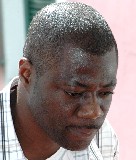
Cordell Farrington
Serial killer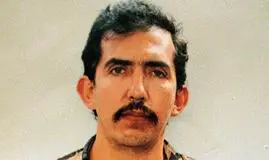 Luis Alfredo Garavito
Serial killer · Colombia/Ecuador · 1992
Luis Alfredo Garavito Cubillos, also known as "La Bestia" ("The Beast") or "Tri…
192 victims
Luis Alfredo Garavito
Serial killer · Colombia/Ecuador · 1992
Luis Alfredo Garavito Cubillos, also known as "La Bestia" ("The Beast") or "Tri…
192 victims
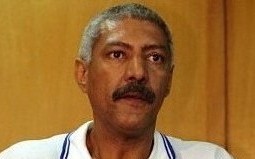 Edson Isidoro Guimaraes
Serial killer · Brazil · 1999
Edson Isidoro Guimarães was a Brazilian nursing assistant and nurse’s aide at S…
131 victims
Edson Isidoro Guimaraes
Serial killer · Brazil · 1999
Edson Isidoro Guimarães was a Brazilian nursing assistant and nurse’s aide at S…
131 victims
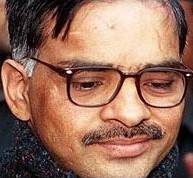 Javed Iqbal
Serial killer · Pakistan · 1998
Javed Iqbal (born 1956 in Lahore, Punjab, Pakistan; died October 8, 2001, in La…
100 victims
Javed Iqbal
Serial killer · Pakistan · 1998
Javed Iqbal (born 1956 in Lahore, Punjab, Pakistan; died October 8, 2001, in La…
100 victims
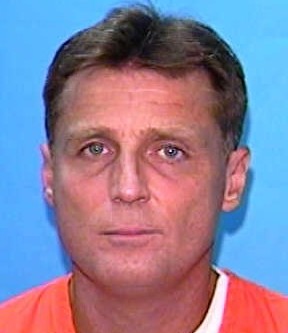 Glen Edward Rogers
Serial killer · USA · 1993
Glen Edward Rogers was a spree killer whose cross-country rampage in 1994-95 le…
70 victims
Glen Edward Rogers
Serial killer · USA · 1993
Glen Edward Rogers was a spree killer whose cross-country rampage in 1994-95 le…
70 victims
 Yang Xinhai
Serial killer · China · 2000
Yang Xinhai (simplified Chinese: 杨新海; pinyin: Yáng Xīnhǎi; 17 July 1968–14 Febr…
67 victims
Yang Xinhai
Serial killer · China · 2000
Yang Xinhai (simplified Chinese: 杨新海; pinyin: Yáng Xīnhǎi; 17 July 1968–14 Febr…
67 victims
 Yang Xinhai
Serial killer · China · 2000
Yang Xinhai (simplified Chinese: 杨新海; pinyin: Yáng Xīnhǎi; 17 July 1968–14 Febr…
67 victims
Yang Xinhai
Serial killer · China · 2000
Yang Xinhai (simplified Chinese: 杨新海; pinyin: Yáng Xīnhǎi; 17 July 1968–14 Febr…
67 victims
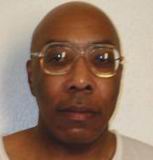 Andrew Sasser
Murderer · USA · 1993
Andrew Sasser was convicted of capital felony murder and sentenced to die by le…
1 victim
Andrew Sasser
Murderer · USA · 1993
Andrew Sasser was convicted of capital felony murder and sentenced to die by le…
1 victim
 Guen Aguilar
Murderer · Singapore · 2005
Guen Garlejo Aguilar was a Filipino domestic worker. She pleaded guilty and was…
1 victim
Guen Aguilar
Murderer · Singapore · 2005
Guen Garlejo Aguilar was a Filipino domestic worker. She pleaded guilty and was…
1 victim
 Willie Ray Williams
Murderer · USA · 1980
Willie Ray Williams was executed by lethal injection in Texas on January 31, 19…
1 victim
Willie Ray Williams
Murderer · USA · 1980
Willie Ray Williams was executed by lethal injection in Texas on January 31, 19…
1 victim
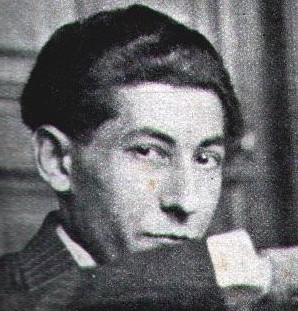 Jacques Mécislas Charrier
Murderer · France · 1922
Jacques Mécislas Charrier was a French anarchist illégaliste. He was executed b…
1 victim
Jacques Mécislas Charrier
Murderer · France · 1922
Jacques Mécislas Charrier was a French anarchist illégaliste. He was executed b…
1 victim
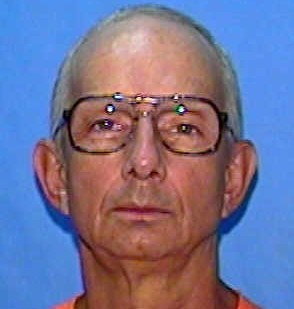 Dusty Ray Spencer
Murderer · USA · 1992
Dusty Ray Spencer (DOB: 02/13/52) was convicted and sentenced to death for the…
1 victim
Dusty Ray Spencer
Murderer · USA · 1992
Dusty Ray Spencer (DOB: 02/13/52) was convicted and sentenced to death for the…
1 victim
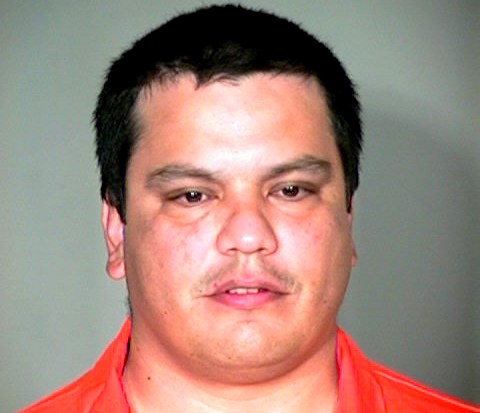 Alfonso Raymond Salazar
Murderer · USA · 1986
Alfonso Raymond Salazar Alfonso Raymond Salazar and Michael Davis entered the T…
1 victim
Alfonso Raymond Salazar
Murderer · USA · 1986
Alfonso Raymond Salazar Alfonso Raymond Salazar and Michael Davis entered the T…
1 victim
- Gender
- male
- Country
- Bahamas
- Location
- Grand Bahama, Bahamas
- Date of birth
- 1968
- Age at first offence
- 34
- Characteristics
- rape, mutilation, drug addict, attempt to collect insurance money
- Victim profile
- Jamaal Robinson, 22 (his lover) / Mackinson Colas, 11 / Junior Reme, 11 / DeAngelo McKenzie, 13 / Desmond Rolle, 14
- Method of murder
- Hitting with a wooden plank - St abbing with knife
- Date(s) of murder
- 2002 - 2003
- Years active
- 2002–2003
- Date of arrest
- October 26, 2003 (surrenders)
- Status
-
Life imprisonment
Sentenced to death, 2006; commuted to life in prison on October 15, 2008; sentenced to life in prison on September 30, 2010
Background
Cordell Farrington was a father of three children, including one who was three months old. He was also described as an avid reader of the Bible and as having kicked a crack habit.
Farrington had previously been at Sandilands Rehabilitation Centre, where both he and Jamaal Robins had been recovering from drug addictions. Farrington was described as having suffered physical, emotional and psychological abuse. Prosecutor Neil Brathwaite said there was evidence that Farrington had also been involved in bestiality and had been admitted to Sandilands, and that Farrington had suffered physical, emotional and psychological abuse.
In 2006, a psychiatrist and a psychologist testified that Farrington was not insane at the time of the act, and that he had a disease of the mind that suggested the defence of diminished responsibility. Farrington also told the court that he suffered from periodic memory lapses that resulted from an abusive childhood. His attorney Ramona Farquharson submitted that he had suffered from a severe personality disorder and that prior to committing the offences he had been a productive and law-abiding citizen.
Farrington was accused of murdering four boys who had worked as bag-packers at the Winn Dixie Supermarket in Freeport and had played video games nearby.
The offence
Murder of Jamaal Robinson
Cordell Farrington was charged with the murders of Jamaal Robinson and four boys.
Farrington confessed to police to the murder of 22-year-old Jamaal Robins, and told the court that he had loved Jamaal Robins so much that he wanted him to be with him “forever.” Farrington said he killed Jamaal Robins because Jamaal Robins had started using drugs again and resorted to stealing to support his habit.
Farrington’s confession described that one night he hit Jamaal Robins across the head with an iron plank as hard as he could, followed by blows about the body. He wrapped the body in a blanket, and with the help of an ex-lover, Oterrio Floyd, disposed of the body in a bushy area off the Grand Bahama Highway. Farrington told police that he returned to the scene in December 2002 to ensure that the body was deteriorating so that he would be able to package the remains and take them home for safe keeping. Farrington also told police that he kept the remains because stashing the remains had been in his mind all along, because he knew how important finding those bones would be to police.
Farrington’s un-sworn statement in court said:
“I didn't fully understand what happened but I ask for forgiveness from the family members.”
In the video-recorded confession shown to jurors, assistant superintendent Anthony Ferguson asked Farrington why he kept the remains, and Farrington replied that stashing the remains was in his mind all along because he knew how important finding those bones would be to police. On videotape, Assistant Superintendent Anthony Ferguson asked Farrington if he had thoughts of killing again. Farrington responded:
“yes”
Farrington said it was only a matter of how and when.
Murder of Mackinson Colas
Mackinson Colas went missing on May 16, 2003. He was last seen by his mother. Farrington told police he had picked the boy up on Pioneer's Way, Freeport.
Farrington confessed that he took Mackinson Colas home, ordered him to take a shower, and told him he was going to kill him. Farrington told police that when the boy asked why he had to kill him, Farrington replied by saying simply that he “had to do it.”
Farrington told police he bound the boy by his hands and feet with duct tape and struck him on the head several times with a wooden plank. He then put the boy’s body in the trunk of his car, drove to Barbary Beach, and buried him there. Two weeks later, Farrington returned to collect the remains.
Murder of DeAngelo McKenzie
DeAngelo McKenzie was last seen by his grandfather on May 27, 2003. Farrington told police he picked up the boy in the parking lot of the Church of God while he was heading home from school.
Farrington said he asked the boy to go home with him to pick up some equipment for the church. He confessed that he took the boy home and had sex with him twice, asked the boy about his family, and told him he was going to have to kill him. Farrington said the boy told him that he only wanted to go to school and have a good education.
Farrington then bound the boy with duct tape and hit him in the head several times with a wooden plank. He put the boy’s body in the trunk of his car and drove to Barbary Beach where he hid the body.
Murder of Junior Reme
Junior Reme was reported missing on July 29, 2003, and he was last seen by his mother. Farrington told police he picked up the boy at the rear of Christ the King Anglican Church and took him home.
Farrington ordered the boy to take a shower but the boy refused. Farrington told investigators that he bound the boy with duct tape and the child started to scream. Farrington then stabbed him in the neck with a knife while Farrington’s own son was in another room.
Farrington told police he took the boy’s body and put it in the trunk of his car, then drove to Barbary Beach where he hid the body. Farrington told police he was sorry the boy had to die such a horrible death.
Murder of Desmond Rolle
Desmond Rolle was last seen by his mother on September 28, 2003. Farrington told police he picked the boy up at a park while heading to William's Town.
Farrington told the boy he knew his mother and brother. After gaining the boy’s trust, Farrington drove him to a bushy area where he handcuffed and raped him. Farrington then slit the boy’s throat, took his body back to his car, and committed a sex act.
Farrington took the boy’s body to Barbary Beach, slit open the chest cavity, removed his heart, and severed his limbs. Farrington told police he was trying a “new way” to kill.
Investigation
Police in the Bahamas were assisted by the FBI and British officers from Scotland Yard. A retired FBI profiler and a former Las Vegas homicide detective were sent to help by the National Center for Missing and Exploited Children, based in Alexandria, Va.
Assistant police commissioner Ellison Greenslade said that common characteristics in the deaths all pointed to one killer and that “The fingerprints are glaring.” Greenslade also said, “This is a complicated investigation. There's a lot more work to be done.”
Farrington’s ex-girlfriend, identifying herself only by the last name Dean, said police seized three cardboard boxes that allegedly belonged to Farrington. The boxes contained human bones separated into plastic bags and labeled with numbers. Dean said Farrington kept the boxes in a room he used to craft artwork with driftwood and conch shells. Dean said:
“He used to say, 'This is my room, and no one is to go in there,'”
Investigators told victims’ relatives that Farrington led them to other remains scattered on the eastern end of Grand Bahama.
Relatives also attended sentencing hearings where the circumstances of the killings were disclosed.
Arrest
Cordell Farrington turned himself in to police and was charged in the Freeport court. Farrington disappeared from work last Thursday at noon.
Farrington was jailed pending a hearing on February 17. If convicted, he could be hanged.
The court heard that Farrington had walked into the Central Police Station in Grand Bahama, told police he “simply could not take it anymore” and confessed to the murder of Jamaal Robbins and the murders of the four boys.
Trial
Trial for murder of Jamaal Robinson
After weeks of testimony, Cordell Farrington was convicted on Friday 18 August of the murder of Jamal Robins of Freeport. Mr. Robins’ parents pronounced themselves happy with the verdict and said their son could now rest in peace.
Farrington gave an un-sworn statement in the Supreme Court on Monday. He said the events of the day he murdered Robbins had haunted him in prison for the last three years and that he wished things had ended differently and that if he had had a little more control, Robbins would have been alive today. Farrington said he still felt that Robbins was with him and that he loved him so much that he felt he knew him better than his family did. He also told the court he suffered from periodic memory lapses that resulted from an abusive childhood.
Jurors watched a videotape in which Farrington confessed to police to the murder of Robbins. During the viewing, Farrington appeared emotionless as the events of that night were relived.
Assistant Superintendent Anthony Ferguson asked Farrington why he kept the remains, and Farrington said that stashing the remains was in his mind all along because he knew how important finding those bones would be to police.
A defence expectation at trial included calling psychiatrist Dr. Michael Neville to the stand.
Trial for murders of the four boys in 2003
Cordell Farrington was charged with the murders of Jamaal Robinson, 22, and the four boys: Mackinson Colas, 11; Junior Reme, 11; DeAngelo McKenzie, 13; and Desmond Rolle, 14.
At trial, jurors heard testimony and viewed confession material, and during sentencing, prosecutors disclosed the circumstances of the killings.
A witness, Oterrio Floyd, testified under duress that he helped dispose of Jamaal Robins’ body off the Grand Bahama Highway. Floyd said he met Farrington in January 2002 and moved in within a week of meeting. Floyd said he was 21 at the time and that he lived in the apartment with Farrington and two other room-mates.
Floyd testified that he started seeing Jamal Robins around their apartment in February 2002. He described an argument between Farrington and Robins:
“Cordell was telling him if he sell his body he might catch AIDS. At that point he just said in a friendly way, 'I would kill that boy,'”
Floyd said he overheard the argument on July 17, 2002. He testified that he was awakened by rumbling about 6.30 a.m. and within five minutes he said the accused was at his door shouting:
“Terry, Terry, Terry, I kill him!”
Floyd followed Farrington to the bedroom, where he said he saw a body lying face up on the floor:
“It was Jamal Robins' body”
Floyd testified that Farrington was standing near the body and that Floyd asked Farrington what he had done in their home. Floyd said that because he was “gay” he decided he could not tell his mother or the police. Floyd stated:
“He shook me and say Terry, Terry catch yourself. He said he would harm me and kill my family,”
Floyd said he was forced to help carry the body because Farrington told him it was too heavy for him to lift. Floyd testified that Robins’ body was placed in the back trunk of Farrington’s car and discarded in bushes off the Grand Bahama Highway.
During the evidence, Edward Robins broke down and had to be escorted out of court.
Sentencing
Death sentence
The status field indicated that Farrington was sentenced to death in 2006.
Sentencing hearing and life sentences in 2010
Sentencing took place before Senior Justice Jon Isaacs on Thursday 30 September 2010. Farrington was sentenced to life imprisonment on each of the four counts.
Senior Justice Jon Isaacs described the killings as “horrific and not of someone who should be readmitted into society.” He noted that the promising lives of four young boys had been snuffed out and that the court could show no further degree of mercy to Farrington other than what had already been afforded him. The judge also noted that Farrington reportedly suffered from a severe personality disorder. The judge stated that while in prison he would receive the counselling he needed, and that the court hoped Farrington would spend the rest of his natural life in jail.
During the sentencing hearing, relatives of the victims’ families had an emotional outburst, and relatives had to be ushered out of court. An outburst by a sister of the deceased prompted the judge to order that all relatives leave the court. The sister shouted:
“You took my brother from me. You are supposed to die,”
Relatives of the deceased refused to speak after the hearing.
Farrington broke into tears in the prisoner's dock when asked whether he had anything to say, and said:
Farrington’s attorney Ramona Farquharson noted that Farrington had confessed to the crimes and had suffered from a severe personality disorder. She submitted that prior to committing the offences he had been a productive and law-abiding citizen.
Sentence repetition and existing life sentence for Jamaal Robbins
The court heard that Farrington was already serving a life sentence for the death of Mr Robbins.
Appeals
On October 15, 2008, the Court of Appeal quashed Farrington’s murder conviction and death sentence. Instead, he was convicted of manslaughter and sentenced to life in prison.
President of the Court of Appeal Dame Joan Sawyer delivered Farrington’s ruling, sitting with Justices Milton Ganpatsingh and Emmanuel Osadebay. Farrington was represented by attorney Wayne Munroe.
The Court of Appeal’s ruling also involved other accused individuals. The Court also dismissed the appeals against the murder conviction and death sentence against Maxo Tido, while noting that Tido still faced hanging for the 2002 killing of 16-year-old Donnel Conover. The appeals court also dismissed applications connected with other convictions and sentences, including written reasons for dismissing the applications by the Attorney General’s Office for leave to the court to appeal against the sentences of Justice Jon Isaacs for three people convicted of murder: Nekita Hamilton, James Dean, and Michelle Woodside. The ruling also notes that none of the three convicts were served with either transcripts or skeleton arguments pertaining to their appeals. It described reaching the decision to dismiss the appeals with “regret since in (their) view there were issues raised on the record, which could have resulted in an arguable appeal on the validity of the sentences passed.”
The Court of Appeal also dismissed the appeal by Ernest Lockhart against his conviction and death sentence for the killing of Claxton Smith, and dismissed the appeal by Lockhart’s co-accused Jeffrey Prosper on conviction.
Kendon Brown lost his appeal against conviction for manslaughter in the killing of nurse Joan Lunn and the attempted murder of Anthony Saunders.
Outcome
Following the October 15, 2008 Court of Appeal ruling, Farrington was convicted of manslaughter and sentenced to life in prison. Later sentencing in 2010 imposed life imprisonment on each of four counts relating to the boys.
The status field indicated: sentenced to death in 2006, commuted to life in prison on October 15, 2008, and sentenced to life in prison on September 30, 2010.
Other details
Farrington was described as having three children with a woman, and he had a loving relationship with a partner who came, testified, and confirmed the relationship. His relationship with Jamaal Robins was described as sexual and developed at the Sandilands Rehabilitation Centre where both were recovering from drug addictions. The partner testified and described that Farrington and Jamaal Robins became sexual lovers at Sandilands.
Farrington’s ex-lover, Oterrio Floyd, was described as a pool attendant at Lyford Cay in 2002, living at Mallory Lane and employed at Burger King as a cleaner making about $165 a week.
Floyd testified that Farrington disposed of Robins’ body in bushes off the Grand Bahama Highway and that Robins went missing between July and August 2002.
Mackinson Colas disappeared in May along with Colas and Jake Grant, 12, and the body of Jake Grant was alleged to have drowned according to minors charged earlier, but his body had not been found yet. Piles of skeletal remains were found Sunday in the Barbary Beach area.
Cordell Farrington was described as 35 in October 2003, and he was described as 43 years old in sentencing reporting from October 2010.
Prosecutor Neil Brathwaite said the prosecution accepted Farrington’s plea of guilt to the charge of manslaughter as he had acted with diminished responsibility as a disease of the mind that reduced the crime to manslaughter and not murder.
When Farrington was asked whether he had anything to say during the sentencing hearing, he broke into tears and said:
The judge stated that Farrington would receive counselling he needs while in prison.
Farrington walked into the Central Police Station and confessed to the murder of Jamaal Robbins and the murders of the four boys, which included the murders of Mackinson Colas, Junior Reme, DeAngelo McKenzie, and Desmond Rolle.
Spotted an error, or have more information about this case?