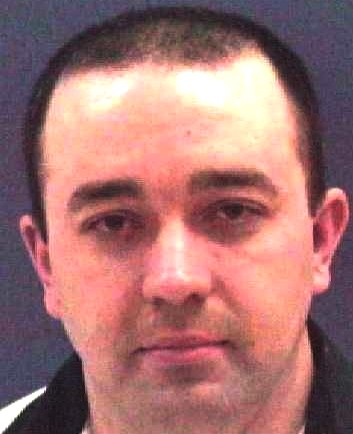
David Scott Franks
Murderer Brian Kevin Rosenfeld
Murderer · USA · 1985
Brian Kevin Rosenfeld Brian Kevin Rosenfeld was sentenced to three concurrent l…
23 victims
Brian Kevin Rosenfeld
Murderer · USA · 1985
Brian Kevin Rosenfeld Brian Kevin Rosenfeld was sentenced to three concurrent l…
23 victims
 Russell Ellwood
Murderer · USA · 1991
Russell Ellwood was a former taxi driver. Authorities suspected him of killing…
20 victims
Russell Ellwood
Murderer · USA · 1991
Russell Ellwood was a former taxi driver. Authorities suspected him of killing…
20 victims
 Robert Martines Perez
Murderer · USA · 1994
Name: Robert Martines Perez · Other name used in proceedings: Robert Martinez P…
15 victims
Robert Martines Perez
Murderer · USA · 1994
Name: Robert Martines Perez · Other name used in proceedings: Robert Martinez P…
15 victims
 Billy Frank Vickers
Murderer · USA · 1993
Billy Frank Vickers Vickers was executed by lethal injection in Texas on Januar…
14 victims
Billy Frank Vickers
Murderer · USA · 1993
Billy Frank Vickers Vickers was executed by lethal injection in Texas on Januar…
14 victims
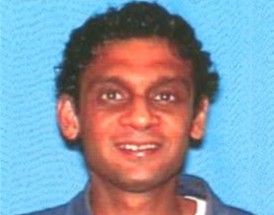 Karthik Rajaram
Mass murderer · USA · 2008
Karthik Rajaram was found dead in his Porter Ranch home along with his wife, mo…
5 victims
Karthik Rajaram
Mass murderer · USA · 2008
Karthik Rajaram was found dead in his Porter Ranch home along with his wife, mo…
5 victims
 Michael Dewayne Johnson
Murderer · USA · 1995
Michael Dewayne Johnson was a death row inmate in Texas. Johnson had no prior c…
1 victim
Michael Dewayne Johnson
Murderer · USA · 1995
Michael Dewayne Johnson was a death row inmate in Texas. Johnson had no prior c…
1 victim
 Michael Wayne McGray
Serial killer · Canada/USA · 1985
Michael Wayne McGray was a Canadian serial killer who claimed to have killed 16…
16 victims
Michael Wayne McGray
Serial killer · Canada/USA · 1985
Michael Wayne McGray was a Canadian serial killer who claimed to have killed 16…
16 victims
 William Glenn Boyd
Murderer · USA · 1986
Name: William Glenn Boyd · Gender: M · Race: B · Date of birth: 1/6/1966 · Pris…
2 victims
William Glenn Boyd
Murderer · USA · 1986
Name: William Glenn Boyd · Gender: M · Race: B · Date of birth: 1/6/1966 · Pris…
2 victims
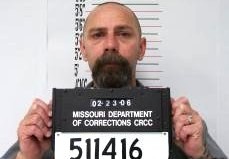 Doyle Kelley
Murderer · USA · 1990
Doyle Kelley was the defendant and appellant. · September 25, 1990 — Doyle Kell…
2 victims
Doyle Kelley
Murderer · USA · 1990
Doyle Kelley was the defendant and appellant. · September 25, 1990 — Doyle Kell…
2 victims
- Gender
- male
- Country
- USA
- Location
- Haralson County, Georgia, USA
- Date of birth
- 1961
- Age at first offence
- 33
- Characteristics
- —
- Victim profile
- Clinton Wilson, 50, and Deborah Wilson, 35; and David Martin, 28
- Method of murder
- St abbing with knife
- Date(s) of murder
- August 5, 1994
- Years active
- 1994
- Date of arrest
- —
- Status
-
Sentenced to death
Sentenced to death on February 16, 1998
Case information
Name: David Scott Franks
Timeline
- August 5, 1994 — David Scott Franks stabbed to death Deborah Wilson and injured her 2 children, ages 13 and 9.
- August 1994 — David Scott Franks shot to death Deborah Wilson's husband, Clinton, and his helper, David Martin, just hours earlier in the basement of his pawnshop in Haralson County.
- February 16, 1998 — A jury began deciding whether convicted murderer David Scott Franks should be executed.
- February 1998 — After 11 days of testimony, a jury deliberated for a total of about 1 hour before finding Franks guilty of 12 felonies connected with the murder of Deborah Wilson and the stabbing of her 2 children.
- July 14, 1997 — The case was decided.
- July 24, 1997 — Reconsideration was denied.
- After Monday’s decision (February 1998) — Jurors heard from relatives of both Deborah Wilson and Franks, and the jury was scheduled to return to court at 10 a.m. to begin deliberations on the death penalty.
Background
David Scott Franks was 33 years old. He had shown little emotion. Moments earlier, during the penalty phase proceedings, he asked relatives of his victims to forgive him for his "involvement in the dealings we had that night," an apparent reference to earlier testimony in which he claimed 2 other men murdered Deborah Wilson's husband, Clinton, and his helper, David Martin, because of a drug deal gone sour. Chief Assistant District Attorney Margaret Gregory remarked: "I thought that was an empty apology." She further stated: "If I were a family member, I would be insulted." After Monday’s events, Franks was on the verge of tears as he apologized to his own family for his actions.
The offence
David Scott Franks was convicted in connection with the murder of 35-year-old Deborah Wilson and the stabbing of her 2 children, ages 13 and 9. Franks was also accused of shooting to death Deborah Wilson's husband, Clinton, and his helper, David Martin, just hours earlier in the basement of his pawnshop in Haralson County. Franks had not been tried on those charges.
The jury found Franks guilty of 12 felonies in connection with the murder and stabbing described above.
Investigation
FBI Agent Gordon Snow was in charge of the investigation and was involved in Franks’s arrest and custody. Prior to Franks’s arrest, Snow received teletypes stating that Franks had sustained a knife wound in connection with the crimes for which he was sought. Medical personnel treated an injury to Franks' forearm near the elbow.
Magill was Special Agent Joe Magill, and he had acted as coordinator of the manhunt for Franks. Magill sent the teletypes to Snow regarding Franks' arm injury and was aware of the circumstances of Franks' arrest.
The State argued that Magill did not intend to elicit an incriminating response from Franks because the question was prompted by a reasonable belief that Franks had been injured during his arrest and might later file a civil rights suit.
The circumstances of the arrest were not entirely clear, including whether rocks were thrown through a window in the room where Franks was supposedly sleeping prior to his arrest.
Arrest
Franks was arrested in Alabama for "unlawful flight to avoid prosecution" for fatally stabbing Wilson and assaulting her two children in Haralson County, Georgia.
After unsuccessfully attempting to draw Franks out of his brother-in-law's house, a team of officers entered the house and found him hiding under a bed. Franks was brought outside and taken into custody by FBI Agent Gordon Snow.
Franks was brought to an FBI booking process. A deputy drove Franks to the Alabama Detention Center, where he was placed in a booking room with Snow and Special Agent Joe Magill for "processing." The procedure included fingerprinting and photographing Franks and collecting physical data; it did not require completion of any standard form.
Trial
Miranda and booking-question issue
The trial was in Hall Superior Court before Judge John Girardeau. The case involved whether the question of how Franks injured his arm fell under an exception to Miranda for "routine booking questions."
Franks was read the Miranda warnings and declined to make a statement.
Franks filed a motion to exclude the admission regarding the stab wound. The trial court summarily denied Franks' motion, finding that the testimony of Snow and Magill "demonstrated" that the question regarding the bandage was a "routine booking question" under Pennsylvania v. Muniz, 496 U. S. 582, 601 (110 SC 2638, 110 LE2d 528) (1990).
Jury deliberations and verdict
After 11 days of testimony, the jury deliberated for a total of about 1 hour on Saturday and Monday before finding Franks guilty of 12 felonies connected with the murder of Deborah Wilson and the stabbing of her 2 children, ages 13 and 9.
Sentencing
Franks’s lawyers, Stan Robbins and Joey Homans, asked the court to declare the electric chair unconstitutional on grounds that it amounts to cruel and unusual punishment. The attorneys submitted the motion more than 2 years ago, and Judge John Girardeau refused to rule on the matter until after the jury decided the penalty.
Georgia used the electric chair as the preferred form of execution. After Monday’s decision, jurors heard from relatives of both Deborah Wilson and Franks.
Deborah Wilson's mother, Diane Boone, told jurors that she thought about her dead daughter every day and recounted the last conversation with her daughter. Boone said: "The purpose of the last phone call I received from Debbie was to tell me about a man named David Scott Franks, who stabbed her and left her to die," and: "My heart was shattered on Aug. 5, 1994, and there is no way to repair the damage that David Franks has caused."
The jury was scheduled to return to court at 10 a.m. and would begin deliberations on the death penalty following instructions from Girardeau.
David Scott Franks was sentenced to death on February 16, 1998.
Appeals
Case name and citation
FRANKS v. THE STATE. S96A1943. (268 Ga. 238) (486 SE2d 594) (1997)
Issues addressed on appeal
The appellate discussion addressed the whether the booking exception applied to the question concerning the arm bandage.
The court addressed federal and state Miranda doctrine, including the booking exception referenced in Pennsylvania v. Muniz and how Georgia courts confined the booking exception to requests for basic biographical data required to complete booking. The court stated there was no per se exception to Miranda for questions asked during booking.
The court concluded:
- The question was not the sort of "routine booking question" referenced in Muniz.
- Under the totality of the circumstances, the question was equivalent to "custodial interrogation" and violated the Fifth Amendment right against self-incrimination.
- Franks’s response to the question was inadmissible at trial for any purpose other than impeachment.
Majority holding
The court reasoned that the question of how a suspect received an obvious injury was more likely to elicit an incriminating response, because the suspect's injury might be directly related to the crime. The court said its inquiry extended beyond whether it fit "routine booking question" categories, to whether it was equivalent to custodial interrogation based on context, officer intention, and relationship to the crime.
The court quoted:
- "[T]he definition of interrogation can extend only to words or actions on the part of police officers that they should have known were reasonably likely to elicit an incriminating response." Rhode Island v. Innis, 446 U. S. 291, 302 (100 SC 1682, 64 LE2d 297) (1980).
- The court further explained that the focus was primarily on the perceptions of the suspect and that it quoted:
- "This focus reflects the fact that the Miranda safeguards were designed to vest a suspect in custody with an added measure of protection against coercive police practices, without regard to objective proof of the underlying intent of the police." Hibbert v. State, 195 Ga. App. 235, 236 (393 SE2d 96) (1990), quoting Innis, supra at 301.
The court described Franks as confronted with a "cruel trilemma" and quoted:
- "cruel trilemma"
- "As 'the inherently coercive environment created by the custodial interrogation precluded the option of remaining silent,' Franks was confronted with the choice of incriminating himself or lying to the agents." (quoted attribution to Muniz, supra at 599)
The court also described the State’s argument about Magill’s intent and addressed factors relevant to interrogation, noting Magill should have known the bandage was reasonably likely to be covering the knife wound mentioned in the reports and that the relationship of the question to the crime was highly relevant.
Concurrence
Justice SEARS concurred and stated beliefs about routine booking medical questions and how questions should be phrased to avoid eliciting incriminating evidence. SEARS concurred in the majority.
Dissent
Justice HUNSTEIN dissented. The dissent concluded the trial court did not abuse its discretion and that the question fell within the booking exception to Miranda. The dissent referenced testimony from Agent Magill, including:
- "when [the FBI] apprehend[s] fugitives [they] like to get a thorough description of them," including their physical description, height, weight, eye color, scars, tattoos, fingerprints, and injuries like marks, swelling, bruises, and bandages and that it is procedure to ask about injuries when the person in custody has a bandage or other type of visible injury.
- The dissent also referenced the agent’s belief that Franks was injured during the arrest, and that bandage placement indicated the injury he had was on the forearm near the elbow, rather than the upper arm described in the reports.
- The dissent quoted the belief that the bandage on Franks’ arm appeared very recent and that the injury believed to have been received at the time of the crime would have been nine days old at the time of booking.
- The dissent stated the trial court heard testimony that when apprehending fugitives, agents like to get a thorough description and that it is procedure to ask about injuries when the person in custody has a bandage or other visible injury.
The dissent concluded:
- The majority substituted its judgment without a clear statement on how the trial court abused its discretion.
- The question was a legitimate police concern for Franks' then-existing medical condition and did not seek to prove an element of the crime Franks was suspected of committing.
- Justice Carley and Justice Hines joined in the dissent.
Procedural dates
The decision was DECIDED JULY 14, 1997 and RECONSIDERATION DENIED JULY 24, 1997.
Other details
People named
- Deborah Wilson — victim; 35-year-old; stabbed to death; her 2 children, ages 13 and 9, were injured.
- Clinton Wilson — Deborah Wilson's husband; accused of being shot to death just hours earlier in the basement of a pawnshop.
- David Martin — helper of Clinton Wilson; accused of being shot to death just hours earlier in the basement of a pawnshop.
- Diane Boone — Deborah Wilson's mother; told jurors the last phone call purpose and recounted the last conversation with her daughter.
- Gordon Snow — FBI Agent; in charge of the investigation; took Franks into custody.
- Joe Magill — Special Agent; coordinator of the manhunt; asked Franks how he received the bandage.
- Stan Robbins — lawyer for appellant (Franks).
- Joey Homans — lawyer for appellant (Franks).
- Margaret Gregory — Chief Assistant District Attorney; commented on Franks’s apology.
- John Girardeau — judge in Hall Superior Court; refused to rule on electric chair issue until after the jury decides the penalty; provided instructions to begin deliberations on the death penalty.
- Lydia J. Sartain — District Attorney, for appellee.
- Leonard C. Parks, Jr. — Assistant District Attorney, for appellee.
Quoted statements and wording
Boone’s quoted statements were included verbatim:
- "The purpose of the last phone call I received from Debbie was to tell me about a man named David Scott Franks, who stabbed her and left her to die,"
- "My heart was shattered on Aug.
Gregory’s quoted remarks were included verbatim:
- "I thought that was an empty apology,"
- "If I were a family member, I would be insulted."
Franks’s apology phrase to victims’ relatives was included verbatim:
- "involvement in the dealings we had that night"
Injuries and booking questioning details
Snow was aware of the bandage but did not ask anyone present about the injury. Magill asked Franks how he received the bandage. Franks replied the bandage covered a stab wound. Magill did not inquire further about the injury and did not ask whether Franks required medical attention.
The parties’ disagreement in the appellate opinion included whether the inquiry was intended to be administrative and identification versus interrogation likely to elicit an incriminating response.
Spotted an error, or have more information about this case?