
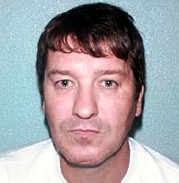
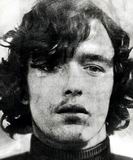
Michael Wayne McGray
Serial killer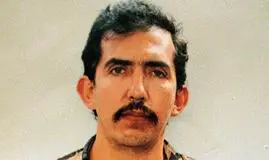 Luis Alfredo Garavito
Serial killer · Colombia/Ecuador · 1992
Luis Alfredo Garavito Cubillos, also known as "La Bestia" ("The Beast") or "Tri…
192 victims
Luis Alfredo Garavito
Serial killer · Colombia/Ecuador · 1992
Luis Alfredo Garavito Cubillos, also known as "La Bestia" ("The Beast") or "Tri…
192 victims
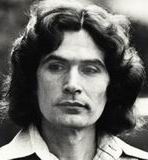 Rodney Alcala
Serial killer · USA · 1977
Rodney James Alcala (born August 23, 1943) was also known as Rodrigo Jacques Al…
100 victims
Rodney Alcala
Serial killer · USA · 1977
Rodney James Alcala (born August 23, 1943) was also known as Rodrigo Jacques Al…
100 victims
 Serhiy Tkach
Serial killer · Ukraine · 1980
Serhiy Tkach (Russian: Серге́й Фёдорович Ткач, born 12 September 1952 in Kisely…
100 victims
Serhiy Tkach
Serial killer · Ukraine · 1980
Serhiy Tkach (Russian: Серге́й Фёдорович Ткач, born 12 September 1952 in Kisely…
100 victims
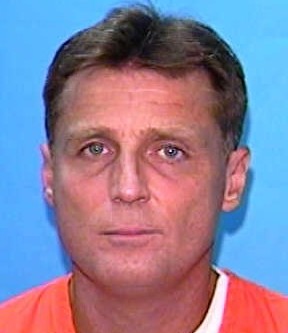 Glen Edward Rogers
Serial killer · USA · 1993
Glen Edward Rogers was a spree killer whose cross-country rampage in 1994-95 le…
70 victims
Glen Edward Rogers
Serial killer · USA · 1993
Glen Edward Rogers was a spree killer whose cross-country rampage in 1994-95 le…
70 victims
 Donald Leroy Evans
Serial killer · USA · 1975
Donald Leroy Evans (born July 5, 1957) was an American serial killer who murder…
60 victims
Donald Leroy Evans
Serial killer · USA · 1975
Donald Leroy Evans (born July 5, 1957) was an American serial killer who murder…
60 victims
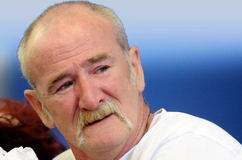 Mick Philpott
Homicide · United Kingdom · 2012
Michael “Mick” Philpott was an Englishman who had gained notoriety as a crimina…
6 victims
Mick Philpott
Homicide · United Kingdom · 2012
Michael “Mick” Philpott was an Englishman who had gained notoriety as a crimina…
6 victims
 Judith Neelley
Murderer · USA · 1982
Judith Neelley was also known as Judith Ann Adams Neelley. Judith Ann Adams Nee…
2 victims
Judith Neelley
Murderer · USA · 1982
Judith Neelley was also known as Judith Ann Adams Neelley. Judith Ann Adams Nee…
2 victims
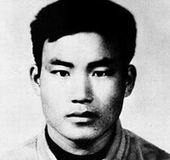 Woo Bun-Kon
Spree killer · South Korea · 1982
Woo Bun-Kon, also known as Woo “Power” Bum-Kon (February 24, 1955–April 27, 198…
57 victims
Woo Bun-Kon
Spree killer · South Korea · 1982
Woo Bun-Kon, also known as Woo “Power” Bum-Kon (February 24, 1955–April 27, 198…
57 victims
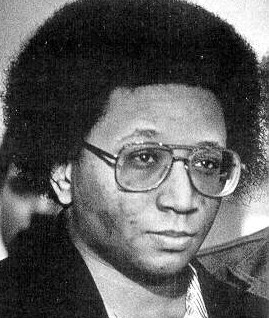 Wayne Williams
Serial killer? · USA · 1979
Wayne Bertram Williams was sentenced to two consecutive terms of life imprisonm…
24 victims
Wayne Williams
Serial killer? · USA · 1979
Wayne Bertram Williams was sentenced to two consecutive terms of life imprisonm…
24 victims
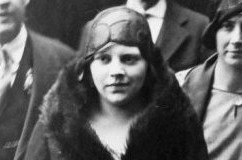 Irene Schroeder
Murderer · USA · 1929
Irene Schroeder (née Crawford) was an American criminal. · February 17, 1909 —…
1 victim
Irene Schroeder
Murderer · USA · 1929
Irene Schroeder (née Crawford) was an American criminal. · February 17, 1909 —…
1 victim
- Gender
- male
- Country
- Canada/USA
- Location
- Canada/USA
- Date of birth
- 1965
- Age at first offence
- 20
- Characteristics
- drug addict, drugs, rape
- Victim profile
- Elizabeth Gale Tucker, / Mark Daniel Gibbons (cab driver) / Joan Hicks, 48, and her daughter Nina, 11 / Robert Assaly, 59 / Gaetan Ethier, 45
- Method of murder
- Stabbing with knife
- Date(s) of murder
- 1985 - 1999
- Years active
- 1985–1999
- Date of arrest
- October 1999
- Status
-
Life imprisonment
Sentenced to life in prison with no chance of parole for 25 years on March 20, 2000
Case record: Michael Wayne McGray
Background
Michael Wayne McGray was a Canadian serial killer who claimed to have killed 16 people. He claimed he had been beaten by his alcoholic father and that he was sexually abused in many of the reform schools in which he essentially grew up. He also claimed that he killed animals as a child.
McGray stated that he wanted psychiatric treatment for “demons” he said sent him on a 15-year coast-to-coast killing spree. He said he would murder a guard, a prisoner, or anyone else to quench his “searing hunger to kill.”
Constable Adrian Tomkins said there may have been even more murders in McGray’s past, stating:
"There are numerous responses from other jurisdictions within Canada, and we are working together to try to assist them with any information that we can provide ... which will possibly give a conclusion to some of the murder investigations that have been open for some time in those areas."
McGray described an urge to kill and told how he “mainlin[ed] cocaine” before the killing of Joan Hicks. He also said he used to kill animals and get in fights all the time at school, stating:
"I used to kill animals and get in fights all the time at school,"
"It was like a hunger."
McGray said he would provide details on killings in return for a deal from police and prosecutors. He wanted to be free from further prosecution and he wanted to protect accomplices he said were involved. Sergeant Wayne Noonan said medical treatment was no problem and that police would keep trying to talk to McGray, stating:
''We want to talk to him. That's the bottom line,''
''Come clean,'' Noonan said. ''You just give us everything that you have on unsolved homicides and we'll take that under consideration.''
After giving interviews to the media, McGray refused to reveal his self-proclaimed role in the string of murders and clammed up. Constable Roland Cormier said:
''He's not talking, so there's not a whole lot anyone can do right now,''
RCMP investigators from Halifax had hoped to speak with McGray but that had been put off until later in the week.
A source in the New Brunswick legal community said McGray wanted time to himself and was unhappy about the way his comments were treated by the media; the source said McGray believed he was misquoted and had decided to say nothing.
Other details
McGray was described as a “drifter” and as having a “long history of angry outbursts, violence and drugs.” He was in and out of institutions from 1985 to 1995. He was in lockdown in a segregated prison cell at the Atlantic Institution, a maximum-security penitentiary in central New Brunswick.
A psychiatric report delivered to the court earlier in the year suggested McGray had an extreme nervous disorder similar to Tourette’s syndrome. Defence lawyer Alan Schelew said Ottawa psychiatrist Dr. John Bradford believed McGray may have a rare and dangerous form of the disease that can spark violence.
McGray was described as a person of few words; Wendell Maxwell characterized him as:
Maxwell characterized his client as "a person of few words, very polite, soft-spoken when I've had to deal with him."
McGray’s Moncton lawyer was Wendell Maxwell. A quote from a legal perspective described how the 11 killings claim was divulged to a police officer while McGray was being transported from the prison in Renous to Moncton for a court appearance.
McGray was 34 years old when he was awaiting trial in 1999 and was also described as 35 years old in March 2000.
Constable Mark Gallagher of the RCMP said investigators had talked to other people known to McGray and to McGray himself while he was awaiting trial, and said:
"Our investigators through the course of their investigation have talked to other people who are known to McGray and to McGray himself. " He also said it had become obvious to police that McGray was telling the truth about his involvement in other killings, adding: "We have sources that gave us the information - the montreal urban police and also in saint john were able to verify his story - and only the person who was involved in the crime would know the details."
Timeline
- October 29, 1999 — Codiac RCMP said they may have one of Canada’s worst serial killers in custody; Michael Wayne McGray was in custody and awaiting trial for the murders of a Moncton woman and her 11-year-old daughter.
- October 30, 1999 — Police said McGray was awaiting trial for the murder of a Moncton mother and daughter and that he was considered a suspect for additional murders in Montreal; a trial was scheduled to begin in February.
- March 20, 2000 — McGray pleaded guilty in Moncton to the first-degree murder of Joan Hicks; he was sentenced to life in prison with no chance of parole for 25 years.
- March 22, 2000 — A lawyer representing McGray said McGray had taken credit for an additional 11 killings.
- March 27, 2000 — McGray refused to reveal his self-proclaimed role in a string of murders that could establish him as the worst serial killer in Canadian history.
- May 23, 2001 — Police in Halifax charged McGray with the murder of hitchhiker Elizabeth Gale Tucker.
The offences
Murder of Joan Hicks (Moncton)
Joan Hicks was murdered in Moncton in 1998. McGray pleaded guilty to slicing the throat of Joan Hicks in Moncton and was sentenced to life in prison with no chance of parole for 25 years.
McGray did not admit his part in the murder of Joan Hicks’ 11-year-old daughter Nina; proceedings in that case were stayed or suspended, with prosecutors having a year to decide whether to revive the charge.
In his statement, McGray described his day before the killing, including that he had spent the day “mainlining cocaine.” He stated that he became overwhelmed with a recurring urge to kill somebody. He said his girlfriend was at the home of Joan Hicks, and that he went to Hicks’ home and sent his girlfriend away. He said he choked Joan Hicks against the wall and, once she was unconscious, slashed her throat with a breadknife to make sure she was dead.
Murder of Nina Hicks (Moncton)
Nina was the 11-year-old daughter of Joan Hicks and was murdered in their Moncton apartment. McGray refused to admit his part in the murder of Nina, and proceedings were stayed or suspended.
Murder of Mark Daniel Gibbons (Saint John)
McGray confessed to the murder in Saint John of Mark Daniel Gibbons in 1987. Gibbons was stabbed to death in Market Square shortly after McGray, Gibbons, and another man had robbed a taxi driver at knifepoint. McGray pleaded guilty to stabbing cabbie Mark Gibbons to death.
McGray received a life sentence for that guilty plea, which ran concurrent to the life sentences he was already serving.
The body of Elizabeth Gale Tucker and the later Mark Gibbons and other bodies were each described separately in the case material; for Gibbons specifically, his body was found inside the Market Square complex.
Murder of Elizabeth Gale Tucker (Halifax / Digby area)
Police charged McGray with the murder of a hitchhiker 16 years after her body was found on the side of a road near Digby, Nova Scotia.
The victim was 17-year-old Elizabeth Gale Tucker. She was murdered in 1985 while hitchhiking to her job at a fish plant. Her body was found in a wooded area near Digby, Nova Scotia.
RCMP Sgt. Wayne Noonan said police officials had spent the last year checking evidence and trying to substantiate claims McGray made more than a year earlier, in which he admitted killing Tucker. Noonan said:
"We had to corroborate some of the things that were said and try to find witnesses and evidence,"
McGray admitted to stabbing Tucker multiple times and dumping her body.
Murders of two men in Montreal (1991)
McGray was charged with the 1991 deaths of two gay men in Montreal. Robert Assaly and Gaetan Ethier were stabbed to death, within five days of each other in April 1991.
Montreal police laid formal homicide charges against McGray in connection with the two 1991 deaths. Preliminary hearings in the Montreal slayings were scheduled for April 24.
Murder charges in Saint John and Montreal (as expectations for additional charges)
In late October 1999, police announced or said they would charge McGray with “3-other murders in Saint John and Montreal,” and they also said more charges were expected in the near future.
Investigation and police statements
Const. Mark Gallagher said police asked police forces across the country to examine unsolved murder records to look for case similarities. He said investigators were led to McGray in other murders after talking to people who knew him in prison.
Constable Adrian Tomkins was identified as the officer who took McGray’s confessions. McGray had also been linked to other crimes through conversations with other inmates while awaiting trial in Moncton.
Police said the Montreal murders of Assaly and Ethier sparked fears that a serial killer was stalking homosexuals, but a police investigation completed in 1993 dispelled that theory of a stalker of gays.
Police said Montreal police and Saint John police were able to verify McGray’s story by checking details that only the person involved would know.
Police said they were reopening old murder files in New Brunswick and more charges were expected.
So far, investigators said they had not uncovered any evidence confirming McGray’s deadly allegations.
Trial and sentencing
Plea and sentencing (March 20, 2000)
On March 20, 2000, McGray pleaded guilty in Moncton to the first degree murder of Newfoundlander Joan Hicks two years earlier. Crown Prosecutor Tony Allman said McGray told his side of the story to a police officer at the Renous Institution last fall.
McGray was sentenced on Monday to the maximum sentence of life in prison with no chance of parole for 25 years.
Police described McGray as having “no remorse.”
McGray also confessed to the murder in Saint John of Mark Daniel Gibbons in 1987 and had admitted to the murder in Montreal of two men in 1991, which McGray was charged with.
Concurrent life sentences
McGray was serving concurrent life sentences of 25 years with no parole. The life sentences ran concurrent with:
- the first-degree murder of Joan Hicks in Moncton in 1998, and
- the two men in Montreal in 1991, and also covered the life sentence received for the 1987 stabbing death of Mark Gibbons.
Status of proceedings for Nina Hicks
McGray refused to admit his part in the murder of Joan Hicks’ 11-year-old daughter Nina. The proceedings in that case were stayed or suspended, and prosecutors had a year to decide whether to revive the charge.
Police said they may try to have him declared a dangerous offender, which would keep him behind bars indefinitely.
Appeals
No appeal information was provided.
Outcome and after developments
Halifax charge for Elizabeth Gale Tucker (May 23, 2001)
On May 23, 2001, police in Halifax, Nova Scotia charged Michael McGray with the murder of hitchhiker Elizabeth Gale Tucker.
Sgt. Wayne Noonan said police had spent the last year checking evidence and trying to substantiate claims McGray made more than a year earlier in which he admitted killing Tucker.
Claim of additional killings and negotiating proposals (March 22, 2000; March 27, 2000)
A lawyer representing McGray said McGray had taken credit for an additional 11 killings, which if true would make him the worst serial killer in Canadian history. The claim was said to have been made when McGray divulged the information “some months ago” while being transported from the prison in Renous to Moncton for a court appearance. Wendell Maxwell said McGray had not provided police with specifics and had not discussed the claim with him. Maxwell said police were trying to work out a deal in which McGray would entrust Maxwell with information about the 11 slayings, and Maxwell would “hold them in escrow” until McGray wanted them divulged.
Constable Roland Cormier later said McGray was refusing to reveal his self-proclaimed role in the string of murders.
Claims about murders in Seattle and other places
McGray claimed he killed a prostitute and a gay man in Seattle sometime in 1995-96 and that he killed three gay men in Montreal. He also said he could lead Toronto police to the body of a 50-year-old alcoholic he buried in a west-end park.
The material also stated that his claims of killings in Halifax, Saint John, Montreal, Newfoundland, Ottawa, Toronto, Calgary, Vancouver and Seattle had caused police to sift through unsolved homicide files looking for links, but investigators said they had not uncovered any evidence confirming his allegations.
Other people whose deaths were attributed to McGray in claims
In the case material, McGray claimed to have killed:
- Elizabeth Gale Tucker, 17, in 1985,
- three gay men in Montreal,
- two men in Montreal (Robert Assaly and Gaetan Ethier, with formal homicide charges laid),
- Mark Daniel Gibbons in 1987, and
- a 50-year-old alcoholic whose body he said he buried in a Toronto west-end park.
Additionally, he was said to have admitted to confessing to 11 slayings while being transported from one prison to another.
Quotes recorded in relation to the investigation and his claims
Constable Roland Cormier said: Sergeant Wayne Noonan said:
''I believe he (McGray) wants closure,''
''The logical first step for him is to come clean and tell us what he knows.''
Sergeant Wayne Noonan also said: RCMP Sgt. Wayne Noonan said: And McGray said:
Spotted an error, or have more information about this case?