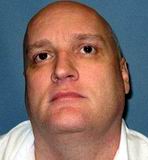
William Glenn Boyd
Murderer Brian Kevin Rosenfeld
Murderer · USA · 1985
Brian Kevin Rosenfeld Brian Kevin Rosenfeld was sentenced to three concurrent l…
23 victims
Brian Kevin Rosenfeld
Murderer · USA · 1985
Brian Kevin Rosenfeld Brian Kevin Rosenfeld was sentenced to three concurrent l…
23 victims
 Yahweh ben Yahweh
Murderer · USA · 1980
Yahweh ben Yahweh was born and legally named Hulon Mitchell Jr. (October 27, 19…
23 victims
Yahweh ben Yahweh
Murderer · USA · 1980
Yahweh ben Yahweh was born and legally named Hulon Mitchell Jr. (October 27, 19…
23 victims
 Russell Ellwood
Murderer · USA · 1991
Russell Ellwood was a former taxi driver. Authorities suspected him of killing…
20 victims
Russell Ellwood
Murderer · USA · 1991
Russell Ellwood was a former taxi driver. Authorities suspected him of killing…
20 victims
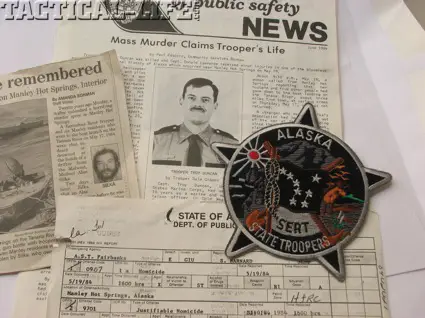 Michael Alan Silka
Spree killer · USA · 1984
Michael Alan Silka was killed during a shoot-out with the police on May 19, 198…
9 victims
Michael Alan Silka
Spree killer · USA · 1984
Michael Alan Silka was killed during a shoot-out with the police on May 19, 198…
9 victims
 Desmond Jennings
Serial killer · USA · 1993
Desmond Jennings declined to make a last statement. Texas Attorney General John…
20 victims
Desmond Jennings
Serial killer · USA · 1993
Desmond Jennings declined to make a last statement. Texas Attorney General John…
20 victims
 Chiang Kuo-ching
Innocent · Taiwan · 1996
Chiang Kuo-ching (江國慶) A military court acquitted Chiang Kuo-ching in a posthum…
0 victims
Chiang Kuo-ching
Innocent · Taiwan · 1996
Chiang Kuo-ching (江國慶) A military court acquitted Chiang Kuo-ching in a posthum…
0 victims
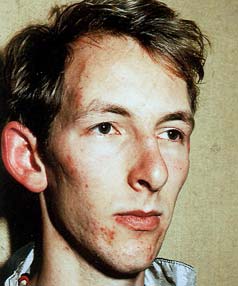 David Bain
Mass murderer ? · New Zealand · 1994
David Cullen Bain (born 27 March 1972) was a New Zealander who featured in one…
5 victims
David Bain
Mass murderer ? · New Zealand · 1994
David Cullen Bain (born 27 March 1972) was a New Zealander who featured in one…
5 victims
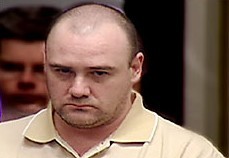 Paul Leahy
Murderer · USA · 2002
Paul Leahy was a fast-food cook and a convicted rapist. Alexandra Zapp was a sa…
1 victim
Paul Leahy
Murderer · USA · 2002
Paul Leahy was a fast-food cook and a convicted rapist. Alexandra Zapp was a sa…
1 victim
 Stephen Nethery
Murderer · USA · 1981
Stephen Ray Nethery was convicted of capital murder and sentenced to death by t…
1 victim
Stephen Nethery
Murderer · USA · 1981
Stephen Ray Nethery was convicted of capital murder and sentenced to death by t…
1 victim
- Gender
- male
- Country
- USA
- Location
- Calhoun County, Alabama, USA
- Date of birth
- January 6, 1966
- Age at first offence
- 20
- Characteristics
- kidnapping, torture
- Victim profile
- Fred Blackmon, 76, and his wife, Evelyn, 41
- Method of murder
- Shooting ( .25 caliber automatic pistol)
- Date(s) of murder
- March 26, 1986
- Years active
- 1986
- Date of arrest
- April 3, 1986
- Status
-
Executed
Executed by lethal injection in Alabama on March 31, 2011
Case information
- Name: William Glenn Boyd
- Gender: M
- Race: B
- Date of birth: 1/6/1966
- Prison: Holman
- DOC#: Z473
- County: CALHOUN
- Charge: MURDER
STATUS details
Boyd was executed by lethal injection on March 31, 2011. The execution took place in Alabama. A U.S. Supreme Court request for a stay and clemency from Alabama Gov. Robert Bentley were denied.
Timeline
- March 26, 1986 — Fred and Evelyn Blackmon disappeared from their home in Anniston, Alabama; a 1976 white, two-door Chevrolet Camaro illegally parked near the intersection of Sunset and Fairway Drives was observed.
- April 3, 1986 — Boyd was arrested for kidnapping in the first degree at 701 Mulberry Street in Anniston; Boyd signed a waiver after being advised of Miranda rights and gave a statement to police.
- April 4, 1986 — Fred Blackmon’s 1985 Cadillac Eldorado was recovered from the Coosa River.
- April 5, 1986 — The piece-matching of taillight parts was described at the Wood’s Body Shop.
- April 7, 1986 — Officers Watson and Bradley inventoried Boyd’s Chevrolet Camaro contents in the fenced and locked impound area; evidence was described.
- April 9, 1986 — A metal drum containing Evelyn Blackmon’s body was recovered from the Coosa River.
- April 11, 1986 — Boyd told police where guns used on March 26, 1986 had been thrown; a nickel-plated Raven Arms Company .25 caliber automatic pistol and a black .22 caliber pistol were recovered.
- April 25, 1986 — A grand jury indicted Boyd on eight counts of capital murder.
- March 16, 1987 — Boyd’s capital murder trial began.
- March 20, 1987 — The jury returned verdicts finding Boyd guilty on all eight counts; the jury recommended life imprisonment without parole by a vote of seven to five.
- April 9, 1987 — The trial court sentenced Boyd to death by electrocution after the penalty hearing.
- March 31, 2011 — Boyd was executed by lethal injection at Holman Prison in Atmore, Alabama.
Background
Fred and Evelyn Blackmon lived at 401 Fairway Drive in Anniston. Julie Greenwood, Evelyn Blackmon’s daughter by a previous marriage, lived with them.
Julie testified that she was living with her mother and her mother’s husband, Fred Blackmon, at 401 Fairway Drive in Anniston. She stated that when she left for school, both Mr. and Mrs. Blackmon were at home, and that when she returned at 9:30 p.m., neither Mr. nor Mrs. Blackmon was home, and Mr. Blackmon’s black Cadillac Eldorado was not at the house.
Julie and her father, Wayne Greenwood, filed a missing person report with the Anniston Police Department the next afternoon.
Julie testified that she had dated Boyd for a couple of years until the two broke up in February of 1986.
Julie testified that in October 1986 she went to see Boyd in jail. She said that Boyd told her that he had a letter which would explain everything, but Boyd never gave her a letter. She said Boyd told her she would be surprised to learn who was involved in the murders, but he would not give her any names.
Julie testified that she went to see Boyd a second time in jail. She said he told her a gang was involved in the murders and they threatened that, if he did not do what they said, the gang would kill Julie and Evelyn Blackmon.
In addition, Julie testified that two telephones were missing from the Blackmon house on March 26, 1986, and that she stated the phones were tapped because someone had been calling Mr. Blackmon and saying things about Mrs. Blackmon. Julie testified that Boyd knew this and had been in the Blackmon house on numerous occasions in the past.
The offence
Events described during the homicide and kidnapping/robbery episode
Boyd and Robert Denton Milstead broke into the home of Fred and Evelyn Blackmon in Anniston, and tied them up, gagged them, and drove them into a woods area. They encouraged Fred to withdraw money and they convinced the victims that Evelyn’s daughter had been kidnapped and that ransom was needed.
Fred was forced at gunpoint to withdraw $5,000 from a bank, and the two men bound and gagged and drove the victims to a woods area where they were beaten and shot to death.
After the killings, Boyd and Milstead returned to dispose of the bodies.
Fred’s body was discovered in the trunk of his car, submerged into the Coosa River.
Evelyn’s body was found in the river inside a metal drum. Evelyn’s body had been hacked with an axe in an attempt to make her more easily fit in the drum. Her mouth was gagged and cloth was tied around her ankles. She sustained multiple gunshot wounds, a laceration to her right forehead, fractures to her nose and face, and an axe wound to her lower back that broke her backbone.
Victim and victim-impact references
Julie testified about missing persons reporting and meetings with Boyd while he was in jail.
Victim impact material in the presentence report was discussed in the post-conviction proceedings. The presentence report text included statements asserting that no victim impact reports were mailed due to the short time between verdict and sentencing, and that families suffered emotional stress over abduction, murders, and the additional days to recover the bodies, and that “the State contends that the family of both victims have suffered great mental and emotional distress” and “they continue to seek the death penalty in this case.” The trial court proceedings also included discussion that the record reflected no victim impact statement mailed.
Investigation and evidence
Vehicle and scene observations
Police officer Ken Murphy was on routine patrol and noticed a 1976 white, two-door Chevrolet Camaro illegally parked near the intersection of Sunset and Fairway Drives about a quarter mile from the Blackmons’ home. The license plate number was said to have been issued to Boyd.
Anniston Police Officers Robertson and Hall impounded Boyd’s automobile.
Boyd’s arrest and statements
Charles Hall arrested Boyd for kidnapping in the first degree on April 3, 1986 at 3:25 p.m. at 701 Mulberry Street in Anniston, in front of his house as Boyd arrived home in his Camaro.
Gary Carroll testified that Boyd made a statement on April 3, 1986 at 5:00 p.m. after being advised of Miranda rights and signing a waiver. The statement included a summary of Boyd and Milstead gaining entry, robbing, kidnapping, taking victims to a river area, assaults, shooting, leaving and returning to dispose of bodies, rolling the car into the river, and using barrels and axes for Evelyn’s body disposal. The statement also included Boyd’s description of plans to tie up the victims and to leave the state.
Carroll also testified that Boyd gave a second statement on April 4, 1986 providing a detailed description of how to find locations of crime scenes, and a third statement on April 6, 1986 claiming that Boyd remained in the car with Fred while Milstead took Evelyn into the woods.
Boyd accompanied police to a creek on April 11, 1986 to show where the guns were discarded.
Boyd’s statements conflicted with Milstead’s statements and testimony as to who killed which victim.
Physical evidence described
At the scene of Evelyn Blackmon’s murder, officers found a trail through the woods, bleached hair entwined with white fiber, soil and debris samples containing blood-stained leaves and soil, and a .25 caliber shell casing close to the blood stain. The hair near the blood stain was microscopically compared to hair from Evelyn’s body and determined to be the same.
Fred Blackmon’s Cadillac Eldorado was recovered from the Coosa River. Evidence described included windows down, doors unlocked, ignition key in the on position, car in first gear, and a broken tail light.
At the area where Milstead said Fred had been murdered, officers found broken pieces of red plastic tail light lens, a silver plastic Cadillac emblem, and two spent .25 caliber shell casings, along with a long white fiber.
Officers Watson and Bradley inventoried Boyd’s Chevrolet Camaro contents on April 7, 1986, finding a piece of white and yellow entwined cloth knotted with hair entwined, a black mesh shirt, blue underwear, a black jacket, additional cloth, a roll of gauze in the console, and a yellow-gold necklace inside an envelope that was identified as belonging to Evelyn Blackmon. Two spent .22 caliber shell casings were found on the dashboard.
A metal drum containing Evelyn Blackmon’s body was recovered on April 9, 1986, from the Coosa River. The drum’s contents included cinder blocks and bricks.
Townsley compared taillight pieces found on the dirt road to a missing portion of taillight on Fred’s car, and the pieces matched.
A blue metal barrel and an ax were found in Milstead’s backyard.
Serologist Larry Huys testified that soil samples contained type A blood, and that stains on clothing found in Boyd’s car tested positive for blood.
A firearms and toolmarks examiner David Higgins testified that bullets found in Fred’s body and expended cartridges found at murder scenes were fired from the .25 caliber pistol found in the creek.
John Case testified that hair samples matched known scalp hair of Evelyn Blackmon and that hair found in Boyd’s car had similarities to Evelyn Blackmon’s hair. Case also testified that cloth found on the Camaro floorboard matched fabric as the ligatures from Evelyn’s ankles and head and the gag on Fred. He also testified that blue smears on the ax were consistent with scrapings of the barrel recovered from the river.
Kenny Surrett testified that he had grown up with Boyd and provided another account indicating that Boyd had confided to him he shot Fred Blackmon but not Evelyn Blackmon, and also described Boyd saying he chopped Evelyn’s back with an axe and how they disposed of bodies.
Arrest
Boyd was arrested on April 3, 1986 for kidnapping in the first degree at 701 Mulberry Street in Anniston as he arrived home in his Camaro.
The automobile was impounded and secured, and keys were provided to Sergeant Robertson.
Trial
Charges and verdicts
Boyd was charged in an eight-count indictment with capital murders of Fred and Evelyn Blackmon. The counts included murder during the course of kidnapping and murder during the course of robbery.
The trial included a jury of five women and seven men, with two alternate jurors discharged according to law.
The jury found Boyd guilty on each count of the indictment.
At the sentence phase of the trial, the jury recommended life without parole by a seven to five vote.
The trial judge rejected the jury’s recommendation and sentenced Boyd to death.
Witness testimony and conflicting accounts
At trial, testimony included:
- Linda Jenkins and Ellen Bass as bank witnesses describing the $5,000 check cashing by Fred Blackmon and the presence of a slender white male with long dark hair.
- Eugene Hunt Scheuerman, commissioner of licenses, describing registration of vehicles including a 1985 black Cadillac Eldorado and the 1976 white Chevrolet Camaro with license tag number.
- Medical examiner Scheuerman and forensic pathologist Dr. Joseph Embry describing autopsies of Fred and Evelyn Blackmon, including gunshot wounds and cause of death.
- Officer Ken Murphy describing the Camaro seen near Sunset and Fairway Drives.
There was conflicting testimony about whether Boyd murdered Fred, Evelyn, or both.
Gary Carroll testified about Boyd’s insistence in his first statement that Milstead killed both victims.
Milstead pleaded guilty to capital murder and testified for the State in exchange for a life without parole sentence.
Milstead testified that Boyd gagged and blindfolded Evelyn, threatened the victims with information about a daughter taken hostage, forced Fred to the bank to withdraw money, drove them to a secluded area by the river, separated the victims, and shot Evelyn with a .22 caliber pistol and then with a .25 caliber gun after she continued to fight, and later shot Fred after hitting him with a stick and choking him with cloth.
Milstead also testified about the disposal: stuffing Fred’s body in the trunk and rolling the car into the river, sinking after a few minutes, throwing pistols into a creek, and attempting to cut Evelyn’s body before putting it into a metal barrel with cement blocks and rocks, then rolling the barrel into the river.
Sharon Johnson testified for the defense that Milstead told her that he shot Mrs. Blackmon and that Boyd shot Mr. Blackmon, and that she saw Boyd with about $3,000 in cash.
Kenny Surrett testified for the State that Boyd confided that he shot Fred Blackmon but not Evelyn Blackmon and also described Boyd’s statements including “Kenny, I didn’t realize how coldblooded I was.”
Evidence admitted and described in trial rulings
A warrantless inventory search issue for Boyd’s impounded vehicle was addressed on direct appeal as not violating the Fourth Amendment where conducted pursuant to standard procedures of the Anniston Police Department.
The jury asked for a distinction between murder and capital murder and the court responded that murder and capital murder had already been defined, the jury should use its own recollection of those definitions to determine any distinction, and both state and defendant counsel responded as satisfied.
No additional error was found regarding the refusal to give additional instructions.
Sentencing
Jury recommendation and judge override
The jury recommended life imprisonment without parole by a vote of seven to five.
The trial judge overrode the jury recommendation and sentenced Boyd to death by electrocution.
Aggravating and mitigating circumstances found by the trial judge
Two aggravating circumstances were found:
- The capital offense was committed while Boyd was engaged in the commission of, or flight after committing or attempting to commit robbery and kidnapping.
- The capital offenses were especially heinous, atrocious or cruel when compared to other capital offenses.
Mitigating circumstances found:
- The defendant was 20 years of age at the time of the commission of the crime charged.
- The trial judge also considered that Boyd assisted law enforcement officers in locating the bodies of the two victims and the weapons used in the crime as a non-statutory mitigating circumstance.
The trial judge described findings of fact underlying the “especially heinous, atrocious or cruel” aggravator, including statements that Boyd invaded the victims’ privacy, threatened to kill their daughter, robbed them, kidnaped them at gunpoint from their home, bound and gagged them, took them to a remote area and abused both while they were fighting and begging for their lives; hit victims on the head and in the face while tied up and blindfolded; shot each victim two or three times after physical abuse; used an axe to cut Evelyn Blackmon so her body would go into a 55 gallon drum; and bragged about the killings and how cold blooded he was.
The trial judge also considered that he believed the jury verdict might have been influenced by emotional testimony offered by Boyd’s sister and mother.
Appeals and post-conviction
Direct appeal
On direct appeal, Boyd v. State, 542 So.2d 1247 (Ala.Cr.App. 1988), affirmed convictions and death sentence.
The Court of Criminal Appeals held that:
- The warrantless inventory search of Boyd’s properly impounded automobile did not violate Fourth Amendment rights.
- Venue for prosecution was proper in Calhoun County even though murders occurred in another county.
- Imposition of death sentence was not disproportionate given the especially heinous nature of the murders and that Boyd was 20 years old at the time.
In connection with jury deliberations, the record included the jury note:
“Could we have a distinction between murder and capital murder?”
The court responded:
“Murder and capital murder have already been defined to you. You should use your own recollection of those definitions to determine any distinction.”
State and defendant counsel responded:
- “MR. FIELD: Satisfied, Your Honor.”
- “MR. PARIS: Satisfied, Your Honor.”
Post-conviction (Rule 32)
Boyd v. State, 746 So.2d 364 (Ala.Crim.App. 1999), affirmed denial of postconviction relief.
The court held:
- Neither trial nor appellate counsel was ineffective.
- Many claims were procedurally barred.
- Petitioner failed to sufficiently plead some claims.
Federal habeas
Boyd v. Allen, 592 F.3d 1274 (11th Cir. 2010), involved federal habeas corpus relief. The Court of Appeals affirmed in part, reversed in part, and remanded with instructions.
The federal appellate court held that:
- Any deficient performance by counsel in failing to adequately investigate and present mitigating evidence did not prejudice Boyd.
- An evidentiary hearing was not warranted on juror misconduct.
- An evidentiary hearing was not warranted on a claim that the State knowingly relied on perjured testimony.
- The state court’s decision not to find reasonable probability of outcome alteration was not contrary to or an unreasonable application of Strickland.
The dissent in part argued that prejudice was established in a jury override case.
Outcome
Boyd was executed by lethal injection in Alabama on March 31, 2011.
Last statement and witnessed procedures
When asked if Boyd wanted to make a statement, Boyd answered “no.” The execution included reading of the execution warrant from the Alabama Supreme Court by Warden Tony Patterson.
As the execution began, Boyd was administered a sedative. Holman chaplain Chris Summers came over, held Boyd’s left hand, and appeared to be praying while Boyd’s lips were moving. A correctional officer came over to check to make sure Boyd was unconscious before the lethal injection started.
Boyd’s last words were “Declined.”
Other details
Meal before execution
Boyd requested chicken, French fries, applesauce, a tomato and an orange drink for his last meal. The record also described he had a meatball sandwich, a Philly cheese steak sandwich, a V8 Splash drink and coffee from the vending machine.
People involved in visitation and witnesses at execution
A spokesman for the Alabama Department of Corrections, Brian Corbett, described visits and witnesses. Visits included family members and spiritual adviser and ministers, including Boyd’s sister Cynthia Pierce and brother-in-law Charles Pierce, and Boyd’s attorney Ruth Friedman.
Witnesses for Boyd at the execution included Boyd’s attorney and two ministers.
Named officials and institutions
Holman Correctional Facility Warden Tony Patterson read the execution warrant.
Chris Summers served as chaplain.
The Alabama Department of Corrections spokesman was Brian Corbett.
Indictment structure and sentencing counts
Boyd’s indictment was described as eight counts of capital murder. The appointment of jury for guilt and sentence phases and the unanimity of verdicts were described in the sentencing findings, including the trial judge’s formal sentencing hearing and written findings.
Spotted an error, or have more information about this case?