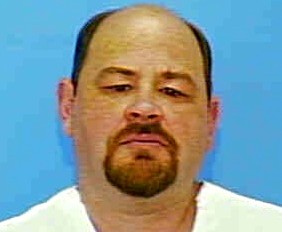
Richard Edwin Fox
Murderer Brian Kevin Rosenfeld
Murderer · USA · 1985
Brian Kevin Rosenfeld Brian Kevin Rosenfeld was sentenced to three concurrent l…
23 victims
Brian Kevin Rosenfeld
Murderer · USA · 1985
Brian Kevin Rosenfeld Brian Kevin Rosenfeld was sentenced to three concurrent l…
23 victims
 Yahweh ben Yahweh
Murderer · USA · 1980
Yahweh ben Yahweh was born and legally named Hulon Mitchell Jr. (October 27, 19…
23 victims
Yahweh ben Yahweh
Murderer · USA · 1980
Yahweh ben Yahweh was born and legally named Hulon Mitchell Jr. (October 27, 19…
23 victims
 Russell Ellwood
Murderer · USA · 1991
Russell Ellwood was a former taxi driver. Authorities suspected him of killing…
20 victims
Russell Ellwood
Murderer · USA · 1991
Russell Ellwood was a former taxi driver. Authorities suspected him of killing…
20 victims
 Robert Martines Perez
Murderer · USA · 1994
Name: Robert Martines Perez · Other name used in proceedings: Robert Martinez P…
15 victims
Robert Martines Perez
Murderer · USA · 1994
Name: Robert Martines Perez · Other name used in proceedings: Robert Martinez P…
15 victims
 Juliet Hulme
Homicide · New Zealand · 1954
Juliet Hulme was known as Juliet Marion Hulme and later as Anne Perry. Juliet H…
1 victim
Juliet Hulme
Homicide · New Zealand · 1954
Juliet Hulme was known as Juliet Marion Hulme and later as Anne Perry. Juliet H…
1 victim
 Mine An Ener
Murderer · USA · 2003
Mine An Ener was a Villanova University history professor specializing in Middl…
1 victim
Mine An Ener
Murderer · USA · 2003
Mine An Ener was a Villanova University history professor specializing in Middl…
1 victim
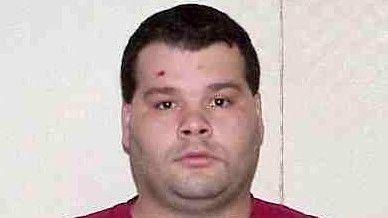 Robert Keith Woodall
Murderer · USA · 1997
Robert Keith Woodall (date of birth 3-19-74) was sentenced to death on Septembe…
1 victim
Robert Keith Woodall
Murderer · USA · 1997
Robert Keith Woodall (date of birth 3-19-74) was sentenced to death on Septembe…
1 victim
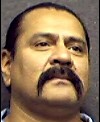 Reyes Miranda
Murderer · USA · 1987
Reyes Miranda was born on 12/20/59. He was convicted in state court of murder a…
1 victim
Reyes Miranda
Murderer · USA · 1987
Reyes Miranda was born on 12/20/59. He was convicted in state court of murder a…
1 victim
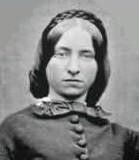 Madeleine Smith
Murderer? · United Kingdom · 1857
Madeleine Smith received a verdict of "not proven" on July 9, 1857. She died on…
1 victim
Madeleine Smith
Murderer? · United Kingdom · 1857
Madeleine Smith received a verdict of "not proven" on July 9, 1857. She died on…
1 victim
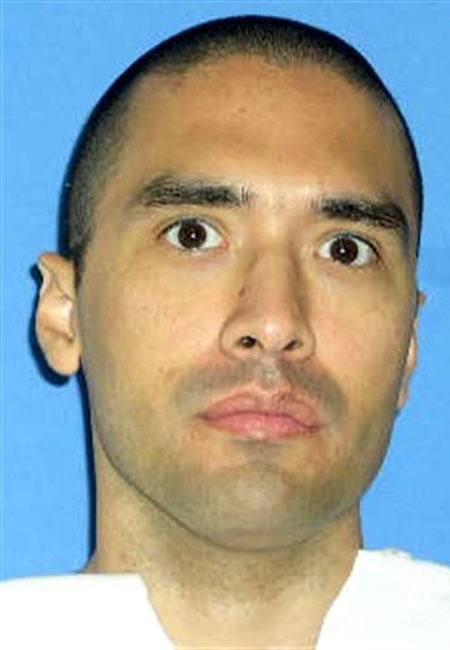 Rolando Ruiz
Murderer · USA · 1992
Rolando Ruiz was convicted of capital murder and was sentenced to death in Bexa…
1 victim
Rolando Ruiz
Murderer · USA · 1992
Rolando Ruiz was convicted of capital murder and was sentenced to death in Bexa…
1 victim
- Gender
- male
- Country
- USA
- Location
- Wood County , Ohio, USA
- Date of birth
- February 3, 1956
- Age at first offence
- 33
- Characteristics
- kidnapping, rape
- Victim profile
- Leslie Renae Keckler (female, 18)
- Method of murder
- Asphyxia from ligature strangulation and multiple stab wounds
- Date(s) of murder
- September 26, 1989
- Years active
- 1989
- Date of arrest
- —
- Status
-
Executed
Executed by lethal injection on February 12, 2003, at the Southern Ohio Correctional Facility in Ohio
Case record: Richard Edwin Fox
Summary / Background
Richard Edwin Fox (February 3, 1956 – February 12, 2003) was convicted of aggravated murder and kidnapping for luring Leslie Keckler, an 18-year-old freshman at Owens Technical College, to an interview in Bowling Green for a nonexistent restaurant-supply sales job. He convinced her to get into his car under the pretext of showing her the sales route and drove to a rural area north of the city. She rejected his sexual advances and fought him, then tried to open the car door. He pulled her back, pulled her coat over her head, and stabbed her six times in the back. He then drove to a secluded road where he told police he strangled her with a rope “just to make sure she was dead.”
Her body was found four days later in a ditch.
Fox was executed by lethal injection in Ohio on February 12, 2003. He made no statement before he was injected with the deadly chemicals. The execution took a total of 13 minutes from the time the first chemical was started until he was declared dead.
Timeline
- September 14, 1989 — Leslie Renee Keckler walked into the Bob Evans Restaurant in Bowling Green to apply for a job; Fox worked there as a grill cook.
- September 26, 1989 — Keckler went to the Holiday Inn in Bowling Green for the scheduled job interview.
- September 27, 1989 — A missing persons report on Keckler was filed with the Bowling Green Police Department.
- September 28, 1989 — Investigator John Helm interviewed Marla Ritchey regarding the composite of “Jeff Bennett” compiled in May 1989.
- September 29, 1989 — The revised composite was completed and later released to local media.
- September 30, 1989 — Keckler’s body was found in a ditch on the west side of Pargillis Road in Wood County.
- October 2, 1989 — Richard Kinsman identified the revised composite drawing as his former friend, Richard Fox of Tontogony, Ohio; police prepared a search warrant for Fox’s residence; Detective Thomas Brokamp and Investigator Helm went to Fox’s residence.
- October 4, 1989 — Fox was indicted for aggravated murder of Leslie Keckler with a specification that the offense was committed while Fox was committing or attempting to commit kidnapping and that Fox was the principal offender; Fox was also indicted on one count of kidnapping.
- May 3, 1990 — A three-judge panel found Fox guilty on both counts and the specification.
- June 27, 1990 — Fox was sentenced to death by a three-judge panel; he also received a concurrent sentence of ten to twenty five years incarceration for kidnapping.
- August 7, 1992 — The Court of Appeals affirmed Fox’s conviction and sentence.
- 1994 — The U.S. Supreme Court refused to hear the case.
- November 14, 2001 — The U.S. Court of Appeals for the Sixth Circuit affirmed the district court’s denial of Fox’s petition for a writ of habeas corpus.
- May 12, 1998 — Fox filed a petition for a writ of habeas corpus.
- November 15, 1999 — The district court denied Fox’s petition for a writ of habeas corpus.
- February 12, 2003 — Fox was executed by lethal injection in Ohio.
The offence
Fox was convicted of aggravated murder and kidnapping for luring Leslie Renae Keckler to a fraudulent job interview.
Luring and abduction
Leslie Keckler applied for a job at a Bowling Green restaurant and gave Fox the information he used to arrange the interview. Fox used deception to lure Keckler into his control by scheduling a job interview in Bowling Green for a restaurant-supply sales job that did not exist.
On the evening of September 26, Keckler went to the Holiday Inn where the interview was scheduled. A missing persons report was filed after she did not return home.
Police found Keckler’s body four days later in a rural drainage ditch, near the northwest Ohio city of Bowling Green.
Killing and injuries
The autopsy revealed that Keckler died as a result of asphyxia from ligature strangulation and multiple stab wounds. She was stabbed six times in the back; three stab wounds penetrated her lungs.
Her right wrist had a deep defensive wound gash, and her face had bruises on her left eye, upper lip, and nose consistent with blunt force injury. The coroner found no signs of sexual molestation.
Property and forensic findings
Police found Keckler’s body in a rural drainage ditch. Aside from a nearby shoe, police found no other evidence at the scene. Additional items were recovered at a rural location after Fox’s statements, including Keckler’s purse, her notebook, a letter she had written, her other shoe, a button from her dress, and a piece of nylon cord.
Forensic examination of Fox’s car revealed blood on the front passenger seat, door, and window. Samples tested included Keckler’s blood type. In Fox’s garage, police found a fillet knife and a thin nylon rope; both had blood on them.
Investigation
Police investigated the murder by comparing the circumstances to an earlier incident involving Marla Ritchey and a man calling himself “Jeff Bennett.”
A check of employees at the restaurants where the two women applied for jobs showed that Fox was employed at both places. An acquaintance told police on October 2 that the composite sketch resembled Richard Fox of Tontogany. Police confirmed Fox matched the description of “Bennett” and that Fox’s car matched “Bennett’s” car.
Police secured a search warrant for Fox’s car and searched the home where Fox lived with his parents, finding “suspicious items.” Fox agreed to go voluntarily to the Bowling Green Police Department. After waiving Miranda rights, he agreed to talk further with police.
Fox’s admissions included statements that:
- he knew Keckler and claimed they had met and talked at the restaurant where he worked and met again a couple of days later;
- he described the encounter at the Holiday Inn on September 26 as a date;
- at the mall, “he saw Leslie and they talked and ended up taking a drive in his car”;
- after driving for a while, “things started getting hot,” Keckler called him an “asshole” and started to get out of the car;
- Fox grabbed Keckler by the coat, pulled her back in, and pulled the coat up over her head;
- he stabbed her in the back 4 or 5 times;
- he “got the rope out of his trunk ‘just to make sure she was dead’ [and] strangled her.”
Police terminated the interview when Fox asked for a lawyer.
Trial
Charges and findings
Fox was indicted for:
- aggravated murder of Leslie Keckler with a specification that the offense was committed while Fox was committing or attempting to commit kidnapping and that Fox was the principal offender;
- one count of kidnapping.
The three-judge panel found Fox guilty on both counts and the specification.
Fox was convicted of aggravated murder and kidnapping and sentenced to death.
Sentencing
After Fox’s conviction, a mitigation hearing took place before the same panel.
The panel sentenced Fox to death for the aggravated murder offense and a concurrent sentence of ten to twenty five years incarceration for the offense of kidnapping.
Fox’s conviction and sentence were affirmed on appeal.
Appeals
State proceedings
On appeal as of right, the Supreme Court affirmed the death sentence. The U.S. Supreme Court refused to hear the case in 1994.
Federal habeas proceedings
Fox sought collateral relief and filed a petition for a writ of habeas corpus on May 12, 1998. The district court denied the petition on November 15, 1999.
The U.S. Court of Appeals for the Sixth Circuit affirmed the denial on November 14, 2001.
The Sixth Circuit held that it affirmed the district court’s denial of the habeas petition, addressing two issues:
- whether Ohio courts erred by using a separate crime for which Fox was neither charged nor convicted as an aggravating circumstance in imposing the death penalty;
- whether Ohio courts erroneously considered the violence and planning of the crime as aggravating factors.
Clemency hearing and execution
Clemency and parole board recommendation
At Fox’s clemency hearing, the parole board listened to arguments why it should or should not recommend that the governor commute a death sentence.
Fox wrote a letter apologizing to the Keckler family:
“If I could, I would sit down with my victim's family and try and share how sorry I am, how I have changed and how I wish I could change what happened. I am sorry, and I must pay for my actions, if it be with a life in prison or if it be by my life, I will do what is required as I know I must pay for my mistakes!”
The parole board recommended that the governor reject Fox’s petition for clemency, allowing his execution to proceed as planned on February 12.
One week before the execution, Governor Bob Taft rejected Fox’s plea for mercy, stating:
“There is no doubt that Mr. Fox is guilty of brutally murdering Leslie Keckler,” and: “The claims of error with respect to the imposition of the death sentence advanced by attorneys for Mr. Fox have been reviewed and rejected by state and federal courts. There are no discussions in this case that would indicate any manifest injustice,” and: “I find that the aggravating circumstances and brutality of Mr. Fox’s crime outweigh any mitigating factors he has presented. I can find no compelling reason to grant clemency.”
Execution details
Fox was scheduled to be executed at 10 a.m. at the Southern Ohio Correctional Institution near Lucasville. Fox was led to the execution chamber at 9:58 a.m.
At 10:05 a.m., the warden asked:
“Fox, do you have any last statement you’d like to make?’’
Fox replied:
“No sir,’’
Fox made no final statement before being injected. The execution involved three drugs: sodium pentothal, pancuronium bromide, and potassium chloride. He was pronounced dead at 10:13 a.m.
People and roles
- Richard Edwin Fox — defendant; convicted of aggravated murder and kidnapping; executed.
- Leslie Keckler (Leslie Renee Keckler; Leslie Renae Keckler) — victim; 18-year-old college student.
- John Helm — investigator.
- Marla Ritchey — witness to a prior similar incident involving “Jeff Bennett.”
- Richard Kinsman — identified the composite drawing as Richard Fox.
- Detective Thomas Brokamp — went to Fox’s residence on October 2, 1989.
- Ronald E. Laney — restaurant manager involved in Keckler’s application and Fox’s employment connection.
- Holly Beaverson — Holiday Inn manager who saw Keckler in the lobby.
- Mike Crego — Keckler’s boyfriend.
- Linda Dunlap Wilson — Keckler’s mother.
- Lester Keckler — Keckler’s father; execution witness.
- Chad Keckler — Keckler’s brother; execution witness.
- Angela Balderson — victim’s maternal aunt; execution witness.
- Jessica Fox — Fox’s daughter.
- Raymond Fischer — Wood County Prosecutor who made statements about clemency.
- Alan Mayberry — prosecutor referenced in the context of death penalty appeals process.
- Kim Norris — spokesman for Attorney General Jim Petro.
- Jeff Sutton — one of Fox’s attorneys.
- Greg Meyers — chief of the Ohio Public Defender’s death penalty section; execution witness.
- Andrea Dean — spokeswoman for the Ohio Department of Rehabilitation and Correction.
- Gov. Bob Taft — governor who rejected clemency.
- Warden James Haviland — asked Fox if he wanted to make a last statement.
- Rev. Robert Henning — execution witness.
- Rev. Jerry Wiles — execution witness.
- Greg Meyers — execution witness.
- Jerry Wiles — brother-in-law of a witness in the execution chamber.
Other details
Prior similar incident (Ritchey)
In early May 1989, Marla Ritchey applied for a waitress job at the Sundance Restaurant in Bowling Green. She received a call inviting her to a job interview at the Holiday Inn in Bowling Green. On May 8, 1989, Ritchey went to the Holiday Inn lobby for the interview. A man introduced himself as “Jeff Bennett,” possessed a copy of her Sundance application on his clipboard, said he had not finished all of his business, and asked if she would accompany him on his business route to discuss the job.
Ritchey agreed, got into his car, and they drove. The man explained that he was a representative for a company called “Great American Foods.” He pulled into the parking lot of a bar called “Gamers” and went inside. When he returned, Ritchey questioned him about the job specifics; he answered vaguely, quickly changing the subject. He asked if she thought she was dressed appropriately for the interview and told her he thought her skirt was too long. He then started the car and said they would go back to the Holiday Inn.
Ritchey became alarmed when they did not return in the direction they had come from. She returned to the Holiday Inn parking lot and told him she was not interested. The man asked what she would do if someone “pulled a knife” on her and asked her for money, or asked her “to do other things.” Ritchey jumped out of the car. The man attempted to grab for her, told her to come back, and said “come back, that he wasn't finished with [her] yet.” Ritchey ran to her car and the man immediately pulled away. She reported the incident to police and provided a description used to create a composite drawing of the suspect.
Execution day meal and final timekeeping
Fox ate his requested meal on Tuesday prior to his execution: a cheeseburger with lettuce, pickle, onion, tomato, ketchup, mustard and mayonnaise along with french fries and a Pepsi. He did not take a shower or eat his breakfast of coffee, apple juice, toast, dry cereal and peanut butter and jelly, according to a spokeswoman.
He spent the final hours with family members and spiritual advisers, was moved to Ohio’s death house from Mansfield Correctional Institution, and watched television and read the Bible in the hours before execution.
The injection process started, and the time from starting the first chemical until declared dead was 13 minutes. Fox was pronounced dead at 10:13 a.m.

Spotted an error, or have more information about this case?