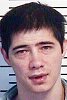
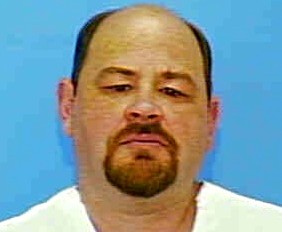
Billy Ray Fox
Murderer Brian Kevin Rosenfeld
Murderer · USA · 1985
Brian Kevin Rosenfeld Brian Kevin Rosenfeld was sentenced to three concurrent l…
23 victims
Brian Kevin Rosenfeld
Murderer · USA · 1985
Brian Kevin Rosenfeld Brian Kevin Rosenfeld was sentenced to three concurrent l…
23 victims
 Marvin Gray
Murderer · USA · 1975
Marvin Gray was convicted killer who claimed responsibility for 23 slayings and…
23 victims
Marvin Gray
Murderer · USA · 1975
Marvin Gray was convicted killer who claimed responsibility for 23 slayings and…
23 victims
 Yahweh ben Yahweh
Murderer · USA · 1980
Yahweh ben Yahweh was born and legally named Hulon Mitchell Jr. (October 27, 19…
23 victims
Yahweh ben Yahweh
Murderer · USA · 1980
Yahweh ben Yahweh was born and legally named Hulon Mitchell Jr. (October 27, 19…
23 victims
 Russell Ellwood
Murderer · USA · 1991
Russell Ellwood was a former taxi driver. Authorities suspected him of killing…
20 victims
Russell Ellwood
Murderer · USA · 1991
Russell Ellwood was a former taxi driver. Authorities suspected him of killing…
20 victims
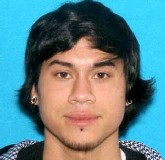 Jacob Tyler Roberts
Murderer · USA · 2012
Jacob Tyler Roberts committed suicide by shooting himself the same day of a sho…
2 victims
Jacob Tyler Roberts
Murderer · USA · 2012
Jacob Tyler Roberts committed suicide by shooting himself the same day of a sho…
2 victims
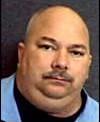 Michael James McNeely
Murderer · USA · 1993
Michael James McNeely was the defendant in a criminal case before the Supreme C…
1 victim
Michael James McNeely
Murderer · USA · 1993
Michael James McNeely was the defendant in a criminal case before the Supreme C…
1 victim
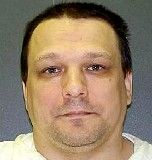 Bobby Lee Hines
Murderer · USA · 1991
Bobby Lee Hines was convicted of capital murder and was sentenced to death by a…
1 victim
Bobby Lee Hines
Murderer · USA · 1991
Bobby Lee Hines was convicted of capital murder and was sentenced to death by a…
1 victim
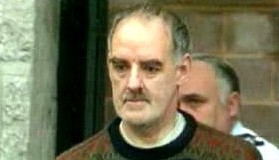 Peter Moore
Serial killer · United Kingdom · 1995
Peter Moore (born 1940) was a Welsh serial killer who murdered four men in 1995…
4 victims
Peter Moore
Serial killer · United Kingdom · 1995
Peter Moore (born 1940) was a Welsh serial killer who murdered four men in 1995…
4 victims
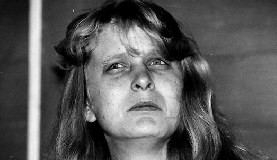 Gunn-Britt Ashfield
Murderer · Australia · 1993
Gunn-Britt Ashfield was the mother of six-year-old John Ashfield. In 2011 she w…
1 victim
Gunn-Britt Ashfield
Murderer · Australia · 1993
Gunn-Britt Ashfield was the mother of six-year-old John Ashfield. In 2011 she w…
1 victim
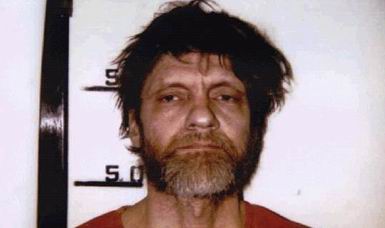 Theodore Kaczynski
Murderer · USA · 1985
Theodore John “Ted” Kaczynski (born May 22, 1942), also known as the Unabomber…
3 victims
Theodore Kaczynski
Murderer · USA · 1985
Theodore John “Ted” Kaczynski (born May 22, 1942), also known as the Unabomber…
3 victims
- Gender
- male
- Country
- USA
- Location
- Oklahoma County, Oklahoma, USA
- Date of birth
- October 24, 1965
- Age at first offence
- 20
- Characteristics
- —
- Victim profile
- John Barrier, 27, Chumpon Chaowasin, 44, Rick Cast, 33 (employees)
- Method of murder
- Shooting / St abbing with knife
- Date(s) of murder
- July 3, 1985
- Years active
- 1985
- Date of arrest
- Next day
- Status
-
Executed
Executed by lethal injection in Oklahoma on January 25 , 2001
Case details
Billy Ray Fox was convicted in Oklahoma County District Court of three counts of Murder in the First Degree committed while in the commission of Robbery with a Dangerous Weapon under the felony-murder doctrine codified at 21 O.S. 1981 § 701.7(B). He was sentenced to death on each count.
Fox and his co-defendant, Mark Andrew Fowler, were tried together. Both defendants admitted to robbing the Wynn's IGA grocery store but each denied committing or participating in the murders.
People
- Billy Ray Fox — defendant
- Mark Andrew Fowler — co-defendant
- John Barrier — victim, 27
- Chumpon Chaowasin — victim, 44
- Rick Cast — victim, 33
- Fowler accomplice (described as) — Fowler is described as an accomplice in the joint robbery/murders
- David M. Cook — District Judge (Oklahoma County District Court)
- Robert Ravitz — Oklahoma County Public Defender
- Opio Toure — Assistant Public Defender
- Pete Gelvin — Assistant Public Defender
- Robert H. Henry — Attorney General
- Susan Stewart Dickerson — Assistant Attorney General
- Ron Ward — Warden, Oklahoma State Penitentiary (in the federal appeal caption)
- Jerry Massie — Corrections Department spokesman
- Gordon Wynn — owner of Wynn's IGA
- Linda Barrier — Barrier’s sister
- Frank Cast — Cast’s brother
- Sam Fox, Jr. — Fox’s brother (testified at sentencing)
- Ned Stuart — expert witness who testified about luminal tests
- Sergeant Tom Bevel — blood splatter expert
- Joyce Gilchrist — expert witness who testified regarding hair evidence
- Samuel Palenik — defense expert referenced in connection with cross-examination
- Officer Hill — testified as an endorsed witness; involved with informant disclosure issues
- Officer Beck — referenced in connection with an inquiry; described as a helicopter pilot not assigned to narcotics (Oklahoma City Police Department) and also referenced as a DEA contact
- Edmond police officers — involved in the arrest and interrogation context described
Timeline
- July 3, 1985 — Three employees of Wynn's IGA in Edmond, Oklahoma, were murdered during a robbery.
- July 4, 1985 — Fox and Fowler were arrested; Fox requested counsel and questioning ceased.
- May 15, 1986 — Fox was convicted by jury.
- June 20, 1986 — Fox was sentenced to death.
- June 16, 1995 — Fox filed a petition for habeas corpus in the federal district court for the Western District of Oklahoma.
- July 6, 1998 — The district court denied Fox’s habeas petition.
- January 25, 2001 — Billy Ray Fox was executed by lethal injection in Oklahoma.
- January 23 — Mark Andrew Fowler was executed (described as having been executed Tuesday night; Fowler execution occurred before Fox’s execution).
The offence
Between 3:15 a.m. and 3:53 a.m. on the morning of July 3, 1985, three employees of the Wynn's I.G.A. grocery store in Edmond, Oklahoma, were murdered while on duty.
Cash in the amount of $1,200.00 and checks totalling $1,500.00 were taken from the store. The three employees were killed in the back room of the store.
- Rick Cast (33) died from a single gunshot wound to the head.
- Chumpon Chaowasin (44) died from a single gunshot wound to the head.
- John Barrier (27) died from being stabbed numerous times in the neck, chest, back and side, and also from being bludgeoned on the back of his head with a shotgun.
During the early morning robbery, Fox and his co-defendant, Mark Fowler, had gone to the bedrooms of Fox’s two roommates and asked to borrow a shotgun from each. When Fox returned home later that morning, he confessed to one room-mate that he had killed some people. After a news broadcast appeared on television, Fox admitted that that was what he had done.
Investigation and evidence
On the evening of July 3, 1985, both defendants were arrested.
Fox was arrested as he approached his pickup, the same vehicle in which he had traveled to and from the grocery store. When two police officers appeared, Fox handed a companion a wad of cash. In the bed of the truck, police found bloody splinters from the broken stock of a shotgun, together with the gun's forestock and two shell casings. The following morning, Fox led detectives to a white purse containing some checks taken from the IGA during the robbery and told officers where to locate a knife that he had hidden. The knife later proved to be consistent with the cause of Barrier’s wounds. The barrel of the shotgun was found in debris in Fox’s yard.
Both Fox and Fowler admitted to police officers that they had gone to the grocery store to commit the robbery, but each denied committing or participating in the homicides.
Fox testified during an in camera hearing on voluntariness that he made incriminating statements only after one of the detectives assaulted him. The court nevertheless concluded the statements were admissible.
Arrest and interrogation
Fox requested counsel on July 4, 1985, and all questioning ceased at that time.
Later during the day of July 4, 1985, two homicide detectives left their business cards with Fox and advised him they were not there to discuss his case. As the officers started to leave, Fox advised them that his case was not getting any better and that he wanted to talk to them. He made an incriminating statement which was tape recorded. He also led detectives to a purse containing checks taken during the robbery and told them where in his home they could find a knife used in the robbery, along with executing a search waiver.
Fox stated:
"My case is not getting any better. It is getting worse, I mean. I would like it if the lawyer was on his way. While I am talking to you now, I mean, I don't mind him not being here, you know, but I am ready to talk to you all now."
The statement about which the federal appellate court noted was “State's exhibit 108(A) at 2 (admitted only for purposes of in camera hearing)” was included in the notes.
Trial
Fox and Fowler were tried together in Oklahoma County District Court. The defendants were tried before a jury.
Both admitted robbing the supermarket but denied committing or participating in the murders.
Jury and venue issues raised on appeal
Fox raised multiple issues on appeal involving jury selection and trial procedure, including claims related to:
- alleged systematic exclusion of “minorities” from the jury,
- jury composition and an exemption for jurors aged seventy years or above,
- pretrial publicity and the ability to seat a fair and impartial jury,
- denial of severance due to mutually antagonistic defenses,
- limitations on voir dire about capital punishment,
- excusing veniremen Stutzman and Porter based on their views about death,
- admissibility of statements to police.
The appellate court affirmed judgments and sentences.
Sentencing
During the sentencing stage, Fox presented fifty-four witnesses who testified his life had meaning to them and that he should be sentenced to life imprisonment rather than being given the death penalty. He also offered affidavits of five more people who were unable to testify at trial.
The jury was instructed to consider aggravating and mitigating circumstances. The jury was instructed:
"You must give separate consideration to the case of each individual defendant. Each defendant is entitled to have his case decided on the basis of the evidence and the law which is applicable to him."
The jury found and returned sentences of death for each count.
Aggravating circumstances found
The appellate court noted the jury’s findings of four aggravating circumstances charged:
- The defendant knowingly created a great risk of death to more than one person;
- The murder was committed for the purpose of avoiding or preventing a lawful arrest or prosecution;
- The existence of a probability that the defendant would commit criminal acts of violence that would constitute a continuing threat to society;
- The murder of John Barrier was especially heinous, atrocious, or cruel.
The appellate court also described evidence for these findings, including that John Barrier suffered serious physical abuse.
Appeals
Oklahoma Court of Criminal Appeals (affirmance)
In Fox v. State, 779 P.2d 562 (Okla. Cr. 1989), the Oklahoma Court of Criminal Appeals reviewed an appeal from the District Court of Oklahoma County.
The opinion stated that Fox was convicted in Oklahoma County District Court of three counts of Murder in the First Degree and was given three sentences of the death penalty, and that “Judgments and sentences are AFFIRMED.”
The opinion also addressed the issues raised and concluded no error warranted reversal or modification.
Post-conviction relief
Fox’s application for post-conviction relief was denied in 1994, stated as “Fox v. Oklahoma, 880 P.2d 383 (Okla. Crim. App. 1994).”
Federal habeas corpus and federal appeal
A federal habeas corpus petition was filed on June 16, 1995 in the Western District of Oklahoma. On July 6, 1998, the district court denied the habeas petition.
Fox sought relief in the United States Court of Appeals for the Tenth Circuit. The judgment was AFFIRMED, following the panel’s review.
The federal appeal listed twelve grounds asserted by Fox for relief, including claims regarding:
- erroneous failure to sever,
- ineffective assistance of trial counsel,
- admissibility of forensic expert testimony,
- admissibility of pretrial statements to police,
- the “especially heinous, atrocious, or cruel” aggravating circumstance,
- prosecutorial misconduct,
- jury instructions regarding option of life sentence,
- restriction of cross-examination of a government expert,
- challenges to the “avoid arrest or prosecution” aggravator,
- challenges to the “continuing threat” aggravator,
- failure to instruct on unanimity requirement for mitigating factors,
- denial of an evidentiary hearing.
The Tenth Circuit resolved the claims against Fox and affirmed.
The opinion also noted that the Antiterrorism and Effective Death Penalty Act (“AEDPA”) did not apply because the habeas petition was filed before enactment, and therefore pre-AEDPA standards were applied.
Outcome
Fox was executed by lethal injection in Oklahoma on January 25, 2001.
He was pronounced dead at 9:06 p.m.
Fox did not request a clemency hearing.
Mark Andrew Fowler was executed on January 23 (described as Tuesday night) prior to Fox’s execution.
Aftermath and related remarks
During the execution proceedings described, Fox was asked if he had last words and responded:
"No." He smiled, keeping his lips closed.
Cast’s brother Frank Cast called Fowler and Fox “mad dogs” and said their execution was the end of 15 1/2 years of grief and pain.
Linda Barrier and Barrier’s sister were described among those present to witness executions, and Edmond police officers were also described as present.
Billy Ray Fox approached Fowler about robbing the grocery store two days before the murders, and the robbery plan involved taking cash and safe access associated with keys Fowler had access to, as recounted in the narrative.
Fox approached and participated in the events leading to the robbery and murders at Wynn's IGA.
Spotted an error, or have more information about this case?