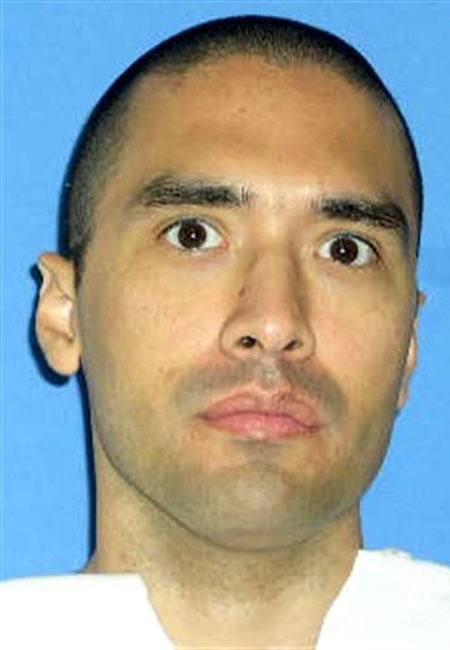
Rolando Ruiz
Murderer Brian Kevin Rosenfeld
Murderer · USA · 1985
Brian Kevin Rosenfeld Brian Kevin Rosenfeld was sentenced to three concurrent l…
23 victims
Brian Kevin Rosenfeld
Murderer · USA · 1985
Brian Kevin Rosenfeld Brian Kevin Rosenfeld was sentenced to three concurrent l…
23 victims
 Russell Ellwood
Murderer · USA · 1991
Russell Ellwood was a former taxi driver. Authorities suspected him of killing…
20 victims
Russell Ellwood
Murderer · USA · 1991
Russell Ellwood was a former taxi driver. Authorities suspected him of killing…
20 victims
 Robert Martines Perez
Murderer · USA · 1994
Name: Robert Martines Perez · Other name used in proceedings: Robert Martinez P…
15 victims
Robert Martines Perez
Murderer · USA · 1994
Name: Robert Martines Perez · Other name used in proceedings: Robert Martinez P…
15 victims
 Billy Frank Vickers
Murderer · USA · 1993
Billy Frank Vickers Vickers was executed by lethal injection in Texas on Januar…
14 victims
Billy Frank Vickers
Murderer · USA · 1993
Billy Frank Vickers Vickers was executed by lethal injection in Texas on Januar…
14 victims
 Eric Alan Stoneman
Homicide · USA · 2005
Eric Alan Stoneman was the 14-year-old defendant who was sentenced in December…
1 victim
Eric Alan Stoneman
Homicide · USA · 2005
Eric Alan Stoneman was the 14-year-old defendant who was sentenced in December…
1 victim
 Arthur & Nizamodeen Hosein
Murderers · United Kingdom · 1969
Arthur Hosein and Nizamodeen Hosein were found guilty at the Old Bailey and wer…
1 victim
Arthur & Nizamodeen Hosein
Murderers · United Kingdom · 1969
Arthur Hosein and Nizamodeen Hosein were found guilty at the Old Bailey and wer…
1 victim
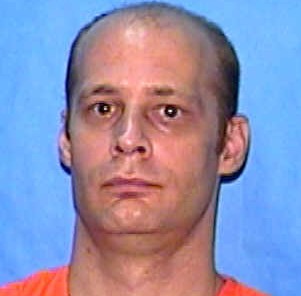 John Christopher Marquard
Murderer · USA · 1991
John Christopher Marquard was sentenced to death on February 5, 1993. The Flori…
1 victim
John Christopher Marquard
Murderer · USA · 1991
John Christopher Marquard was sentenced to death on February 5, 1993. The Flori…
1 victim
 Elmer Henley
Serial killer · USA · 1972
Elmer Wayne Henley, Jr. was born May 9, 1956. He was convicted and incarcerated…
7 victims
Elmer Henley
Serial killer · USA · 1972
Elmer Wayne Henley, Jr. was born May 9, 1956. He was convicted and incarcerated…
7 victims
- Gender
- male
- Country
- USA
- Location
- Bexar County, Texas, USA
- Date of birth
- J uly 4, 1972
- Age at first offence
- 20
- Characteristics
- murder for hire, rape?, convicted rapist
- Victim profile
- Theresa Rodriguez, 29
- Method of murder
- Shooting (.357 revolver)
- Date(s) of murder
- July 14, 1992
- Years active
- 1992
- Date of arrest
- —
- Status
-
Sentenced to death
Sentenced to death on May 4, 1995
Case identification
Rolando Ruiz was convicted of capital murder and was sentenced to death in Bexar County, Texas.
Timeline
- January 18, 1995 — A jury in Bexar County, Texas convicted Ruiz of capital murder and, in the punishment phase, answered the two interrogatories required by Texas law; Ruiz was sentenced to death.
- February 25, 1998 — The Texas Court of Criminal Appeals affirmed Ruiz’s conviction and sentence.
- September 15, 1997 — Ruiz filed an application for writ of habeas corpus with the state trial court.
- December 30, 2002 — The state trial court issued findings of fact and conclusions of law recommending that the Texas Court of Criminal Appeals deny relief.
- April 2, 2003 — The Texas Court of Criminal Appeals denied Ruiz’s state habeas application.
- February 18, 2004 — Ruiz filed a federal petition for writ of habeas corpus in a San Antonio U.S. district court.
- August 29, 2005 — The federal district court denied Ruiz the relief requested in his federal habeas petition.
- October 12, 2005 — The federal district court granted a certificate of appealability with regard to one claim but denied COA on the rest of the claims.
- September 13, 2005 — Ruiz’s motion to alter or amend the judgment under Federal Rule 59(e) was denied.
- September 15, 2005 — Ruiz’s request to stay proceedings and hold the case in abeyance was denied.
- November 30, 2005 — Ruiz’s motion to reconsider, alter or amend the judgment and order denying the COA application was denied.
- October 13, 2005 — Ruiz’s request for COA from the U.S. District Court on the previously denied issues was denied.
- February 10, 2006 — Ruiz filed an appellant’s brief and an application for additional certificate of appealability with the 5th U.S. Circuit Court of Appeals.
- August 10, 2006 — The 5th Circuit issued an opinion affirming the district court’s judgment and refusing to grant Ruiz the requested additional COA.
- September 14, 2006 — The 5th Circuit denied Ruiz’s petition for rehearing by the full 5th Circuit Court.
- December 13, 2006 — Ruiz petitioned the U.S. Supreme Court for a writ of certiorari.
- March 19, 2007 — The Supreme Court denied Ruiz’s petition for certiorari.
- April 3, 2007 — The trial court issued an order setting Ruiz’s execution date for July 10, 2007.
The offence
Theresa Rodriguez was shot to death in the garage of the couple’s house.
Prosecutors presented evidence that Ruiz was hired by Mark Rodriguez and Michael Rodriguez to murder Michael’s wife, Theresa, for two thousand dollars. The evidence showed that Ruiz did so by shooting Theresa in the head at close range with a .357 revolver.
Ruiz followed Theresa and Michael Rodriguez home from a movie theater and parked his car. As Theresa opened the car door, Ruiz pointed a gun at her head and shot her once. The evidence stated that Ruiz did not take Theresa’s purse and then ran back to his car and drove away. After leaving the scene, Ruiz spent the rest of the evening playing basketball.
Prosecutors believed that the Rodriguez brothers wanted to collect insurance money. The evidence stated that Ruiz received final payment for the murder on July 17, 1992.
Theresa Rodriguez was described as just having arrived home with her husband and his brother when the hit man opened fire. Ruiz opened fire when she had just arrived home.
Dates connected to the offence
- Ruiz told San Antonio police that Mark Rodriguez and Michael Rodriguez asked him to kill Michael’s wife, Theresa Rodriguez.
- Ruiz told officers that Michael Rodriguez asked him to rob and murder Mrs. Rodriguez when she arrived at a restaurant on July 10, 1992. The evidence stated that Michael told Ruiz he would pay him one-thousand dollars up front and another thousand dollars when the job was done, and Ruiz agreed.
- Ruiz went to the restaurant but called off the murder when he saw a security guard.
- The next day, Michael asked Ruiz to carry out the killing that night at the movies once the Rodriguez’s left the theater; the Rodriguez’s did not show up that evening.
- Mark Rodriguez, Theresa’s brother-in-law, told Ruiz to follow Michael and his wife, Theresa, home from a movie theater on July 14, 1992.
- Ruiz received final payment for the murder on July 17, 1992.
Investigation
Ruiz told San Antonio police that he had been asked to kill Michael’s wife, Theresa Rodriguez, by Mark Rodriguez and Michael Rodriguez.
The evidence presented at trial included the statement attributed to Judge Mark Luitjen, a former prosecutor, about Rodriguez’s payment of a hit man.
“He paid the hit man $2,000 to have his wife killed,” Judge Mark Luitjen, a former prosecutor, said of Rodriguez.
“You have to wonder who is worse, the person who has a loved one killed or the person who will kill someone for money,” Luitjen said.
Arrest
The procedural history included indictment by a Bexar County grand jury and later trial proceedings; the material stated that Ruiz had been in and out of jail numerous time and was arrested a total of nine times before his current incarceration and death sentence for capital murder.
Trial
Indictment and conviction
- October 21, 1992 — A Bexar County grand jury indicted Ruiz for the capital murder of Theresa Rodriguez.
- January 18, 1995 — A Bexar County grand jury found Ruiz guilty of capital murder. (The procedural history also described a jury conviction on January 18, 1995, followed by punishment-phase findings and sentencing.)
- January 20, 1995 — Following a separate punishment hearing, Ruiz was sentenced to death.
Trial evidence about hiring and the killing
There was sufficient evidence at trial from which the jury could conclude that Ruiz was hired by Mark and Michael Rodriguez to murder Michael’s wife, Theresa, for two thousand dollars, and that he did so by shooting her in the head at close range with a .357 revolver.
Punishment phase evidence and testimony
At the punishment phase, the State presented evidence demonstrating Ruiz’s violent propensity through testimony of Ruiz’s friends and acquaintances.
Samuel Perez testified that Ruiz was violent and carried guns.
Kristian Villareal testified that she had also knew Ruiz carried guns and that he frequently got into fights. Villareal stated that she was concerned Ruiz would shoot the police when they came to arrest him. In her opinion, Ruiz does not have a conscience.
Rudolfo Espinoza testified that he and Ruiz were in a neighborhood gang, and that Ruiz preferred to resolve disputes through the use of violence rather than conversation.
The State presented evidence of a prior conviction for aggravated robbery committed on June 8, 1992. The evidence showed that Ruiz dragged his then-girlfriend Roxanne Conway out of her truck, then beat her with his fists and kicked her teeth out with his boots. Ruiz then pulled another woman out of the truck and stole the truck, leaving the women behind; when the truck was found a few minutes later, it had been vandalized. Conway admitted fearing for her life at the time of the assault.
The State also presented evidence of Ruiz’s violent misconduct while he was in jail.
A Bexar County detention officer testified that on one occasion, Ruiz charged out of his cell in an attempt to attack another inmate, and that it took two officers to subdue Ruiz after this incident.
Evidence indicated that Ruiz was a member of the Texas Syndicate prison gang. The evidence stated that on September 6, 1992, Ruiz and three members of the gang attacked another inmate who was being returned to his cell, which resulted in a detention officer being struck in the face.
On April 21, 1993, Ruiz was involved in another altercation in which four detention officers were assaulted, and a video recording of a portion of this incident was played for the jury.
Appeals
State habeas corpus and appeal
- December 30, 2002 — The state trial court issued its findings of fact and conclusions of law recommending denial of relief.
- April 2, 2003 — The Texas Court of Criminal Appeals ultimately denied Ruiz’s state habeas application.
Federal habeas corpus
Ruiz filed a federal petition for writ of habeas corpus in a San Antonio U.S. district court.
The federal district court dismissed claims of ineffective assistance of counsel and unconstitutional strictures of argument in mitigation as procedurally barred, and rejected the contention that the state trial court erred in sustaining the State’s challenge for cause of a member of the venire.
The federal district court refused certificate of appealability except as to the Witherspoon-related claim concerning the venire member Ms. Castro.
Ruiz later sought COA and additional COA in the federal appellate process:
- October 12, 2005 — The district court granted COA regarding one of Ruiz’s claims but denied COA on the rest.
- February 10, 2006 — Ruiz filed an appellant’s brief and an application for additional COA with the 5th Circuit.
- August 10, 2006 — The 5th Circuit affirmed the district court’s judgment on third claim and refused Ruiz’s request for COA on first two claims.
- September 14, 2006 — The 5th Circuit denied Ruiz’s petition for rehearing by the full 5th Circuit.
Witherspoon / juror selection claim
In the federal appeal, the only remaining claim of error addressed was that the trial court erred in granting the State’s challenge for cause of Ms. Castro, a member of the venire. Ruiz alleged the issue violated Witherspoon v. Illinois.
The material described that Ms. Castro:
- stated in a juror questionnaire that she opposed capital punishment,
- stated in open court that she did not believe in capital punishment but could follow the court’s instructions if instructed to do so, and
- testified: “I think my answer to this point is that I get out of here and I'm going to start some kind of action against the death penalty to change the law.”
The trial judge observed that her statement about starting an organization doing away with the death penalty was a tipping point; the material included the quoted observation:
“I went along until she said she was going to get involved in an organization doing away with the death penalty.”
The Texas Court of Criminal Appeals summarized Castro’s statements as including that she would never be part of a jury imposing death penalty and would vote for a life sentence with no parole before 35 years, and that she would influence her verdict so that she would not consider giving the death penalty and would vote for a life sentence.
The appellate court discussed that lay persons can shift and turn in responses during voir dire, and noted limitations of appellate review of transcripts, referencing Wainwright v. Witt.
The federal court affirmed the denial of federal habeas relief, stating it could not say the state court decision was an unreasonable application of Supreme Court law and refused to grant COA.
Sentencing
Ruiz was sentenced to death after a jury in Bexar County, Texas convicted him of capital murder. At the punishment phase, the jury gave affirmative answers to two interrogatories required by Texas law.
The Texas Court of Criminal Appeals affirmed Ruiz’s conviction and death sentence.
A trial court later set an execution date:
- April 3, 2007 — An order set Ruiz’s execution date for July 10, 2007.
Outcome
The Texas Court of Criminal Appeals affirmed Ruiz’s conviction and sentence. Federal habeas relief was denied, and the 5th Circuit affirmed the district court’s judgment.
“In sum, we refuse to grant the requested COA and affirm the judgment of the district court denying federal relief.”
Aftermath
The material stated that Rolando Ruiz was on death row and that, at the time described, his execution was scheduled by the Texas Attorney General media advisory.
It also described that Michael Rodriguez escaped from prison in December of 2000 as a member of the Texas 7, and that during an ensuing crime spree police officer Aubrey Hawkins was murdered when he interrupted a hold-up. The material also stated that Michael Rodriguez’s brother Mark received a life sentence.
Spotted an error, or have more information about this case?