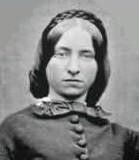
Madeleine Smith
Murderer?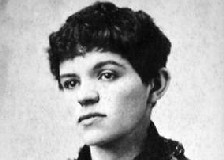 Adelaide Bartlett
Murderer? · United Kingdom · 1886
Adelaide Bartlett was tried for the murder of her husband, Thomas Edwin Bartlet…
1 victim
Adelaide Bartlett
Murderer? · United Kingdom · 1886
Adelaide Bartlett was tried for the murder of her husband, Thomas Edwin Bartlet…
1 victim
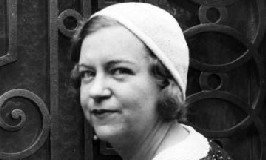 Elvira Barney
Murderer? · United Kingdom · 1932
Elvira Barney Elvira Barney was found not guilty on July 5, 1932. Michael Scott…
1 victim
Elvira Barney
Murderer? · United Kingdom · 1932
Elvira Barney Elvira Barney was found not guilty on July 5, 1932. Michael Scott…
1 victim
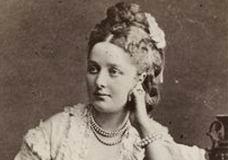 Florence Bravo
Murderer? · United Kingdom · 1876
Florence Bravo was a Victorian heiress and young widow at 26. She met and marri…
1 victim
Florence Bravo
Murderer? · United Kingdom · 1876
Florence Bravo was a Victorian heiress and young widow at 26. She met and marri…
1 victim
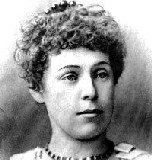 Florence Maybrick
Murderer? · United Kingdom · 1899
Florence Elizabeth Maybrick (Florence Maybrick) was an American woman convicted…
1 victim
Florence Maybrick
Murderer? · United Kingdom · 1899
Florence Elizabeth Maybrick (Florence Maybrick) was an American woman convicted…
1 victim
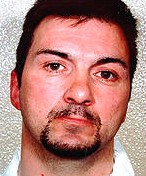 Barry George
Murderer? · United Kingdom · 1999
Barry George was also known as Barry Bulsara. He was born on 15 April 1960 in H…
1 victim
Barry George
Murderer? · United Kingdom · 1999
Barry George was also known as Barry Bulsara. He was born on 15 April 1960 in H…
1 victim
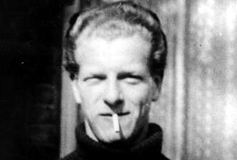 Derek Bentley
Murderer? · United Kingdom · 1952
Derek William Bentley (30 June 1933 – 28 January 1953) was a British teenager h…
1 victim
Derek Bentley
Murderer? · United Kingdom · 1952
Derek William Bentley (30 June 1933 – 28 January 1953) was a British teenager h…
1 victim
 Sibusiso Madubela
Mass murderer · South Africa · 1999
Sibusiso Madubela was a black army lieutenant serving with the 1st South Africa…
8 victims
Sibusiso Madubela
Mass murderer · South Africa · 1999
Sibusiso Madubela was a black army lieutenant serving with the 1st South Africa…
8 victims
 Robert Spahalski
Serial killer · USA · 1990
Robert Spahalski was sentenced to 100 years in prison on December 13, 2006. Spa…
4 victims
Robert Spahalski
Serial killer · USA · 1990
Robert Spahalski was sentenced to 100 years in prison on December 13, 2006. Spa…
4 victims
 Curtis Don Brown
Serial killer · USA · 1984
Curtis Don Brown was convicted and sentenced to life in prison in 1989. He late…
18 victims
Curtis Don Brown
Serial killer · USA · 1984
Curtis Don Brown was convicted and sentenced to life in prison in 1989. He late…
18 victims
 Jay Thompson
Murderer · USA · 1981
Richard Dillon was identified by a Deputy Sheriff as near the property at the t…
2 victims
Jay Thompson
Murderer · USA · 1981
Richard Dillon was identified by a Deputy Sheriff as near the property at the t…
2 victims
 Bryan Eric Wolfe
Murderer · USA · 1992
Bryan Eric Wolfe was convicted of capital murder and sentenced to death in Texa…
1 victim
Bryan Eric Wolfe
Murderer · USA · 1992
Bryan Eric Wolfe was convicted of capital murder and sentenced to death in Texa…
1 victim
- Gender
- female
- Country
- United Kingdom
- Location
- Glasgow, Scotland, United Kingdom
- Date of birth
- March 29, 18 35
- Characteristics
- poisoner
- Victim profile
- Pierre Emile L'Angelier, 33 (her lover)
- Method of murder
- Poisoning (arsenic)
- Date(s) of murder
- March 23, 1857
- Years active
- 1857
- Date of arrest
- 8 days after
- Status
-
Died in custody
Verdict of "not proven" on July 9, 1857; died on April 12, 1928
Case record: Madeleine Smith
Status / Outcome
Madeleine Smith received a verdict of "not proven" on July 9, 1857. She died on April 12, 1928.
Background
Madeleine Hamilton Smith (1835–1928) was a 19th century Glasgow socialite who was the defendant in a sensational murder trial in Scotland in 1857.
She was the first child of an upper-middle-class family in Glasgow. Her father James Smith (1808–1863) was a wealthy architect, and her mother Janet was the daughter of leading neo-classical architect David Hamilton. The family lived at No 7, Blythswood Square, Glasgow, and also had a country property, "Rowaleyn", near Helensburgh.
In early 1855, Smith began a secret love affair with Pierre Emile L'Angelier, an apprentice nurseryman who originally came from the Channel Islands. They met late at night at Smith’s bedroom window and engaged in voluminous correspondence. During one of their infrequent meetings alone, she lost her virginity to L'Angelier. Smith’s parents were unaware of the affair. They found a suitable fiancé within the Glasgow upper-middle class: William Harper Minnoch.
In February 1857, Smith asked L'Angelier to return the letters she had written to him. L'Angelier threatened to use the letters to expose her and force her to marry him.
She was soon observed in a druggist's office, ordering arsenic, and signed in as M.H. Smith.
The offence
In the early morning of 23 March 1857, L'Angelier died from arsenic poisoning.
After Smith's numerous letters were found in his lodging house, she was arrested and charged with murder.
Investigation
The case involved the chronology of certain letters from Smith to L'Angellier. Because the letters themselves were undated, the case hinged in part on the envelopes.
One letter depended on the correct interpretation of the date of the postmark, which was unfortunately illegible, and attracted caustic comments from the judge. The majority of the other postmarks were struck clearly.
When the police searched L'Angelier's room, many of Smith's letters were found without their envelopes. The letters were then hurriedly collected and stuck into whichever envelopes came to hand.
Arrest
By March 26, Madeleine’s sister Janet awoke to find her eldest sister gone from the bed they shared and gone from their room and from the entire house.
On March 31, based on stacks of letters found at Emile’s lodgings and office, Madeleine was arrested and gave a lengthy statement to the Sheriff-Substitute of Lanarkshire.
In her statement, she said that she had last seen Emile three weeks previous to his death. She did not deny that they had been lovers, that she had written the letters to him, or that they had seriously discussed marriage. She also did not deny making three purchases of arsenic in the previous month. She said that she mixed the arsenic with water and washed her arms and face with it, describing a cosmetic use she had learned while at school.
She said that she had lied to the apothecary about the arsenic's use because she was too self-conscious to say that it was for her complexion.
She declared:
"never administered, or caused to be administered, to M. L'Angelier arsenic or anything injurious -- and this I declare to be truth."
The trial was moved from Glasgow to Edinburgh and began on June 30, 1857.
Trial
At trial, Smith was defended by noted advocate John Inglis, Lord Glencorse.
Although circumstantial evidence pointed towards her guilt—she had made purchases of arsenic in the weeks leading up to L'Angelier's death and had a clear motive—the jury returned a verdict of "not proven." The jury was unconvinced that Smith was innocent, but the prosecution had produced insufficient evidence to the contrary.
During the trial, due to court rules of the time, Smith was not allowed to take the stand in her own defense and had to rely solely on legal counsel and on her deposition.
People swarmed the courthouse to catch a glimpse of Smith. Crowds lined the streets every night as her carriage took her back to the East Jail of Edinburgh. Newspapers carried detailed descriptions, and the proceedings became the chief topic of conversation throughout Scotland.
The prosecution argued for the court to admit all of Smith's letters and all of Emile's papers as evidence. Inglis argued that her letters could be presented, but that a diary found in his room should not be admitted into evidence. The prosecution stated that the diary should be admitted, as it contained notations possibly indicating that Emile had seen Madeleine right before his first and second attacks of stomach illness.
Inglis argued that with the author now dead, the written entries could not be questioned or properly cross-examined. The diary was withheld from the jury because Inglis won on this issue.
The trial went on for nine days and included many witnesses. Smith’s sister Janet testified that she did not recall Madeleine ever getting out of bed the night of March 22nd. William Minnoch took the stand and had quickly withdrawn his marriage proposal.
The prosecution called witnesses to testify about contradictions in Smith’s story. The defense countered with experts who discussed arsenic's cosmetic uses and called witnesses who claimed Emile had made statements to them regarding several prior suicide attempts.
Smith showed calmness and poise during the trial. She refused food and water while in court but kept a small vial of smelling salts, which she never had to use. She followed the questioning closely and only showed discomfort when the text of some of her letters to Emile was read aloud.
The prosecution argued that Smith had already lied at least once about the real purpose of the arsenic—to the apothecary—and said Emile’s refusal to return her letters and end the affair was motive for killing him.
Inglis argued that nobody could solidly disprove Smith’s claim that she had not seen Emile in the three weeks before his death. He also pointed out that Emile had his first attack two days before Madeleine’s first recorded purchase of arsenic.
The prosecution and defense both argued, but because it could not be shown that Smith and Emile had actually seen each other before any of his three attacks, the jury deliberated for only 30 minutes on July 9 and reached a verdict of "not proven." Smith went free that afternoon and returned to the Smith home.
Quotations recorded in the case narrative
The narrative included multiple quotations.
Emile L'Angelier’s alleged statement to Miss Perry on March 9 about Madeleine:
"I cannot think why I was so unwell after getting that coffee and chocolate from her."
Emile L'Angelier’s further statement to Miss Perry:
"I can't think why I was so unwell after getting that coffee and chocolate from her."
"I don't know that."
"Perhaps she might not be sorry to be rid of me."
Madeleine Smith’s letter to Emile about returning letters and not revealing anything:
I trust your honour as a gentleman that you will not reveal anything that may have passed between us.
Madeleine Smith’s letter about the break in engagement and returning letters:
Altogether, I think owing to coolness and indifference--nothing else--that we had better, for the future, consider ourselves as strangers. I trust your honor as a gentleman that you will not reveal anything that may have passed between us. I shall feel obliged by your bringing me my letters and likeness on Thursday evening at seven. Be at the area gate, and (the housemaid) will take the parcel from you. On Friday night, I shall send you all your letters, likeness, etc. P.S. You may be astonished at this sudden change--but for some time back you must have noticed a coolness in my notes. My love for you has ceased, and that is why I was cool. I did once love you truly, fondly, but for some time back I have lost much of that love. There is no other reason for my conduct, and I think it but fair to let you know this. I might have gone on and become your wife, but I could not have loved you as I ought. I know you will never injure the character of one you so fondly loved. No, Emile, I know you have honor and are a gentleman. What has passed you will not mention. I know when I ask you, that you will comply.
Emile L'Angelier’s statement about feeling unwell after visiting:
I can't think why I was so unwell after getting that coffee from her … If she were to poison me, I would forgive her.
Madeleine Smith’s later declaration:
"I never administered, or caused to be administered, to M. L'Angelier arsenic or anything injurious -- and this I declare to be truth."
John Inglis’s quoted response at a dinner party:
"rather have danced than supped with her."
The narrative also included multiple verbatim newspaper-style quotations, attributed to named newspapers:
- The Glasgow Sentinel:
"[Madeleine Smith was] as much the seducer as the seduced. And when once the veil of modesty was thrown aside, from the first a very frail and flimsy one, the woman of strong passion and libidinous tendencies at once reveals herself.... [Madeleine is] one of those abnormal spirits that now and then rise up in society to startle and appall us...."
- The Glasgow Citizen:
"In her first efforts at retrieval [of her letters], she found herself not in the arms of a protector but in the coils of a reptile."
- The Scotsman:
"[Madeleine Smith is] either the most fortunate of criminals or the most unfortunate of women."
- The Examiner:
"...to Madeleine Smith alone his horrible death seems to have been no shock, no grief, and she demeaned herself [at] her trial as if L'Angelier had never had a place in her affections. If it had been a trial for poisoning a dog the indifference could not have been greater."
Timeline
- 23 March 1857 — L'Angelier died from arsenic poisoning.
- 26 March 1857 — Madeleine Smith’s sister Janet found Madeleine gone from the bed they shared, gone from their room, and gone from the entire house.
- 31 March 1857 — Madeleine was arrested, based on stacks of letters found at Emile’s lodgings and office, and gave a statement to the Sheriff-Substitute of Lanarkshire.
- 30 June 1857 — The trial in Edinburgh began.
- 9 July 1857 — The jury returned a verdict of "not proven."
- 4 July 1861 — Smith married an artist named George Wardle.
- 1928 — Madeleine died under the name of Lena Wardle Sheehy.
- 12 April 1928 — Madeleine died.
Other details
Smith left Scotland after the trial’s notoriety. She went to London and eventually married George Wardle, a draftsman and business manager of the artist William Morris, in July 1861.
They had one son named Thomas and one daughter named Mary. After years of marriage, they separated, and Madeleine moved to New York City. She died in 1928 under the name Lena Wardle Sheehy.
Later theories and commentary included multiple points. The narrative stated that some modern scholars believed Smith committed the crime and was saved from conviction due to no eyewitness proving she had met L'Angelier in the weeks before his death. It also noted that, after the trial, The Scotsman ran a small article stating that a witness had come forward claiming a young male and female were seen outside Smith's house on the night of L'Angellier's death, but that the trial had already been in progress and the witness could not be questioned during it.
Dramatisations mentioned several works based on the case: plays and the 1950 film Madeleine, directed by David Lean. Jack House’s 1961 book Square Mile of Murder included a section on Smith and formed the basis for a BBC television version in 1980. A television play based upon the case, "Killer In Close-Up: The Trial Of Madeleine Smith", written by George F. Kerr, aired on August 13, 1958 on Sydney television station ABN-2. Wilkie Collins’ 1875 novel The Law and the Lady was said to have used the case’s “not proven” verdict and arsenic poisoning as a means for murder. Other novels listed were The House in Queen Anne's Square (1920) by William Darling Lyell, Letty Lynton (1931) by Marie Belloc Lowndes, Lovers All Untrue (1970) by Norah Lofts, and Alas, for Her That Met Me! (1976) by Mary Ann Ashe (pseudonym of Christianna Brand).
The narrative also described biographical context for Emile L'Angelier: he was described as born in the Channel Islands in April of 1823, and that he was a nurseryman who worked in the Channel Islands, then Edinburgh after apprenticeship. It also described his move to Glasgow in 1852. It additionally described a meeting in early spring 1855 between Madeleine and Emile via a mutual friend; it said Madeleine’s early teens included travel to London to attend Mrs. Alice Gorton’s Academy for Young Ladies, and her return to her family home in the summer of 1853 at the age of 18 years.
The narrative included details of arsenic purchases and poisoning allegations: it described that on February 21, 1857 Madeleine purchased arsenic at a local apothecary and signed in as required by law. It described arsenic being sold with coloring matter such as soot or indigo. It described a purchase on March 6 and a third purchase on March 18 or the following day after the family returned from a trip on March 17. It described that Emile traveled to Bridge of Allan about five miles north of Stirling for a weeklong vacation and returned unexpectedly on March 22. It described a commotion at the front door early on March 23 and that Emile died about ten hours later.
The narrative included a statement attributed to a doctor to the landlady, quoted in the narrative: “The man is dead.”
It also included additional quotations and statements in verbatim block-like form, including a portion of an unpublished-style quote about Emile’s diary and arsenic searches; the narrative also included a quoted judge comment context for an illegible postmark.
Aftermath
Madeleine continued to remain silent about the trial and the accused crime, though newspapers and curiosity-seekers followed her.
The narrative said wild rumors appeared from time to time in newspapers about her living or dying under other identities, including in Australia and France. It stated that a theory claimed she died under a different name (Lena Wardle Sheehy) in New York City in 1928, but said this was contradicted by Mrs. Sheehy’s death certificate, which stated she was almost 30 years younger than Madeleine would have been.
The narrative concluded that whatever happened, Madeleine took what she knew about Emile's death “with her to her grave.”

Spotted an error, or have more information about this case?