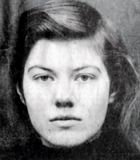
Juliet Hulme
Homicide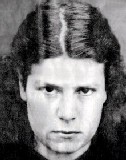 Pauline Parker
Homicide · New Zealand · 1954
Pauline Parker was born on 26 May 1938. She was from Christchurch, New Zealand,…
1 victim
Pauline Parker
Homicide · New Zealand · 1954
Pauline Parker was born on 26 May 1938. She was from Christchurch, New Zealand,…
1 victim
 Renee Kara O'Brien
Homicide · New Zealand · 2002
Renee Kara O'Brien was 14 years and nine months old when she beat Kenneth Pigot…
1 victim
Renee Kara O'Brien
Homicide · New Zealand · 2002
Renee Kara O'Brien was 14 years and nine months old when she beat Kenneth Pigot…
1 victim
 Constance Fisher
Homicide · USA · 1954
Constance Fisher · 3 August 1954 — Constance Fisher drowned her three children…
6 victims
Constance Fisher
Homicide · USA · 1954
Constance Fisher · 3 August 1954 — Constance Fisher drowned her three children…
6 victims
 Akshay Chand
Homicide · New Zealand · 2011
Akshay Anand Chand murdered Christie Alexis Lesley Marceau on 7 November 2011,…
1 victim
Akshay Chand
Homicide · New Zealand · 2011
Akshay Anand Chand murdered Christie Alexis Lesley Marceau on 7 November 2011,…
1 victim
 Cheryl Crane
Homicide · USA · 1958
Cheryl Christina Crane (born July 25, 1943) was the only child of actress Lana…
1 victim
Cheryl Crane
Homicide · USA · 1958
Cheryl Christina Crane (born July 25, 1943) was the only child of actress Lana…
1 victim
 Charles Stuart
Murderer · USA · 1989
Charles Stuart was born in 1959 and died on January 4, 1990. He was described a…
1 victim
Charles Stuart
Murderer · USA · 1989
Charles Stuart was born in 1959 and died on January 4, 1990. He was described a…
1 victim
 Lizzie Borden
Murderer? · USA · 1892
Lizzie Andrew Borden (July 19, 1860 – June 1, 1927) was an American woman who w…
2 victims
Lizzie Borden
Murderer? · USA · 1892
Lizzie Andrew Borden (July 19, 1860 – June 1, 1927) was an American woman who w…
2 victims
 Raymond Levi Cobb
Homicide · 1993
Appellant: Raymond Levi Cobb · Court: In the Court of Criminal Appeals of Texas…
2 victims
Raymond Levi Cobb
Homicide · 1993
Appellant: Raymond Levi Cobb · Court: In the Court of Criminal Appeals of Texas…
2 victims
 Alec Kreider
Homicide · USA · 2007
Alec Devon Kreider (born February 4, 1991) was a Lancaster County, Pennsylvania…
3 victims
Alec Kreider
Homicide · USA · 2007
Alec Devon Kreider (born February 4, 1991) was a Lancaster County, Pennsylvania…
3 victims
 Larry Allen Stout
Murderer · USA · 1987
Larry Allen Stout, aged 33, pleaded guilty in a Virginia court to the robbery a…
1 victim
Larry Allen Stout
Murderer · USA · 1987
Larry Allen Stout, aged 33, pleaded guilty in a Virginia court to the robbery a…
1 victim
- Gender
- female
- Country
- New Zealand
- Location
- Christchurch, Canterbury, South Island, New Zealand
- Date of birth
- October 28, 1938
- Age at first offence
- 16
- Characteristics
- juvenile (15), abuse, motive unknown
- Victim profile
- Honora Rieper (her friend's mother)
- Method of murder
- B eating to death with a half brick concealed in a stocking
- Date(s) of murder
- June 22, 1954
- Years active
- 1954
- Date of arrest
- Next day
- Status
-
Released
Sentenced to be detained at Her Majesty's pleasure on August 28, 1954; Released in 1959
Name and identity
Juliet Hulme was known as Juliet Marion Hulme and later as Anne Perry.
Background
Juliet Hulme was born in Blackheath, London, the daughter of Dr. Henry Hulme, an English physicist. She was diagnosed with tuberculosis as a child and was sent to the Caribbean and South Africa in hopes that a warmer climate would improve her health. She rejoined her family when her father took a position as Rector of Canterbury University College, New Zealand when she was 13. She attended Christchurch Girls' High School (located in what became the Cranmer Centre).
In 1954, Hulme’s parents separated. Her father resigned from his position as rector of Canterbury College and planned to relocate to England. It was decided that Hulme would be sent to live with relatives in South Africa.
The offence
On 22 June 1954, Juliet Hulme and her best friend Pauline Parker murdered Parker’s mother, Honorah Rieper. The girls went for a walk in Victoria Park in their hometown of Christchurch. On an isolated path, Hulme dropped an ornamental stone so that Ms. Rieper would lean over to retrieve it. Parker had planned to hit her mother with half a brick wrapped in a stocking. The prosecution account described that, while Ms. Rieper was asked to bend down to examine the stone, Parker would strike her with the brick in the stocking. The plan resulted in more than one strike.
The narrative account described that the girls bludgeoned Rieper to death with half a brick enclosed in an old stocking. After committing the murder, the two girls fled, covered in blood, back to the tea kiosk where the three of them had eaten only minutes before. They told Agnes and Kenneth Ritchie, owners of the tea shop, that Honora had fallen and hit her head. The body was found by Kenneth Ritchie.
Major lacerations were found about Honora’s head, neck, and face, with minor injuries to her fingers. Police soon discovered the murder weapon in the nearby woods. A doctor who had been called to the scene said the injuries could not be explained as having been caused by a fall. Doctors counted forty-five separate wounds on the body, including twenty-four lacerated wounds on the face and head. The pathologist reported death from multiple head injuries and a fracture of the skull. Evidence described bruises on the throat indicating that Honora had been held by the throat, and that a laceration on the finger suggested she received the injury when she put up her hand to defend herself.
Investigation, arrest, and custody
Three weeks later, a magistrate committed Pauline Yvonne Parker and Juliet Marion Hulme for trial on a charge of having murdered Honora Mary Parker (Honora Rieper).
During custody and the police process, Senior Detective MacDonald Brown described how he interviewed Pauline Parker after Honora’s death and how Pauline made a statement. Brown also described finding exercise books and a diary in Pauline’s room. A piece of paper Pauline had tried to burn was taken from her, with “I am taking the blame for everything.”
Detective-Sergeant Tate described interviews with Juliet Hulme. Tate stated that Juliet made two statements: one describing that she was not with Pauline when Mrs. Parker was killed and that she came back to find her on the ground; and a second, the next day (23 June), in which Juliet apologized for misleading him and said she wished to tell the truth. In the second statement, Juliet said they decided to go to Victoria Park with Mrs. Parker to have it out about Pauline accompanying her to South Africa, that there was a pink stone on the path and that she dropped it there herself, and that she was expecting Mrs. Rieper to be attacked. Juliet said she heard noises behind her, saw Mrs. Rieper in a squatting position and that she and Pauline quarrelled; Juliet then saw Pauline hit Mrs. Rieper with the brick in the stocking and that Juliet also hit her with the stocking. Juliet stated she was terrified and that she thought that one of them had to die. She said Mrs. Rieper moved convulsively, and then was still when they left, and that the brick had come out of the stocking with the force of the blows.
Trial
Court and parties
The trial took place in Christchurch in 1954. Pauline Yvonne Parker and Juliet Marion Hulme were tried together.
Mr. Justice Adams presided. For the defence, Dr. A. L. Haslam represented Pauline Parker, and Mr. T. A. Gresson represented Juliet Hulme. The Crown Prosecutor was Alan W. Brown.
Prosecution case
The Crown Prosecutor described the motive as arising from opposition to the girls’ plans to go overseas together, stating that their friendship was intense devotion and that the murder was planned to address their inability to remain together. The prosecution presented evidence from Pauline Parker’s diary, medical evidence, and legal argument.
The Crown Prosecutor produced statements of confessions made shortly after the commission of the crime, including quoted admissions attributed to Juliet Hulme and Pauline Parker.
From Juliet Hulme: “I gave the brick to Pauline…. I know it was put in the stocking…. I wasn't quite sure what was going to happen when we went to Victoria Park. I thought we might have been able to frighten Mrs Rieper [Parker] with the brick, and she would have given her consent for me and Pauline to stay together. I saw Pauline hit her mother with the brick in the stocking. I took it and hit her, too. After the first blow was struck, I knew it would be necessary for us to kill her. I was terrified, hysterical.”
From Pauline Parker: “I killed my mother. Had made up my mind to do it some days before. I don't know how many times I hit her; a great many, I imagine.”
The prosecution also relied on extracts from Pauline Parker’s diary, described as written in ink in clear, adult calligraphy with entries relating to the murder plan. Extracts read in court included the following verbatim diary entries:
- “February 23th, 1954: Why could not Mother die? Dozens, thousands of people are dying. Why not Mother, and Father too? Life is very hard.”
- “April 28th: Anger against Mother boiling inside me as she is the main obstacle in my path. Suddenly, means of ridding myself of the obstacle occur to me. If she were to die…”
- “June 20th: Deborah and I talked for some time. Afterwards, we discussed our plans for moidering Mother and made them clear. But peculiarly enough, I have no qualms of conscience. Or is it peculiar? We are so made.”
- “June 21st: Deborah rang and we decided to use a brick in a stocking rather than a sandbag. Mother has fallen in with plans beautifully. Feel quite keyed up.”
- “June 22nd: I felt very excited last night and sort of nightbefore-Chrisnnas, but I did 'not have pleasant dreams. I am about to rise.” The top of the page for June 22nd was headed in printed letters: “The Day of the Happy Event.”
The Crown Prosecutor also described the theory of how the murder was carried out and why the girls’ stories had fallen apart, including that evidence indicated that death resulted from multiple blows rather than a fall.
Defence case
The defence argued the central issue was the mental capacity, sanity or otherwise, of the girls at the time of the offence. The defence asserted they were suffering from paranoia of the exalted type associated with folie a deux.
Mr. Gresson said: “The actual killing or physical assault, therefore, cannot be successfully refuted, and the sole but very important issue in this case concerns the mental capacity, the sanity or otherwise, of these girls when they committed their ill-conceived and disastrous assault.”
He also stated: “The Crown has seen to fit to refer to the accused as ordinary, dirty-minded little girls. Our evidence will show that they are nothing of the kind. They are mentally sick girls, more to be pitied than blamed.”
Evidence on insanity and sanity
Medical evidence was presented by multiple psychiatrists and doctors for both the defence and the prosecution.
Dr. Reginald Warren Medlicott testified for the defence. He said Juliet had told him “Pan was the favourite god of Pauline and herself,” and he quoted a poem said to have been written by Pauline Parker titled “The Ones I Worship.” The poem’s second verse was quoted verbatim in the proceedings: “ I worship the power of these lovely two, With that adoring love known to so few, 'Tans indeed a miracle, one must feel, That two such heavenly creatures are real, Both sets of eyes though different far, Hold many mysteries strange, Impassively, they watch the race of man decay and change, Hatred burning bright in the brown eyes for fuel, Ivy scorn glitters in the grey eyes, contemptuous and cruel Why are men such fools they will not realise, The wisdom that is hidden behind those strange eyes, And these wonderful people are you and I.”
Medlicott described the psychiatric view that the girls had extraordinary conceit and that their beliefs and delusions influenced them.
During questioning by the Crown Prosecutor about sexual matters in connection with a boy named Nicholas, the narrative described Juliet’s reaction: “Hands clenched, eyes flashing, face suffused, teeth bared, she leaned across the wardress and hissed, rather than whispered, to the dark and impassive Pauline.” (No further verbatim words were provided in the material.)
The prosecution medical witnesses concluded the girls were sane medically and legally, based on interviews and diary evidence. Dr. K. R. Stallworthy was described as having examined each girl four times in remand prison and concluding that neither girl had a disease of the mind, and that each had known the nature and quality of her act.
The prosecution’s final address included a statement attributed to Crown Prosecutor Brown: “These girls are not incurably insane. They are incurably bad.”
Judge’s directions and verdict
The jury returned a verdict of guilty. The timing described that the jury was out for two hours and thirteen minutes, and the girls returned to court with the jury and were sentenced to be detained during Her Majesty’s pleasure.
The judge summed up and told the jury the burden of proof of insanity rested on the defence. He said: “Grave crimes are almost invariably committed by persons knowing that they were doing wrong but nevertheless by some perversity of the mental process are led to commit the act. In such cases the only question is, did the accused know that the act was wrong?”
He also gave definitions of the words “knowing” and “wrong,” stating: “As to the word ' wrong ' I tell you, as a matter of law, that a person knows a thing can be wrong if he Or she knows it to be contrary to the law of the land, and contrary to the moral standards accepted by ordinary, reasonable members of the community.” “It is not permissible to say, 'I knew this was a breach of the law and a breach of the moral code, but I thought I was above or beyond the law and that although it was illegal or immoral I might commit it without infringing my own code of morality.' That is no defence in law.”
The judge concluded: “Were their minds so confused that they did not know the act was wrong?”
Sentencing
Juliet Hulme and Pauline Parker were sentenced to be detained at Her Majesty’s pleasure.
The sentencing date in the status field was stated as August 28, 1954. The material described that they were too young to be considered for the death penalty under New Zealand law at the time, and that the sentence meant they were to be detained at the discretion of the Minister of Justice.
Appeals
No appeal information was present.
Outcome
Juliet Hulme was released in 1959.
After the release, it was described that Hulme travelled to the United States and later had a successful career as a historical detective novelist under her new name, Anne Perry.
Aftermath and later life
After being released from prison, Hulme returned to England and became a flight attendant. She lived in the United States for a period and joined The Church of Jesus Christ of Latter-day Saints in 1968. She later settled in the Scottish village of Portmahomack where she lived with her mother.
She took the name Anne Perry, using her stepfather’s surname. Her first novel, The Cater Street Hangman, was published under this name in 1979. Her later works included historical murder mysteries and detective fiction, featuring recurring characters including Thomas Pitt in her first novel and private investigator William Monk (first appeared in her 1990 novel The Face of a Stranger).
By 2003, she had published 47 novels and several collections of short stories. Her story “Heroes,” first appeared in the 1999 anthology Murder and Obsession edited by Otto Penzler, and won the 2001 Edgar Award for Best Short Story.
In 2005, Perry appeared on the Trisha show to discuss the crime on a special themed show. In March 2006, Perry said that while her relationship with Pauline Parker was obsessive, they were not lesbians.
The material also described that she spent time with the Mormon community after converting to the church. She lived with her brother, a retired doctor, in a stone barn restored with royalties from books she sold.
Other details
The material described a debate about whether the girls were lesbian, noting that speculation existed at trial and later, including that in 2006 Perry said the relationship was obsessive but they were not lesbians.
The material also described that the murder became the basis for the 1994 film Heavenly Creatures, portraying Pauline Parker and Juliet Hulme. It described that the film’s release time did not make it generally known that the well-known mystery author “Anne Perry” was the grown-up Juliet Hulme, and that this was made public some months after the film had been issued.
The material described that Pauline Parker was tried with Juliet Hulme and spent time in New Zealand under close surveillance before being allowed to leave for England. It stated that as of 1997, Parker was living in the small village of Hoo near Strood, Kent, and running a children’s riding school, and that as an adult she became a Roman Catholic.

Spotted an error, or have more information about this case?