
Gert Van Rooyen
Serial killer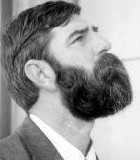 Louis Van Schoor
Serial killer · South Africa · 1986
Louis van Schoor was a security guard and an ex-policeman who was convicted and…
39 victims
Louis Van Schoor
Serial killer · South Africa · 1986
Louis van Schoor was a security guard and an ex-policeman who was convicted and…
39 victims
 Moses Sithole
Serial killer · South Africa · 1994
Moses Sithole (November 17, 1964) was a serial rapist and serial killer in Sout…
38 victims
Moses Sithole
Serial killer · South Africa · 1994
Moses Sithole (November 17, 1964) was a serial rapist and serial killer in Sout…
38 victims
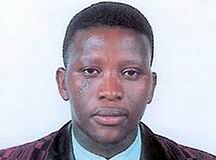 Norman Afzal Simons
Serial killer · South Africa · 1986
Norman Afzal Simons was a former teacher. He later converted to Islam in 1993,…
22 victims
Norman Afzal Simons
Serial killer · South Africa · 1986
Norman Afzal Simons was a former teacher. He later converted to Islam in 1993,…
22 victims
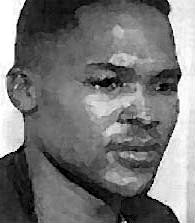 Velaphi Ndlangamandla
Serial killer · South Africa · 1998
Velaphi Ndlangamandla, known as the “saloon killer”, was convicted in connectio…
19 victims
Velaphi Ndlangamandla
Serial killer · South Africa · 1998
Velaphi Ndlangamandla, known as the “saloon killer”, was convicted in connectio…
19 victims
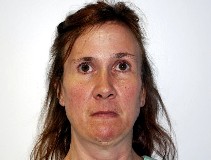 Michele Kalina
Murderer · USA · 1996
Michele Kalina pleaded guilty to murder for one of five infants she initially w…
5 victims
Michele Kalina
Murderer · USA · 1996
Michele Kalina pleaded guilty to murder for one of five infants she initially w…
5 victims
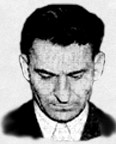 Walter Dworecki
Murderer · USA · 1939
Walter (“Iron Mike”) Dworecki lived in Camden, N.J. He led the First Polish Bap…
1 victim
Walter Dworecki
Murderer · USA · 1939
Walter (“Iron Mike”) Dworecki lived in Camden, N.J. He led the First Polish Bap…
1 victim
 Donna Roberts
Murderer · USA · 2001
Donna Roberts was convicted as an accomplice to murder and was sentenced to dea…
1 victim
Donna Roberts
Murderer · USA · 2001
Donna Roberts was convicted as an accomplice to murder and was sentenced to dea…
1 victim
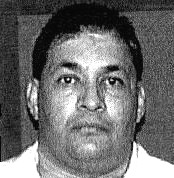 Joe Fedelfido Gonzales
Murderer · USA · 1992
September 18, 1996 — Joe Fedelfido Gonzales was executed by lethal injection in…
1 victim
Joe Fedelfido Gonzales
Murderer · USA · 1992
September 18, 1996 — Joe Fedelfido Gonzales was executed by lethal injection in…
1 victim
 Erik Hollie
Murderer · USA · 2009
Erik Hollie was sentenced to death on March 16, 2010, for a capital murder in W…
1 victim
Erik Hollie
Murderer · USA · 2009
Erik Hollie was sentenced to death on March 16, 2010, for a capital murder in W…
1 victim
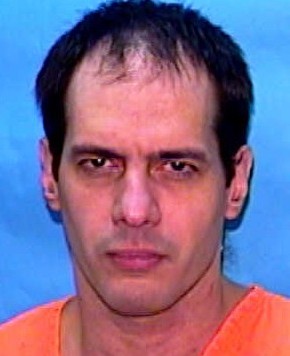 Juan Carlos Chavez
Murderer · USA · 1995
Juan Carlos Chavez was sentenced to death for the kidnapping, sexual assault, a…
1 victim
Juan Carlos Chavez
Murderer · USA · 1995
Juan Carlos Chavez was sentenced to death for the kidnapping, sexual assault, a…
1 victim
- Gender
- male
- Country
- South Africa
- Location
- KwaZulu Natal, Capital Park, South Africa
- Date of birth
- 1938
- Age at first offence
- 50
- Characteristics
- paedophile, the bodies were never found
- Victim profile
- Joey Haarhof (his accomplice and lover) / Tracy-Lee Scott-Crossley, 14 / Joan Horn, 13 / Odette Boucher, 11 / Anne-Marie Wapenaar, 12 / Yolande Wessels, 12 and Fiona Harvey, 12
- Method of murder
- Shooting / ???
- Date(s) of murder
- 1988 - 1989
- Years active
- 1988–1989
- Date of arrest
- —
- Status
-
Died in custody
Committed suicide by gunshot to avoid arrest on January 15, 1990
Background
Cornelius Gerhardus van Rooyen, known as “Gert” van Rooyen, was a South African paedophile and serial killer who, together with his partner Joey Haarhof, abducted and murdered at least six young girls between 1988 and 1989. Their victims were never found.
Van Rooyen’s first crimes were theft, and he was sent to a reform school in 1954 for stealing a car and rifle. He was later imprisoned in 1960 for stealing motor spares and clothing. Van Rooyen married and subsequently fathered six children. He ran a building construction business together with his brothers.
In September 1983, Van Rooyen and his wife Aletta divorced. In 1988, he started dating Francina Johanna Hermina Haarhoff, known as “Joey” Haarhoff. The couple holidayed together at Warmbaths and Umdloti, on the KwaZulu Natal coast.
The offence
In 1979, Gert van Rooyen abducted two girls aged 10 and 13 and took them to the Hartbeespoort Dam near Pretoria. He punched them in the face to force them to strip naked and perform sexual acts. Van Rooyen released the girls in Pretoria the following day.
Van Rooyen and Haarhof were linked to the disappearance of multiple young girls. The girls were never found, and the pair committed suicide when faced with arrest after the escape of their last kidnap victim.
Investigation
All of the disappearances described as linked to Van Rooyen and Haarhof, with the exception of Rosa Piel and Tracy-Lee Scott-Crossley, were linked by witness statements or forensic evidence following their deaths. For example, Odette Boucher’s home address, phone number and class captain’s badge, as well as Anne-Mari’s address and home keys, were found in Van Rooyen’s home.
However, none of the victims was ever found, despite extensive police searches of Van Rooyen’s business premises and house, which was dubbed “The House of Horrors” by the press.
In 1996, Absa Bank donated Van Rooyen’s former house to the police to allow the girls’ disappearance to be investigated further. On 13 May 1996, police systematically demolished the house in a search for new forensic evidence. The roof was removed and vacuumed for traces of human hair and nails. Then the walls were demolished and the kitchen and main bedroom were scanned with sonar equipment for cavities. The soil in the garden was sifted, and some bones were found. Forensic pathologists identified these as non-human.
In February 2001, Flippie van Rooyen, the son of Gert van Rooyen, was found guilty of perjury in the Pretoria Magistrate’s Court. He was charged with three counts of perjury after giving police conflicting statements under oath relating to the six missing schoolgirls.
On 12 March 2007, renewed interest in the case occurred after a set of adolescent bones was found on the beach near Umdloti, KwaZulu-Natal, about 500 m away from a holiday resort believed that Van Rooyen and Haarhoff are known to have visited. Subsequent DNA testing did not identify any of the Van Rooyen victims.
Significant public attention was brought to bear on the case by the investigative television series “Carte Blanche,” which controversially dedicated a recent episode to the mystery.
In November 2007, bones were discovered in a property adjacent to Van Rooyen’s house in Pretoria while ground was being dug up to install a swimming pool. Local authorities were alerted, and investigations were underway to determine if the bones were human and of the missing girls.
Police also investigated the possibility that the girls’ bodies may have been buried near the Zandfontein cemetery in Hercules in northwest Pretoria, but no evidence was found. In 1989, police excavated Van Rooyen’s garden and swimming pool, but no evidence was found.
Arrest
Police placed Van Rooyen’s home under surveillance. Four days later, they identified Van Rooyen when he drove past his house in a white Ford pickup matching the description of a vehicle used in one of the abductions. Police gave chase, but Van Rooyen shot Haarhoff and himself dead with a high powered revolver when police closed on him.
Timeline
- 1988 — Van Rooyen started dating Francina Johanna Hermina Haarhoff (“Joey” Haarhoff).
- 1 August 1988 — Tracy-Lee Scott-Crossley disappeared.
- 22 December 1988 — Fiona Harvey disappeared.
- 7 June 1989 — Joan Horn disappeared.
- July 1989 — Janet Delport disappeared.
- 1989 — Rosa Piel disappeared (some weeks later).
- 22 September 1989 — Odette Boucher disappeared.
- 22 September 1989 — Anne-Mari Wapenaar disappeared.
- 29 September 1989 — Kobie Wapenaar received a letter from her daughter.
- 3 November 1989 — Yolanda Wessels disappeared.
- 11 January 1990 — Joan Booysen was abducted.
- 13 May 1996 — Police demolished Van Rooyen’s former house during a forensic search.
- February 2001 — Flippie van Rooyen was found guilty of perjury.
- 12 March 2007 — Adolescent bones were found near Umdloti.
- April 7, 2007 — Christina Gallagher published an article mentioning the case.
- November 2007 — Bones were discovered at a property adjacent to Van Rooyen’s house while installing a swimming pool.
- January 15, 1990 — Van Rooyen committed suicide by gunshot to avoid arrest.
Other details
Prior conviction and sentence
Van Rooyen was convicted and sentenced to “corrective training” in 1954 for stealing a car. He returned to reform school a year later for stealing cars and a rifle. In 1960 he was imprisoned again for stealing motor spares and clothing.
His prison record was clean until 1979, when he was jailed for sexually molesting two girls. He served three years of a four-year sentence.
Authorities later said Van Rooyen’s construction business appeared to be in trouble, but Van Rooyen was always seen with lots of cash. One domestic worker said Van Rooyen threatened to withhold her pay unless she brought him “young girls from the township”. Other domestic workers and a handyman said he often did not pay them for their services.
Neighbours claimed Van Rooyen lived in a fortress-like home:
- “Nobody could get in there. They unlocked the security gate for visitors and locked it as soon as you were inside,” one neighbour said.
- “What I found strange was that he never parked in front of the house. He always drove into the enclosed car park and closed the gates like a prison warder.” Another said. Girls in the area said Van Rooyen “leered, whistled at them and told them they were sexy. He was always hanging over the gate to chat.”
Possible victims and disappearances
On 1 August 1988, 14-year-old Tracy-Lee Scott-Crossley of Randburg near Johannesburg disappeared. She was seen by witnesses climbing into a VW Beetle outside the Cresta shopping mall. Her brother, who had declined an offer to go with her, was severely guilt-ridden and traumatized by her disappearance. In later life, he was found guilty of murder but the conviction was overturned.
On 22 December 1988, 12-year-old Fiona Harvey of Pietermaritzburg disappeared. A white Ford “Bantam” pickup used in her abduction with an advertisement for Van Rooyen’s building-contracting business on it would later link him to this crime.
On 7 June 1989, 12-year-old Joan Horn of Pretoria disappeared.
In July 1989, 16-year-old Janet Delport of Durban disappeared after being abducted in a shopping mall by a blonde woman. She was later found wandering around distressed, but unharmed.
Some weeks later, 9-year-old Rosa Piel of Alberton disappeared.
Children’s homes reported that Joey Haarhoff telephoned requesting to bring girls home for the holidays and weekends. At the end of 1989, a 14-year-old girl from an orphanage in the Orange Free State spent the Christmas holidays with the couple. The couple applied to foster children, but the application was turned down.
On 22 September 1989, 11-year-old Odette Boucher of Kempton Park disappeared. On 22 September 1989 as well, 12-year-old Anne-Mari Wapenaar, also from Kempton Park, disappeared.
On 29 September 1989, Kobie Wapenaar, Anne-Mari’s mother, received a letter from her daughter claiming that she and Odette had run away to Durban with some boys. It was suspected the letter was written under duress.
On 3 November 1989, Yolanda Wessels, the 13-year-old niece of Van Rooyen’s partner Joey Haarhof, disappeared.
On 11 January 1990, 16-year-old Joan Booysen of Pretoria was abducted by Haarhoff in Church Square, Pretoria. She was taken to Van Rooyen’s home in Malherbe Street, Capital Park, Pretoria, where she was handcuffed, drugged and sexually assaulted before being locked in a cupboard. Joan Booysen managed to escape and alert the police.
Search and demolition details
The 13 May 1996 demolition involved removing the roof and vacuuming for traces of human hair and nails, demolishing the walls, and scanning the kitchen and main bedroom with sonar equipment for secret compartments. The soil in the garden was sifted and forensic specialists determined that bones found at the scene were from animals.
Resort visit and last days
Before Van Rooyen and Haarhoff committed suicide, they spent a night at the Umdloti resort. The resort owner described Haarhoff the day they checked in: “She said she was on the verge of a nervous breakdown and had been ordered by her doctor to take a break.” They left the resort the Sunday before they committed suicide without paying their bill.
Reports and allegations about motives and rituals
Flippie van Rooyen alleged that the girls had been killed as part of satanic rituals and that their bodies had been burnt with acid, or that they had been taken to the Middle East. He also alleged that three former National Party (NP) ministers had been involved in a child smuggling network with his father that involved selling girls for cash. However, no ground was found for this allegation.
Death and method
Van Rooyen and Haarhoff’s last victim escaped from Van Rooyen’s house at 227 Malherbe Street, Capital Park, Pretoria, and their death occurred less than a week after her escape. Van Rooyen shot Haarhoff and himself dead with a high powered revolver when police closed on him.
Article excerpt and characterization
Cornelius Gerhardus (Gert) van Rooyen was described as “flamboyant and a sexual braggart” by some people and “a ‘God-fearing man’, who claimed to be a preacher, by others.” Van Rooyen, 52, often told guests at his Capital Park, Pretoria, home about his sexual exploits with young women and with girls as young as 5.
Van Rooyen began dating Francina Johanna (Joey) Hermina Haarhoff in 1988. Haarhoff was described as “very attractive” by a friend. Friends and family said Haarhoff raised her three boys alone after her husband’s death in the mid-1980s, working as an accounts clerk and later as a debtor’s clerk. Haarhoff’s sons said that after she began dating Van Rooyen, “her personality changed drastically.” One son said: “When she met this man she became as meek as a lamb. She was very much in love with him. I think he bewitched her,” one son said.
Court and date context
Flippie van Rooyen was found guilty of perjury in the Pretoria Magistrate’s Court in February 2001, after giving police conflicting statements under oath relating to the six missing schoolgirls.
Publication reference
Christina Gallagher published “He feared God but loved young girls” in Iol.co.za on April 07, 2007.
Spotted an error, or have more information about this case?