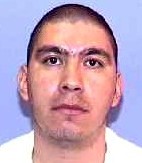
Rigoberto Avila
Murderer Russell Ellwood
Murderer · USA · 1991
Russell Ellwood was a former taxi driver. Authorities suspected him of killing…
20 victims
Russell Ellwood
Murderer · USA · 1991
Russell Ellwood was a former taxi driver. Authorities suspected him of killing…
20 victims
 Robert Martines Perez
Murderer · USA · 1994
Name: Robert Martines Perez · Other name used in proceedings: Robert Martinez P…
15 victims
Robert Martines Perez
Murderer · USA · 1994
Name: Robert Martines Perez · Other name used in proceedings: Robert Martinez P…
15 victims
 Billy Frank Vickers
Murderer · USA · 1993
Billy Frank Vickers Vickers was executed by lethal injection in Texas on Januar…
14 victims
Billy Frank Vickers
Murderer · USA · 1993
Billy Frank Vickers Vickers was executed by lethal injection in Texas on Januar…
14 victims
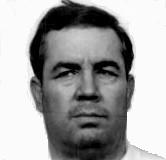 James Otto Earhart
Murderer · USA · 1987
James Otto Earhart · May 4, 1987 — Earhart visited the Kirtland home in respons…
1 victim
James Otto Earhart
Murderer · USA · 1987
James Otto Earhart · May 4, 1987 — Earhart visited the Kirtland home in respons…
1 victim
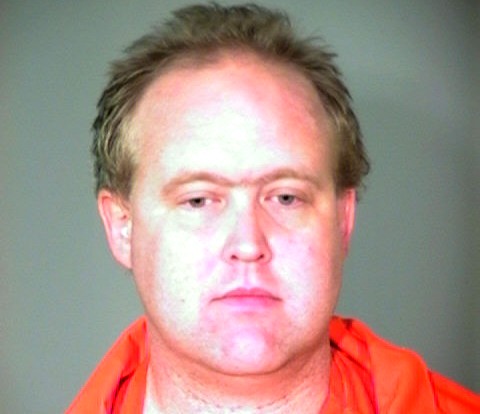 Pete Carl Rogovich
Spree killer · USA · 1992
Pete Carl Rogovich was tried in Maricopa County in connection with the March 15…
4 victims
Pete Carl Rogovich
Spree killer · USA · 1992
Pete Carl Rogovich was tried in Maricopa County in connection with the March 15…
4 victims
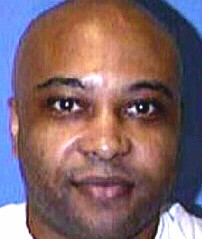 Keith Bernard Clay
Murderer · USA · 1993
Keith Bernard Clay was a defendant in the capital murder case of Melathethil To…
4 victims
Keith Bernard Clay
Murderer · USA · 1993
Keith Bernard Clay was a defendant in the capital murder case of Melathethil To…
4 victims
 Charles Evans
Murderer · USA · 1985
September 19, 1986 — Charles Evans was sentenced to death. · On 12-08-92 — Evan…
1 victim
Charles Evans
Murderer · USA · 1985
September 19, 1986 — Charles Evans was sentenced to death. · On 12-08-92 — Evan…
1 victim
 Ronald Watkins
Murderer · USA · 1988
Ronald Watkins was convicted of capital murder and robbery for the killing of W…
1 victim
Ronald Watkins
Murderer · USA · 1988
Ronald Watkins was convicted of capital murder and robbery for the killing of W…
1 victim
 George James Miller
Murderer · USA · 1994
George James Miller Miller was executed by lethal injection in Oklahoma on May…
1 victim
George James Miller
Murderer · USA · 1994
George James Miller Miller was executed by lethal injection in Oklahoma on May…
1 victim
- Gender
- male
- Country
- USA
- Location
- El Paso County, Texas, USA
- Date of birth
- August 5, 1972
- Age at first offence
- 28
- Characteristics
- babysitter
- Victim profile
- Nicholas Macias, 19-month-old
- Method of murder
- Beating
- Date(s) of murder
- February 29, 2000
- Years active
- 2000
- Date of arrest
- —
- Status
-
Sentenced to death
Sentenced to death on July 19, 2001
Case identification
Rigoberto Avila, Jr. was convicted of capital murder in El Paso County, Texas.
TDCJ Number: 999391 Date of Birth: 08/05/1972 Race and Gender: Hispanic male Hair Color: black Height: 6 ft 2 in Weight: 229 Eye Color: brown
Background
Avila was a laborer in El Paso, Texas. He had no prior prison record.
The offence
On 02/29/2000, Avila was babysitting a 19-month-old Hispanic male and his four-year-old brother, Dylan Salinas, at their residence in El Paso. Avila struck the 19-month-old in the abdomen, causing the death of the child.
Marcelina Macias left her home to attend a class, leaving her son, Nicholas Macias, and his brother in Avila’s care.
Around 6:00 p.m., the children were left in Avila’s care.
At 7:02 p.m., Avila called “911” and told the operator that the infant boy he was babysitting had stopped breathing. When paramedics arrived, they administered emergency treatment to the child before transporting him to the hospital.
While treating the boy, paramedics found a bruise on Nicholas’ stomach in the shape of a boot print. When they asked Avila, he denied any knowledge of the marking.
In his second written statement, Avila stated that he had been watching television when Dylan called him and told him that Nicholas was not breathing. Avila stated that Dylan later told him that he and Nicholas had been wrestling when he put his hand over Nicholas’ mouth, and Nicholas fainted.
In the same second written statement, Avila stated that he went over to the boy and “stamped on him hard” with his right foot, and he stated that he did not know what “came over [him]” when he stamped on Nicholas. Avila claimed this was the only injury he inflicted on the boy.
The medical examiner reported that Nicholas “died of internal bleeding due to massive abdominal trauma resulting from blunt for[ce] injury.” The autopsy revealed that major organs in Nicholas’ body had been split in two by considerable blunt-force trauma consistent with being stomped by an adult.
A surgeon’s testimony likened Nicholas’ injuries to those caused by events such as “exiting an automobile traveling at sixty miles per hour” or being dropped “twenty feet.”
The State argued that two additional bruises on Nicholas’ torso, which the medical examiner categorized as “fresh,” indicated Avila inflicted more injury than just a single “stamp.” The State also presented, without objection, testimony from the medical examiner regarding bruises on Nicholas’ head. The medical examiner testified that those bruises were “a few days old” and were not inflicted at the same time as the injury that caused Nicholas’ death or the other two bruises to the torso.
Investigation
Officer Jose Lopez testified at a pretrial Jackson v. Denno hearing that on February 29, 2000, he was dispatched to the home of a child who had stopped breathing.
Avila told Lopez that he had been watching television when Dylan came into the room and told him that Nicholas was not breathing. According to Avila, Dylan told him that “he had held [Nicholas’] mouth” and then he stopped breathing.
Lopez noted that Avila did not appear to be under the influence of alcohol or any other types of intoxicants.
Detective Tony Tabullo arrived at the hospital to assess the situation. Because Avila was the last adult known to be with Nicholas, Tabullo asked if he would be willing to discuss the incident with him at the Crimes Against Persons (CAP) offices. Avila agreed because he understood from working as a security guard that such discussions were standard procedure.
Tabullo asked whether Avila wanted to ride or drive in his own vehicle. Avila initially indicated that he would drive to the office with his mother, but once outside the hospital he changed his mind and asked to ride with Tabullo.
Tabullo and Avila arrived at the CAP offices around 11:05 p.m. Tabullo offered Avila a beverage and then they sat down in Tabullo’s cubicle to discuss the incident.
Before questioning Avila, Tabullo handed him a card that set out his Miranda warnings and asked Avila to read the warnings. (2) See Miranda v. Arizona, 384 U.S. 436 (1966).
After Avila read the card, Tabullo asked if he understood his rights, and Avila indicated that he did. Avila indicated he knew “all about the Miranda warnings” because he was a security guard.
Avila signed the card and wrote the date and time on it. Tabullo advised him that he was not under arrest and was free to leave at any time, and that he had the right to an attorney. Avila said he did not want an attorney and did want to talk to the detective.
Tabullo typed during the conversation. Tabullo testified that Avila was very calm and did not appear to be under the influence of alcohol or any drugs or narcotics, and that Avila did not appear to be under duress.
After completing the typed statement, Tabullo asked Avila to read each paragraph and instructed him to initial each paragraph noting he had read and understood it.
In the first statement, Avila stated that he had been watching television when Dylan called him and told him that Nicholas was not breathing. The statement included Avila’s claim that Dylan later told him that he and Nicholas had been wrestling when Avila put his hand over Nicholas’ mouth, and Nicholas fainted.
The first statement ended at 2:10 the morning of March 1, 2000.
After taking Avila’s first statement, Tabullo told Avila that his mother was outside. Avila asked Tabullo to tell his mother that he would call her when he was finished and asked if he was still free to leave at any time. Tabullo told him that he was.
At 2:25 a.m., Tabullo again had Avila read his rights and sign, date, and place the time on the card noting he understood. Tabullo asked if Avila wanted an attorney and Avila said he did not want one. Avila indicated he was willing to continue talking.
Shortly thereafter, Tabullo received polaroid photographs that appeared to show an adult-sized footprint on Nicholas’ stomach. Tabullo confronted Avila with the photographs. After being confronted, Avila orally admitted to stomping Nicholas.
Tabullo asked for Avila’s shoes, which Avila gave him. Tabullo then took Avila to be fingerprinted and photographed. Avila signed a document indicating he knew he could refuse to be fingerprinted and photographed.
After these procedures, Tabullo and Avila returned to the interview room and continued talking. Tabullo typed the second statement beginning at 5:46 a.m. Avila read and signed the second statement, but did not write the ending time or initial the individual paragraphs. Tabullo admitted in response to questions from appellant’s counsel that Avila could have slept between the statements; however, Tabullo never saw him sleep and stated Avila was “fully awake” when he signed the second statement. Detective Terry Kozak and Officer Lopez witnessed the signing of the second statement.
Lopez testified that Avila did not appear to be under duress when he signed the second statement and opined that he was not forced or coerced into signing.
After the State rested, Avila testified in his own defense. Avila said he did not read the second statement before signing it. He said that after finishing the first statement, Tabullo told him he needed “to clear up a few things on the statement.” Avila testified that he fell asleep until Tabullo awakened him and told him to sign the corrected statement. He testified that he did not know what he was signing and took Tabullo’s word that it was a corrected version of the first statement.
Arrest
After Avila’s oral confession and related steps, Tabullo went to procure a warrant, and Avila was taken before a magistrate close to 8:00 a.m.
The court record discussed that Avila was arrested without a warrant. It also noted that probable cause existed based on Avila’s oral confession to Tabullo and the photographs of an adult footprint across Nicholas’ stomach.
Trial
Conviction and procedural basis for sentence
In May 2001, a jury convicted Avila of capital murder under Tex. Penal Code Ann. § 19.03(a).
Pursuant to the jury’s answers to special issues under Texas Code of Criminal Procedure Article 37.071, §§ 2(b) and 2(e), the trial judge sentenced Avila to death under Art. 37.071, § 2(g).
Direct appeal to the Texas Court of Criminal Appeals was automatic under Art. 37.071, § 2(h).
Avila raised eleven points of error on direct appeal.
The Court of Criminal Appeals affirmed.
Admission of written statements (Jackson v. Denno and delay before magistrate)
Avila challenged the trial court’s conduct of a Jackson v. Denno hearing regarding the voluntariness of his second written statement, alleging the trial court failed to conduct a proper Jackson v. Denno hearing.
Avila did not assert that the Jackson hearing itself was improperly conducted. He argued the trial judge’s findings and conclusions after the hearing were inaccurate, incomplete, and not supported by the record. He asserted that the trial judge “failed to rule on [specifically enumerated] important fact issues” raised by his own testimony at the suppression hearing.
The trial court denied the motion to suppress his written statements and entered findings and conclusions that the voluntary statements were freely and voluntarily made without compulsion or persuasion.
The trial court findings and conclusions included:
The Court hereby finds that the Voluntary Statements of the Accused were freely and voluntarily made without compulsion or persuasion.
The Detective read the Miranda warnings to the Defendant from the Miranda card provided by the El Paso Police Department [citation to exhibit omitted].
The Defendant initialed the card and stated he understood his rights.
The Defendant freely and voluntarily waived his rights including his right to an attorney and his right to remain silent.
Prior to giving both Voluntary Statements of Accused, the Defendant was read his Miranda warnings again from the top of each statement, stated he understood his rights and freely and voluntarily waived his rights.
The appellate discussion noted that the trial judge’s finding that Avila “was read” his rights prior to each statement was not precisely accurate, but the record supported that Avila was given his rights in writing (and to some extent verbally) at least twice before taking each statement and another time in between. It also found Avila acknowledged familiarity with his rights and that the record supported waiver and voluntariness.
The appellate court also addressed Avila’s second point of error arguing suppression was required under the Texas Constitution and Texas Code of Criminal Procedure Articles 14.06 and 15.17 due to undue delay in taking him before a magistrate.
The appellate discussion emphasized that violations of those articles do not automatically invalidate a confession and require a causal connection between the confession and any failure to take the accused promptly before a magistrate.
Admission of photographs (Rule 403)
Avila argued that the trial court violated Texas Rule of Evidence 403 by admitting State’s Exhibits 16, 17, and 18.
State’s Exhibit 16 was a view of Nicholas’ major organs after the medical examiner cut open and spread the torso sides. State’s Exhibit 17 showed the upper one-third of Nicholas’ body with the chest open, ribs spread, organs removed, and the front half of the scalp cut and peeled down over his face. State’s Exhibit 18 showed Nicholas’ head and shoulders from the back with the back half of the scalp peeled down and hanging like a hood.
The appellate court determined State’s Exhibit 16 fell within an exception and that the trial judge did not abuse discretion in allowing it.
The appellate court found State’s Exhibits 17 and 18 showed mutilation attributable to the medical examiner and did not fit the exception. It held the trial court abused its discretion in admitting those photographs.
The appellate court then conducted a harm analysis under Texas Rule of Appellate Procedure 44.2(b). It concluded there was fair assurance that the error did not influence the jury at either stage of trial or had but a slight effect.
Competency of witness
Avila challenged the trial court’s ruling that Dylan Salinas was a competent witness.
The appellate court discussed Texas Rule of Evidence 601(a)(2), under which the trial judge determines competency.
The appellate discussion described a hearing outside the presence of the jury where the judge questioned Dylan to determine competency. Dylan knew his full name, could correctly spell “Dylan,” and knew he was five years old. Dylan knew he went to a school named Putnam and sometimes read but did not like it. Dylan could recite his alphabet.
The judge asked Dylan in the abstract about the difference between telling the truth and telling a lie; Dylan said he did not know. When given a concrete example such as it was sunny outside or it was snowing outside, Dylan could tell what was true and what was not true.
The judge asked about the concept of truth using a concrete example about whether Dylan ate all the cookies when his mother told him not to. Dylan demonstrated he knew to tell the truth.
The appellate court stated Dylan demonstrated understanding of the difference between right and wrong, including that it was wrong to take someone else’s apple at school, and Dylan promised to listen to questions and answer truthfully if he knew the answer.
The appellate court held the judge did not abuse discretion in finding Dylan competent.
Effective assistance of counsel
Avila argued ineffective assistance of trial counsel in five separate points of error, including alleged deficiencies relating to punishment-phase argument, cross-examination of Nicholas’ mother, failure to object to alleged mischaracterization of the manner of death, failure to timely tender a videotape interview of Dylan Salinas, and a motion to have Nicholas’ body exhumed for a general examination.
The appellate court reviewed the claim using Strickland v. Washington standards and noted that appellate review was highly deferential and generally required a record sufficiently developed to evaluate deficiencies.
The appellate court held the record was not sufficiently developed regarding points of error seven, eight, and eleven and overruled those points.
For point of error nine, Avila argued counsel was ineffective for failing to object to the State’s “mischaracterization” of the manner of Nicholas’ death at punishment, specifically that two additional bruises on Nicholas’ torso indicated Avila inflicted more than just one stomping injury.
The appellate court stated proper jury argument included summation of the evidence, reasonable deductions, answer to opposing argument, or a plea for law enforcement, and it held the prosecutor’s argument was permissible as a reasonable deduction from evidence and that counsel’s failure to object did not constitute ineffective assistance.
For point of error ten, Avila argued counsel was ineffective for failing to timely tender to the trial court a videotape interview of Dylan Salinas.
The appellate discussion stated that the videotape interview showed a conversation between Detective Brian Fuller and Dylan Salinas and occurred just past midnight on March 1, 2000, more than a year before Dylan was called to testify at trial. It noted that whether Dylan was competent hours after the offense and more than a year before trial was not material given the competency hearing testimony, and it held counsel was not deficient for failing to present the videotape.
Sufficiency of evidence for future dangerousness
Avila argued in a point of error that the evidence was insufficient to support the jury’s finding that he would probably be a continuing threat to society.
The appellate discussion reviewed sufficiency in the light most favorable to the verdict and found that the facts of the crime alone could support the future dangerousness finding.
It stated jurors heard that Avila was the only adult with Nicholas when Nicholas was hurt, that Nicholas was so badly injured that several of his organs were “literally ripped in two,” and that doctors testified that the force required was extreme.
It stated the prosecution argued for a scenario in which Avila kicked Nicholas twice before finally fatally stomping him, supported by testimony about two additional “fresh” bruises on Nicholas’ torso.
It stated the State presented no evidence of prior criminal history, other bad acts, or psychological evidence.
The appellate court found a rational juror could conclude Avila would continue to be a threat based on the killing of a young, helpless 19-month-old with severed internal organs, the circumstances when help was called, the alleged intentional misleading of paramedics about the nature of the injuries, the attempt to blame injuries on the equally defenseless four-year-old boy, and that Avila provided no explanation when admitting his actions.
The appellate court held the evidence was legally sufficient to support the jury’s affirmative answer to future dangerousness.
Sentencing
The jury was asked special issues under Texas Code of Criminal Procedure Article 37.071, §§ 2(b) and 2(e). Based on the jury’s answers, the trial judge sentenced Avila to death under Art. 37.071, § 2(g).
Avila was sentenced to death on July 19, 2001.
Appeals
Avila’s direct appeal to the Texas Court of Criminal Appeals was automatic.
The Texas Court of Criminal Appeals overruled all raised points of error and affirmed the trial court’s judgment.
The opinion was delivered July 2, 2003.
Outcome
The Texas Court of Criminal Appeals affirmed the judgment of the trial court, including the death sentence.
Other details
A note at the end of the appellate discussion stated that Tabullo kept referring to the warnings as “ Miranda ” warnings, and that the warnings actually complied with Article 38.22.
Spotted an error, or have more information about this case?