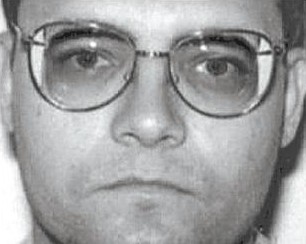
Tony Leslie Fry
Murderer Brian Kevin Rosenfeld
Murderer · USA · 1985
Brian Kevin Rosenfeld Brian Kevin Rosenfeld was sentenced to three concurrent l…
23 victims
Brian Kevin Rosenfeld
Murderer · USA · 1985
Brian Kevin Rosenfeld Brian Kevin Rosenfeld was sentenced to three concurrent l…
23 victims
 Russell Ellwood
Murderer · USA · 1991
Russell Ellwood was a former taxi driver. Authorities suspected him of killing…
20 victims
Russell Ellwood
Murderer · USA · 1991
Russell Ellwood was a former taxi driver. Authorities suspected him of killing…
20 victims
 Robert Martines Perez
Murderer · USA · 1994
Name: Robert Martines Perez · Other name used in proceedings: Robert Martinez P…
15 victims
Robert Martines Perez
Murderer · USA · 1994
Name: Robert Martines Perez · Other name used in proceedings: Robert Martinez P…
15 victims
 Billy Frank Vickers
Murderer · USA · 1993
Billy Frank Vickers Vickers was executed by lethal injection in Texas on Januar…
14 victims
Billy Frank Vickers
Murderer · USA · 1993
Billy Frank Vickers Vickers was executed by lethal injection in Texas on Januar…
14 victims
 Harold McElmurry
Murderer · USA · 1999
Harold McElmurry was a convicted killer who was executed by lethal injection in…
2 victims
Harold McElmurry
Murderer · USA · 1999
Harold McElmurry was a convicted killer who was executed by lethal injection in…
2 victims
 Derick Lynn Peterson
Murderer · USA · 1982
Derick Lynn Peterson was convicted of capital murder and sentenced to death in…
1 victim
Derick Lynn Peterson
Murderer · USA · 1982
Derick Lynn Peterson was convicted of capital murder and sentenced to death in…
1 victim
 Anthony Sowell
Serial killer · USA · 2007
Anthony Edward Sowell (born August 19, 1959) was an American serial killer iden…
11 victims
Anthony Sowell
Serial killer · USA · 2007
Anthony Edward Sowell (born August 19, 1959) was an American serial killer iden…
11 victims
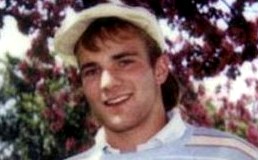 Peter Zimmer
Homicide · USA · 1983
Peter Zimmer pleaded no contest to the killings in 1983 and was found delinquen…
3 victims
Peter Zimmer
Homicide · USA · 1983
Peter Zimmer pleaded no contest to the killings in 1983 and was found delinquen…
3 victims
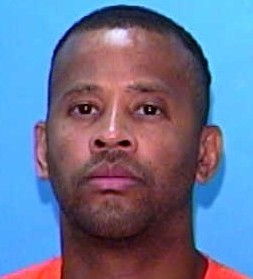 Timothy Alexander Robinson
Murderer · USA · 1988
02/28/89 — Timothy Alexander Robinson was indicted on counts including First-De…
4 victims
Timothy Alexander Robinson
Murderer · USA · 1988
02/28/89 — Timothy Alexander Robinson was indicted on counts including First-De…
4 victims
- Gender
- male
- Country
- USA
- Location
- Chesterfield County, Virginia, USA
- Date of birth
- 1975
- Age at first offence
- 19
- Characteristics
- robbery
- Victim profile
- Leland A. Jacobs, 42 (car salesman)
- Method of murder
- Shooting ( .22-caliber handgun )
- Date(s) of murder
- February 21, 1994
- Years active
- 1994
- Date of arrest
- —
- Status
-
Executed
Executed by lethal injection in Virginia on February 4, 1999
Case identity
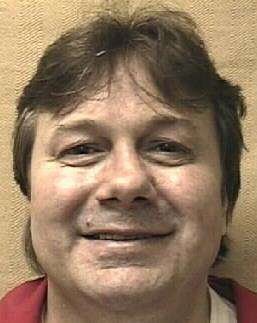
Tony Leslie Fry
Timeline
- February 21, 1994 — Tony Fry and his accomplice, 17-year-old Bradford Hinson, used a .22 caliber weapon to shoot and kill Leland Jacobs. Fry lured Jacobs from his Ford dealership under a ruse that Fry's grandmother wanted to buy a 1994 Ford Explorer. Jacobs was robbed, shot eleven times, tied to the rear bumper of the Explorer with his necktie, and dragged down a dirt road 777 feet into the woods while still alive.
- About 15 minutes after the murder — A police officer who had a warrant for Fry’s arrest for another crime had a tip that Fry frequented the area where Jacobs was killed and came upon Fry and Hinson as they were leaving the scene. Fry confessed when he was arrested.
- October 3, 1994 — Tony Leslie Fry pled guilty to the murder of Leland A. Jacobs.
- January 6, 1995 — Fry was placed on death row.
- 1995 — Fry waived all further appeals.
- 1996 — Fry changed his mind regarding further appeals.
- February 4, 1999 — Tony Leslie Fry was executed by lethal injection in Virginia.
Background
Leland Jacobs was a 42-year-old car salesman who worked for a Richmond-area Ford dealership and operated from a Ford dealership in Chesterfield County. Fry lived in southern Chesterfield and lured Jacobs from his Ford dealership with the ruse that Fry's grandmother wanted to buy a 1994 Ford Explorer.
At the time of the crime, Fry was 19 years old. Fry presented mitigating evidence at sentencing, including his age, his attitude toward police and the crime, his family background, and the fact that he did not supply the murder weapon. Fry had been abandoned by both of his parents as a child and had been raised by his maternal great-grandmother. As a young boy, Fry frequented church and was a member of the choir but did not have a lot of friends. During high school, Fry was placed in a special education class that could handle his emotional disturbance, and he was considered a below average student with trouble with schoolwork.
Two mental health experts testified on Fry’s behalf. One psychologist stated that Fry’s intelligence was below average and that he could only read at a fifth grade level. The psychologist testified that Fry was “suffering from a dependent personality disorder” and stated that Fry presented some features of void and schizoid personality disorders, but that Fry did not suffer from a mental illness. The second psychological expert testified: “Fry's personality disorders and retarded social development resulted from his abandonment by his mother and the peculiarities of his great-grandparents' household.” However, that expert concurred with the psychologist that Fry did not have a mental health disorder.
Fry threatened suicide twice during his arrest. Both police and Fry’s former employer testified that he was “polite and respectful” with the police, and they continued on to say that Fry was “forthright about his involvement in Jacobs' murder and the other criminal activities.” Testimony from a fellow inmate of Hinson and Fry stated that “Hinson was the leader of [Fry].”
The offence
On February 21, 1994, Tony Fry and his accomplice, 17-year-old Bradford Hinson, used a .22 caliber weapon to shoot and kill Leland Jacobs.
Fry had lured Jacobs from his Ford dealership with the ruse that Fry’s grandmother wanted to buy a 1994 Ford Explorer. After the killing, Jacobs was robbed, shot eleven times, and tied to the rear bumper of the Explorer with his necktie. Jacobs was dragged down a dirt road 777 feet into the woods while still alive.
A medical examiner testified that Jacobs probably was still alive when he was dragged.
Investigation and arrest
About 15 minutes after the murder, a police officer who had a warrant for Fry’s arrest for another crime had a tip that Fry frequented the area where Jacobs was killed. The officer came upon Fry and Hinson as they were leaving the scene of the murder and stopped them.
People involved
Defendant
Tony Leslie Fry, 23, executed by lethal injection in Virginia on February 4, 1999. Fry had been convicted for the murder of Leland A. Jacobs and also for robbery and firearm-related counts.
Accomplice
Bradford Hinson, 17 years old. Hinson was convicted of the 1st-degree murder of Jacobs, robbery, and 2 counts of use of a firearm, and received an 88-year sentence.
Victim
Leland Jacobs (Leland A. Jacobs), 42-year-old car salesman.
Trial and plea
Tony Leslie Fry pled guilty to murder and robbery in the February 1994 slaying of Leland A. Jacobs. Fry pleaded guilty to the murder of Leland A. Jacobs on October 3, 1994.
Sentencing
In addition to the death penalty, Fry received:
- a 50 year sentence for the robbery, and
- an eight year sentence for 2 counts of use of a firearm related to Jacobs' death.
Hinson received:
- an 88 year sentence after being convicted of the 1st-degree murder of Jacobs, robbery, and 2 counts of use of a firearm.
During Fry’s sentencing, Chesterfield police testified that when Fry was arrested shortly after Jacobs’ murder, he admitted robbing 3 churches in the Matoaca area, including Greenwood Presbyterian Church, of which he was a member. Fry also confessed to torching 2 vacant homes in Chesterfield and pulling fire alarms at various local facilities.
Fry admitted robbing a grave off Reedy Branch Road and stealing parts of a man’s skull. He left a jawbone in a friend’s apartment, where it was found by police.
Appeals
Fry waived all further appeals in 1995 and changed his mind in 1996.
The Supreme Court of Virginia issued an opinion identified as Supreme Court of Virginia opinion 950673.
The U.S. Supreme Court rejected Fry’s emergency request and formal appeal by a 7-2 vote, leaving no appeal options before his execution.
Fry’s lawyers said he did not plan to ask Gov. Jim Gilmore for clemency.
Outcome
Tony Leslie Fry was executed by lethal injection in Virginia on February 4, 1999.
In a final statement, Fry said: “sorry for what I've done, and I have made peace with myself.”
Fry stated he was sorry for what he had done and that he had written the family of his victim “I was sorry that it happened and that I wish that I could go back and change what happened.”
Aftermath
Fry became the 2nd condemned inmate to be put to death in Virginia that year and the 61st overall since the state resumed capital punishment in 1982.
Only Texas had executed more people. Fry also became the 13th condemned prisoner to be executed in the USA that year and the 513th overall since the United States resumed executions on Jan. 17, 1977.
Spotted an error, or have more information about this case?