
David Funches
Murderer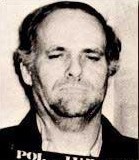 Ervil LeBaron
Murderer · USA · 1972
Ervil Morrell LeBaron (1925 to August 16, 1981) was the leader of a polygamous…
35 victims
Ervil LeBaron
Murderer · USA · 1972
Ervil Morrell LeBaron (1925 to August 16, 1981) was the leader of a polygamous…
35 victims
 Marvin Gray
Murderer · USA · 1975
Marvin Gray was convicted killer who claimed responsibility for 23 slayings and…
23 victims
Marvin Gray
Murderer · USA · 1975
Marvin Gray was convicted killer who claimed responsibility for 23 slayings and…
23 victims
 Yahweh ben Yahweh
Murderer · USA · 1980
Yahweh ben Yahweh was born and legally named Hulon Mitchell Jr. (October 27, 19…
23 victims
Yahweh ben Yahweh
Murderer · USA · 1980
Yahweh ben Yahweh was born and legally named Hulon Mitchell Jr. (October 27, 19…
23 victims
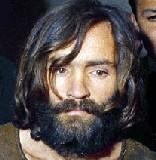 Charles Manson
Murderer · USA · 1969
Charles Milles Manson (born November 12, 1934) was an American criminal and mus…
9 victims
Charles Manson
Murderer · USA · 1969
Charles Milles Manson (born November 12, 1934) was an American criminal and mus…
9 victims
 Walter Seifert
Mass murderer · Germany · 1964
Committed suicide by poisoning himself with cyanide the same day; died next day…
10 victims
Walter Seifert
Mass murderer · Germany · 1964
Committed suicide by poisoning himself with cyanide the same day; died next day…
10 victims
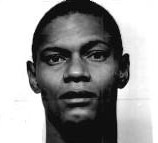 Norman Evans Green
Murderer · USA · 1985
Norman Evans Green was executed by lethal injection in Texas on February 24, 19…
1 victim
Norman Evans Green
Murderer · USA · 1985
Norman Evans Green was executed by lethal injection in Texas on February 24, 19…
1 victim
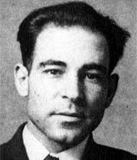 Nicola Sacco
Murderer? · USA · 1920
Nicola Sacco Nicola Sacco and Bartolomeo Vanzetti were convicted of murdering t…
2 victims
Nicola Sacco
Murderer? · USA · 1920
Nicola Sacco Nicola Sacco and Bartolomeo Vanzetti were convicted of murdering t…
2 victims
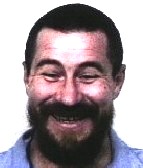 Stephen Wayne Anderson
Serial killer · USA · 1970
May 24, 1979 — Stephen Wayne Anderson escaped from Utah State Prison. · May 26,…
8 victims
Stephen Wayne Anderson
Serial killer · USA · 1970
May 24, 1979 — Stephen Wayne Anderson escaped from Utah State Prison. · May 26,…
8 victims
 Georges Gauchet
Murderer · France · 1930
Georges Gauchet was a French aristocrat described as a “playboy” of Paris. He w…
1 victim
Georges Gauchet
Murderer · France · 1930
Georges Gauchet was a French aristocrat described as a “playboy” of Paris. He w…
1 victim
- Gender
- male
- Country
- USA
- Location
- Duval County, Florida, USA
- Date of birth
- 1946
- Age at first offence
- 28
- Characteristics
- robbery
- Victim profile
- Anna Waldrop (female, 53) and Clayton Ragan (male, 56)
- Method of murder
- St abbing with knife
- Date(s) of murder
- December 16, 1974
- Years active
- 1974
- Date of arrest
- —
- Status
-
Executed
Executed by electrocution in Florida on April 22, 1986
Parties and identification
David Livingston Funchess was the petitioner and appellant in federal habeas corpus proceedings in the United States Court of Appeals for the Eleventh Circuit and also the defendant in Florida capital cases.
Timeline
- May 1975 — A Florida jury convicted David Funchess on two counts of first degree murder for the stabbing deaths of Anna Waldrop and Clayton Ragan; the jury returned an advisory sentence of death as to each count and the trial judge concurred, sentencing him to two consecutive death sentences.
- October 1977 — The United States Supreme Court denied a petition for writ of certiorari from the direct appeal.
- 1979 — Pursuant to Gardner v. Florida, the Florida Supreme Court vacated and remanded Funchess’ death sentences to the trial court for resentencing.
- July 1982 — Funchess filed his first petition for writ of habeas corpus in federal district court in the Middle District of Florida.
- November 1984 — The district court denied an amended petition for writ of habeas corpus and the stay of execution was lifted.
- October 23, 1985 — The United States Court of Appeals for the Eleventh Circuit issued an opinion affirming the denial of habeas corpus relief.
- March 5, 1986 — Funchess filed a petition for state habeas corpus relief and an application for a stay of execution with the Supreme Court of Florida.
- April 17, 1986 — The Supreme Court of Florida denied Funchess’ claim.
- April 20, 1986 — Funchess sought relief again in the Circuit Court of Duval County, Florida.
- April 21, 1986 — The circuit court denied the petition and the Supreme Court of Florida affirmed.
- April 22, 1986 — A rehearing en banc was denied; Funchess was executed by electrocution in Florida.
Background
Funchess was a Vietnam veteran. He was executed by electrocution in Florida on April 22, 1986.
In 1975, a Duval County jury found David Livingston Funchess guilty of two counts of first degree murder, and he was sentenced to two death penalties.
A federal court later considered issues including competency to stand trial and be sentenced, the use of nonrecord material in Florida Supreme Court review, ineffective assistance of counsel at the penalty phase, issues involving jury instructions and aggravating circumstances, whether racial and sexual discrimination prompted the death sentence, whether electrocution constituted cruel and unusual punishment, and whether the death qualification process was unconstitutional.
The offence
Funchess was convicted for the stabbing deaths of Anna Waldrop and Clayton Ragan during a holdup. The trial judge found the killings were “truly some of the most senseless, heinous and horrible murders that have ever taken place in the City of Jacksonville.”
A third woman was also stabbed and remained comatose as a result of the stabbing.
At the time of the crimes, the murders occurred while Funchess was robbing:
- Avondale Liquors in Jacksonville, Florida.
- The record included findings that Funchess went to the Avondale Lounge in December 1974 to rob it, and that he robbed the place on December 16, 1974.
Funchess was also described as having admitted, for purposes of resentencing, that he went to the Avondale Lounge on December 16, 1974 to rob the place and that he did rob the place on that day.
Investigation and trial proceedings
Direct conviction and sentencing
In May 1975, a Florida jury convicted David Funchess on two counts of first degree murder for the stabbing deaths of Anna Waldrop and Clayton Ragan.
The jury returned an advisory sentence of death as to each count. The trial judge concurred and sentenced Funchess to two consecutive sentences of death.
Appeals
State direct appeal and certiorari
On direct appeal, the Florida Supreme Court affirmed the convictions and sentences.
Funchess’ petition for writ of certiorari was denied by the United States Supreme Court in October 1977.
Gardner resentencing and subsequent state review
In 1979, pursuant to Gardner v.
After a hearing on the Gardner issue, the trial court reimposed a sentence of death for each count.
The reimposition of the death sentences was affirmed by the Florida Supreme Court. A petition for writ of certiorari was subsequently denied by the United States Supreme Court.
Post-conviction proceedings in Florida
Funchess’ 3.850 motion in Florida was denied, and he appealed to the Florida Supreme Court.
In Funchess v. State, 449 So.2d 1283 (Fla. 1984), the Florida Supreme Court affirmed the denial of Funchess’ 3.850 motion and denied his petition for habeas corpus relief.
Funchess’ petition for rehearing was likewise denied by that court.
Federal habeas corpus proceedings
Initial federal petition and stay
Funchess filed his first petition for writ of habeas corpus in federal district court in July 1982.
The district court issued an order requiring Funchess to exhaust claims that had not been previously exhausted and, pursuant to Goode v. Wainwright, ordered a stay of execution.
Denial of amended petition and lifting of stay
After further proceedings, the district court denied an amended petition for writ of habeas corpus in November 1984, and the stay of execution was lifted.
Funchess thereafter appealed.
Eleventh Circuit—opinion on habeas issues
In October 1985, the Eleventh Circuit issued an opinion affirming the district court’s denial of habeas corpus relief.
Funchess raised six issues on appeal:
- Whether the use of nonrecord material by the Florida Supreme Court in affirming Funchess’ conviction and sentence was unconstitutional.
- Ineffective assistance of counsel at the penalty phase of the trial.
- Whether the trial court’s reimposition of the death penalty without the benefit of a second jury advisory opinion was error.
- Whether the trial court and the Florida Supreme Court failed to discuss or find that certain non-statutory mitigating circumstances existed.
- Whether the trial court and the Florida Supreme Court failed to find that certain statutory mitigating circumstances existed.
- Whether appellate counsel was ineffective on appeal.
Nonrecord material
Funchess argued that requesting and receiving ex parte information by the Florida Supreme Court in pending capital appeals, without notice to appellants or their attorneys, was unconstitutional.
The Eleventh Circuit held that Brown v. Wainwright was dispositive of Funchess’ claim regarding nonrecord materials.
Ineffective assistance of counsel—penalty phase
Funchess contended he was denied effective assistance of counsel during the penalty phase. He argued counsel was deficient for:
- Failure to present evidence of statutory and non-statutory mitigating factors.
- Failure to object to erroneous jury instructions.
- Failure to object to the application of duplicitous aggravating circumstances by the trial court.
The Eleventh Circuit applied the Strickland v. Washington standard and addressed each argument.
Mitigating circumstances—statutory and non-statutory
The court discussed the record showing that Funchess never told his attorney of any past psychological problems and that a psychological evaluation indicated competence to stand trial and competence at the time of the murders. The court held that trial counsel could not be faulted for not investigating further.
As to non-statutory mitigating circumstances, Funchess argued that evidence should have been introduced regarding childhood abuse, economic hardships, and heavy but “medicinal” use of heroin. The court held that counsel’s strategy of maintaining innocence justified not presenting evidence implying guilt to excuse the conduct, and the decision was afforded deference.
Jury instructions on mitigation standard
Funchess argued counsel was ineffective for failing to object to an instruction that “mitigating circumstances must be proved beyond a reasonable doubt.”
The Eleventh Circuit held it was not altogether clear that the instruction was improper, noted the Florida Supreme Court had twice considered and rejected Funchess’ argument on the same issue, and deferred to the Florida Supreme Court’s interpretation of the state’s death penalty statute in the absence of a constitutional challenge to the instruction.
Overlapping aggravating circumstances and merger
Funchess argued counsel was ineffective for not objecting to jury instructions regarding two aggravating circumstances that allegedly overlapped: “murder in the course of a robbery” and “murder committed for pecuniary gain.”
The court stated that later state authority condemned the “doubling up” and held that counsel’s failure to anticipate it did not constitute ineffective assistance. It also noted that prejudice, if any, was cured by merger at resentencing.
Funchess also argued counsel was ineffective for not requesting explanatory instructions regarding the “no significant history of prior criminal activity” mitigating factor and the “heinous, atrocious and cruel” aggravating factor. The Eleventh Circuit held the arguments were without merit.
Finally, the court rejected an argument that instructions precluded consideration of non-statutory mitigating circumstances.
Duplicitous aggravating circumstances—robbery course and avoidance of arrest
Funchess argued counsel was ineffective at resentencing for failing to object to application of aggravating factors to the same aspect of the crime: “murder in the course of a robbery” and “murder to avoid arrest and prosecution.”
The Eleventh Circuit held that, where facts will support such, applying more than one aggravating circumstance to a single aspect was not improper and agreed that the facts supported the application. Counsel therefore was not ineffective for not objecting.
Resentencing without second advisory jury opinion
Funchess argued the trial court erred in resentencing without the benefit of a second advisory opinion by the jury.
The Eleventh Circuit disagreed, citing Proffitt v. Wainwright and holding that Funchess had already received one advisory jury opinion, and it was not free from serious error. The court also held that the trial court had the benefit of new mitigating evidence at resentencing and that Funchess was not prejudiced by the initial jury’s inability to consider evidence that came later.
Non-statutory mitigating circumstances consideration
Funchess contended the trial court failed to consider non-statutory mitigating circumstances in resentencing and that the Florida Supreme Court ignored these factors.
The Eleventh Circuit held that Funchess presented evidence relating to non-statutory mitigating circumstances at the second resentencing hearing and that the trial court considered the evidence but was not persuaded it justified establishment of non-statutory mitigating factors. The court held that failure to include detailed discussion did not show lack of consideration, referencing prior decisions.
Statutory mitigating circumstance—no significant history of prior criminal activity
Funchess argued the trial court and Florida Supreme Court violated his rights by refusing to recognize the statutory mitigating factor that he had no significant history of prior criminal activity.
The Eleventh Circuit held that the statute did not limit the sentencer to prior convictions and could consider any criminal activity. The court held that the trial court properly considered Funchess’ history under the statutory construction set forth in Washington v. State, and the Florida Supreme Court and district court agreed. The court also held Funchess was challenging factual conclusions and that those were supported by the record.
The trial court’s findings about Funchess’ criminal history included the following:
- On June 27, 1970 — charged with Grand Larceny, pleaded guilty to Petit Larceny, sentenced to six months in jail.
- On September 19, 1973 — charged with a Breach of the Peace and fined $50.00, with sentence suspended.
- On February 14, 1974 — fined $50.00 for Loitering.
- On March 14, 1974 — charged with Breaking and Entering; the charge was dismissed on March 22, 1974.
- On April 29, 1974 — arrested for Public Intoxication and Obstructing Traffic; fined $26.00 on both charges.
- On August 20, 1974 — arrested on a charge of Trespass After Warning; the charge was dismissed.
- On July 3, 1979 — admitted to stealing money from Avondale Lounge in the approximate amount of eight hundred dollars; said he was fired because of the theft.
- On July 3, 1979 — told the court he went to the Avondale Lounge in December 1974 to rob it.
- On July 3, 1979 — admitted using heroin and marijuana.
The trial court found Funchess had a significant history of prior criminal activity and concluded the circumstance of the case was not a mitigating circumstance.
Ineffective assistance of counsel on appeal
Funchess argued appellate counsel failed to raise and brief several meritorious issues on direct appeal.
The Eleventh Circuit held that Funchess was not denied reasonably effective assistance of counsel on direct appeal, addressing alleged omissions and noting that counsel need not brief issues reasonably considered to be without merit.
Eleventh Circuit—subsequent decision and rehearing en banc denial
The Eleventh Circuit also addressed additional claims in a later per curiam decision dated April 22, 1986.
That decision described Funchess as presently scheduled to be executed in Florida’s electric chair at 7:00 a.m. on April 22, 1986.
It addressed six issues on appeal:
- Whether Funchess was competent to stand trial and to be sentenced, based on PTSD.
- Whether the prosecutor misinformed the jury of sentencing responsibilities in violation of Caldwell v. Mississippi.
- Whether the trial judge and jury were deprived of considering evidence supporting non-statutory mitigating factors because trial counsel believed he was limited in his investigation and presentation.
- Whether racial and sexual discrimination prompted Funchess’ death sentence.
- Whether electrocution constituted cruel and unusual punishment.
- Whether the death qualification process was unconstitutional.
Competency and PTSD
Funchess argued he was incompetent because he had PTSD resulting from his service in the United States Marine Corps in Vietnam.
The court noted that while a sanity hearing was held at the time of trial and Funchess was adjudged sane, PTSD was not generally recognized until the publication of the third edition of the Diagnostic and Statistical Manual of Mental Disorders (American Psychiatric Association) in 1980.
The court stated that by May 3, 1982, Dr. John Russell Smith diagnosed Funchess as having PTSD.
In his 1982 report, Dr. Smith stated:
“Mr. Funchess is currently suffering a severe form of psychiatric disorder known as ‘Post Traumatic Stress Disorder, Chronic.’ ”
The court also stated that Dr. Smith reviewed his earlier diagnosis in 1986 in light of affidavits of friends and relatives describing Funchess’ behavior after returning from Vietnam.
In a written report dated April 19, 1986, Dr. Smith concluded:
“The data from the affidavits together with the other existing data strongly confirm my earlier diagnosis of a severe Post Traumatic Stress Disorder....”
The court concluded that Funchess’ incompetency claim was barred under the doctrine of abuse of the writ because he neglected to raise the issue in either of his earlier federal habeas petitions, despite having been diagnosed as suffering from PTSD as early as May 1982.
Caldwell claim
The court held Funchess’ Caldwell claim was without merit.
Non-statutory mitigating evidence and trial counsel investigation
The court held that the third claim—non-statutory mitigating evidence based on counsel’s belief he was limited—had been examined and rejected previously as ineffective assistance and was an abuse of the writ.
Racial and sexual discrimination claims
The court held claims of systematic discrimination and particularized discrimination based on allegedly prejudicial remarks were meritless and that remarks relied upon did not support a finding of prejudice.
Cruel and unusual punishment—electrocution
The court held the electrocution claim was foreclosed by Spinkellink v. Wainwright, which held death by electrocution is not unnecessarily tortious and wantonly cruel so as to constitute cruel and unusual punishment in violation of the Eighth and Fourteenth Amendments.
Death qualification process
The court held the death qualification process claim was foreclosed by controlling circuit precedent and that it had not stayed executions on the Grigsby issue because it was settled by circuit decisions. The court referenced Jones v. Smith and described that the Supreme Court denied certiorari and a stay after a prior denial related to Lockhart v. McCree.
Sentencing and post-sentencing details
Jury recommendation, resentencing, and weighing
The Eleventh Circuit described that, at resentencing, Funchess was permitted to present mitigating evidence that had not been presented at the initial sentencing proceeding. The trial court took the advisory jury opinion and the new evidence into account when reimposing death.
In the resentencing order described in the appellate record, the trial court made findings about merger of aggravating circumstances. It stated that the aggravating circumstance for commission during robbery applied because Funchess admitted going to the Avondale Lounge on December 16, 1974 to rob it and robbing the place on that day.
The court found that the circumstance for pecuniary gain should be merged with the robbery circumstance “in all robbery-murders, both subsections refer to the same aspect of a Defendant’s crime,” and it found that pecuniary gain was therefore not an aggravating circumstance.
Competency and sanity hearing
A sanity hearing was held at the time of trial, and Funchess was adjudged sane, while his later competency claim relied on PTSD and asserted that PTSD symptoms were not recognized at the time of trial and resentencing.
Outcome
Funchess’ federal habeas corpus petition was dismissed in the United States District Court for the Middle District of Florida.
On appeal, the Eleventh Circuit affirmed the denial of habeas corpus relief.
A limited stay of execution was granted until 12 o’clock noon, Tuesday, April 22, 1986, in connection with the timing of the decision.
Funchess was executed by electrocution in Florida on April 22, 1986.
Other details
Schedule and procedural history in late execution period
The Eleventh Circuit per curiam described that:
- The district court entered an order dismissing Funchess’ petition and denying his application for a stay of execution at 10:25 p.m. after a hearing at 5:00 p.m.
- Funchess was scheduled to be executed in Florida’s electric chair at 7:00 a.m. on April 22, 1986.
Mentions of additional procedural items and opinions
The appellate materials included references to:
- Funchess v. Wainwright (with district court and appellate proceedings described).
- Funchess v. State decisions relating to post-conviction relief and resentencing.
- Caldwell v. Mississippi.
- Gardner v. Florida.
- Spinkellink v. Wainwright and In re Kemmler for electrocution constitutionality.
- Lockhart v. McCree and Grigsby v. Mabry in relation to death qualification processes.

Spotted an error, or have more information about this case?