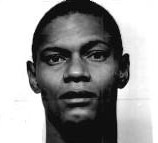
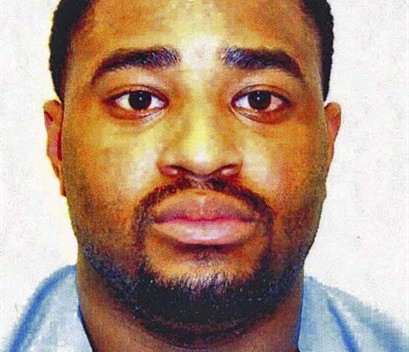
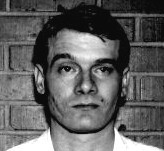
Norman Evans Green
Murderer Brian Kevin Rosenfeld
Murderer · USA · 1985
Brian Kevin Rosenfeld Brian Kevin Rosenfeld was sentenced to three concurrent l…
23 victims
Brian Kevin Rosenfeld
Murderer · USA · 1985
Brian Kevin Rosenfeld Brian Kevin Rosenfeld was sentenced to three concurrent l…
23 victims
 Marvin Gray
Murderer · USA · 1975
Marvin Gray was convicted killer who claimed responsibility for 23 slayings and…
23 victims
Marvin Gray
Murderer · USA · 1975
Marvin Gray was convicted killer who claimed responsibility for 23 slayings and…
23 victims
 Yahweh ben Yahweh
Murderer · USA · 1980
Yahweh ben Yahweh was born and legally named Hulon Mitchell Jr. (October 27, 19…
23 victims
Yahweh ben Yahweh
Murderer · USA · 1980
Yahweh ben Yahweh was born and legally named Hulon Mitchell Jr. (October 27, 19…
23 victims
 Russell Ellwood
Murderer · USA · 1991
Russell Ellwood was a former taxi driver. Authorities suspected him of killing…
20 victims
Russell Ellwood
Murderer · USA · 1991
Russell Ellwood was a former taxi driver. Authorities suspected him of killing…
20 victims
 Darren Mack
Murderer · USA · 2006
Darren Mack (born January 31, 1961) became the subject of an international manh…
1 victim
Darren Mack
Murderer · USA · 2006
Darren Mack (born January 31, 1961) became the subject of an international manh…
1 victim
 Lowell Lee Andrews
Murderer · USA · 1958
Name: Lowell Lee Andrews Date of execution: November 30, 1962 Status: Executed…
3 victims
Lowell Lee Andrews
Murderer · USA · 1958
Name: Lowell Lee Andrews Date of execution: November 30, 1962 Status: Executed…
3 victims
 Robert Wayne Murray
Murderer · USA · 1991
Defendant: Robert Wayne Murray Victim(s): Dean Morrison; Jackie Appelhans Victi…
2 victims
Robert Wayne Murray
Murderer · USA · 1991
Defendant: Robert Wayne Murray Victim(s): Dean Morrison; Jackie Appelhans Victi…
2 victims
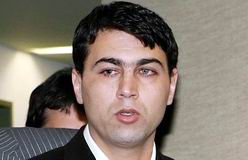 Herisch Ali Abdullah
Murderer · Germany · 2005
Defendant: Herisch Ali Abdullah, 25, Iraqi man and asylum seeker · Victim: Rudo…
1 victim
Herisch Ali Abdullah
Murderer · Germany · 2005
Defendant: Herisch Ali Abdullah, 25, Iraqi man and asylum seeker · Victim: Rudo…
1 victim
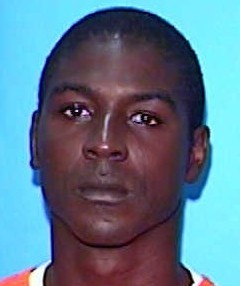 Kenneth Dessaure
Murderer · USA · 1999
Name: Kenneth Dessaure · Date of birth: 01/28/78 · Supreme Court of Florida opi…
1 victim
Kenneth Dessaure
Murderer · USA · 1999
Name: Kenneth Dessaure · Date of birth: 01/28/78 · Supreme Court of Florida opi…
1 victim
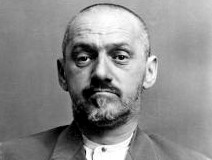 Mohammed Hadjetlaché
Murderer · Sweden · 1918
Mohammed Beck Hadjetlaché (20 May 1868, he also sometimes stated 1870 or 1872,…
3 victims
Mohammed Hadjetlaché
Murderer · Sweden · 1918
Mohammed Beck Hadjetlaché (20 May 1868, he also sometimes stated 1870 or 1872,…
3 victims
- Gender
- male
- Country
- USA
- Location
- Bexar County, Texas, USA
- Date of birth
- November 7, 1960
- Age at first offence
- 25
- Characteristics
- robbery
- Victim profile
- Timothy Adams, 19 (store employee)
- Method of murder
- Shooting (.38-caliber pistol)
- Date(s) of murder
- February 13, 1985
- Years active
- 1985
- Date of arrest
- February 21, 1985 ( surrenders )
- Status
-
Executed
Executed by lethal injection in Texas on February 24, 1999
Case record: Norman Evans Green
Status / outcome
Norman Evans Green was executed by lethal injection in Texas on February 24, 1999.
Green declined to make a last statement.
Timeline
- February 13, 1985 — Norman Evans Green and Harold Bowens visited Dyer Electronics in San Antonio, Texas, and later returned to attempt to rob the store.
- January 8, 1990 — Jury selection began.
- January 22, 1990 — Trial on the merits began.
- January 26, 1990 — The jury found Green guilty as charged and answered the special issues submitted pursuant to article 37.071(b) of the Texas Code of Criminal Procedure; Green was sentenced to death by lethal injection.
- 1989 — The Texas Court of Criminal Appeals reversed Green’s original conviction and sentence of death.
- 1992 — The Court of Criminal Appeals affirmed Green’s conviction and sentence; the court denied rehearing on September 23, 1992.
- April 5, 1993 — The United States Supreme Court denied Green’s petition for writ of certiorari.
- August 1993 — Green filed an application for writ of habeas corpus in state trial court.
- May 5–6, 1994 — The state trial court conducted an evidentiary hearing.
- May 25, 1994 — The state trial court issued written findings of fact, conclusions of law, and recommended denial of Green’s state habeas application.
- July 12, 1994 — The Texas Court of Criminal Appeals issued a one-page order denying Green’s state habeas corpus application.
- November 28, 1994 — The United States Supreme Court denied Green’s petition for writ of certiorari.
- December 5, 1994 — Green filed in federal district court a 149-page petition for federal habeas corpus relief, a motion for stay of execution, and a motion for time to amend; the district court granted the stay, appointed counsel, and gave counsel until January 31, 1995, to file an amended petition; Green did not file an amended petition.
- March 20, 1995 — The State filed a 70-page motion for summary judgment.
- December 23, 1997 — The district court issued a 198-page Memorandum Opinion and Order denying Green’s petition for habeas corpus relief, denying a request for an evidentiary hearing, denying a certificate of probable cause to appeal (“CPC”), and vacating the previously issued stay of execution.
- January 9, 1998 — Green filed notice of appeal.
- November 11, 1998 — The United States Court of Appeals for the Fifth Circuit issued an opinion denying Green’s application for a certificate of probable cause to appeal the adverse judgment of the district court.
- February 10, 1999 — The Court of Criminal Appeals dismissed a second application for state writ of habeas corpus as successive (abuse of the writ).
- February 23, 1999 — The Fifth Circuit denied Green permission to file a second federal habeas petition.
- February 24, 1999 — Green was executed by lethal injection.
Background
Norman Evans Green was convicted for the capital offense of murdering Timothy Adams during the commission and attempted commission of robbery, a capital offense.
Green was convicted of capital murder for the February 13, 1985 shooting death of Timothy Adams.
Green’s trial proceeded after the Texas Court of Criminal Appeals reversed Green’s original conviction and sentence of death in 1989.
Green was indicted in Cause No. 85-CR-1174-A for the murder of Timothy Adams during the commission and attempted commission of robbery, a capital offense.
Green pleaded not guilty to the charge and was tried by a jury.
The offence
On February 13, 1985, Wilson Lucas, a retired educator, was visiting a friend at apartments directly behind a Dyer Electronics in San Antonio. Lucas testified that about midday on February 13 he came into contact with Green and his co-defendant in the parking lot of the apartment complex. Lucas said he carefully looked both men over, as well as the vehicle they were near, during the several minutes he was in contact with them. Lucas testified the two men were still at the apartment complex when Lucas and his friend left. He also testified that about twenty minutes after he left the complex, he heard over the radio that the adjacent Dyer Electronics store had been robbed and the attendant had been shot, and that he and his friend then went to Dyer’s and subsequently gave a statement to police.
Shortly before Lucas’s encounter, Gerry Rickhoff, the store manager at Dyer Electronics, and his eighteen-year-old employee Timothy Adams were commencing what appeared to be another ordinary work day. Rickhoff testified that business had been slow that morning, but that two men had come into the store in the early afternoon. He stated that he noticed the vehicle in which the men had arrived was old and in poor condition. He testified that Adams engaged the men in conversation, then one separated from the discussion and looked over the store. The men left without asking about any particular equipment and without purchasing anything. Rickhoff identified Green as one of those two men. The other was later identified as Harold Bowens.
Rickhoff testified that as he prepared to leave for lunch, he noticed the same vehicle returning to the store and later identified the same two men as the car’s occupants. Rickhoff exited his car, returned to the store, and told Adams not to let the two “steal anything.” Rickhoff then left for lunch. Upon arriving at his apartment shortly after leaving the store, Rickhoff received a phone call that there had been a shooting at the store.
Next door to Dyer Electronics was a Midas Muffler Shop with Steve Robinson on duty as manager. Jeff Cochran and Randy Reece were also working there on February 13, 1985. Reece testified that at approximately 1:30 p.m. he heard sounds that his co-worker Cochran identified as gunshots coming from the direction of the electronics store. Reece stated he then went to the front door of Midas and saw two men later identified as Green and Bowens exit Dyer’s and get into the same old, beat-up vehicle identified by Lucas and Rickhoff. Reece, Cochran, and Robinson then all ran over to the Dyer building.
They found Timothy Adams alive, but “covered in blood”. Reece testified that as he approached Adams, Adams stated several times that he had been shot and needed an ambulance. Reece testified he found Adams slumped over the cash register and helped him to the floor. Reece also testified that he overheard Adams tell Cochran, “They tried to rob me, but they didn’t get anything.”
Leslie Daniels, Dyer’s city manager, testified that he called the store that afternoon only to have his call answered by Adams proclaiming to be dying and asking for help. Daniels had an employee contact the owner, Jerry Dyer. Daniels testified that when he arrived at the store, police and ambulance were both at the scene. Daniels spoke to Adams, who told him that the two men who had been in the store earlier that day had done this to him and that Rickhoff knew who they were. Daniels later told the police that nothing appeared to be missing from the store.
Officer Donald Weilbacher testified that Adams told him that two men had shot him during their attempt to commit robbery.
After the police arrived at the scene of the shooting and questioned witnesses, one officer broadcast a description of the suspects and the car involved. Officer James Holguin of the San Antonio Police Department testified that he located a car matching the description at an apartment complex. Holguin testified that Cochran and Reece were subsequently taken to the apartment complex where they positively identified the car as the one that the perpetrators had used in the incident.
Holguin testified that when he pulled his vehicle close to the suspect vehicle, the two occupants exited the car and began walking in different directions. Holguin testified that as he recognized Bowens as the passenger, he followed the driver later identified as Green. Holguin testified that Green ran when he identified himself as a police officer, and that although Holguin gave chase, he momentarily lost sight of Green. Holguin testified that when he saw Green again, Green had removed and discarded the jacket he had been wearing, and Green managed to elude capture at that time. Officer Harold Schott of the San Antonio Police Department testified that he found a gun in the vicinity of where Holguin had chased Green, very near Green’s vehicle.
The gun was identified as a blue steel .38 caliber revolver with a four inch barrel. Schott testified the six-shot revolver contained four spent shell casings and two live rounds of .38 caliber special Winchester Plus P ammunition. Schott testified the bullets had been manually altered, with an “X” cut in the nose of each bullet. Schott testified this type of alteration facilitated more rapid expansion upon impact, resulting in faster killing power. Schott testified that fresh scratches on the gun indicated it had been dropped fairly recently. Schott testified he fingerprinted the gun and obtained prints.
Fingerprint expert Officer Ricardo Contreras testified that he positively identified the prints taken from the gun as those of Green. None of the prints lifted from the weapon belonged to Bowens. While other ridge prints were found, they were insufficient to make an identification.
Green was subsequently arrested pursuant to a warrant and immediately advised of his constitutional rights. Detective Anton Michalec testified that Green was then taken to the police station where he was readvised of his rights and questioned. Green gave a four-page statement to Michalec in which Green accused Bowens of planning the entire event and of firing the fatal shot.
Green explained that when he and Bowens were on their way to pick up some 200 videocassette recorders, Bowens received a .38 caliber gun from a friend which Bowens appeared to place on the floor of the vehicle. Green claimed Bowens had taken the gun into Dyer’s and that when the victim would not cooperate, Bowens fired a shot into the floor of the store.
Dr. Robert Bux performed the autopsy on Adams. Adams had received gunshot wounds to the right elbow, the left anterior chest, and the abdomen below the rib cage.
Billy Hazel also testified for the State. Hazel testified that in 1985, he was placed in a cell with Green while Hazel was under arrest for burglary. Hazel testified about a conversation with Green in which Green stated he had shot a salesperson at Dyer Electronics. Hazel testified Green told him that Bowens had been with him and that Green had made up his mind to rob the place.
Green testified on his own behalf at trial. Green admitted that he had been convicted twice previously and served time in prison. Green admitted going to Dyer’s with Bowens, but maintained that he and Bowens were to “move” two hundred videocassette recorders and that it was an “inside deal.” Green claimed Bowens took the gun into the store without Green’s knowledge and that Bowens shot the victim. Green claimed Bowens shot into the floor. Green testified he was at the apartments behind Dyer Electronics where he and Bowens had been seen by Lucas earlier that day to visit his brother, but said he changed his mind.
Green made other statements to the jury that were inconsistent with what he told the police in his earlier statement.
Investigation / evidence
Green’s fingerprints were positively identified as those lifted from the .38-caliber revolver.
The bullets in the revolver had been manually altered with an “X” cut in the nose of each bullet to facilitate faster expansion upon impact.
Adams made statements at the scene indicating he had been shot and attempting to convey that the attackers tried to rob him.
A police fingerprint expert testified that prints found on the gun were inconsistent with the weapon having been wiped clean of prints.
Officer Anton Michalec testified about Green’s statement and that Green was readvised of his rights and questioned; Green gave a four-page statement.
Officer Anton Michalec testified about the investigation and provided trial testimony about Bowens and a polygraph test.
Green followed his counsel’s advice not to take a polygraph test, and Michalec testified Green did not take the polygraph test.
Arrest
Green was arrested pursuant to a warrant and immediately advised of his constitutional rights, after being pursued and eluding capture.
Trial
Jury selection began on January 8, 1990, and trial on the merits began on January 22, 1990.
The jury found Green guilty as charged on January 26, 1990.
After hearing additional evidence relevant to punishment, the jury answered the special issues submitted pursuant to article 37.071(b) of the Texas Code of Criminal Procedure.
Green was then sentenced to death by lethal injection, as required by law.
During voir dire and punishment-related matters, Green contested issues including statements and jury contacts described in the later appellate proceedings.
Defense position at trial
Green maintained he and Bowens were to “move” two hundred videocassette recorders and that it was an “inside deal.”
Green asserted Bowens was the person who took the gun into Dyer’s and shot the victim.
Green asserted Bowens shot into the floor.
Sentencing
The jury answered the special issues submitted pursuant to article 37.071(b) of the Texas Code of Criminal Procedure.
Green was sentenced to death by lethal injection.
Appeals
Green’s conviction and sentence were affirmed on appeal by the Court of Criminal Appeals in 1992.
The Court of Criminal Appeals denied rehearing on September 23, 1992.
The United States Supreme Court denied Green’s petition for writ of certiorari on April 5, 1993.
In August 1993, Green filed an application for writ of habeas corpus in state trial court. The state trial court conducted an evidentiary hearing on May 5–6, 1994. On May 25, 1994, the state trial court issued written findings of fact, conclusions of law, and a recommendation that Green’s state habeas corpus application be denied. On July 12, 1994, the Texas Court of Criminal Appeals issued a one-page order denying Green’s state habeas corpus application.
On November 28, 1994, the United States Supreme Court denied Green’s petition for writ of certiorari.
Green filed a 149-page petition for federal habeas corpus relief, a motion for stay of execution, and a motion for time to amend on December 5, 1994. The district court granted the stay, appointed counsel, and gave counsel until January 31, 1995, to file an amended petition, but Green never filed an amended petition.
On March 20, 1995, the State filed a 70-page motion for summary judgment.
On December 23, 1997, the district court issued a 198-page Memorandum Opinion and Order denying Green’s petition for habeas corpus relief, denying Green’s request for an evidentiary hearing, denying a certificate of probable cause to appeal (“CPC”), and vacating the previously issued stay of execution.
Green filed notice of appeal on January 9, 1998.
On November 11, 1998, the United States Court of Appeals for the Fifth Circuit issued an opinion denying Green’s application for a certificate of probable cause to appeal the adverse judgment of the district court.
Green filed a petition for writ of certiorari to the United States Supreme Court which was pending before the court at the time of the media advisory information dated February 23, 1999.
On February 10, 1999, the Court of Criminal Appeals dismissed a second application for state writ of habeas corpus as successive (abuse of the writ).
On February 23, 1999, the Fifth Circuit denied Green permission to file a second federal habeas petition.
Aftermath / final events
Green’s execution was scheduled for February 24, 1999.
Green was pronounced dead at 6:17 p.m., 6 minutes after the lethal drugs began flowing into his system.
Prior criminal history
Green admitted at trial he had been convicted twice previously and served time in prison.
The record described Green’s 1978 conviction for burglary, and his release on shock probation two months later.
The record described Green returning to prison in 1980 for stealing a car, receiving parole, and later returning for a parole violation.
The record described Green’s release again in 1984.
The record described a first conviction and death sentence for the Adams’ slaying in 1985, followed by the Texas Court of Criminal Appeals granting a new trial in 1989.
The record described a second jury convicting Green again in 1990.
Drugs and/or alcohol
There was no evidence of drug or alcohol use in connection with the instant offense.
People and roles
- Norman Evans Green — offender; defendant; convicted; executed.
- Timothy Adams — victim; eighteen-year-old employee at Dyer Electronics; engineering student.
- Harold Bowens — co-defendant; accomplice; testified in exchange for a reduced charge and a life sentence; later said to have remained in prison.
- Wilson Lucas — witness; retired educator; contacted Green and Bowens in the apartment complex parking lot.
- Gerry Rickhoff — store manager at Dyer Electronics; witness.
- Leslie Daniels — city manager for Dyer; witness.
- Jerry Dyer — owner of Dyer Electronics (contacted via Daniels).
- Steve Robinson — Midas Muffler Shop manager; witness.
- Jeff Cochran — Midas Muffler Shop worker; witness (gunshots identified).
- Randy Reece — Midas Muffler Shop worker; witness.
- Officer Donald Weilbacher — officer; witness.
- Officer James Holguin — San Antonio Police Department; officer; witness.
- Officer Harold Schott — San Antonio Police Department; officer; found the gun.
- Detective Anton Michalec — detective; questioned Green and testified about Green’s statement.
- Officer Ricardo Contreras — fingerprint expert; testified about prints from the gun.
- Dr. Robert Bux — performed autopsy on Timothy Adams.
- Billy Hazel — fellow inmate; testified for the State about a jail conversation with Green.
- Wilson Lucas — witness who saw Green and Bowens in the parking lot earlier that day.
- Edith H. Jones — Circuit Judge (in the Fifth Circuit opinion content).
- Robert McClure II — prosecutor (as quoted in the later narrative text).
- Iris Adams — victim’s mother.
- Ernest Adams — victim’s father.
- Tammy (listed as victim’s sister) — victim’s sister.
- Estella Hamilton — forewoman referenced in jury-contact narrative.
- Phil Chavarria — judge referenced in jury-related narrative.
- Dennis McKnight — defense attorney referenced in narrative about attorney switching.
- Andrew Carruthers — defense attorney referenced in narrative about attorney switching.
- Gary L. Johnson — Director, Texas Department of Criminal Justice Institutional Division (in case caption).
- John Cornyn — Texas Attorney General referenced in media advisory context.
- Antonio Express-News — referenced in the narrative involving judge’s statement about the forewoman contact.
Quotations (verbatim)
Lucas told the jury that he carefully looked both men over, as well as the vehicle they were near, during the several minutes he was in contact with them.
Rickhoff told Adams not to let the two “steal anything.”
Adams stated to Reece that he had been shot and needed an ambulance.
Reece testified Adams told Cochran, “They tried to rob me, but they didn’t get anything.”
Reece testified that he overheard the victim tell Cochran, "They tried to rob me, but they didn't get anything."
Green blamed the shooting on accomplice Harold Bowens, a man Green claimed was a stranger he had met on the day of the killing.
“He (Green) took the time to notch those bullets. He meant for whomever he came across to die,” said the victim's mother, Iris Adams.
Iris Adams said: “I’m glad to have it finished.”
Asked if she thought Green was sorry, she replied: “I think he's sorry he got caught.”
She said: “This man just took one deep breath and he was gone,”
and: “My son suffered.”
The jury foreman contact narrative included: “I instructed her not to relate this matter to other jurors and not to consider it in reaching her verdict,”
and: “It's high time.”
and: “Tim Adams has waited far too long for this,”
and it quoted Adams’ last words as: “They shot me for no reason.”
The narrative quoting the victim’s mother included: “Somebody called my name, and he turned around and looked me in the face and said, `I'm sorry,'”
and she said: “If you hit my dog and look me in the face and say, `I'm sorry,' that's one thing.”
and: “He deliberately killed my son.”
and: “The only thing he's sorry for is he was caught.”
Other details
Victim and timing details
Timothy Adams was shot during an attempt to rob Dyer Electronics during a lunch hour.
Adams was described as having been shot in the chest, abdomen and arm in the narrative, and as having gunshot wounds to the right elbow, the left anterior chest, and the abdomen below the rib cage in the trial evidence.
Adams stated to witnesses at the scene that he was shot by two black men who unsuccessfully tried to rob the store.
The record also stated that nothing appeared to be missing from the store.
Evidence about the robbery attempt
The narrative included that no money was obtained and that the pair fled empty-handed.
Prosecutors described the attempted robbery as an armed robbery even though they were unable to open the cash register.
Jury-contact narrative and judge statement
A narrative described that during the retrial, $1000 was supposedly offered to the foreman not to appear in court for deliberation.
The forewoman, Estella Hamilton, stated that a strange woman instructed to offer her money confronted her at home.
The judge, Phil Chavarria, was quoted: “I instructed her not to relate this matter to other jurors and not to consider it in reaching her verdict,” Chavarria told the San Antonio Express-News.
Trial counsel switching narrative (non-outcome detail)
A narrative described that defense attorneys were switched from Dennis McKnight to Andrew Carruthers during the first trial.
The narrative described an incident involving an envelope of marijuana cigarettes passed to Green in the courtroom, a threat to use it in the punishment phase, and that Dennis McKnight stepped down to act as a material witness in the incident.
The narrative further described bailiffs informing McKnight a young woman was in the courtroom with an envelope for him and instructions for McKnight to fetch the envelope himself.
The narrative described that the envelope was later confiscated and opened.
Fifth Circuit opinion content (procedural disputes included)
In the Fifth Circuit proceedings described, Green appealed from the judgment denying a certificate of probable cause (“CPC”). The opinion stated: “Because Green has not made a substantial showing of the denial of a federal right, we affirm.”
The Fifth Circuit opinion included discussion of multiple claims, including ineffective assistance of counsel categories, juror contact issues, evidentiary issues, and other challenges.
Dates in “last-ditch appeal” narrative
Earlier in the day of execution, the narrative stated the United States Supreme Court rejected Green’s last-ditch appeal.
Final meal / spiritual adviser narrative
The narrative stated that Green ate his final meal consisting of barbecued pork chops, salad, baked potato, Texas toast and a Coke.
The narrative stated Green winked at his spiritual adviser before the execution process.
Execution timing narrative
The narrative stated Green became the seventh death row inmate in Texas and the second from San Antonio to receive the state’s lethal injection that year, and that he was pronounced dead at 6:17 p.m., 6 minutes after lethal drugs began flowing into his system.
Spotted an error, or have more information about this case?