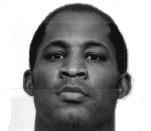
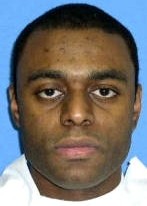
Tyrone Leroy Fuller
Murderer Brian Kevin Rosenfeld
Murderer · USA · 1985
Brian Kevin Rosenfeld Brian Kevin Rosenfeld was sentenced to three concurrent l…
23 victims
Brian Kevin Rosenfeld
Murderer · USA · 1985
Brian Kevin Rosenfeld Brian Kevin Rosenfeld was sentenced to three concurrent l…
23 victims
 Yahweh ben Yahweh
Murderer · USA · 1980
Yahweh ben Yahweh was born and legally named Hulon Mitchell Jr. (October 27, 19…
23 victims
Yahweh ben Yahweh
Murderer · USA · 1980
Yahweh ben Yahweh was born and legally named Hulon Mitchell Jr. (October 27, 19…
23 victims
 Russell Ellwood
Murderer · USA · 1991
Russell Ellwood was a former taxi driver. Authorities suspected him of killing…
20 victims
Russell Ellwood
Murderer · USA · 1991
Russell Ellwood was a former taxi driver. Authorities suspected him of killing…
20 victims
 Robert Martines Perez
Murderer · USA · 1994
Name: Robert Martines Perez · Other name used in proceedings: Robert Martinez P…
15 victims
Robert Martines Perez
Murderer · USA · 1994
Name: Robert Martines Perez · Other name used in proceedings: Robert Martinez P…
15 victims
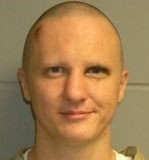 Jared Loughner
Mass murderer · USA · 2011
January 8, 2011 — Jared Lee Loughner opened fire at a constituent meeting held…
6 victims
Jared Loughner
Mass murderer · USA · 2011
January 8, 2011 — Jared Lee Loughner opened fire at a constituent meeting held…
6 victims
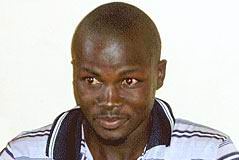 Sidney Enoch
Murderer · Uganda · 2011
Sidney Nsubuga Enoch (male prostitute) was the accused. · David Kato Kisule (c.…
1 victim
Sidney Enoch
Murderer · Uganda · 2011
Sidney Nsubuga Enoch (male prostitute) was the accused. · David Kato Kisule (c.…
1 victim
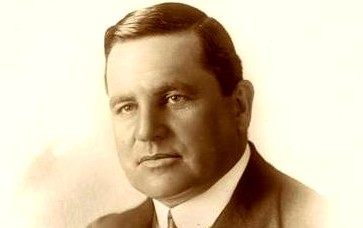 Thomas John Ley
Murderer · Australia/United Kingdom · 1946
Thomas John Ley (28 October 1880 — 29 July 1947) was an Australian politician w…
1 victim
Thomas John Ley
Murderer · Australia/United Kingdom · 1946
Thomas John Ley (28 October 1880 — 29 July 1947) was an Australian politician w…
1 victim
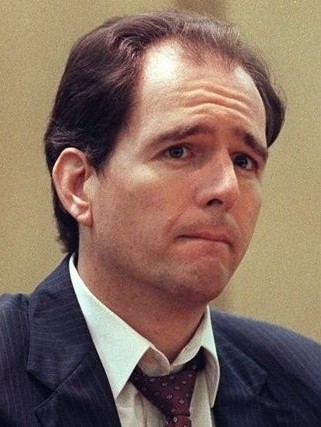 Danny Rolling
Serial killer · USA · 1989
Danny Harold Rolling was executed by lethal injection in Florida on October 25,…
8 victims
Danny Rolling
Serial killer · USA · 1989
Danny Harold Rolling was executed by lethal injection in Florida on October 25,…
8 victims
 Louisa Merrifield
Murderer · United Kingdom · 1953
Louisa May Merrifield was a housekeeper and companion who was executed for murd…
1 victim
Louisa Merrifield
Murderer · United Kingdom · 1953
Louisa May Merrifield was a housekeeper and companion who was executed for murd…
1 victim
- Gender
- male
- Country
- USA
- Location
- Grayson County, Texas, USA
- Date of birth
- August 1, 1963
- Age at first offence
- 25
- Characteristics
- rape, torture, robbery
- Victim profile
- Andrea Lea Luke (female, 26)
- Method of murder
- St abbing with knife
- Date(s) of murder
- January 20, 1988
- Years active
- 1988
- Date of arrest
- —
- Status
-
Executed
Executed by lethal injection in Texas on July 7, 1999
Offender
Tyrone Leroy Fuller
Status and execution details
Tyrone Leroy Fuller was scheduled to be executed after 6 p.m. on Wednesday, July 7, 1999. He was pronounced dead at 6:20 p.m. on July 7, 1999, eight minutes after the flow of lethal drugs began. He made a brief statement and expressed love to his family. He had watched through a window a few feet away as he gasped and coughed a few times before dying. Five members of the victim’s family also watched him being put to death, and Fuller made no eye contact with them.
Fuller’s last statement was:
“to my family, I love you. Please do not mourn my death or my life. Continue to live as I want you to live. I hold no bitterness toward no one. Just remember the light. I’m gonna let this light shine. Let it shine. Let the light shine.”
Fuller’s nickname for himself was “Evil”. He was on parole at the time of the murder.
Victim
Andrea Lea Duke
The offence
Andrea Lea Duke’s body was discovered on her neighbor’s front steps on January 20, 1988. She had died as a result of multiple stab wounds to her chest and heart. Before she died, Duke was severely beaten, raped, and left for dead. She died as she struggled to reach her neighbor’s house.
Patricia Duke, who returned home to the apartment she shared with her sister Andrea Lea Duke in Paris, Texas from her night-shift post as a nurse at a nearby hospital, approached the apartment from the rear where the carport was located. She noticed that her sister’s car was gone and assumed her sister had already left for work. The telephone was ringing when Patricia entered the apartment; she went to answer it, then noticed that the front door was standing open. She walked toward the front door and saw that the floor and walls of their apartment were smeared with blood. Patricia ran out the front door and around the corner of the apartment, following a pair of bloody footprints, to where police, emergency medical technicians, and passersby were gathered around the body of her sister Andrea Lea Duke.
Duke’s nightgown-clad body had been discovered shortly after 7 a.m. on January 20, 1988, on the front steps of the duplex next door to her apartment.
Evidence indicated Duke had been beaten, stabbed several times, sexually assaulted, and left for dead, and then she apparently managed to drag herself from her bedroom out the front door and across the lawn to the steps of her next-door neighbors, where she died.
Police investigating the scene retraced the trail of blood left by Duke back into the apartment and into Duke’s bedroom. They discovered large amounts of blood on the bed, clothing strewn about, and the furniture in general disarray. They also discovered a bloody sock print on a floor tile in the hallway outside the bedroom.
Patricia Duke informed investigators that several items were missing from the apartment, including videotapes, jewelry, some credit cards, and her sister’s car.
At trial, the pathologist who first observed Duke’s body at the crime scene and later performed an autopsy testified that Duke died as a result of multiple stab wounds to the chest and heart and subsequent loss of blood. The pathologist identified 44 wounds on Duke’s body, including several stab wounds, three of which penetrated the chest cavity and were potentially fatal; various lacerations and contusions; and several “paired wounds” and “brush burn type” abrasions. The pathologist testified that the “paired wounds” and “brush burn type” abrasions could have been caused by being whipped with the plug of the electric cord that was found tied around Duke’s right wrist. The pathologist also detected a broad contusion with sub-scalp hemorrhaging on the back of Duke’s head, indicating a blow to the head with a broad, flat object.
The pathologist testified that evidence indicated Duke had lived for a significant period of time, possibly for hours, after she was wounded. The pathologist also testified that a stab wound to Duke’s throat produced a great deal of bleeding and could have made it impossible for Duke to call for help either during the attack or after she was abandoned by her assailants.
The pathologist testified that he detected two distinct types among the numerous stab wounds: one type sharp at one end and blunted or squared off at the other end, consistent with a single-edged knife; and the other type rounded at both ends, which could have been produced by either an irregular, a single-edged, or a double-edged sharp instrument. The pathologist acknowledged that all of the stab wounds could have been inflicted by the same weapon. He testified that a five-inch-long lock-blade pocket knife could have inflicted the injuries.
In federal appellate proceedings, the court stated that Duke was attacked during the burglary of her duplex by John McGrew, Kenneth Harmon and Fuller. Fuller’s criminal conduct was charged as capital murder while in the course of committing and attempting to commit the offenses of aggravated sexual assault, burglary, and robbery.
Fuller and two accomplices drove off with Duke’s car, jewelry and credit cards.
Investigation
Police recovered a bloody sock print on the hallway tile floor that was consistent with Fuller’s footprint, but not those of his codefendants.
Blood typing and genetic marker testing of seminal stains found on Duke’s bed excluded the possibility that Duke’s boyfriend or either of the codefendants was the donor, but did not exclude Fuller. DNA testing of seminal stains and hairs recovered from Duke’s body excluded the possibility that they came from the codefendants or Duke’s boyfriend, but did not exclude Fuller.
Fuller’s fingerprints were found in and on Duke’s car. The car was discovered by police the day after the murder parked a block from Fuller’s house.
Fuller’s handwriting and fingerprints were found on the receipts of the stolen credit cards, and several witnesses testified he had used the credit cards during the weeks following the crime. Fuller was arrested after using the credit cards in Dallas, about 100 miles to the southwest.
Arrest
Trial
Fuller was indicted on December 13, 1988, in the Sixth Judicial District Court of Lamar County, Texas, in Cause No. 11755, for the capital murder of Andrea Lea Duke while in the course of committing and attempting to commit the offenses of aggravated sexual assault, burglary, and robbery, which occurred on January 20, 1988.
After a change of venue to the 59th Judicial District Court of Grayson County, Texas, Fuller was tried before a jury upon a plea of not guilty.
On March 7, 1989, the jury found him guilty of the capital offense. On March 13, 1989, following a separate punishment hearing, the jury answered affirmatively the two special sentencing issues submitted pursuant to former Article 37.071(b) of the Texas Code of Criminal Procedure. The trial court assessed Fuller's punishment at death.
Fuller v. State, 827 S.W.2d 919 (Tex.Crim.App.1992) affirmed the conviction.
Fuller’s statements to law enforcement and grand jury testimony
The state presented at trial several statements Fuller had made to law enforcement and his testimony before the Lamar County grand jury. In those statements, Fuller admitted to various levels of involvement in the instant offense. He claimed that he had been planning the burglary of Duke’s apartment for about two weeks and had asked co-defendants John McGrew and Kenneth Harmon to accompany him. Fuller claimed that the three of them broke into the apartment on the night of January 19, 1988, unaware that anyone was home. He claimed that he discovered Duke in her bed and informed McGrew and Harmon, then went to another room to look for items to steal. Fuller claimed that McGrew and Harmon went into Duke’s bedroom, and that he heard a “scuffling” from Duke’s bedroom and thought McGrew and Harmon were tying her up and putting her in the closet. Fuller claimed McGrew and Harmon were in Duke’s bedroom for 45 to 55 minutes while he searched for items to steal. He claimed that he and McGrew left without Harmon then met up with him again later that night. Fuller claimed that he did not see any blood on McGrew or Harmon, and that they never discussed what happened to Duke.
In all of these statements, Fuller denied any involvement in, and indeed claimed that he was not even aware of, the sexual assault and murder of Andrea Lea Duke.
Eyewitnesses and forensic evidence at trial
Several eyewitnesses placed Fuller in Duke’s car on the day of the murder.
The federal appellate court described Fuller as one of three attackers during the burglary, together with John McGrew and Kenneth Harmon. The court stated that the police recovered the bloody sock print consistent with Fuller’s footprint but not those of his codefendants, and that DNA and seminal stain testing did not exclude Fuller.
Sentencing
Following the punishment hearing, the jury answered affirmatively the two special sentencing issues submitted pursuant to former Article 37.071(b) of the Texas Code of Criminal Procedure. In accordance with state law, the trial court assessed Fuller's punishment at death.
Appeals and post-conviction proceedings
Direct appeal and certiorari
Fuller’s conviction and sentence of death were automatically appealed to the Texas Court of Criminal Appeals, which affirmed on March 25, 1992.
The United States Supreme Court denied a petition for writ of certiorari on June 28, 1993, and denied rehearing on August 9, 1993. The Supreme Court denied a petition for writ of certiorari in Fuller v. Texas, 509 U.S. 922 (1993) and denied a rehearing in Fuller v. Texas, 509 U.S. 940 (1993).
State habeas corpus
Fuller filed an application for state writ of habeas corpus on May 3, 1995. On November 30, 1995, the trial court issued findings of fact and conclusions of law recommending that relief be denied. On January 16, 1996, the Court of Criminal Appeals denied relief based on the trial court's findings and conclusions.
Fuller filed a second application for state writ of habeas corpus, and on July 5, 1999, the Court of Criminal Appeals dismissed it.
Federal habeas corpus
Fuller filed an initial petition for federal writ of habeas corpus in the United States District Court for the Eastern District of Texas, Sherman Division on April 22, 1996. Fuller filed an amended petition on July 27, 1996.
On April 21, 1997, a United States Magistrate Judge conducted an evidentiary hearing limited to Fuller's claims that had been presented to the state courts. On August 19, 1997, a United States District Court Judge issued a memorandum opinion and order adopting the magistrate's report and recommendation and issued final judgment denying Fuller's petition for writ of habeas corpus.
The United States Court of Appeals for the Fifth Circuit affirmed the district court’s denial of habeas corpus relief on October 27, 1998. The Supreme Court denied a petition for writ of certiorari on May 24, 1999. The Fifth Circuit case described the appeal as affirming dismissal of his federal habeas petition, stating that Fuller's claims were procedurally defaulted and, in the alternative, without merit.
Clemency
On July 5, 1999, the Texas Board of Pardons and Paroles denied a clemency petition filed by Fuller.
Claims addressed by the Fifth Circuit
Fuller raised several claims in the Fifth Circuit appeal. The court concluded that Fuller procedurally defaulted on these claims and affirmed dismissal. In the alternative, the court concluded that the claims were without merit. The court discussed:
- Ineffective assistance of counsel (juror Boyce Lee Lindsay theft charge not raised): Juror Boyce Lee Lindsay was legally accused of theft at the time he was selected to serve on Fuller's jury. In juror questionnaire responses, Lindsay replied “No” to a question about being “charged, arrested, indicted, convicted or received any type of probation or deferred adjudication for any criminal offense above the level of a traffic ticket.” During voir dire, the court instructed the panel that if any panelist was under legal accusation for a felony or any theft offense, the panelist must approach the bench. Fuller argued that counsel should have discovered the charge after trial and obtained a new trial. The court declined to hold counsel ineffective in these circumstances and found Fuller did not satisfy the prejudice prong.
- Ineffective assistance of counsel (failure to advise not to testify before the grand jury): Fuller argued counsel failed to advise him not to testify before the grand jury in April 1988. The court described that Fuller was informed and made an informed choice to testify and concluded counsel was not constitutionally ineffective.
- Sixth Amendment right to counsel (grand jury proceeding): The court held that because Fuller had not been indicted at the time of his grand jury testimony, his Sixth Amendment right to counsel had not attached.
- Due process and fair trial (juror Lindsay presence): The court held that violations of state law were not sufficient unless they rendered the trial as a whole fundamentally unfair, and Fuller had not shown that.
The Fifth Circuit affirmed the judgment of the district court dismissing Fuller's habeas petition, stating “AFFIRMED.”
Prior criminal history
At the punishment phase, the state presented evidence that Fuller had two prior felony convictions before the instant offense.
On March 16, 1981, Fuller was convicted of burglary of a building upon a plea of guilty in Cause No. 8645 in the 6th Judicial District Court of Lamar County, Texas. He received a ten-year probated sentence, which was subsequently revoked when he failed to report to his probation officer. He then received a seven-year sentence to be served in the Texas Department of Criminal Justice, Institutional Division.
On August 18, 1983, Fuller was convicted of burglary of a building upon a plea of guilty in Cause No. 9413 in the 6th Judicial District Court of Lamar County, Texas. He received a twelve-year sentence to be served in the Texas Department of Criminal Justice, Institutional Division.
Cleon Drake testified as Fuller's adult probation officer in 1981. Drake testified that at their first and only meeting Fuller indicated his nickname was “Evil” because he was so bad. Drake testified that he tried to schedule Fuller's reporting sessions around his work schedule, but Fuller refused to cooperate and never reported. Fuller’s probation was revoked as a result. Drake testified that Fuller had an attitude that the world owed him something, and that Fuller never attempted to cooperate within the criminal justice system or try to turn his life around.
Other details
Incarceration while awaiting trial (escape preparations and weapons)
Jailer Juanita McFadden testified that while Fuller was incarcerated in the Lamar County jail awaiting trial for the instant offense, she discovered during a search of his single-man cell several items she considered potential weapons: metal parts from a television set, a bracket from a light fixture, and a comb that Fuller had hidden in his cell. McFadden searched Fuller's cell again a few days later after hearing banging noises and discovered that the television in his cell was turned up very loud. McFadden found Fuller attempting to dig through the wall of his cell into a stairway leading to an unsecured part of the courthouse. McFadden found a detailed outline of an escape plan and other notes in his cell, as well as more potential weapons. Fuller was moved to another cell. During a third search, McFadden discovered more potential weapons and another note regarding escape plans.
Employment and psychological assessment
Vicky Bates, a supervisor at a local food service corporation, testified that Fuller had been employed there from June 1986 to July 1987, when he was terminated due to his admitted involvement in a series of thefts.
Nan Rose, a counselor for the Texas Rehabilitation Commission, came into contact with Fuller in January 1986 when he applied for services after being referred by his parole officer. Psychological testing indicated Fuller had an average I.Q. and was fully capable of functioning at a high level, but Fuller wanted a less demanding job that did not require additional training. Fuller found a job as a dishwasher at a local food service corporation. Rose testified that Fuller was diagnosed as having an antisocial personality with attendant characteristics of being manipulative and self-centered.
Drugs and alcohol
There was no evidence of drug or alcohol use in connection with the instant offense.
Age and other identifiers mentioned
Fuller was described as 35. Fuller’s identifier was given as “#934” and he was described as a Texas death row inmate in federal appellate proceedings.
Timeline
- January 20, 1988 — Andrea Lea Duke’s body was discovered on her neighbor’s front steps; she died from multiple stab wounds to her chest and heart after being beaten and sexually assaulted during a burglary.
- March 7, 1989 — The jury found Fuller guilty of the capital offense.
- March 13, 1989 — The jury answered affirmatively the two special sentencing issues; the trial court assessed punishment at death.
- March 25, 1992 — The Texas Court of Criminal Appeals affirmed Fuller’s conviction.
- June 28, 1993 — The United States Supreme Court denied a petition for writ of certiorari.
- August 9, 1993 — The United States Supreme Court denied rehearing.
- May 3, 1995 — Fuller filed an application for state writ of habeas corpus.
- November 30, 1995 — The trial court issued findings of fact and conclusions of law recommending denial of state habeas relief.
- January 16, 1996 — The Court of Criminal Appeals denied relief on Fuller’s state habeas application.
- April 22, 1996 — Fuller filed an initial petition for federal writ of habeas corpus.
- June 10, 1996 — The United States Supreme Court denied a petition for writ of certiorari.
- July 27, 1996 — Fuller filed an amended petition for federal writ of habeas corpus.
- April 21, 1997 — A United States Magistrate Judge conducted an evidentiary hearing limited to Fuller’s claims presented to the state courts.
- August 19, 1997 — The district court issued final judgment denying Fuller’s federal habeas petition.
- October 27, 1998 — The United States Court of Appeals for the Fifth Circuit affirmed dismissal of Fuller’s habeas petition.
- May 24, 1999 — The United States Supreme Court denied a petition for writ of certiorari.
- July 5, 1999 — The Court of Criminal Appeals dismissed a second state writ of habeas corpus application filed by Fuller.
- July 5, 1999 — The Texas Board of Pardons and Paroles denied Fuller’s clemency petition.
- July 7, 1999 — Fuller was pronounced dead at 6:20 p.m. after the flow of lethal drugs began; he was executed by lethal injection in Texas.

Spotted an error, or have more information about this case?