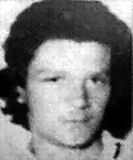
Ferdinand Gamper
Spree killer Martin Bryant
Spree killer · Australia · 1996
Martin Bryant was born May 7, 1967, and was the elder of two children of Mauric…
35 victims
Martin Bryant
Spree killer · Australia · 1996
Martin Bryant was born May 7, 1967, and was the elder of two children of Mauric…
35 victims
 Campo Elías Delgado Morales
Spree killer · Colombia · 1986
Campo Elías Delgado Morales was a Colombian Vietnam War veteran. He lived with…
30 victims
Campo Elías Delgado Morales
Spree killer · Colombia · 1986
Campo Elías Delgado Morales was a Colombian Vietnam War veteran. He lived with…
30 victims
 Michael Robert Ryan
Spree killer · United Kingdom · 1987
Michael Robert Ryan was an unemployed local labourer. He lived in Hungerford, B…
16 victims
Michael Robert Ryan
Spree killer · United Kingdom · 1987
Michael Robert Ryan was an unemployed local labourer. He lived in Hungerford, B…
16 victims
 Genildo Ferreira do Franca
Spree killer · Brazil · 1997
Genildo Ferreira de Franca died in a shootout after he released two hostages un…
15 victims
Genildo Ferreira do Franca
Spree killer · Brazil · 1997
Genildo Ferreira de Franca died in a shootout after he released two hostages un…
15 victims
 Angela Norman
Homicide · USA · 2011
Angela Norman was a Dayton resident and the mother of Makayla Norman, a 14-year…
1 victim
Angela Norman
Homicide · USA · 2011
Angela Norman was a Dayton resident and the mother of Makayla Norman, a 14-year…
1 victim
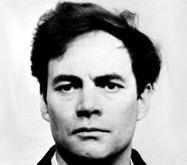 Donald Neilson
Serial killer · United Kingdom · 1974
Donald Neilson was born as Donald Nappey on August 1, 1936. He was nicknamed th…
5 victims
Donald Neilson
Serial killer · United Kingdom · 1974
Donald Neilson was born as Donald Nappey on August 1, 1936. He was nicknamed th…
5 victims
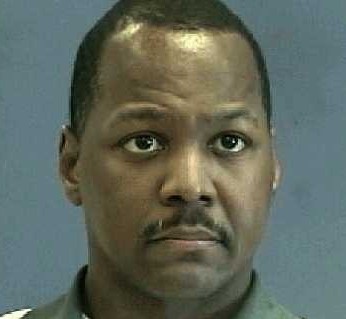 Raymond Burgess
Murderer · USA · 1977
Raymond Burgess was sentenced to death on February 25, 1992. His case involved…
2 victims
Raymond Burgess
Murderer · USA · 1977
Raymond Burgess was sentenced to death on February 25, 1992. His case involved…
2 victims
 Paul Durousseau
Serial killer · USA · 1997
Paul Durousseau was an American serial killer born on August 11, 1970, in Beaum…
7 victims
Paul Durousseau
Serial killer · USA · 1997
Paul Durousseau was an American serial killer born on August 11, 1970, in Beaum…
7 victims
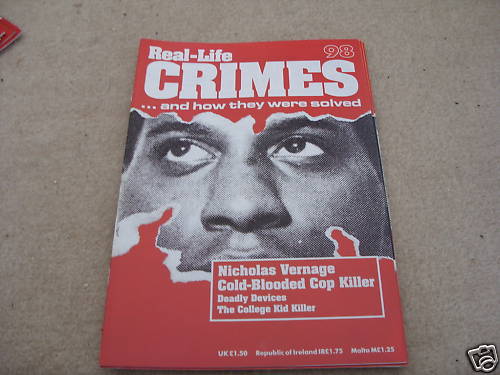 Nicholas Vernage
Murderer · Canada · 1991
Nicholas Vernage (26) murdered Sgt Alan King and also killed Lorna Bogle and Ja…
3 victims
Nicholas Vernage
Murderer · Canada · 1991
Nicholas Vernage (26) murdered Sgt Alan King and also killed Lorna Bogle and Ja…
3 victims
 Jeffrey Weise
Spree killer · USA · 2005
Jeffrey Weise, a 16-year-old student at Red Lake High School in Red Lake, an un…
9 victims
Jeffrey Weise
Spree killer · USA · 2005
Jeffrey Weise, a 16-year-old student at Red Lake High School in Red Lake, an un…
9 victims
- Gender
- male
- Country
- Italy
- Location
- Merano, Bolzano, Italy
- Date of birth
- September 12, 1957
- Age at first offence
- 39
- Characteristics
- anarchist, motive unclear, fugitive
- Victim profile
- Hans Otto Detmering (German banker ) and Clorinda Cecchetti (his Italian fiancee) / Umberto Marchioro (local farmer) / Paolo Vecchiolini (factory worker) / Tullio Melchiori (local bricklayer) / Guerrino Botte (carabinieri marshal)
- Method of murder
- Shooting (.22-calibre pistol)
- Date(s) of murder
- February 8-March1, 1996
- Years active
- 1996
- Date of arrest
- —
- Status
-
Died in custody
Committed suicide by shooting himself during police shoot-out, Mar ch 1, 1996
Overview
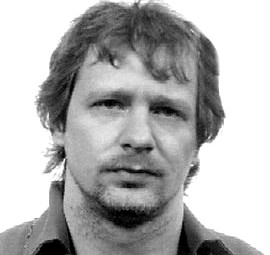
Ferdinand Gamper was identified as the killer in a series of shootings in Merano, northern Italy. The killings involved victims who were shot in the head with a .22-calibre pistol.
Timeline
- February 8, 1996 — Hans Otto Detmering, a German Bundesbank official, and his companion, a local woman teacher, were shot dead in a central street in Merano.
- February, 1996 — The killings continued in Merano over the following weeks, including a shooting at close range in which a 58-year-old farm laborer was shot in the head.
- March 1, 1996 — Authorities identified Ferdinand Gamper, a shepherd, as the killer; police later stormed a location near his house and Gamper took hostages before dying.
The offence
Ferdinand Gamper was described as a shepherd who carried out shootings in Merano and surrounding areas. All victims were shot in the head with a .22-calibre pistol.
A fifth body was found in a hut near Gamper’s house. Police then stormed the location about two miles from the town. Ferdinand Gamper held two elderly women hostage and freed them after police tear-gassed the farm house. Gamper scribbled “You were too late” on a piece of paper and shot himself.
Investigation
The Italian press described the town of Merano as “the city of fear” after four murders in three weeks. Franz Alber, the Mayor, said: “We are all living in fear,” and added: “we are dealing with a psychopath.”
Initial speculation included possible connections to an international banking scandal or a tangled love affair. Investigators later identified links they believed were connected to ethnic and political issues in the Alto Adige (South Tyrol) region.
Among documents recovered by police were posters and stickers in German advocating the Alto Adige’s reabsorption into Austria. A long note left beside Tullio Melchiori’s body included a “terrifying” paean to Nazism and an admission that had yet to be verified that Gamper murdered one or more children.
There was discussion of possible links between the early murders and Gamper’s motive, including speculation that investigators considered “every usual motive for a serial killer,” such as “a grudge against courting couples” and “a morbid interest in guns,” before considering the regional political context.
Arrest / Police action
On March 1, 1996, authorities identified Ferdinand Gamper as the killer. Police stormed a farmhouse located about two miles from the town.
A commander of the police operation, a carabinieri marshal called Guerrino Botte, was shot in the head during the assault and later died in hospital.
During the police response, police took cover among vineyards and olive trees. Police fired several volleys of tear gas into the barn, setting the building on fire.
The shooting stopped after police used tear gas and the police stormed in, finding the two hostages unharmed on the ground floor and the murderer dead with his weapon in his hand.
Outcome
Ferdinand Gamper died by suicide. A note in German read: “You got here too late.” He had shot himself through the mouth.
People and identities mentioned
- Ferdinand Gamper — shepherd; identified as the killer.
- Hans Otto Detmering — German Bundesbank official; shot dead in Merano.
- Clorinda Cecchetti — Hans Otto Detmering’s Italian fiancee; shot dead in Merano.
- Tullio Melchiori — local bricklayer in the Rifiano hamlet; landlord of Gamper; murdered.
- Umberto Marchioro — a 58-year-old crippled local farmer; shot outside his cattle shed.
- Paolo Vecchiolini — a factory worker; killed in front of his girlfriend.
- Luca Nobile — a young Italian-speaking plasterer found near the scene with bloodstains on his clothing; he was released from custody.
- Guerrino Botte — a carabinieri marshal and police commander; shot in the head and died in hospital.
- Franz Alber — Mayor of Merano; made statements quoted during the investigation period.
- Pierluigi Marteuzzi — local painter who made a quoted statement about sentiments before and after the killing was identified.
- Joseph Zoderer — local writer who suggested the neo-Nazi leaflets found in the barn were unwanted junk mail.
- Orlando Facchini — Merano correspondent for the Italian language newspaper Alto Adige; quoted about the region.
- Mauro Minniti — local spokesman in Merano; made complaints quoted about language teaching and state jobs.
- Leopold Steurer — local historian and campaigner for the Green party; made a quoted statement about the region’s capacity if a similar event happened again.
- The two elderly women — hostages held by Gamper; freed after police tear-gassed the farm house.
- An Italian fiancee and companion — Clorinda Cecchetti and the local woman teacher were included among those shot dead in the killings.
Other details
- The killings began on February 8, 1996, and authorities later identified Gamper on March 1, 1996.
- Alarm was raised when farmers in the hamlet of Rifiano heard gunshots from the house of a local bricklayer named Tullio Melchiori.
- Gamper killed Melchiori and forced his wife and daughter at gunpoint to follow him into a barn next door.
- When police arrived, Gamper opened fire after giving them little time to discover the body, shooting a Carabinieri officer in the head; the officer was whisked to hospital and died three hours later.
- Police eventually fired several volleys of tear gas into the barn, setting the building on fire.
- A long note left beside Melchiori’s body included a “terrifying” paean to Nazism and an admission that had yet to be verified.
- Among the documents recovered by police were posters and stickers in German advocating the Alto Adige’s reabsorption into Austria.
- Police also recovered a blue rucksack spotted by witnesses near Gamper’s body.
- A German mayor of Merano named Franz Alber said: “People who live here understand that there is no basis to this supposedly ethnic motivation for the killings,” and continued: “Talking about it can only make things artificially worse and take community relations a step backwards. It's not always easy to live together but we are all working hard to do what we can.”
- Pierluigi Marteuzzi said: “One of the papers quoted Gamper as saying before he died that he was only doing what others wanted to but didn't dare. I have to say, as an Italian of long standing here in the Alto Adige that I recognise something true in such sentiments,” and added: “Before we knew who the killer was, I must admit I caught myself wishing he wasn't an Italian, and I'm quite sure Germans were wishing he wasn't a German. Nobody is willing to talk about this, but if you go out on the street now you can see Germans in Tyrolean hats carrying thick walking sticks. It's a self-protection reflex. Nobody was carrying these things around a month ago.”
- Joseph Zoderer said the neo-Nazi leaflets found in the barn in Rifiano were “merely unwanted junk mail that Gamper had not had time to throw out.”
- Orlando Facchini said: “We are an endangered species.”
- Mauro Minniti complained: “The Germans got what they wanted through the blackmail of terrorism, and now they aren't prepared to give anything back,” and added that the SVP refused to listen to Italian proposals on language teaching in schools and that there was no allotment of state jobs to give weight to merit as well as ethnic origin.
- Leopold Steurer said: “People say this is an isolated incident, but if something like it happened again I don't think our society could handle it.”
- The summary characterisation included that Gamper was described as a German-speaking neo-Nazi committed to reunifying the Alto Adige with Austria.
- The victims included Italian-speakers and the reporting described one victim as an Italian-speaking; all but one were described as Italian-speakers.
- A shrine marking the site of one murder was smeared with human faeces a few days after the deaths.
- The account described ethnic and political background about the Alto Adige, including its status changes and tensions between German-speaking and Italian communities, and described how local economic benefits and autonomy arrangements affected community relations.
Spotted an error, or have more information about this case?