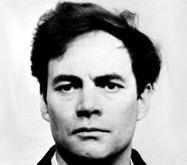
Donald Neilson
Serial killer Bruce Lee
Serial killer · United Kingdom · 1973
Bruce Lee was born Peter George Dinsdale in 1960. He later changed his name to…
26 victims
Bruce Lee
Serial killer · United Kingdom · 1973
Bruce Lee was born Peter George Dinsdale in 1960. He later changed his name to…
26 victims
 Dennis Nilsen
Serial killer · United Kingdom · 1978
Dennis Andrew Nilsen was born on November 23, 1945. He lived in London. He was…
16 victims
Dennis Nilsen
Serial killer · United Kingdom · 1978
Dennis Andrew Nilsen was born on November 23, 1945. He lived in London. He was…
16 victims
 Dr. Harold Shipman
Serial killer · United Kingdom · 1974
Harold Fredrick Shipman was an English doctor who was convicted as a serial kil…
15 victims
Dr. Harold Shipman
Serial killer · United Kingdom · 1974
Harold Fredrick Shipman was an English doctor who was convicted as a serial kil…
15 victims
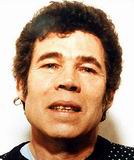 Frederick West
Serial killer · United Kingdom · 1967
Frederick West (29 September 1941 – 1 January 1995) was an English serial kille…
13 victims
Frederick West
Serial killer · United Kingdom · 1967
Frederick West (29 September 1941 – 1 January 1995) was an English serial kille…
13 victims
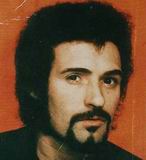 Peter Sutcliffe
Serial killer · United Kingdom · 1975
Peter William Sutcliffe (born 2 June 1946) was an English serial killer dubbed…
13 victims
Peter Sutcliffe
Serial killer · United Kingdom · 1975
Peter William Sutcliffe (born 2 June 1946) was an English serial killer dubbed…
13 victims
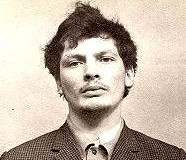 Patrick David Mackay
Serial killer · United Kingdom · 1973
Patrick David Mackay was born on September 25, 1952, in England. He was the son…
11 victims
Patrick David Mackay
Serial killer · United Kingdom · 1973
Patrick David Mackay was born on September 25, 1952, in England. He was the son…
11 victims
 Rachel Capra Craig
Homicide · Canada · 2001
Rachel Capra Craig was a Canadian woman accused of the murder of her fourteen-y…
1 victim
Rachel Capra Craig
Homicide · Canada · 2001
Rachel Capra Craig was a Canadian woman accused of the murder of her fourteen-y…
1 victim
 Maria del Rosio Alfaro
Murderer · USA · 1990
Maria del Rosio Alfaro, also known as “Rosie” Alfaro, was sentenced to death on…
1 victim
Maria del Rosio Alfaro
Murderer · USA · 1990
Maria del Rosio Alfaro, also known as “Rosie” Alfaro, was sentenced to death on…
1 victim
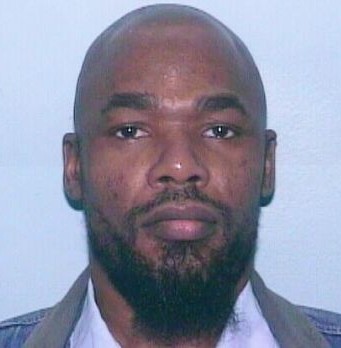 Gregory Clepper
Murderer · USA · 1996
1991 — The killings began. · April 24, 1996 — Patricia Scott was found in a tra…
1 victim
Gregory Clepper
Murderer · USA · 1996
1991 — The killings began. · April 24, 1996 — Patricia Scott was found in a tra…
1 victim
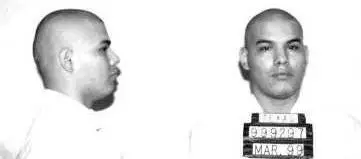 Pablo Lucio Vasquez
Murderer · USA · 1998
Pablo Lucio Vasquez was a Hispanic male from Texas Department of Criminal Justi…
1 victim
Pablo Lucio Vasquez
Murderer · USA · 1998
Pablo Lucio Vasquez was a Hispanic male from Texas Department of Criminal Justi…
1 victim
 Zakieya Avery
Murderer · USA · 2014
Zakieya Avery, 28, and Monifa Sanford, 21, were indicted in the stabbings of fo…
2 victims
Zakieya Avery
Murderer · USA · 2014
Zakieya Avery, 28, and Monifa Sanford, 21, were indicted in the stabbings of fo…
2 victims
- Gender
- male
- Country
- United Kingdom
- Location
- England, United Kingdom
- Date of birth
- August 1, 1936
- Age at first offence
- 38
- Characteristics
- kidnapping, robbery
- Victim profile
- Donald Skepper ( sub-postmaster) / Derek Astin (sub-postmaster) / Sidney Grayland (sub-postmaster) / Lesley Whittle (female, 17) / Gerald Smith (security guard)
- Method of murder
- Shooting
- Date(s) of murder
- 1974 - 1975
- Years active
- 1974–1975
- Date of arrest
- December 11, 1975
- Status
-
Life imprisonment
Sentenced to life imprisonment in July 1976
Case record: Donald Neilson
Donald Neilson was born as Donald Nappey on August 1, 1936. He was nicknamed the “Black Panther”. He was a British multiple murderer and kidnapper.
Background
Donald Neilson was a jobbing builder who turned to crime when his business failed to make money. He supplemented his earnings as a builder by robbing Post Offices at gunpoint.
He married at age 19 and had a daughter, Kathryn, in 1960. After that, he changed his surname from Nappey to Neilson.
He had no criminal history in his youth. In 1965, he turned to burglary and then robbery when his carpentry and building business hit hard times. He also had an abortive attempt at a taxi firm.
He developed a technique for breaking into houses: using a brace and bit to drill a hole in the window frame and using a screwdriver or coat hanger to open the catch. West Yorkshire constabulary called him the “Brace and Bit Robber”.
He became obsessed with the discipline and routine of army life. He had relished his statutory national service when he was a teenager. Although he was persuaded by his wife not to join the services permanently, he continued his passion for the military by forcing his wife and daughter to take part in games of “soldiers”.
In 1967, he branched out into robbing sub-Post Offices. Between 1967 and 1974, he raided multiple sub-Post Offices in Lancashire and Yorkshire, including Nottingham.
The offence
Robberies and murders at sub-Post Offices
In February 1972, Neilson broke into a sub-Post Office in Heywood, Lancashire. The owner, Leslie Richardson, was woken up and confronted a hooded man. A struggle ensued, and the shotgun Neilson was carrying went off, making a hole in the ceiling. Richardson managed to remove the hood and get a good look at Neilson. Neilson escaped out of the rear of the building. Police created a photofit picture of the intruder; the first one of six did not resemble any of the others or resemble Neilson.
In 1974, Neilson targeted a sub-Post Office in Harrogate, North Yorkshire. After tying up the sub-postmaster’s 18-year-old son, he confronted the sub-postmaster, Donald Skepper, as Skepper lay in bed with his wife. Skepper attempted to apprehend Neilson, and Neilson shot him as he leapt towards him. Neilson fled empty-handed, and Skepper died of his wounds. Police later cautiously connected this robbery to a previous one two years earlier in Heywood, Lancashire, despite photofits from the two robberies not bearing great resemblance.
By the following September, more than 30,000 people had been interviewed in the search for a man labelled the Black Panther. Neilson lay low for six months before breaking into a sub-Post Office in the Higher Baxindale locale, of Accrington, Lancashire. The owner, Derek Astin, woke to find an intruder in the bedroom and began a tussle with him, waking his wife. As the fight spilled out onto the landing, the shotgun went off. Astin died in hospital of his wounds. Neilson fell down the stairs but managed to recover and flee. Police quickly established this was the same perpetrator due to identical methods of entry, clothes and bullets.
Neilson struck again two months later by choosing a different and more cunning method of entry. The owner, Sidney Grayland, went to answer a knock at the rear door. Neilson was waiting, hooded, carrying a torch with a bottle of ammonia attached. When he succeeded in squirting himself and forced him to rip off his mask, Grayland’s wife entered the scene. This prompted Neilson to attack her, fracturing her skull, while also shooting her husband. Neilson left with £800 in Postal Orders from the safe. Grayland was dead and his wife was critically injured. She survived and gave another description that again did not show huge similarities to previous photofits. Identical bullets to the previous two killings were recovered by police.
Neilson also shot a security guard named Gerald Smith while attempting to raid a security depot after the kidnap investigation had begun.
The abduction of Lesley Whittle
By 1972, Neilson had decided he needed to step up his criminal activity to gain the big payout he wanted and receive publicity. He read an article in the Daily Express about Lesley Whittle, a teenage schoolgirl left £82,500 by her deceased father, George. George Whittle had run a successful coach company. Neilson continued with his sub-Post Office raids while concocting a way to kidnap Lesley and extract a large ransom.
By the beginning of 1975, Neilson was ready to carry out his plan.
On January 14, Neilson drove to the Whittle home in Highley, Shropshire. He silently broke into Lesley Whittle’s bedroom and abducted her at gunpoint. Lesley was 17 years old and was a sixth former. There was neither struggle nor noise, and he allowed her to put on a dressing gown and slippers before taking her.
On the lounge table, Neilson left a ransom demand on a box of chocolates punched out on a roll of Dymo-tape. The ransom demand read:
NO POLICE £50000 RANSOM TO BE READY TO DELIVER WAIT FOR TELEPHONE CALL AT SWAN SHOPPING CENTRE TELEPHONE BOX 6 PM TO 1 PM IF NO CALL RETURN FOLLOWING EVENING WHEN YOU ANSWER GIVE NAME ONLY AND LISTEN YOU MUST FOLLOW INSTRUCTIONS WITHOUT ARGUMENT FROM TIME YOU ANSWER YOU ARE ON A TIME LIMIT IF POLICE OR TRICKS DEATH SWAN SHOPPING CENTRE KIDDERMINSTER DELIVER £50000 IN A WHITE VAN £50000 IN ALL OLD NOTES £25000 IN £1 NOTES AND £25000 IN £5 THERE WILL BE NO EXCHANGE ONLY AFTER £50000 HAS BEEN CLEARED WILL VICTIM BE RELEASED
When Lesley failed to come downstairs for breakfast the next morning, her mother went to her room and saw the empty bed. She went into the lounge, found the note, and immediately raised the alarm. Lesley’s brother, Ronald Whittle, brought in the police while considering the threat in the ransom demand. It was agreed that he should take the ransom as directed.
Meanwhile, Neilson took Lesley to a disused drainage shaft in a beauty spot at Bathpool Park in the town of Kidsgrove, Staffordshire. He left her with a rope round her neck, basic food requirements and some bedding.
During the next few hours, a freelance reporter heard that a kidnap incident was underway and gave the story to a radio station, which broadcast it. The police withdrew Ronald Whittle from the ransom scene to avoid panicking the kidnapper into believing it was a honeytrap. The phone in the phone box rang at just before midnight, but there was no one to answer it. The next night, a hoax call sent Ronald Whittle on a false rendezvous.
That same night, Neilson shot security guard Gerald Smith while attempting to raid a security depot. In the hurry to escape, Neilson left his stolen green Morris 1300 a few hundred yards from Smith’s body. The police failed to notice the car for eight days. When the car was discovered and searched, items were found in the boot, including a sleeping bag, a tape recording of Lesley’s voice, torches, a gun and ammunition and some Dymo-tape.
On the third night of the kidnap, Ronald Whittle waited at home for the phone to ring. A recording of Lesley’s voice told him to go and wait by a phone box in Kidsgrove. He drove to Bridgnorth police station and was briefed by Detective Chief Superintendent Lovejoy of Scotland Yard. At that point, police had not realised the connection between the Black Panther and the wanted crimes, and Scotland Yard was in charge of the Whittle kidnap investigation. They did not think to exchange information with each other. Whittle drove to Kidsgrove, followed by several unmarked police cars. Whittle twice got lost and it was nearly 3am when he arrived. After another 30 minutes he located the hidden message instructing him to go to Bathpool Park and wait for a flashlight signal.
Neilson had driven the route and worked out that Whittle should arrive at Bathpool Park at 2.30am. A couple in a car arrived earlier and were baffled by the flashing light they saw. They also said they saw a police car in the car park, a claim denied by local police. Neilson watched and, convinced that Whittle was cooperating with a police trap, went into a rage.
There were differing accounts about Lesley’s death. One account said Neilson returned to the drainage shaft where she was held, pushed her off the ledge, and throttled her. A conflicting report said she died from shock and terror.
Police later matched the findings in the abandoned car to the sub-Post Office murders and realised that Lesley had been kidnapped by the Black Panther. Until then, police had not been convinced the abductor was dangerous enough to kill the hostage.
Investigation
Previously, senior crime officers from Scotland Yard discounted a full search of Bathpool Park, claiming there would be nothing to find. After the discovery of the Morris 1300, a search was immediately ordered. The shaft was found where Lesley’s naked body was discovered hanging from a wire cable. Her feet were only a few inches from the ground. Almost two months had passed since the day she was abducted, though the post-mortem suggested she had been killed within 48 hours of her capture.
The discovery of Lesley’s body triggered recriminations within the two police forces investigating the kidnapping of Lesley. The detective in charge of the case was demoted back to uniformed beat officer.
Arrest
Neilson remained at large for much of 1975 and returned to Post Office robberies, though he committed no more killings in the raids.
He was finally arrested at the end of the year. On December 11, two uniformed police officers were patrolling the streets of Mansfield, Nottinghamshire. They spotted a man in black outside a post office carrying a holdall and moving suspiciously. They called him over to their car and asked what he was doing. Keeping calm and friendly, Neilson said he was on his way home from work and gave a false name. One officer asked him to write his name down. Neilson produced a sawn-off shotgun.
Neilson forced one officer into the backseat and then got into the front passenger seat. He pointed the shotgun at the policeman driving and told him to drive to Blidworth, about six miles away. The rear seated officer spotted the gun pointing away from the driver and lunged at the gun, pulling the muzzle up. At the same time the driver slammed on the brakes and the gun went off into the roof of the car. The car stopped outside a chip shop in Rainworth. Two customers, joined the incident. The four men struggled with Neilson, who fought and was eventually subdued and handcuffed to a handrail.
At the police station, Neilson gave a false name and then deliberated before answering any question. He eventually gave his real name and address. When his home in Bradford, West Yorkshire was searched, police realised he was the Black Panther responsible for the murder of Lesley and three sub-postmasters. Officers discovered Army accessories, a range of knives, guns and ammunition, wire that matched that used to strangle Lesley, and a model of a black panther.
Under questioning, Neilson admitted after 12 hours to kidnapping Lesley but said her death was an accident. He also claimed he never intended to kill any of the postmasters. He was charged with four counts of murder and numerous related offences.
Trial
Neilson’s trial at Oxford Crown Court started on June 14, 1976. It was a massive public event with queues stretching out onto the street.
On July 1, Neilson was unanimously convicted. He received a life sentence for each murder committed—four in total—plus another life term for causing grievous bodily harm to Mrs Grayland, the wife of one of the sub-postmasters killed. He was convicted of kidnapping, blackmail, making threats to kill, burglary and possessing firearms with intent to endanger life.
The shooting of the security guard was ordered to lie on file. Neilson was acquitted on two charges of attempted murder.
The trial judge told Neilson that in his case, life must mean life and only great age or infirmity should be used as reasons to release him. The judge also sympathised with the jury over the amount of evidence they were forced to hear and sift through before reaching their verdict and later recommended to the Home Office that each juror be declared exempt from further jury service for the next ten years.
After the trial, police released two photographs of Neilson: one taken during his spell on remand with a blank expression, and one taken immediately after his arrest showing bruises and cuts from his struggle to stay free. This photograph appeared on the front of every national newspaper the morning after his conviction.
Neilson remained incarcerated in a high-security prison.
Sentencing
Neilson was sentenced to life imprisonment in July 1976 for the murder of Lesley Whittle, two sub-postmasters and the husband of a sub-postmistress.
He was found not guilty of the attempted murders of sub-postmistress Margaret “Peggy” Grayland and PC Tony White, but guilty of the lesser alternative charges of inflicting grievous bodily harm on Mrs Grayland and possessing a shotgun with the intent of endangering life at Mansfield.
A charge of attempting to murder the security guard Gerald Smith who he shot six times was left on file because of legal complications due to the fact that Smith died more than a year and a day after being shot. The law has since been changed.
The trial judge recommended that Neilson receive a whole life tariff. He was confirmed on the Home Office’s list of prisoners issued with whole life tariffs.
The European Court of Human Rights legislation affected politicians’ power to set minimum terms in November 2002, and therefore the original 30-year tariff was restored. This made Neilson eligible for parole in July 2006, one month before his 70th birthday.
In 2008, Neilson applied to the High Court to have his minimum term reverted to 30 years. On 12 June 2008, the appeal was rejected and he was told he would have to spend the rest of his life in prison. He continued to serve his sentence at HMP Norwich.
Appeals
Neilson appealed against the murder of Lesley, and the appeal was rejected in 1977.
In 2008, he applied to the High Court to have his minimum term reverted to 30 years. On 12 June 2008, his appeal was rejected.
Outcome
Neilson was convicted for multiple murders including the murder of Lesley Whittle and three sub-postmasters, and he was sentenced to life imprisonment in July 1976. He was acquitted on two charges of attempted murder. He remained incarcerated.
Other details
Victims list
- Donald Skepper — February 15, 1974
- Derek Astin — September 6, 1974
- Sidney Grayland — November 11, 1974
- Lesley Whittle — January 17, 1975
- Gerald Smith — March 1976
Notes on evidence and legal constraints
Police discovered relevant items in the boot of the stolen green Morris 1300, including a tape recording of Lesley’s voice, torches, a gun and ammunition and Dymo-tape.
A fingerprint was found to match a single partial one found in a notebook in the drainage shaft with the body of Lesley Whittle.
Neilson could not be charged with the murder of Gerald Smith at the time because UK law at the time prevented bringing a murder charge for a victim who died more than a year and a day after the incident.
Illness
On 29 June 2008, it was revealed that Neilson had Motor Neurone Disease, a progressive and fatal disease.
Prison record and location
Details of Neilson’s prison record, conduct and current location were kept under wraps, and it was understood that he was in good health as he neared the end of his recommended tariff. Later he remained one of Britain’s longest-serving prisoners at HMP Norwich.
Named people (as referenced in the record)
- Ronald Whittle (Lesley’s brother)
- Leslie Richardson (sub-Post Office owner in Heywood, Lancashire)
- Donald Skepper (sub-postmaster in Harrogate, North Yorkshire)
- Derek Astin (sub-Post Office owner in Accrington, Lancashire)
- Sidney Grayland (sub-Post Office owner at Langley, West Midlands)
- Margaret “Peggy” Grayland (wife of a sub-postmaster killed)
- Lesley Whittle
- George Whittle (Lesley’s father)
- Gerald Smith (security guard)
- PC Tony White
- PC Stuart Mackenzie (also written as Stuart McKenzie / Mackenzie in the record)
- Roy Morris
- Keith Wood
- Detective Chief Superintendent Lovejoy of Scotland Yard (briefed Ronald Whittle)
- Detective Constable Philip Maskery (described as lowered into the shaft during search)
- Detective Chief Superintendent Bob Booth (referred to as leading the inquiry in the kidnapping narrative)
- Dr John Brown (pathologist who reported on the post-mortem examination)

Spotted an error, or have more information about this case?