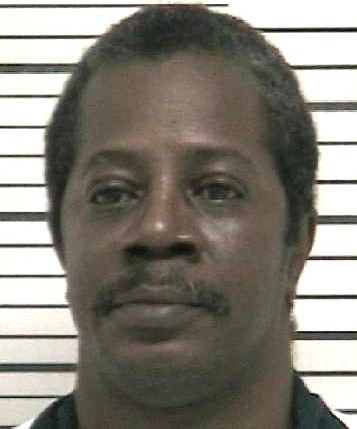
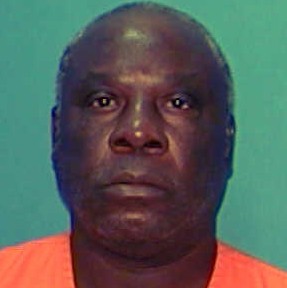
Johnny Lee Gates
Murderer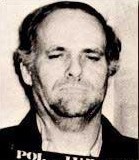 Ervil LeBaron
Murderer · USA · 1972
Ervil Morrell LeBaron (1925 to August 16, 1981) was the leader of a polygamous…
35 victims
Ervil LeBaron
Murderer · USA · 1972
Ervil Morrell LeBaron (1925 to August 16, 1981) was the leader of a polygamous…
35 victims
 Brian Kevin Rosenfeld
Murderer · USA · 1985
Brian Kevin Rosenfeld Brian Kevin Rosenfeld was sentenced to three concurrent l…
23 victims
Brian Kevin Rosenfeld
Murderer · USA · 1985
Brian Kevin Rosenfeld Brian Kevin Rosenfeld was sentenced to three concurrent l…
23 victims
 Marvin Gray
Murderer · USA · 1975
Marvin Gray was convicted killer who claimed responsibility for 23 slayings and…
23 victims
Marvin Gray
Murderer · USA · 1975
Marvin Gray was convicted killer who claimed responsibility for 23 slayings and…
23 victims
 Yahweh ben Yahweh
Murderer · USA · 1980
Yahweh ben Yahweh was born and legally named Hulon Mitchell Jr. (October 27, 19…
23 victims
Yahweh ben Yahweh
Murderer · USA · 1980
Yahweh ben Yahweh was born and legally named Hulon Mitchell Jr. (October 27, 19…
23 victims
 Parveen Bibi
Murderer · Pakistan · 2016
Parveen Bibi was convicted of murdering Zeenat Rafiq by burning her to death in…
1 victim
Parveen Bibi
Murderer · Pakistan · 2016
Parveen Bibi was convicted of murdering Zeenat Rafiq by burning her to death in…
1 victim
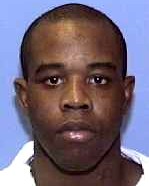 Perry Eugene Williams
Murderer · USA · 2000
Perry Eugene Williams (TDCJ Number 999420) Williams was born in Houston. The fa…
1 victim
Perry Eugene Williams
Murderer · USA · 2000
Perry Eugene Williams (TDCJ Number 999420) Williams was born in Houston. The fa…
1 victim
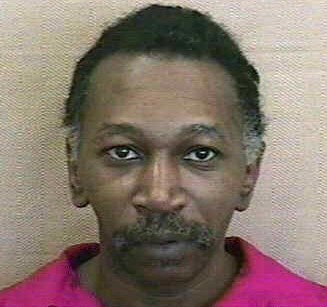 Wendell Flowers
Murderer · USA · 1981
1981 — Wendell Flowers was serving a life sentence for the murder of 81-year-ol…
2 victims
Wendell Flowers
Murderer · USA · 1981
1981 — Wendell Flowers was serving a life sentence for the murder of 81-year-ol…
2 victims
 Robert William Fisher
Murderer · USA · 2001
Robert William Fisher remained at large. Robert William Fisher was born April 1…
3 victims
Robert William Fisher
Murderer · USA · 2001
Robert William Fisher remained at large. Robert William Fisher was born April 1…
3 victims
 Daniel Burns
Murderer · 1987
Daniel Burns, Jr. was prosecuted in the Twelfth Judicial Circuit, Manatee Count…
1 victim
Daniel Burns
Murderer · 1987
Daniel Burns, Jr. was prosecuted in the Twelfth Judicial Circuit, Manatee Count…
1 victim
- Gender
- male
- Country
- USA
- Location
- Muscogee County, Georgia, USA
- Date of birth
- 1955
- Age at first offence
- 21
- Characteristics
- rape, robbery, mentally ill
- Victim profile
- Katharina Wright (female, 19) / ???
- Method of murder
- Shooting
- Date(s) of murder
- November 30 / December 20, 1976
- Years active
- 1976
- Date of arrest
- January 31, 1977
- Status
-
Sentenced to death
Sentenced to death on September 1977
Case identifiers
- Defendant: Johnny Lee Gates
- Age: 41
- Court: Muscogee Superior Court
- Judge: Land
- Appeal: GATES v. THE STATE. 35053 (244 Ga. 587) (261 SE2d 349) (1979) HILL, Justice
- Appeal dates: ARGUED JULY 10, 1979 — DECIDED OCTOBER 24, 1979
Timeline
- November 30, 1976 — Johnny Lee Gates posed as a gas company employee to enter Katharina Wright’s home; he robbed, raped, and shot her in the head.
- January 31, 1977 — Gates was arrested on unrelated charges and confessed to the crimes of murder, armed robbery, and rape.
- September 1977 — Gates was sentenced to death in Muscogee County.
- 1992 — Gates’ case was sent back to Muscogee County for a new sentencing trial on the question of mental retardation.
- July 10, 1979 — The case was argued.
- October 24, 1979 — The case was decided.
Background
Johnny Lee Gates was sentenced to death in Muscogee County in September 1977. Gates was on parole at the time of the November 30, 1976 killing. Between Katharina Wright’s killing and Gates’s arrest, Gates also committed two other armed robberies and voluntary manslaughter.
The offence
On November 30, 1976, Gates posed as a gas company employee to get into the home of 19-year-old Katharina Wright, whom he robbed, raped, and then shot in the head.
The victim’s husband had been stationed in Germany where he met and married the 19-year-old victim. On November 30, 1976, the couple had been in the United States about a month and had been in their apartment in Columbus about ten days. The husband left for work at Fort Benning about 6 a.m. on that date.
Shortly after noon on November 30, 1976, Gates knocked on the door of the apartment, posing as being from the gas company. Wright allowed him to enter, apparently thinking he had been sent in response to her request that the gas heater be repaired. Once inside, Gates was given a can of oil and was shown to the heater in a closet. After beginning to oil a fan, Gates walked to the bathroom where Wright was and told her of his intent to rob her.
Gates raped Wright and forced her at gunpoint to give him:
- $300 hidden under her mattress in the bedroom
- $180 hidden in a tape player in the living room
Before leaving, Gates took Wright back into the bedroom, where he gagged her and blindfolded her with her husband’s army ties, and tied her hands behind her back with the belt to her bathrobe. He then shot her in her right temple, causing her death.
A fingerprint was found on the heater.
After Gates’s arrest on January 31, 1977, Gates was questioned by police concerning the crimes of murder, armed robbery, and rape. Gates confessed to the crimes of murder and armed robbery, but stated that Wright had voluntarily engaged in sexual intercourse with him.
Investigation and arrest
After his arrest on January 31, 1977, on unrelated crimes, Gates was questioned by police concerning the above crimes of murder, armed robbery and rape, and he confessed to the crimes of murder and armed robbery.
A neighbor of the victim identified Gates as having knocked on his door about noon on the date in question, stating he was from the gas company.
Trial
Charges and convictions
Gates was convicted by jury of:
- rape
- armed robbery
- murder of a young woman in Columbus
Death penalty sentencing findings
The jury found three statutory aggravating circumstances and imposed the death penalty.
Sentences imposed by the trial court
- Sentence of death for the crime of murder
- 20 years consecutively for the crimes of armed robbery and rape
Jury verdict on aggravating circumstances
After deliberation, the jury returned a verdict imposing the death penalty for:
- (1) Armed robbery
- (2) Rape
- (3) Outrageously or wantonly vile, horrible or inhuman in that it involved depravity of mind to the victim
- The jury recommended the death penalty
The verdict specified “(1) Armed robbery” and “(2) Rape” as aggravating circumstances upon which it imposed the death penalty. The intent of the jury was clear to the lawyers and the judge, and no objection had been made to the form of the verdict.
Confessions and evidentiary issues
Gates enumerated one error in the guilt/innocence phase of his trial regarding the admission into evidence of his written and videotaped confessions, asserting they were not knowingly, intelligently and voluntarily made.
Before submitting Gates’s written and videotaped confessions to the jury, the trial court conducted a Jackson v. Denno hearing.
At the Jackson-Denno hearing:
- Officers testified that they explained Gates’s constitutional rights to him.
- Officers listened to Gates read aloud the statement of rights and waiver of rights form.
- Officers further explained the pronunciation and meaning of the word “coercion.”
- Officers witnessed Gates sign the waiver before hearing and writing out his subsequent confession.
- Officers testified they were aware at the time that Gates was 21 years old and had completed the sixth grade in school.
- One officer testified that Gates voluntarily went with him to the then vacant apartment.
- A video tape recording was made showing Gates being advised of his rights again and again waiving them.
- The video tape recording did not depict a literal re-enactment of the crimes, and instead showed where and stated how Gates had committed the crimes and where furniture had been located at the time.
Gates testified at the Jackson-Denno hearing that:
- he had asked for a lawyer prior to confessing,
- he was told it would take several days and he did not need one,
- he was afraid to ask again afterwards,
- the detectives told him that if he confessed they would ensure his most severe punishment would not exceed a life sentence,
- he had not understood at the time the significance of the waiver he had signed even after reading it aloud,
- after he had signed it he thought he had no choice but to confess on video tape at the scene of the crime.
One officer was recalled and refuted the statements Gates made about him and the other officer.
At the close of the hearing, the trial court found:
". . . were made freely and voluntarily . . . without the remotest fear of injury, without any promise or hope of benefit or reward, and after having his constitutional rights explained to him, that he had the right to remain silent, that anything he said could be used against him in a court of law, that he had the right to have an attorney to confer with and confer with an attorney prior to making any statement and during the making of the statement, and that if he could not afford an attorney that one would be furnished to him by the state free of charge, that he understood these constitutional rights that were explained to him and that he voluntarily, intelligently -- and intelligently waived them. He understood them and he waived them. . ."
The signed waiver itself read:
"I have read this statement of my rights and I understand what my rights are. I am willing to make a statement and answer questions. I do not want a lawyer at this time. I understand and know what I am doing. No promises or threats have been made to me and no pressure or coercion of any kind has been used against me."
Gates did not claim that the videotape was inaccurate in its particulars or that material alterations had been made.
In connection with Gates’s allegations about the videotape’s effect:
- The defendant had not raised objections at trial on the grounds that the videotaped confession was unnecessary, served as an extra witness, or by its nature made a forceful impression on the jury.
- The court addressed the argument on its merits because this was a death case.
Motions and claims in death-sentence review
The court addressed whether the videotape could have prejudiced the jury through the influence of passion, prejudice, or other arbitrary factor.
The jury was shown on the videotape that Gates was handcuffed at the scene of the crime while confessing to the murder and armed robbery. The court reasoned that absent justifying circumstances a defendant should not normally be seen handcuffed in the courtroom or courthouse. The court stated that where jurors by chance see a defendant in handcuffs outside the courtroom it was not error to deny a motion for mistrial, and it described circumstances where handcuffing for security reasons was within the trial court’s discretion and the police’s responsibility while transporting a prisoner.
Gates asserted that pretrial publicity and remarks of the prosecutor caused the jury to be influenced by passion and prejudice into recommending the death sentence.
Details concerning pretrial publicity and voir dire included:
- Gates was tried seven months after his arrest.
- Six weeks prior to trial another murder occurred causing much publicity.
- The weekend prior to trial, local radio, television and newspaper stories related that the trial judge might televise the trial.
- On the day of trial, a local radio station broadcast details about Gates’s previous convictions and news that the state would ask for the death sentence.
- The trial court granted extensive individual voir dire of prospective jurors outside the presence of the others.
- The court granted motions to strike jurors for cause, leaving a panel of 50 prospective jurors.
- Some prospective jurors admitted vague knowledge of the crimes, but none could recall details, and each prospective juror stated an ability to weigh the evidence impartially.
- The court found no prejudicial pretrial publicity weighing against juror impartiality.
Gates also argued that the prosecutor’s sentencing argument was highly prejudicial.
Admission of guilty pleas to unrelated crimes
Gates contended the court erred in admitting his pleas of guilty to three unrelated crimes committed after the crimes for which he was being tried. After being arrested and before trial, Gates pled guilty to:
- two counts of armed robbery
- one count of voluntary manslaughter These pleas were admitted during the sentencing trial. The pleas were admitted during sentencing and were not introduced to support a specific aggravating circumstance to authorize the death penalty.
The court addressed Gates’s argument that prior criminal convictions and pleas of guilty for crimes committed after the murder were not admissible under Code Ann. 27-2503, and the court stated that at issue for sentencing purposes was the status of the defendant at the time of sentencing.
Jury instructions and aggravating circumstance disputes
Gates enumerated errors related to sentencing instructions. The trial court instructed the jury to consider facts and circumstances in mitigation and aggravation, explained that mitigating circumstances did not excuse the offense but could reduce moral culpability or blame, and instructed that the jury was free to recommend mercy even if aggravating circumstances existed.
Gates asserted two errors:
- the failure to instruct that mitigating and aggravating circumstances should be weighed against each other
- the failure to give concrete examples of mitigating factors
The court discussed the statutory approach under Georgia law and stated that the additional requirement was not imposed by the statute as held constitutional.
Gates also asserted error about the trial court’s charge of the statutory aggravating circumstance phrase that ". . . the offense of murder was outrageously or wantonly vile, horrible or inhuman in that it involved depravity of mind to the victim . . . [sic]". The court discussed that Code Ann. 27-2534.1(b)(7) had been held constitutional.
After some deliberation, the jury requested clarification of the phrase “depravity of mind to the victim.” The trial court read from Black’s Law Dictionary and from Webster’s International Dictionary, then explained that:
". . . that his actions were so vile, horrible, or inhuman that he created such a state of mind in the victim as defined by the word depravity." The court stated that it was not the victim’s state of mind that must concern the jury but the defendant’s, and described that the jury was not charged on the meaning as intended by the legislature and as interpreted by the court. The court said it was unnecessary to decide whether the death penalty had to be set aside on that ground because of reasons appearing later in the opinion.
The jury was instructed as to two other aggravating circumstances:
- “The offense of murder was committed while the offender was engaged in the commission of another capital felony, to wit: armed robbery”
- “The offense of murder was committed while the offender was engaged in the commission of another capital felony, to wit: rape”
The evidence showed Gates took some $480 from the victim at gunpoint.
A gynecologist testified:
- motile sperm was found in the victim’s vagina and cervix
- lacerations indicated forced sexual intercourse
The defendant admitted having intercourse with Wright but claimed she consented. The jury found Gates guilty of rape and armed robbery and found them beyond a reasonable doubt.
Concurrence
HILL, Justice, concurring. HILL stated he would consider Sandstrom v. Montana even though it was not raised. The concurrence stated:
Additionally, I would consider Sandstrom v. Montana, ---- U. S. ---- (99 SC 2450, 61 LE2d 39) (1979), even though it was not raised. See Code Ann. 27-2537 (c)(2) and (i). In my view the presumptions given in charge bring into question the validity of the armed robbery and rape convictions (the statutory aggravating circumstances) as well as the conviction for murder. Having considered Sandstrom v. Montana, supra, and the charge as a whole, I would affirm the Conviction and sentence.
Appeals
Gates enumerated one error in the guilt/innocence phase and six errors in the sentencing phase, which the court considered in connection with death sentence review.
Court determinations during appeal
The court found no reversible error in admitting written and videotaped confessions, concluding a rational trier of fact could have found Gates guilty of murder, armed robbery and rape beyond a reasonable doubt.
The court determined it had to check under Code Ann. 27-2537 whether the death sentence was imposed under the influence of passion, prejudice, or any other arbitrary factor, including whether the videotape could have so prejudiced the jury. The court concluded it found no merit in pretrial publicity contentions and no merit in the claim that the prosecutor’s arguments during sentencing influenced the jury through passion and prejudice as used in the statute.
The court also concluded that admission of the pleas of guilty to the unrelated crimes during the sentencing phase was not error.
The court concluded:
- the death sentence was not imposed under the influence of passion, prejudice or other arbitrary factor
- the verdict and aggravating circumstances supported the death penalty
- the death penalty was not excessive or disproportionate to the penalty imposed in similar cases
Outcome
The convictions were affirmed, and the sentence of death was affirmed.
Other details
- Gates confessed twice to armed robbery and murder.
- The court described Gates’s denial of the rape as asserting voluntary consent to sexual intercourse, while medical evidence authorized a guilty verdict for rape.
- The jury authorized the death sentence because the offense of murder was committed while Gates was engaged in the commission of two other capital felonies: armed robbery and rape.
- The court stated that where two or more statutory aggravating circumstances were found, failure of one circumstance did not taint proceedings so as to invalidate the other aggravating circumstance found and the sentence of death based there on.
- The charge about depravity of mind had a grammatically incorrect phrase, and Code Ann. 27-2534.1(b)(7) read:
"The offense of murder . . . was outrageously or wantonly vile, horrible or inhuman in that it involved torture, depravity of mind, or an aggravated battery to the victim."
- The opinion noted:
- “The torture and aggravated battery involve the victim; the depravity of mind is that of the murderer. Harris v. State, 237 Ga. 718 , 732 ( 230 SE2d 1 ) (1976).”
- Notes included:
- The signed waiver quote included that Gates did not want a lawyer at that time and denied promises or threats or coercion.
- Gates did not mention that at the beginning of the video tape recording he was shown wearing handcuffs, and the court said this would be considered further later in the opinion.
- A discussion distinguished standards related to admissibility versus proof for conviction in Lego v. Twomey.
- The note stated: “At the request of a juror, the confession was” (with the remainder absent from the provided text).


Spotted an error, or have more information about this case?