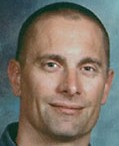
Robert William Fisher
Murderer Russell Ellwood
Murderer · USA · 1991
Russell Ellwood was a former taxi driver. Authorities suspected him of killing…
20 victims
Russell Ellwood
Murderer · USA · 1991
Russell Ellwood was a former taxi driver. Authorities suspected him of killing…
20 victims
 Robert Martines Perez
Murderer · USA · 1994
Name: Robert Martines Perez · Other name used in proceedings: Robert Martinez P…
15 victims
Robert Martines Perez
Murderer · USA · 1994
Name: Robert Martines Perez · Other name used in proceedings: Robert Martinez P…
15 victims
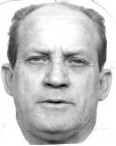 Billy Frank Vickers
Murderer · USA · 1993
Billy Frank Vickers Vickers was executed by lethal injection in Texas on Januar…
14 victims
Billy Frank Vickers
Murderer · USA · 1993
Billy Frank Vickers Vickers was executed by lethal injection in Texas on Januar…
14 victims
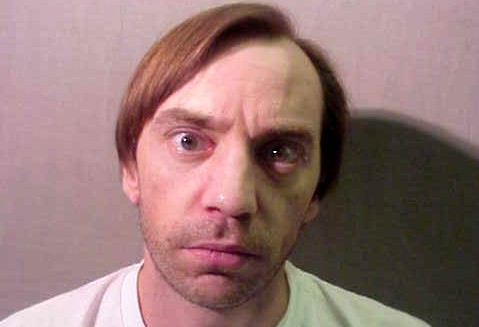 Jesse Timmendequas
Murderer · USA · 1994
Jesse Timmendequas (born April 15, 1961) raped and murdered his neighbor, seven…
1 victim
Jesse Timmendequas
Murderer · USA · 1994
Jesse Timmendequas (born April 15, 1961) raped and murdered his neighbor, seven…
1 victim
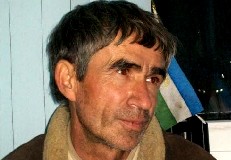 Sergey Martynov
Serial killer · Russia (from Vladimir Region to Yekaterinburg) · 1992
Sergey Martynov (also spelled as Sergei Martynov, born in 1962) was suspected o…
9 victims
Sergey Martynov
Serial killer · Russia (from Vladimir Region to Yekaterinburg) · 1992
Sergey Martynov (also spelled as Sergei Martynov, born in 1962) was suspected o…
9 victims
 Jock Palfreeman
Murderer · Bulgaria · 2007
Jock Palfreeman was an Australian convicted of murder in Bulgaria. In December…
1 victim
Jock Palfreeman
Murderer · Bulgaria · 2007
Jock Palfreeman was an Australian convicted of murder in Bulgaria. In December…
1 victim
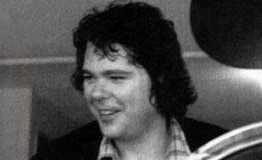 James Beck Gordon
Homicide · USA · 1983
James Beck “Jim” Gordon (born January 1, 1945) was an American recording artist…
1 victim
James Beck Gordon
Homicide · USA · 1983
James Beck “Jim” Gordon (born January 1, 1945) was an American recording artist…
1 victim
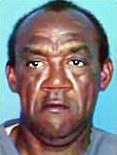 Jerry Frank Townsend
Serial killer? · USA · 1973
Jerry Frank Townsend was sentenced to seven concurrent life sentences in 1980.…
6 victims
Jerry Frank Townsend
Serial killer? · USA · 1973
Jerry Frank Townsend was sentenced to seven concurrent life sentences in 1980.…
6 victims
- Gender
- male
- Country
- USA
- Location
- Young, Arizona, USA
- Date of birth
- April 13, 1961
- Age at first offence
- 40
- Characteristics
- parricide, arson, fugitive
- Victim profile
- His wife Mary Fisher, 38, and her two children, Brittney Fisher, 12, and Robert "Bobby" William Fisher, Jr., 10
- Method of murder
- Shooting - Cutting their throats
- Date(s) of murder
- April 10, 2001
- Years active
- 2001
- Date of arrest
- Remains at large
- Status
-
At large
Remains at large
Case record: Robert William Fisher
Status
Robert William Fisher remained at large.
Background
Robert William Fisher was born April 13, 1961. He had blue eyes, brown hair, and was six feet tall (6’0”). He weighed 190 pounds. He chewed tobacco heavily. He had surgical scars on his lower back, and his lower back injury made him walk with an exaggerated erect posture and his chest pushed out. He had a noticeable gold crown on his upper left first bicuspid tooth.
Fisher was the son of William Fisher, a banker, and Jan Howell. Fisher had two sisters. His parents divorced in 1976, when he was 15. Fisher grew up in Tucson and attended Sahuaro High School in Tucson. He graduated from Sahuaro High School in 1979.
Fisher served in the Navy as a Petty Officer on the San Diego-based USS Belleau Wood until 1982. After being discharged, Fisher became a firefighter in rural San Diego County. He worked as a surgical catheter technician, respiratory therapist, and firefighter, and he was an avid outdoorsman, hunter, and fisherman.
Fisher married Mary Cooper in 1987. Mary was born in Chicago. Fisher and Mary had a 14-year marriage that was in trouble by 2001. They had two children: Brittney Fisher (aged 12) and Robert “Bobby” William Fisher, Jr. (aged 10).
Fisher’s family included his mother-in-law, Ginny Cooper. Fisher’s wife and children were victims in the case.
The offence
On Tuesday April 10, 2001, shortly before 9am, an explosion tore through a south Scottsdale house, and a fire engulfed the home. Firefighters were alerted due to a natural gas explosion and fire.
After the explosion, police found burned bodies of a woman and two children lying in bed in the remains of the house. The victims were identified as Mary Fisher (aged 38), Brittney Fisher (aged 12), and Robert “Bobby” William Fisher, Jr. (aged 10).
Authorities confirmed that the three victims had not died in the fire. Their throats were slashed prior to the start of the fire, and Mary Fisher had a bullet lodged in the back of her head. Mary Fisher was shot in the back of the head.
The blast appeared to be centered in the living room. The explosion was strong enough to collapse the front brick wall and rattle the frames of neighboring houses for a half-mile in all directions. Rural/Metro Fire Department firefighters arrived within minutes and kept the 20-foot-high blaze from spreading to neighboring houses.
A series of smaller secondary explosions followed. Those were believed to be either rifle ammunition or paint cans going up, and firefighters kept their distance. One firefighter suffered minor injuries to his leg when the firefighter lost balance and fell near the burning house.
Fire investigators learned that the explosion was caused when someone unhooked a gas line, placed a candle on a nearby table, and poured fire accelerant down the hallway of the home. The accumulating gas was later ignited by an ignition source, possibly the pilot light on the water heater.
There were reports that evidence of the homicide had been tried to be concealed by pulling out the gas line from the back of the home’s furnace.
Investigation
On April 14, 2001, Robert William Fisher, who had disappeared at the time of the murders, was named as an official (and to date only) suspect in the case. Arizona Department of Public Safety officers were instructed in a statewide bulletin to arrest him.
On April 20, police found Fisher’s Toyota 4Runner and dog “Blue” in Tonto National Forest, about a hundred miles north of Scottsdale.
On July 19, 2001, an Arizona Superior Court state arrest warrant was issued at Phoenix. The warrant charged Fisher with three counts of first-degree murder and one count of arson.
Subsequently, Fisher was declared a fugitive. A federal arrest warrant was issued by the United States District Court for the District of Arizona charging him with unlawful flight to avoid prosecution.
On August 2001, police believed Fisher called America’s Most Wanted Program from Chester, VA.
On June 29, 2002, the FBI named Fisher as the 475th fugitive to be placed on the Ten Most Wanted list. He was also listed on America’s Most Wanted “Dirty Dozen” list. The FBI offered a reward of up to $100,000 for information leading to his capture.
As of April 2003, the FBI had received “hundreds and hundreds of leads.” However, sightings had been inconclusive or false.
In February 2004, an individual with a striking physical resemblance to Robert Fisher was arrested in Vancouver, British Columbia by the Royal Canadian Mounted Police. Fingerprints eventually confirmed the man was not Fisher. The man was held by Canadian police for approximately one week until a family member correctly identified him.
Fisher was considered armed and extremely dangerous. He had ties to Florida and New Mexico. He had been speculated to have committed suicide or started a new life under an assumed identity. Police thought Fisher was a loner and was thought to live alone in an isolated area.
Arrest and warrants
On July 19, 2001, an Arizona Superior Court state arrest warrant was issued at Phoenix charging Fisher with three counts of first-degree murder and one count of arson.
A federal arrest warrant was later issued by the United States District Court for the District of Arizona charging Fisher with unlawful flight to avoid prosecution.
Trial
No trial proceedings were stated in the provided material.
Sentencing
No sentencing details were stated in the provided material.
Appeals
No appeal details were stated in the provided material.
Outcome
Fisher remained a suspect and remained at large. He was on the FBI Ten Most Wanted list and was selected by America’s Most Wanted host John Walsh as the program’s Public Enemy Number One. A reward of up to $100,000 was offered by the FBI for information leading directly to the arrest of Fisher.
Aftermath
After Mary’s SUV was found, the abandoned vehicle remains were described as the last piece of evidence uncovered in the case, aside from unconfirmed sightings of Fisher.
In the days and weeks following discovery of Mary’s SUV, there was suspicion that Fisher might have walked deep into the wilderness to commit suicide, and the forested area near Payson was searched for weeks. Professional spelunkers from Tucson searched the limestone caves and found no physical evidence.
Fisher’s disappearance and lack of credible sightings led to speculation about whether he was dead, with the possibility that remains had been carried off by wild animals after a suicide. Law enforcement continued searching without hard evidence supporting Fisher’s death.
FBI special agent Robert Caldwell said he believed Fisher was one of nearly 200,000 U.S. fugitives living under a false name and that he was likely residing somewhere in the United States, Mexico, or Canada.
“I think if he is alive, one of the possibilities is in Sierra Madre, Mexico. It’s known for its lawlessness. He could hide in this area, very easily.”
— Adam Trahan
“I personally believe by now he’s hooked up with somebody. The way he is, the way he was such a control freak with Mary, I’m sure he’s found companionship. If he did find it, it’s probably with a woman who he’s extremely controlling of.”
— Robert Caldwell, FBI special agent
“This guy has kind of vanished. (The police) feel he could be somewhere in the U.S. or possibly parts of Canada.”
— Greg Howell, America’s Most Wanted producer
“There’s no doubt in my mind that he’s still out there,” says Bill Cooper.
— Bill Cooper
Timeline
- 1976 — Fisher’s parents divorced when he was 15.
- 1982 — Fisher left the Navy; he later became a firefighter in rural San Diego County.
- 1987 — Fisher married Mary Cooper.
- 1979 — Fisher graduated from Sahuaro High School.
- 1998 — The Fishers went to their church’s senior pastor for marital counseling.
- December 2000 — Fisher fretted that a urinary tract infection was caused by a one-night affair with a prostitute met in a massage parlor.
- April 9, 2001 — Neighbors reported a loud argument between Fisher and his wife at 10:30, approximately ten hours before the explosion.
- April 10, 2001 — An explosion and fire destroyed a south Scottsdale home; the victims were identified as Mary Fisher (aged 38), Brittney Fisher (aged 12), and Robert “Bobby” William Fisher, Jr. (aged 10).
- April 14, 2001 — Fisher was named an official suspect, and Arizona Department of Public Safety officers were instructed to arrest him.
- April 20, 2001 — Police found Fisher’s Toyota 4Runner and dog “Blue” in Tonto National Forest.
- July 19, 2001 — An Arizona Superior Court state arrest warrant was issued at Phoenix charging Fisher with three counts of first-degree murder and one count of arson.
- June 29, 2002 — The FBI named Fisher as the 475th fugitive to be placed on the Ten Most Wanted list.
- April 2003 — The FBI had received “hundreds and hundreds of leads.”
- February 2004 — An individual resembling Fisher was arrested in Vancouver, British Columbia; fingerprints confirmed he was not Fisher.
- August 2001 — Police believed Fisher called America’s Most Wanted from Chester, VA.
Other details
Fisher worked at Mayo Clinic in Scottsdale as a respiratory therapist. He spent the day caring for patients and, at the end of his shift, picked up his 12-year-old daughter, Brittney, and drove her to a National Junior Honor Society induction ceremony where she was to be honored.
During the ceremony, Fisher grew impatient, and the two left before Brittney could collect her certificate. Fisher’s wife, Mary, accompanied their 10-year-old son, Bobby, to a gun-safety class before the known facts ended.
Neighbors reported hearing the Fishers arguing loudly when Mary returned home that evening.
Police reported that Fisher’s possessions were missing after the explosion, including clothing and his .38-caliber revolver. Police also reported that Fisher was last seen in a surveillance photo withdrawing $280 from the Wells Fargo on Scottsdale and McDowell roads in Scottsdale while wearing an Oakland Raiders baseball cap and driving Mary’s silver 2000 Toyota 4-Runner. Police later found the baseball cap left inside the vehicle.
Speculation existed about how Fisher left the area. One theory suggested an accomplice transported him away; no physical evidence supported it. Another suggestion was that Fisher hitchhiked or obtained a ride that took him away from the scene. FBI special agent Robert Caldwell said, “We know he didn’t walk away because the dog would have followed him.” He added, “There are a lot of different things that could have happened. But the dog stayed there, so obviously he was driven away.”
Fisher was described as withdrawn from church activities in the months prior to the murders. He had been an active member of the Scottsdale Baptist Church’s men’s ministry, but unlike Mary, he began to withdraw. At some point before the murders, Fisher confided to one associate that his life could have been different if his mother hadn’t left the family.
Ginny Cooper said: “Fisher didn't socialize often with family because of a fear of getting too close to people and losing them.”
Fisher’s mother told investigators she had been a “yes-sir” wife who didn’t stand up to her husband. She said she saw similar dynamics early in her son’s marriage to Mary and talked to her daughter-in-law about her concerns.
A close friend of Robert Fisher said his family resembled Fisher’s childhood family.
Fisher was described by a Navy veteran background and by friends and relatives as cruel and distant, a control freak father who was awkward with his children, but who tried to hold an image as a devoted family man.
Fisher told co-workers about a one-night affair with a prostitute he met in a massage parlor. He fretted that his wife would find out that it was the cause of a urinary tract infection that left him ill for several days in December 2000.
Fisher told a hunting mate he renewed his commitment to his faith and his marriage because he “could not live without his family,” possibly hinting that he would consider suicide over divorce.
In the weeks before Mary’s death, Mary told several friends she was going to divorce her husband.
In the months leading up to the murders, law enforcement concluded that due to events of his own childhood, divorce would never be an option for Fisher. FBI special agent Robert Caldwell said: “He vowed that he would never get a divorce,” and added, “Robert had a big problem with divorce.”
Bill Cooper described an encounter at the fire scene and made a plea: “Where are you Robert? Please come home.”
Bill Cooper also said, “We never knew a thing. She didn’t want mommy and daddy to know anything she was going through. She just took care of those two precious kids.”
Mary’s friend Lori Greenbeck made a statement: “I was thinking early on they would find some bones up there where they found his truck.”
Neil Websdale said: “But most of the suicides occur at the scene or very close to the scene,” and “It would be very unlikely that someone would take off and kill themselves in a remote location.”
Law enforcement described Fisher as a loner who might live alone in an isolated area.
Skylar Robinson, described in the material as a psychic detective, stated: “Fisher is living under a different identity in Calallen, Texas, where he travels in and out of Mexico. “He lives in a trailer. He’s gotten a little too comfortable in this town. He’s not trying too hard to stay hidden.”
Spotted an error, or have more information about this case?