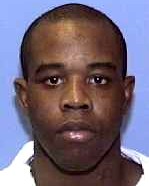
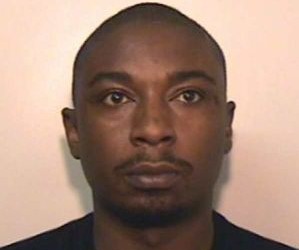
Perry Eugene Williams
Murderer Russell Ellwood
Murderer · USA · 1991
Russell Ellwood was a former taxi driver. Authorities suspected him of killing…
20 victims
Russell Ellwood
Murderer · USA · 1991
Russell Ellwood was a former taxi driver. Authorities suspected him of killing…
20 victims
 Robert Martines Perez
Murderer · USA · 1994
Name: Robert Martines Perez · Other name used in proceedings: Robert Martinez P…
15 victims
Robert Martines Perez
Murderer · USA · 1994
Name: Robert Martines Perez · Other name used in proceedings: Robert Martinez P…
15 victims
 Billy Frank Vickers
Murderer · USA · 1993
Billy Frank Vickers Vickers was executed by lethal injection in Texas on Januar…
14 victims
Billy Frank Vickers
Murderer · USA · 1993
Billy Frank Vickers Vickers was executed by lethal injection in Texas on Januar…
14 victims
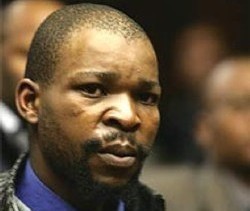 Sipho Dube
Serial killer · South Africa · 2001
Sipho Dube was convicted of seven murders and three rapes and was sentenced to…
7 victims
Sipho Dube
Serial killer · South Africa · 2001
Sipho Dube was convicted of seven murders and three rapes and was sentenced to…
7 victims
 Raymond Landry
Murderer · USA · 1982
Raymond Landry Sr. was the person convicted in a Texas capital case. Raymond La…
1 victim
Raymond Landry
Murderer · USA · 1982
Raymond Landry Sr. was the person convicted in a Texas capital case. Raymond La…
1 victim
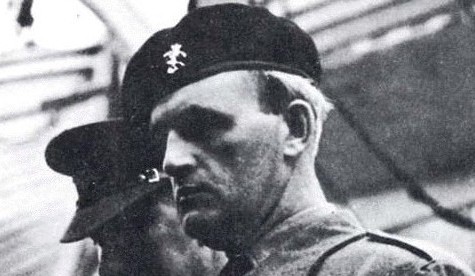 Frederick Emmett-Dunne
Homicide · Germany · 1953
Defendant: Frederick Emmett-Dunne Victim: Sergeant Reginald Watters Other named…
1 victim
Frederick Emmett-Dunne
Homicide · Germany · 1953
Defendant: Frederick Emmett-Dunne Victim: Sergeant Reginald Watters Other named…
1 victim
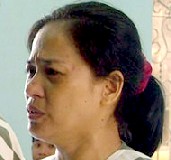 Le Thanh Van
Serial killer · Vietnam · 1998
Le Thanh Van was a 49-year-old woman from Ho Chi Minh City. She was described a…
13 victims
Le Thanh Van
Serial killer · Vietnam · 1998
Le Thanh Van was a 49-year-old woman from Ho Chi Minh City. She was described a…
13 victims
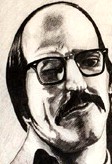 Jack Howard Potts
Murderer · USA · 1975
Jack Howard Potts was sentenced to death in March 1976 in two counties, Forsyth…
1 victim
Jack Howard Potts
Murderer · USA · 1975
Jack Howard Potts was sentenced to death in March 1976 in two counties, Forsyth…
1 victim
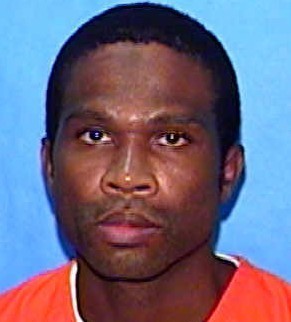 Chadwick Banks
Murderer · USA · 1992
Chadwick Banks was a Black male who was born on June 15, 1971. His aliases incl…
2 victims
Chadwick Banks
Murderer · USA · 1992
Chadwick Banks was a Black male who was born on June 15, 1971. His aliases incl…
2 victims
- Gender
- male
- Country
- USA
- Location
- Harris County, Texas, USA
- Date of birth
- September 22, 1980
- Age at first offence
- 20
- Characteristics
- robbery, rape, drugs, gang, drug addict
- Victim profile
- Matthew Carter
- Method of murder
- Shooting
- Date(s) of murder
- September 17, 2000
- Years active
- 2000
- Date of arrest
- —
- Status
-
Sentenced to death
Sentenced to death on June 25, 2002
Case identification
Perry Eugene Williams (TDCJ Number 999420)
Background
Williams was born in Houston. The family lived there until 1991, when they moved to Mississippi. Williams moved back to Houston in 2000 and stayed with Roberta’s sister, Dinah Clay Morgan.
Prior occupation
Williams had worked in Texas shipping/receiving, clerical, auto mechanic, and laborer roles.
Prior prison record
Williams had no prior prison record listed as N/A.
The offence
The offense occurred during the middle of a crime spree in Houston, Texas.
Crime spree overview
On September 9, 2000, Williams drove in his car with a female friend, Kinita Starr Butler, who had a handgun. While driving past, Williams saw Lolita Cherry and Nicole Green walking down the street. Williams parked a short distance in front of them. Williams got out of his car, grabbed Cherry, placed the handgun to her head, and demanded her purse. After Butler searched through the purse and told Williams, "This bitch don't got no money," Williams turned Cherry around to face him and shot her in the breast. Williams then jumped into his car and drove away.
Cherry was taken to the hospital, where the wound was determined to be "superficial." The bullet had entered and exited her breast and was not recovered. Cherry was permitted to leave the hospital the next morning.
During punishment phase testimony, Williams claimed his shooting was intended only to scare Cherry, not to hit her, and that he did not realize at the time that she had actually been shot.
On September 17, 2000, Williams, his cousin James Dunn, Jr., and Butler were driving around in Williams’s car and picked up Corey Phillips. Butler again brought her handgun, and the group proceeded to carry out four robberies that evening. Later, about an hour after the Carter murder, the group committed two more robberies.
Robbery of Anthony Gonzales (Kroger parking lot)
In a Kroger parking lot, Williams pointed the handgun at Anthony Gonzales’s face and said, "Give me your car." Because Gonzales’s car had a stick shift, Williams could not drive it and point the gun at Gonzales at the same time, so he ordered Gonzales to drive the car while he held the gun to Gonzales’s ribs. Williams took Gonzales’s wallet and yanked two chains from his neck. Williams also took Gonzales’s ATM card and demanded the PIN number. Williams kept Gonzales’s driver’s license so Gonzales would not report the robbery or so they needed "somebody" to "take care of it." Williams testified that this was done at Phillips’s instruction. The group drove to an ATM machine, and Williams tried to withdraw money using the ATM card, but the PIN number did not work. Williams testified Dunn urged him to try again, but Williams’s efforts were not successful.
Williams’s testimony at trial also included that he did not call the act involving Cherry “abducting” and instead referred to it as not being where no one can see you.
Robbery of Matthew Carter (Blockbuster parking lot) and the shooting in this case
Matthew Carter was the victim in this case. Carter had visited his girlfriend and fellow medical student, Maryam Saifi, to help her with a class project. Carter left Saifi’s home around 11:00 p.m. to return a rented video to Blockbuster. The group drove into the Blockbuster parking lot and saw Carter returning to his car after returning the videotape.
According to Williams’s testimony at trial, Dunn was supposed to take the handgun and rob Carter as part of an initiation into an affiliate of the Crips gang, but Dunn "froze up." Phillips handed Williams the gun and told him to "go get em." Williams testified that he "took the gun and took over." Williams forced Carter at gunpoint into the passenger seat of Carter’s car, and Williams got into the driver’s seat. They then followed Phillips, who was driving Williams’s vehicle.
Carter told Williams numerous times he had an ATM card that Williams could "max out" and pleaded with Williams not to hurt him. Williams shot Carter in the head from close range after parking the car. Williams’s confession described that Carter hit Williams and the gun fired. Forty dollars was taken out of Carter’s wallet and distributed evenly among the four members of the group.
Robbery of Tomas Kooh and Ricardo Rubio (gas station)
About an hour later, the group committed two more robberies. At a gas station, Tomas Kooh and Ricardo Rubio were present when Williams and his companions drove up. Phillips pointed the handgun at both men and demanded their wallets. Phillips took their wallets, after which Williams "burned off and got on the freeway."
Robbery connected to Franklin Jackson (motel room; shot fired)
In another robbery, Phillips approached Franklin Jackson, who had left the door of his motel room open after unloading his truck. As Jackson turned to close the door, Phillips pointed a gun and told him to get back. Jackson slammed the door as Phillips attempted to force his way in and a shot was fired as a result, causing a minor wound to Jackson’s hand. Williams was also the driver of the car in this robbery.
Victim information
- Matthew Carter (white male)
- Lolita Cherry (victim of a separate shooting; treated as an earlier incident)
- Nicole Green (was present when Cherry was targeted)
- Anthony Gonzales (white male)
- Tomas Kooh (gas station robbery victim)
- Ricardo Rubio (gas station robbery victim)
- Franklin Jackson (motel robbery victim; minor wound to hand)
- Dr. Carter’s family testimony related to Matthew Carter and included Saifi’s description
Investigation and custody
Incarceration in the “kid tank” (pretrial custody)
Upon arrest, Williams was incarcerated in the county jail’s "kid tank," the section occupied by inmates under age twenty-two.
During his time in the kid tank, Williams was disciplined four times for fighting, once for giving himself unauthorized tattoos, once for committing an assault and destroying county property, and once for stealing. Jail disciplinary reports contained statements made by Williams and other inmates.
Disciplinary incidents in jail
October 25, 2000 — fight with Charles King The jail officer determined Williams and Charles King were engaged in a mutual fight. Williams claimed King called him insulting names and took away his newspaper. Williams also claimed there was only "so much you can take." Williams said: "All I can say is I'm sorry for breaking the rules by fighting." Williams testified that King asked for the comics section of the newspaper and that Williams said he was reading it; Williams replied to King’s question with, "Fuck you." Williams stood up as if to hit King, and Williams testified he swung at King after King threatened to hit him back. Williams told King he did not care about fighting because he wanted to be moved out of the tank anyway.
March 12, 2001 — fight with Floyd Barnes Williams and inmate Floyd Barnes were caught fighting. The record contained no statements from either inmate about this incident.
April 22, 2001 — fight with Wiley Williams Williams told the disciplinary authority that they started fighting when Wiley Williams insulted appellant’s neighborhood. Williams claimed Wiley Williams threw the first punch and Williams was only defending himself. Williams concluded: "I know I was wrong for fighting but I had to defend myself. I ask you to understand where I am coming from." Wiley Williams said he was sitting in a group engaging in friendly conversation when Williams "took the conversation to a whole different level" and "continuously tried to fight" him. Wiley Williams said he did not want to fight, but Williams kept advancing toward him. Wiley Williams concluded by stating: "I feel this inmate had no reason to put his hands on me and I want to press charges."
June 17, 2001 — tattooing equipment Jail authorities discovered tattooing equipment and that Williams had recently given himself tattoos. In a written statement, Williams said: "I'll like to start by saying I am sorry for disobeying county rules. But I felt I was paying my cousin respect by getting his name tattooed on my arm since he passed away. I know it was wrong but all I can say once again I am sorry. But I didn't mean to cause so much trouble."
June 23, 2001 — fight involving multiple inmates Williams engaged in a fight involving inmates David Bradford, Willie Jones, Hari Brown, and Quentin Rubin. Williams claimed he was not fighting but "was trying to break it up." Appellant contested this allegation and was found guilty.
August 4, 2001 — tearing Curtis Vandver’s shirt Williams walked up to inmate Curtis Vandver and grabbed and tore Vandver’s shirt. Vandver appeared afraid and said Williams did this for no reason at all. Williams wrote: "I know it was wrong but all I can say is I was being a kid. I don't need to get into anymore trouble but I did so I don't know what else to say but I'm sorry for my childish actions. Please forgive me and give me a second chance."
August 12, 2001 — stealing from another inmate Williams was caught stealing property from another inmate. Williams indicated other inmates were involved but he did not want the whole tank to get in trouble and asked for forgiveness.
Letters mentioning gang affiliation
While incarcerated, Williams wrote two letters to Butler. One letter was dated February 11, 2001; the other letter was not dated. Both contained comments at the end suggesting gang affiliation, including: "crip forever," "crip for life," and "blue over gray all day every day." During punishment phase testimony, Williams said he responded to similar statements in Butler’s letters and characterized the actions as "a youngster mistake."
Transfer to adult tank
In January of 2002, Williams was moved to the adult tank. During punishment phase testimony in June 2002, a deputy sheriff said problems in the kid tanks were not unusual and that Williams had not been a problem since he was placed in the adult tank.
Steve Martin testified as an expert on prisons about the environment of a maximum security prison, where Williams would stay if sentenced to life imprisonment. Martin commented on Williams’s jail disciplinary record and testified that relatively mild punishments suggested the infractions were not serious. Martin testified he expected to see minor fights more often in a tank of youthful offenders than a tank of older offenders. On cross-examination, Martin acknowledged that there are gangs, violence, and drugs in prison.
Trial
Proceedings and courts
Williams’s direct appeal was automatic. The case reached the Court of Criminal Appeals of Texas. The opinion was delivered by Keller, P.J., with judges Womack, Keasler, Hervey, Holcomb, and Cochran, JJ. joining. Meyers, J. filed a dissenting opinion. Price, J. filed a concurring opinion. Johnson, J. filed a concurring and dissenting opinion. The appellate case included eleven points of error raised by Williams.
Conviction
In June 2002, Williams was convicted of capital murder and sentenced to death.
Punishment phase evidence
Mitigating evidence regarding changes in character
Family testimony and background
Williams’s mother, Roberta Clay Williams, testified about Williams’s childhood and background events, about what a good person his father was, and about general background on other family members. She explained Williams was born in Houston and that the family moved to Mississippi in 1991. She also testified that after Williams returned to Houston in 2000, he stayed with Dinah Clay Morgan.
Dinah’s husband, Clifton Morgan, testified that Williams was "respectful" and "not violent." Sandra Miller, a friend, testified to Williams’s "respectful" nature. Dinah later testified that Williams began to change and started hanging around the "wrong crowd." Williams’s sister, Detra Clay, testified Williams started drinking a lot and smoking marijuana, and she saw him pop a pill once. She stated that when he came to her home, he threw up "constantly" and "everywhere."
Williams, during his own testimony, said his reasons for disregarding advice from family to stay out of trouble were "[m]e being saying I was grown and drug abuse and hanging around with the wrong crowd." Williams claimed he used "PCP laced with marijuana."
When asked whether he was responsible for his actions, Roberta agreed he was, but agreed that "hanging with the wrong crowd" mattered "[b]ecause he is not like this."
Chaplain testimony
After Williams’s incarceration, a jail chaplain was referred to Williams by Williams’s cousin Dunn, who was concerned about Williams’s spiritual condition. The chaplain testified he was pleasantly surprised to find Williams "broken" and "repentant" and that Williams had "made his peace with God." The chaplain believed he had found "a real change" in Williams’s life, but on cross-examination conceded he did not know what Williams’s life was like before meeting him.
Testimony about following prison rules
During punishment phase testimony, defense counsel asked whether, if Williams received a life sentence, he would follow prison rules. Williams responded affirmatively. He also responded he would not be a problem for fellow inmates or prison staff.
Williams’s testimony seeking to convey acceptance of responsibility
During direct examination in the punishment phase, Williams made statements indicating acceptance of responsibility. When asked whether the drugs he used were at fault for what happened, Williams replied: "No sir." Asked, "Whose fault is it?" he responded: "It's mine." Asked about Carter’s death, Williams explained:
"It wasn't meant to or his fault that he died, it was mine. It was a bunch of things that was going on that I cannot explain. Don't know how to explain them. *** Is not that I won't explain, it's just the night everything happened we had been smoking PCP laced with marijuana. That's no excuse for what I did. I didn't intentionally kill Matthew Carter."
Williams denied intentionally killing Carter. Defense counsel questioned Williams about actions he did intend that night, including participating in the robbery, holding the gun, and cocking the gun. Williams denied loading the gun, claiming Phillips had done so, and he stated he did not know the gun was loaded until it fired.
Asked whether he knew a bullet was in the gun's chamber when Cherry was shot the week before, Williams answered, "Not necessarily speaking." Asked how the shot was fired, Williams said:
"In the process of him getting out of the car he walked around the car, I'm trying to see where he is coming from. I had, I had the gun, and something happened. I don't know what happened. Something physical happened and I tensed up and I pulled the trigger."
Asked, "Who was responsible for what happened to Matthew Carter?" Williams replied: "I am." Asked about what he had to say to his mother, Williams answered: "Really ain't too much I can say. Only thing I can say is I'm sorry." Asked what he had to say to the victim’s family, Williams responded: "Only thing I can say is I'm sorry for the pain I caused in your heart by taking your son's life."
Cross-examination about acceptance of responsibility and dominance
During cross-examination, the prosecutor questioned whether Williams was truly accepting responsibility:
Q. What we have here today right now is you sitting in front of this jury saying it's my fault, right?
A. Yes, ma'am.
Q. It's my responsibility, right?
Q. I accept your verdict, right?
Q. Okay. But in reality that's not what you're saying, is it Mr. Williams?
A. That's what I'm saying.
Q. What you keep saying is Corey told me to do this. Corey told me to do this.
A. May I speak freely?
Q. Just answer my question. Are you telling me - have we not heard you say Corey told you to do it, right?
Q. So Corey is the big bad Corey that's in charge of this whole reign of terror, shall we say, right?
A. Technically speaking, yes.
The prosecutor later elicited that Dunn was supposed to commit a robbery to become part of the Crips gang. The prosecutor asked:
"So Corey is here," the prosecutor said, "and in order to get with the gang you do it. James don't want to do it. Instead of putting up with the tomfoolery, give me the gun, I'll take care of business?"
Williams responded: "Technically speaking."
The prosecutor asked whether Phillips was the leader. Williams responded, "[N]ot to my recollection. It's been so long I don't remember. I don't remember the biggest part of this whole situation."
On Gonzales robbery abducting question, the prosecutor asked whether the group abducted Gonzales during the first robbery incident on September 17, 2000, and Williams answered, "Yes, ma'am. I don't call it abducting." When asked, "What would you like to call it?" Williams responded, "Not being where no one can see you."
The prosecutor pressed, "So then in fact Corey is following you?" and Williams answered, "At this point in time, yes." Asked whether he was calling the shots, Williams answered, "I don't put it like that." Asked whether he directed Anthony where to go, Williams answered, "Technically speaking, yes."
Regarding ATM withdrawal, the prosecutor questioned Williams about his role. Williams explained withdrawing money was Phillips’s idea even though Williams obtained the PIN number. After two unsuccessful attempts, Williams testified Dunn told him to try one more time. When asked about asking Anthony for the PIN, Williams answered: "Technically speaking, yes."
Defense redirect and follow-up questions
Defense counsel asked about the inconsistency of Williams’s “fault” statements:
Q. I mean, you took the witness stand here today, you said it was your fault, wasn't Corey Phillip's [sic] fault, then you spent the whole cross telling us it was Corey Phillips. * * *
A. I'm not saying it's anyone's fault.
Q. Sure you are. You said it's my fault.
A. It is my fault.
Q. No, you didn't say that. You spent the last 30 minutes telling these people it's Corey Phillip's [sic] fault. I just want to know, you know, if Corey Phillips tells you to jump off a bridge, you jumping off a bridge?
A. Not necessarily, no. * * *
Q. Why did you get up and say it's your fault, turned around and say it's not your fault?
A. I didn't say.
Q. Yes, you did.
A. I didn't say - I didn't say it wasn't my fault. What I said was - I took responsibility for taking the man's life, shooting Lolita Cherry, if that's how you pronounce the name, if I am not pronouncing it right. I take responsibility for the biggest things that changed my life and changed the Carters' lives forever. * * *
Q. What do you mean you're talking technically speaking? What does that mean, technically speaking? What does that mean?
A. That means yes just in a stronger way to the way I put it.
Q. Okay. Well, you know, can you see how that technically speaking does not sound right?
A. I just -
Q. Can you just see how that doesn't sound right?
A. Yes, sir.
Defense counsel also questioned Williams about being nervous and testifying before:
Q. You never testified before, have you?
A. No sir.
Defense counsel asked whether Williams could exercise free will rather than march along. Williams said, "I don't know how to answer that question." When asked whether he could say no, Williams answered, "Yes, sir." When asked if Corey Phillips tells him to do something he does not refuse, Williams answered, "Yes, sir."
State’s victim-impact and victim-character evidence
Guilt phase
Through Saifi, the State introduced evidence about Carter’s personal life. Saifi testified they met as summer camp counselors and became involved in a serious dating relationship. After Carter graduated from college, he chose medical school at Baylor College of Medicine because Saifi was already attending there. Saifi also testified Carter’s father was chairman of the Neurology Department at Southwestern Medical School and his mother was a social worker. This testimony was admitted without objection.
Claire Bassett, Vice President for Public Affairs at Baylor College of Medicine, testified she knew Carter as "because he was one of our top ten students." Defense counsel objected. At a bench conference, the trial judge sustained the objection. No instruction to disregard was requested or given. Bassett then testified Carter was one of her medical students and identified his picture. Defense counsel objected to Bassett identifying the picture, but the objection was overruled.
Punishment phase
After the defense rested, the State called three witnesses to give victim-related testimony.
Bassett testified that the medical school decided to permit students to delay taking exams because many medical students were upset by Carter’s death and that psychiatric faculty were available for counseling if needed.
Saifi testified she lost her best friend with Carter’s death and that the loss changed her life daily. Saifi stated Carter’s death "really destroyed the future that Matt and I had planned for each other." She explained plans to be married by the end of his first year in medical school and that Carter’s death destroyed their plans and dreams, including:
"So, I lost you know, my husband that I would spend the rest of my life with and, uhm, the family we had dreamed about. We already discussed, apparently, how we wanted to raise our family, uhm, where we'd live so we'd be close to his family, close to my family. Uhm, they were definite plans that were interrupted and dreams that were destroyed."
Saifi also explained her medical school position became jeopardized; she took time off and received counseling.
Carter’s father, Dr. Gregory Carter, testified. Dr. Carter described driving from Dallas to Houston the evening they learned of their son’s murder and described it as a "painful drive" with "a certain amount of disbelief . . . that this could be real, this could really happen." Dr. Carter described himself, his wife, their other son, and medical school students as "very upset." Asked about the impact, Dr. Carter said it was "devastating." He lost a "considerable amount of work" and had "difficulty keeping up subsequent to that." Dr. Carter testified his wife had been making progress on her career before Carter’s death, but afterward she was unable to work full time and became "markedly disabled with depression." He also testified that she developed "an attack of multiple sclerosis." He said grief was mitigated somewhat by their other son’s new marriage, but that on Carter’s birthday memories returned. Dr. Carter said his absence was a "major rip or hole in the fabric" of the family, and the victim’s brother felt "like a hunk had been taken out of his heart." Dr. Carter described Carter as:
"You know, you raise a child up to be right with God, right with your family and right with their community, and Matthew was a shining example of all that. We were so proud of him and so proud of all that he had done and all that he had accomplished and what kind of person he was."
Dr. Carter testified memories were brought back again in August 2001 when his father died of natural causes and again on September 18 when they saw on the news families suffering sudden and violent losses during the September 11, 2001 terrorist attacks.
During defense counsel’s attempt to introduce a "bystander's bill," defense counsel contended Dr. Carter had to stop "while he was crying several times" talking about his wife and son. One prosecutor said:
"Doctor Carter, if he paused at all was very brief in nature. There were a couple of times I guess I would refer to it as his voice broke but he did not sob."
The trial judge did not comment on these contrasting views.
Incarceration-related and other testimony at punishment
Chaplain and prison discipline
The chaplain believed Williams had "a real change" in his life. Steve Martin testified about the prison environment and commented that Williams’s jail punishments were relatively mild and that he had not been a problem in the adult tank after transfer in January of 2002.
Appeals
Williams raised eleven points of error in his direct appeal to the Court of Criminal Appeals of Texas. The court affirmed the conviction and sentence and found no reversible error.
Points of error addressed
- Sufficiency of evidence for jury’s future dangerousness determination: overruled.
- Factual sufficiency review of future dangerousness special issue: overruled.
- Indictment failure to allege special issues conforming to future dangerousness: overruled.
- Waiver of mitigation special issue and victim-impact/character evidence points of error one through three: the court held the trial court erred in refusing to allow the mitigation waiver, but held the error harmless; it found point of error two did not merit relief; it found point of error three did not merit relief because no limiting instruction request was made at the time evidence was admitted.
- Execution-impact testimony: overruled.
- Residual doubt instruction: overruled.
- Exclusion of hearsay statement from accomplice Dunn: overruled.
- Refusal to allow Williams to argue last on mitigation: overruled.
- Overruling objections to prosecutor’s punishment phase argument regarding parole eligibility: overruled.
Parole instruction argument (verbatim proceedings)
In point of error ten, the court addressed allegations that prosecutor argued the jury could disregard parole eligibility instruction. The appellate record included the prosecutor’s and defense counsel’s objections and court rulings:
[PROSECUTOR]: As the defendant sits in the courtroom this day you're asked to answer this question. Do you find from the evidence beyond a reasonable doubt there's a probability that the defendant would commit criminal acts of violence -
[DEFENSE COUNSEL]: Excuse me, Mr. [prosecutor]. I object. He asks the jury to read the charge and isolate it and ignore the parole provisions. THE COURT: Denied.
[PROSECUTOR]: The parole provision, because you're not supposed to consider parole in reaching your decision, you're asked to answer this question today. Now what I suggest [defense counsel] is saying is he wants you to put into this question that he is going to serve 40 years day-for-day. [DEFENSE COUNSEL]: Judge, that's the law. I object to him striking the defendant over counsel's shoulder. THE COURT: Overruled.
[PROSECUTOR]: And I ask don't rewrite this question. Don't let him rewrite the question. As the defendant sits in this courtroom this day, that's where we are. This question is before you. Today is the day that you have to answer it, and you have to answer it today, this question. [DEFENSE COUNSEL]: Judge, may I have a running objection to the misrepresentation of the law that counsel is telling the jury? THE COURT: Yes, sir. [DEFENSE COUNSEL]: Thank you. [PROSECUTOR]: Will that running objection be overruled? THE COURT: Yes. [PROSECUTOR]: You're to decide is the defendant - is there a probability that the defendant beyond a reasonable doubt would be a continuing threat to commit criminal acts of violence, a continuing threat to society, and that's the question. Not put into it after he gets out after 40 years, if he gets out after 40 years. You cannot put in he got a life sentence into the question, because in the charge it says, the very first part, it says the mandatory punishment for the offense of capital murder of which you have found the defendant guilty is death or confinement in the Texas Department of Corrections for life.
Defense counsel responded in closing:
On page 4, the Judge tells you about parole law. This is the argument we have and we'll continue to have, I imagine, as long as we're both doing this. Let me tell you why I think what I'm saying is something that you can rely on. On page 4 the Judge tells you that if you sentence someone or to get a life sentence in a capital murder case they're going to serve 40 calendar years without consideration of any good time. That means day-for-day. Now, reality tells us that if Mr. Williams leaves here, goes to a prison unit in the Texas Department of Corrections with a capital murder life sentence that's where he is going to be for the next 40 years. That's a fact. Now they, [the prosecutor], does not want that to be a fact. He wants to argue I'm grafting something on the statute that is not there, but you see it. It's the Judge's words what the law is. So when you're looking at Special Issue No. 1 you got to consider the society in which Perry Williams is going to be for the next 40 years.
Other details
Timeline of key dated events (from the case record)
- 09/07/2000 — Williams fatally shot an adult white male victim in Houston, Texas.
- 09/09/2000 — Williams and Butler targeted Lolita Cherry; Williams shot her in the breast.
- 10/25/2000 — Williams was disciplined for fighting after an incident involving Charles King.
- 03/12/2001 — Williams and inmate Floyd Barnes were caught fighting.
- 04/22/2001 — Williams was disciplined for fighting with Wiley Williams.
- 06/17/2001 — Jail authorities discovered tattooing equipment and Williams had given himself tattoos.
- 06/23/2001 — Williams was involved in a fight involving David Bradford, Willie Jones, Hari Brown, and Quentin Rubin; he contested the allegation.
- 08/04/2001 — Williams tore Curtis Vandver’s shirt.
- 08/12/2001 — Williams was caught stealing property from another inmate.
- 02/11/2001 — Williams wrote a letter to Butler containing gang-affiliation comments including "crip forever," "crip for life," and "blue over gray all day every day."
- 01/2002 — Williams was moved to the adult tank.
- 06/25/2002 — Williams’s sentencing date is reflected in the case summary.
- 06/11/2008 — The appellate opinion was delivered and published.
Education level and age at relevant points
- Date Received: 06/25/2002; Age when received: 21; Education level: 12.
- Date of Offense: 09/07/2000; Age at offense: 19.
Physical description
- Height: 5 ft 11 in
- Weight: 135
- Hair color: black
- Eye color: brown
- Race: Harris (as listed), Gender: male
Additional participants named in the incident
- Kinita Starr Butler (female friend; co-defendant referenced through the letters and group robbery episodes)
- James Dunn, Jr. (cousin; co-defendant)
- Corey Phillips (picked up the group; participant in robberies and the Carter sequence)
- Maryam Saifi (girlfriend and fellow medical student of Matthew Carter; testified)
- Lolita Cherry (targeted and shot)
- Nicole Green (present during Cherry’s targeting)
- Anthony Gonzales (robbery victim)
- Matthew Carter (robbery victim and case victim)
- Franklin Jackson (motel robbery victim)
- Dr. Gregory Carter (Carter’s father; testified)
- Roberta Clay Williams (mother)
- Dinah Clay Morgan (Dinah’s testimony and related background)
- Clifton Morgan (Dinah’s husband)
- Sandra Miller (friend; testified)
- Detra Clay (sister; testified)
- Curtis Vandver (shirt-torn incident)
- Charles King (first fight incident)
- Floyd Barnes (second fight incident)
- Wiley Williams (fourth? fight with neighborhood insult)
- David Bradford, Willie Jones, Hari Brown, Quentin Rubin (fight participants)
- Steve Martin (prisons expert witness)
- Keller, P.J.; Womack, Keasler, Hervey, Holcomb, Cochran, Meyers, Price, Johnson (judges)
Dates and identification in the appellate caption
The appellate matter appeared as "IN THE COURT OF CRIMINAL APPEALS OF TEXAS NO. AP-74,391 PERRY EUGENE WILLIAMS, Apellant v. THE STATE OF TEXAS" and arose from direct appeal from Harris County.
Spotted an error, or have more information about this case?