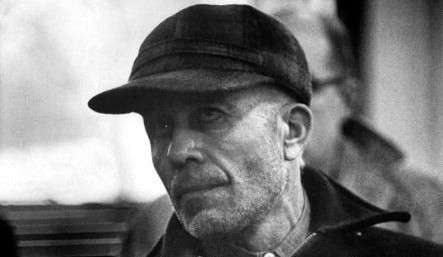
Edward Gein
Homicide Joseph Francis Bryan
Homicide · USA · 1964
Joseph Francis Bryan was born in Camden, New Jersey. He first ran afoul of the…
3 victims
Joseph Francis Bryan
Homicide · USA · 1964
Joseph Francis Bryan was born in Camden, New Jersey. He first ran afoul of the…
3 victims
 William Heirens
Homicide · USA · 1945
William George Heirens (born November 15, 1928 in Evanston, Illinois) was an Am…
3 victims
William Heirens
Homicide · USA · 1945
William George Heirens (born November 15, 1928 in Evanston, Illinois) was an Am…
3 victims
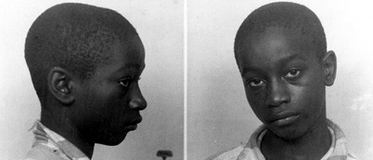 George Stinney
Homicide · USA · 1944
George Junius Stinney Jr. was executed by electrocution on June 16, 1944. He wa…
2 victims
George Stinney
Homicide · USA · 1944
George Junius Stinney Jr. was executed by electrocution on June 16, 1944. He wa…
2 victims
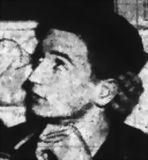 Clifford Fortner
Homicide · USA · 1959
Clifford Fortner was a 15-year-old boy from the neighborhood. Lorna Lax was a 1…
1 victim
Clifford Fortner
Homicide · USA · 1959
Clifford Fortner was a 15-year-old boy from the neighborhood. Lorna Lax was a 1…
1 victim
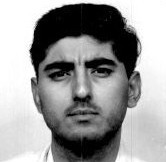 Eliseo Hernandez Moreno
Spree killer · USA · 1983
Eliseo Hernandez Moreno was executed by lethal injection in Texas on March 4, 1…
6 victims
Eliseo Hernandez Moreno
Spree killer · USA · 1983
Eliseo Hernandez Moreno was executed by lethal injection in Texas on March 4, 1…
6 victims
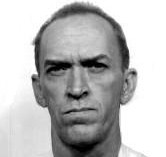 Ernest Orville Baldree
Murderer · USA · 1986
Ernest Orville Baldree was executed by lethal injection in Texas on April 29, 1…
2 victims
Ernest Orville Baldree
Murderer · USA · 1986
Ernest Orville Baldree was executed by lethal injection in Texas on April 29, 1…
2 victims
 Sean Paul Hanify
Murderer ( claims to be a serial killer) · USA · 1989
Sean Paul Hanify described himself as a serial killer. He was convicted of firs…
8 victims
Sean Paul Hanify
Murderer ( claims to be a serial killer) · USA · 1989
Sean Paul Hanify described himself as a serial killer. He was convicted of firs…
8 victims
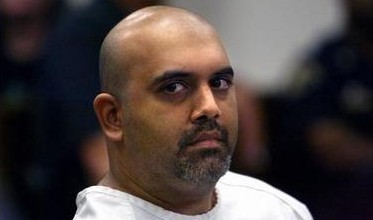 Naveed Afzal Haq
Murderer · USA · 2006
Name: Naveed Afzal Haq Naveed Afzal Haq was an American man of Pakistani descen…
1 victim
Naveed Afzal Haq
Murderer · USA · 2006
Name: Naveed Afzal Haq Naveed Afzal Haq was an American man of Pakistani descen…
1 victim
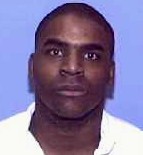 Quintin Phillippe Jones
Murderer · USA · 1999
Name: Quintin Phillippe Jones TDCJ number: 999379 Date of birth: 7/15/1979 Race…
1 victim
Quintin Phillippe Jones
Murderer · USA · 1999
Name: Quintin Phillippe Jones TDCJ number: 999379 Date of birth: 7/15/1979 Race…
1 victim
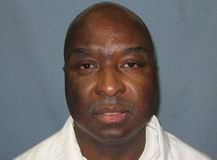 Holly Wood
Murderer · USA · 1993
Holly Wood (DOC# 00Z573) was sentenced to death in Alabama and was executed on…
1 victim
Holly Wood
Murderer · USA · 1993
Holly Wood (DOC# 00Z573) was sentenced to death in Alabama and was executed on…
1 victim
- Gender
- male
- Country
- USA
- Location
- Plainfield, Wisconsin, USA
- Date of birth
- August 27, 1906
- Age at first offence
- 48
- Characteristics
- necrophilia
- Victim profile
- Mary Hogan, 54 (tavern owner) / Bernice C. Worden, 58 (hardware store owner)
- Method of murder
- Shooting (.22-caliber rifle)
- Date(s) of murder
- December 8, 1954 / November 16, 1957
- Years active
- 1954–1957
- Date of arrest
- November 17, 1957
- Status
-
Died in custody
Sentenced to life imprisonment; found not guilty by reason of insanity and acquitted; transferred to mental hospital; died on July 26, 1984
Case record: Edward Gein
Status and outcome
Edward Gein was sentenced to life imprisonment in 1968. He was found not guilty by reason of insanity and acquitted, and he was transferred to mental hospital. He died on July 26, 1984.
Background
Edward Theodore “Ed” Gein was an American murderer and body snatcher. He lived in and committed crimes around his hometown of Plainfield, Wisconsin. Authorities discovered that Gein had exhumed corpses from local graveyards and fashioned trophies and keepsakes from their bones and skin.
Gein confessed to killing two women: tavern owner Mary Hogan in 1954 and a Plainfield hardware store owner, Bernice Worden, in 1957.
A judge, Robert H. Gollmar, wrote: “Due to prohibitive costs, Gein was tried for only one murder—that of Mrs. Worden.”
Gein’s real-life case influenced the creation of several fictional serial killers, including Leatherface from The Texas Chainsaw Massacre, Norman Bates from Psycho, and Buffalo Bill from The Silence of the Lambs. Gein had fewer than three murders attributed and therefore did not meet the traditional definition of a serial killer.
Other details (early life and background)
Gein was born on August 27, 1906, and his death occurred on July 26, 1984. Childhood accounts described Gein as being born in La Crosse County, Wisconsin. His parents, George and Augusta Gein, were natives of Wisconsin. The family had two sons: Henry George Gein and his younger brother, Edward Theodore Gein.
Augusta Gein operated a small grocery store and eventually purchased a farm on the outskirts of the small town of Plainfield, Wisconsin, which became the Gein family’s permanent home. Augusta moved to that location to prevent outsiders from influencing her sons.
Gein left the premises only to go to school and spent most of his time doing chores on the farm. Augusta Gein preached to her boys the innate immorality of the world, the evil of drinking, and the belief that all women (herself excluded) were prostitutes and instruments of the devil. Each afternoon she read to her boys from the Bible, usually selecting graphic verses from the Old Testament dealing with death, murder, and divine retribution.
Gein was described as having an effeminate demeanor and became a target for bullies. Classmates and teachers recalled off-putting mannerisms, including seemingly random laughter as if he were laughing at his own personal jokes. His mother scolded him whenever he tried to make friends. Despite poor social development, Gein did fairly well in school, particularly in reading.
Gein tried to make his mother happy, but she was rarely pleased with him. She often abused him, believing that they were destined to become failures like their father. During their teens and through their early adulthood, the boys remained detached from people outside of their farmstead and had only each other for company.
Deaths of family members
After George Gein died of a heart attack in 1940, Henry and Ed Gein began working at odd jobs to help with expenses. Residents of the community considered both brothers reliable and honest. They worked as handymen; Ed Gein frequently babysat for neighbors. He enjoyed babysitting and appeared to relate more easily to children than adults.
Henry Gein began to reject his mother’s view of the world and worried about Ed Gein’s attachment to her. Henry spoke ill of their mother around his brother.
On May 16, 1944, a brush fire burned close to the farm. The Gein brothers went out to extinguish it. Gein was reportedly separated from his brother, and as night fell, Ed Gein lost sight of Henry. When the fire was extinguished, Ed Gein reported to police that Henry was missing. A search party was organized, and Gein led them to Henry, who lay dead on the ground. The police had concerns about the circumstances under which Henry’s body was discovered: the ground where Henry lay was untouched by fire and Henry had bruises on his head. Despite this, police dismissed the possibility of foul play, and the county coroner listed asphyxiation as the cause of death. Some investigators suspected Ed Gein killed Henry, but no charges were filed.
After Henry’s death, Gein lived alone with his mother. Augusta Gein died on December 29, 1945, following a series of strokes. Gein remained on the farm with his earnings from odd jobs. He boarded up rooms used by his mother, including the upstairs, downstairs parlor, and living room, leaving them untouched. He lived in a small room next to the kitchen.
Gein became interested in reading death-cult magazines and adventure stories.
Investigation and arrest
On November 16, 1957, Bernice Worden, a Plainfield hardware store owner, disappeared. Her son told investigators that Gein had been in the store the evening before the disappearance and had said he would return the following morning for a gallon of anti-freeze. A sales slip for a gallon of anti-freeze was the last receipt written by Worden on the morning she disappeared.
Upon searching Gein’s property, investigators discovered Worden’s decapitated body in a shed. She was hung upside down by ropes at her wrists, with a crossbar at her ankles. The torso was “dressed out” like that of a deer. She had been shot with a .22-caliber rifle, and mutilations were performed after death.
Authorities found multiple items in the house, including:
- Four noses
- Whole human bones and fragments
- Nine masks of human skin
- Bowls made from human skulls
- Ten female heads with the tops sawed off
- Human skin covering several chair seats
- Mary Hogan’s head in a paper bag
- Bernice Worden’s head in a burlap sack
- Nine vulvas in a shoe box
- Skulls on his bedposts
- Organs in the refrigerator
- A pair of lips on a draw string for a windowshade
- A belt made from human female nipples
- A lampshade made from the skin from a human face
These artifacts were photographed at the crime lab and then were properly destroyed.
When questioned, Gein told investigators that between 1947 and 1952 he made as many as 40 nocturnal visits to three local graveyards to exhume recently buried bodies while he was in a “daze-like” state. Gein said that on about 30 of those visits he came out of the daze while in the cemetery, left the grave in good order, and returned home empty handed. On other occasions, he dug up the graves of recently buried middle-aged women he thought resembled his mother and took the bodies home, where he tanned their skins to make paraphernalia.
Gein admitted robbing nine graves, leading investigators to their locations. Because authorities were uncertain as to whether Gein was capable of single-handedly digging up a grave in a single evening, authorities exhumed two of the graves and found them empty, corroborating Gein’s confession.
Shortly after his mother’s death, Gein decided he wanted a sex change and began to create a “woman suit” so he could pretend to be a female. Gein’s practice of donning the tanned skins of women was described as an “insane transvestite ritual.” Gein denied having sex with the bodies he exhumed, explaining: “They smelled too bad.”
During interrogation, Gein admitted the shooting death of Mary Hogan, a tavern operator missing since 1954.
A 16-year-old youth whose parents were friends of Gein and who attended ball games and movies with Gein reported awareness of shrunken heads that Gein had described as relics from the Philippines sent by a cousin who had served in World War II. Police determined these were human facial skins peeled from cadavers and used as masks by Gein.
Waushara County sheriff Art Schley allegedly physically assaulted Gein during questioning by banging Gein’s head and face into a brick wall, causing Gein’s initial confession to be ruled inadmissible.
Schley died of a heart attack in December 1968 at age 43, only a month after testifying at Gein’s trial. Many who knew Schley said he was traumatized by the horror of Gein’s crimes and feared having to testify, especially about assaulting Gein, which led to his early death. One of Schley’s friends said: “He was a victim of Ed Gein as surely as if he had butchered him.”
Confessions and other reported investigations
Gein admitted killing Bernice Worden, and police described Worden as shot in the head with a .22-calibre rifle. Gein also admitted transporting Worden back to the farmhouse after the murder.
Later, Gein confessed to the murder of Mary Hogan, a Plainfield innkeeper who had vanished in mysterious circumstances. Gein said most of the body parts had been taken from corpses of women he had dug up in the local cemetery. Detectives were unsure if Gein was telling the truth and thought he may have been responsible for four other murders in central Wisconsin dating back to 1947.
Eight-year-old Georgia Weckler had gone missing on her way home from school. Evelyn Hartley, 15, had been abducted while babysitting. Two deer hunters, Victor Travis and Ray Burgess, vanished in December 1952. No trace was ever found of the four missing people, and body parts in Gein’s house came from female adults, including Mrs. Hogan.
Police exhumed bodies of eight women at Plainfield cemetery and discovered they had all been mutilated. Body parts, including faces, breasts, genitalia, and strips of skin, had been removed after death. Police described that someone had placed the bodies back in coffins and replaced the earth to avoid suspicion. Gein and a trusted friend identified only as Gus were said to have made these nocturnal raids only hours after these women’s funerals after reading their obituaries in the local newspaper. One description stated that Gein only began killing when Gus was moved to an old people’s home and Gein was unable to carry out nocturnal exertions alone.
Gein told detectives, in a conversational manner, how he would wear the human skin shirt around the house at night and often placed female genitalia over his naked groin as if he were a woman. Gein was described as being almost certainly a virgin and being obsessed by women.
Psychiatrists later concluded Gein was clinically insane.
Trial
On November 21, 1957, Gein was arraigned on one count of first degree murder in Waushara County Court, where he entered a plea of not guilty by reason of insanity.
Gein was found mentally incompetent and thus unfit to stand trial. He was sent to the Central State Hospital for the Criminally Insane (now the Dodge Correctional Institution), a maximum-security facility in Waupun, Wisconsin. He was later transferred to the Mendota State Hospital in Madison, Wisconsin.
In 1968, Gein’s doctors determined he was sane enough to stand trial.
The trial began on November 14, 1968 and lasted one week. Judge Robert H. Gollmar found Gein guilty of first-degree murder. Because he was found to be legally insane, Gein spent the rest of his life in a mental hospital.
Sentencing and legal status
Gein was sentenced to life imprisonment in 1968, and he spent the rest of his life in a mental hospital.
The status included that he was found not guilty by reason of insanity and acquitted.
Aftermath and related events
On March 20, 1958, while Gein was in detention, his house burned to the ground. Arson was suspected. When Gein learned of the incident, he shrugged and said: “Just as well.”
In 1958, Gein’s car, which he had used to haul the bodies of his victims, was sold at a public auction for $760 ($5,718 when accounting for inflation) to carnival sideshow operator Bunny Gibbons. Gibbons later charged carnival goers 25¢ admission to see it.
Death
On July 26, 1984, Gein died of respiratory and heart failure due to cancer in Goodland Hall at the Mendota Mental Health Institute.
His grave site in the Plainfield cemetery was frequently vandalized over the years; souvenir seekers chipped off pieces of his gravestone before the bulk of it was stolen in 2000. The gravestone was recovered in June 2001 near Seattle and was now in a museum in Waushara County.
Impact in popular culture
Gein’s story had a lasting impact on popular culture, appearing in movies, music, and literature. Movies included Deranged (1974), In the Light of the Moon (2000; later retitled Ed Gein for the U.S. market), and Ed Gein: The Butcher of Plainfield (2007).
A biographical musical titled “Ed Gein: the Musical” premiered on January 2, 2010 in Menasha, Wisconsin.
Timeline
- 1940 — George Gein died of a heart attack
- May 16, 1944 — A brush fire burned close to the farm; Henry George Gein was later found dead on the ground with bruises on his head
- December 29, 1945 — Augusta Gein died following a series of strokes
- 1954 — Mary Hogan was murdered; she went missing in 1954
- 1957 — Plainfield hardware store owner Bernice Worden disappeared and was later found decapitated
- November 21, 1957 — Gein was arraigned on one count of first degree murder in Waushara County Court and entered a plea of not guilty by reason of insanity
- November 14, 1968 — The trial began
- 1968 — Gein was found sane enough to stand trial; he was tried and found guilty of first-degree murder
- December 1968 — Sheriff Art Schley died of a heart attack at age 43
- March 20, 1958 — While Gein was in detention, his house burned to the ground; arson was suspected
- July 26, 1984 — Gein died of respiratory and heart failure due to cancer in Goodland Hall at the Mendota Mental Health Institute
- 2000 — The bulk of Gein’s gravestone was stolen
- June 2001 — The gravestone was recovered near Seattle and was placed in a museum in Waushara County
- January 2, 2010 — “Ed Gein: the Musical” premiered in Menasha, Wisconsin

Spotted an error, or have more information about this case?