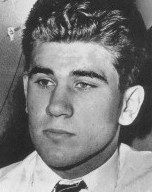
William Heirens
Homicide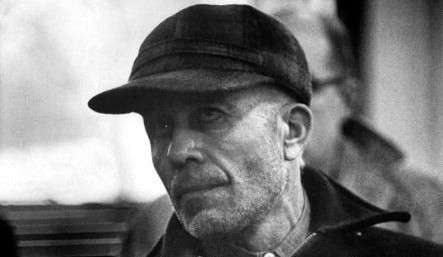 Edward Gein
Homicide · USA · 1954
Edward Gein was sentenced to life imprisonment in 1968. He was found not guilty…
2 victims
Edward Gein
Homicide · USA · 1954
Edward Gein was sentenced to life imprisonment in 1968. He was found not guilty…
2 victims
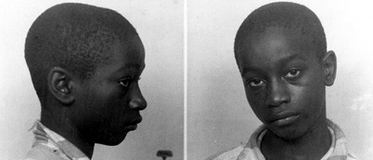 George Stinney
Homicide · USA · 1944
George Junius Stinney Jr. was executed by electrocution on June 16, 1944. He wa…
2 victims
George Stinney
Homicide · USA · 1944
George Junius Stinney Jr. was executed by electrocution on June 16, 1944. He wa…
2 victims
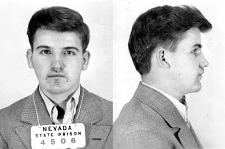 Floyd Loveless
Homicide · USA · 1942
Floyd Loveless was the person executed by asphyxiation-gas on September 29, 194…
1 victim
Floyd Loveless
Homicide · USA · 1942
Floyd Loveless was the person executed by asphyxiation-gas on September 29, 194…
1 victim
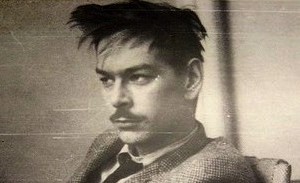 Lucien Carr
Homicide · USA · 1944
Lucien Carr (March 1, 1925 – January 28, 2005) was a key figure in the Beat gen…
1 victim
Lucien Carr
Homicide · USA · 1944
Lucien Carr (March 1, 1925 – January 28, 2005) was a key figure in the Beat gen…
1 victim
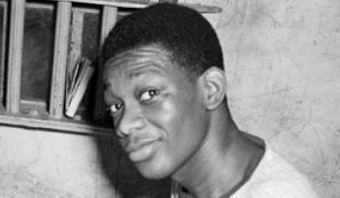 Willie Francis
Homicide · USA · 1944
Willie Francis (c. 1930 – May 9, 1947) was an African American sentenced to dea…
1 victim
Willie Francis
Homicide · USA · 1944
Willie Francis (c. 1930 – May 9, 1947) was an African American sentenced to dea…
1 victim
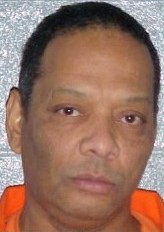 Bernard Smith
Murderer · USA · 1983
Bernard Smith was convicted in Superior Court (Yuma) of first-degree murder and…
1 victim
Bernard Smith
Murderer · USA · 1983
Bernard Smith was convicted in Superior Court (Yuma) of first-degree murder and…
1 victim
 Velaphi Ndlangamandla
Serial killer · South Africa · 1998
Velaphi Ndlangamandla, known as the “saloon killer”, was convicted in connectio…
19 victims
Velaphi Ndlangamandla
Serial killer · South Africa · 1998
Velaphi Ndlangamandla, known as the “saloon killer”, was convicted in connectio…
19 victims
 Johan Kotze
Murderer · South Africa · 2012
Johan Kotze was sentenced to life in prison on July 16, 2013. · Johan Kotze — c…
1 victim
Johan Kotze
Murderer · South Africa · 2012
Johan Kotze was sentenced to life in prison on July 16, 2013. · Johan Kotze — c…
1 victim
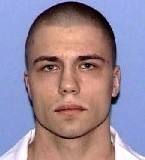 Clinton Lee Young
Murderer · USA
Clinton Lee Young (born July 19, 1983) was convicted of murdering two men in No…
2001 victims
Clinton Lee Young
Murderer · USA
Clinton Lee Young (born July 19, 1983) was convicted of murdering two men in No…
2001 victims
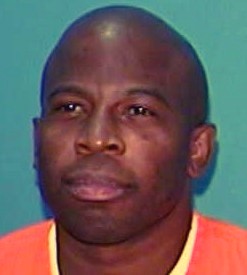 Rodney Tyrone Lowe
Murderer · USA · 1990
Rodney Tyrone Lowe was prosecuted in the Nineteenth Judicial Circuit, Indian Ri…
1 victim
Rodney Tyrone Lowe
Murderer · USA · 1990
Rodney Tyrone Lowe was prosecuted in the Nineteenth Judicial Circuit, Indian Ri…
1 victim
- Gender
- male
- Country
- USA
- Location
- Chicago, Illinois, USA
- Date of birth
- November 15, 1928
- Age at first offence
- 17
- Characteristics
- juvenile (17), kidnapping, rape, torture, dismemberment, escape attempt
- Victim profile
- Josephine Ross, 45 / Francis Brown, 34 / Suzanne Degnan, 6
- Method of murder
- St abbing with knife / Strangulation
- Date(s) of murder
- June 1945 - January 1946
- Years active
- 1945–1946
- Date of arrest
- June 26, 1946
- Status
-
Life imprisonment
Sentenced to life in prison on September 5, 1946
Case record: William Heirens
William George Heirens (born November 15, 1928 in Evanston, Illinois) was an American serial killer who confessed to three murders in 1946. Heirens was also called The Lipstick Killer due to a message scrawled in lipstick at a crime scene. He remained incarcerated at the Dixon Correctional Center minimum security prison in Dixon, Illinois (Inmate No. C-06103). Heirens recanted his confession and claimed he was a victim of coercive interrogation and police brutality.
Heirens grew up in Lincolnwood, a suburb of Chicago. At the age of 11, he claimed he had witnessed a couple making love. He told his mother, who then told him that all sex was dirty and would lead to diseases. While kissing a girlfriend, he burst into tears and vomited in the presence of the girl.
At 13 years old, Heirens was arrested for carrying a loaded gun. A subsequent search of the Heirens home discovered more weapons hidden in a refrigerator and in the loft. He admitted to a string of burglaries and was sent to the Gibault School for wayward boys for several months. He claimed that he mostly stole for fun and to release tension. Not long after his release, he was again arrested for burglary.
This time, he was sentenced to three years at St. Bede’s Academy, operated by Benedictine Monks. During his time at the school, Heirens stood out as an exceptional student. He was released when he was 16. Due to good test scores, he was enrolled at the University of Chicago. He resumed serial burglary even as he studied electrical engineering.
Heirens was first housed at Stateville Prison in Joliet, Illinois. He later learned several trades, including television and radio repair, and at one point had his own repair shop. On February 6, 1972, he became the first prisoner in Illinois history to earn a four year college degree, receiving a Bachelor of Arts (BA) degree. He helped other prisoners earn their General Educational Development (GED) degrees and helped with appeals as a “jailhouse lawyer.”
In 1975, he was transferred to the minimal security Vienna Correctional Center in Vienna, Illinois, and in 1998, upon his request, he was transferred to the Dixon Correctional Center minimum security prison in Dixon, Illinois. He resided in the Hospital Ward. He suffered from diabetes, which had swollen his legs and limited his eyesight, and he was confined to a wheelchair. He continued efforts to win clemency.
Timeline
- November 15, 1928 — William George Heirens was born in Evanston, Illinois.
- June 5, 1945 — Josephine Ross was found dead in her apartment.
- December 11, 1945 — Francis Brown was discovered stabbed to death in her apartment.
- January 7, 1946 — Suzanne Degnan was discovered missing from her bedroom.
- January 18, 1946 — Captain Timothy O’Connor took the ransom note to the FBI crime laboratory in Washington, D.C.
- June 26, 1946 — Heirens was arrested on attempted burglary charges after being seen breaking into an apartment.
- July 2, 1946 — Heirens was transferred to the Cook County Jail and placed in the infirmary to recover.
- July 14, 1946 — State’s Attorney William Tuohy met with Heirens’ lawyers Malachy and John Coghlan to discuss a possible plea bargain.
- July 18, 1946 — A fabricated “confession” story was printed under the title “The Heirens Story! How He Killed Suzanne Degnan and 2 Women.”
- July 30, 1946 — Heirens made his official confession after a date was agreed for that purpose.
- July 31, 1946 — Heirens positively identified the knife as his.
- August 7, 1946 — Heirens took full responsibility for the three murders.
- September 4, 1946 — Heirens admitted guilt on burglary and murder charges; that night, he tried to hang himself in his cell and was discovered before he died.
- September 5, 1946 — Chief Justice Harold G. Ward presided and Heirens was formally sentenced to three life terms; the sheriff asked Heirens whether Suzanne Degnan suffered and Heirens responded.
- February 6, 1972 — Heirens received a Bachelor of Arts (BA) degree.
- 1975 — Heirens was transferred to the minimal security Vienna Correctional Center in Vienna, Illinois.
- 1998 — Heirens requested transfer to the Dixon Correctional Center minimum security prison in Dixon, Illinois.
- 2002 — Lawrence C. Marshall, et al., filed a petition on Heirens’ behalf seeking clemency.
- July 26, 2007 — Heirens’ most recent parole hearing was held.
The offence
Josephine Ross
On June 5, 1945, Josephine Ross, 43 years old, was found dead in her apartment. She had been repeatedly stabbed, and her head was wrapped in a dress. She was presumed to have surprised an intruder, who then killed her. Dark hairs were found clutched in Ross’ hand, indicating she had struggled with the intruder before she was killed. No valuables were taken from the apartment.
Ross’ fiancé had an alibi, as did her former boyfriends and ex-husbands, and police had no other suspects. Police looked for a dark-complexioned man who was reported loitering at the apartment or running from the scene, but were unable to identify or locate him.
Francis Brown
On December 11, 1945, Francis Brown was discovered stabbed to death in her apartment after a cleaning woman heard a radio playing loudly and noted Brown’s door partly open. Brown was savagely stabbed. Authorities thought a burglar had been discovered or interrupted.
No valuables were taken. Someone had written a message in lipstick on the wall of Brown’s apartment: “For heavens [sic] sake catch me before I kill more I cannot control myself”.
Police found a bloody fingerprint smudge on the door jamb of the entrance door. There was also a possible eyewitness to the killer’s escape. An “ear-witness”, George Weinberg, heard gunshots at about 4 a.m. According to John Derick, the Night Clerk stationed in the lobby of the building, a nervous man of 35-40 years old and weighing approximately 140 pounds had got off the elevator, fumbled for the door to the street, and left.
Suzanne Degnan
On January 7, 1946, six-year-old Suzanne Degnan was discovered missing from her bedroom. After searching the home and not finding the girl, her family called police.
Police found a ladder outside the girl’s window and discovered a ransom note. The note read: “Get $20,000 ready & waite [sic] for word. Do not notify FBI or police. Bills in $5's and $10's.” On the reverse of the note was written: “Burn this for her safty [sic].”
A man repeatedly called the Degnan residence demanding the ransom but hung up before meaningful conversation could take place. Police questioned the Degnan family’s neighbors, but no one had seen anything unusual. An anonymous call suggested police look in the sewers near the Degnan home. Police did so and discovered the young girl’s head in a catch basin that was in an alley.
In the same alley, police discovered the girl’s right leg in another catch basin; her torso in a storm drain; and her left leg in another alley. Her arms were found in a sewer a month later. Searches uncovered a laundry tub in a nearby apartment building basement across where her head was found that seemed to have been where she was dismembered. The press called it the “Murder Room.”
Police questioned hundreds of people and gave polygraph exams to about 170. Authorities claimed to have captured the killer on several occasions, but cases proved baseless and suspects were released.
Police arrested Hector Verburgh, 65-year-old janitor, on suspicion of murder. The basis included that he worked in the apartment building where Degnan lived, the sink in which the victim was dismembered was in an area he frequented, and the grimy state of the ransom note suggested it was written by a dirty hand, and janitors frequently have dirty hands. Police told the press: “This is the Man,” despite discrepancies between Verburgh’s profile and the one developed by authorities regarding the killer’s skills, including the idea that the killer had surgical knowledge or at least was a butcher.
Verburgh was repeatedly beaten under police questioning for 48 hours, suffering injuries including a separated shoulder. He refused to confess. Verburgh’s Janitor Union lawyer got Verburgh released on a writ of habeas corpus. After his release, Verburgh said: “Oh, they hanged me up, they blindfolded me”, “I can’t put up my arms, they are sore. They had handcuffs on me for hours and hours. They threw me in the cell and blindfolded me. They handcuffed my hands behind my back and pulled me up on bars until my toes touched the floor. I no eat, I go to the hospital. Oh, I am so sick. Any more and I would have confessed to anything.”
Verburgh spent 10 days in the hospital. It was determined that Verburgh could not write English well enough even by the crude standards of the ransom note itself for him to have written it. Verburgh sued the Chicago Police Department for USD$15,000 but was awarded USD$20,000, approximately USD$211,000 in 2007 dollars. Five thousand dollars ($52,740 2007 dollars) of the $20,000 awarded to Verburgh was awarded to his wife. Police tried to pressure her to implicate Verburgh.
Another false lead involved Sidney Sherman, a recently discharged Marine who had served in World War II. Police found blond hairs in the back of the Degnan apartment building and suspected a wire could have been used as a garrote to strangle Suzanne Degnan. Nearby was a handkerchief suspected to have been used as a gag. The handkerchief had a laundry mark name: S. Sherman. Police suspected that the owner might be linked to the murder and searched records until they found that a Sidney Sherman lived nearby at the Hyde Park YMCA.
Police questioned Sherman but found he had vacated without checking out and quit his job without picking up his last paycheck. Sherman was found four days later in Toledo, Ohio. Under interrogation, he explained he had eloped with his girlfriend and denied the handkerchief was his. He was administered a polygraph test and passed and was later cleared. The real owner was found to be Airman Seymour Sherman of New York City, who had been out of the country when Suzanne Degnan was murdered. The handkerchief presence was determined to be a coincidence.
Mystery phone calls were solved by identifying a local boy, Theodore Campbell, who admitted under questioning that another local teenager, Vincent Costelloto, had killed Suzanne Degnan. Campbell said Costelloto told him to make ransom calls to the Degnans. The police arrested Costelloto and interrogated him overnight. Both Campbell’s and Costelloto’s polygraph test indicated no knowledge of the murder, and they later admitted they had heard police officers discussing details of the case and came up with the idea of calling the Degnans about the ransom.
By February, Suzanne Degnan’s arms were found by sewer workers about a half mile from her home after the rest of her was already interred. By April, some 370 suspects were questioned and cleared. The press became increasingly critical of police handling of the investigation.
Investigation
After the Degnan murder, police examined many suspects and used polygraph tests. Authorities also investigated anonymous tips, including suggestions to look in the sewers near the Degnan home. Police stated that on several occasions they claimed to have captured the killer but suspects were released when cases proved baseless.
A janitor, Hector Verburgh, was arrested on suspicion of murder and beaten during police questioning for 48 hours. He was later released on a writ of habeas corpus after determining he could not write English well enough to have written the ransom note.
Police also investigated Sidney Sherman, a discharged Marine, based on hairs, a wire, and a handkerchief with “S. Sherman” laundry mark. Sherman was later cleared after matching the handkerchief to Airman Seymour Sherman of New York City and determining he had been out of the country when the murder occurred.
Police questioned hundreds of people and gave polygraph exams to about 170 during the Degnan investigation.
Arrest
On June 26, 1946, Heirens was arrested on attempted burglary charges after someone saw him breaking into an apartment. He fled. The building’s janitor pursued him and blocked his path out of the building. Heirens allegedly pointed the gun he was carrying at the caretaker and said: “Let me get out or I'll let you have it in the guts!” The janitor ceased pursuit.
Heirens made his way to a nearby building to lay low, but a resident spotted him and called police. Two officers closed in from two different directions. When trapped, Heirens brandished a revolver, and some reports stated he pulled the trigger but the gun misfired. Other accounts stated Heirens charged after his gun misfired twice.
In Heirens’ version, he turned and attempted to run after bluffing with the gun and the officers charged him. A scuffle resulted that ended when an off-duty policeman dropped a flowerpot on Heirens’s head, rendering him unconscious.
Heirens was taken to Bridewell Hospital, adjacent to the Cook County Jail. In his version, policemen threatened him, pushing him and then punching him and jabbing him in the body. He felt his hands pushed onto an inkpad. He drifted in and out of consciousness.
Heirens later said he was interrogated around the clock for six consecutive days, being beaten and abused by police and not allowed to eat or drink. He said he was not allowed to see his parents for four days and was refused the opportunity to speak to a lawyer for six days.
Two psychiatrists, Doctors Haines and Roy Grinker, gave Heirens sodium pentathol without a warrant and without Heirens’ or his parents’ consent, and interrogated him for three hours. Heirens claimed he recalled little of the drug-induced interrogation and that what he said was in dispute as the original transcript disappeared. Authorities claimed Heirens spoke of an alternate personality named “George Murman”, who had committed the murders. On his fifth day in custody, Heirens was given a lumbar puncture without anesthesia.
Moments later, he was driven to police headquarters for a polygraph test. The test was rescheduled because he was in such obvious pain that the test could not be administered at that time. When administered, authorities announced the results were “inconclusive.” On July 2, 1946, Heirens was transferred to the Cook County Jail and placed in the infirmary to recover.
Trial
First confession (while under sodium pentathol and before polygraph)
After sodium pentathol questioning but before the polygraph exam, Heirens spoke to Captain Michael Ahern, one of the few Chicago police officers who had shown him kindness. With State’s Attorney William Tuohy and a stenographer present, Heirens offered an indirect confession, confirming his claim that his alter-ego “George Murman” might have been responsible for the crimes. Heirens claimed “George” gave him the loot to hide in his dormitory room.
Police hunted for this “George” among Heirens’ known friends, family, and associations but found no one. Details of the interrogation leaked, including claims Heirens said he met “George” when he was 13, that “George” sent him out prowling at night, that he robbed for pleasure, and that he “killed like a Cobra” when cornered. Heirens allegedly claimed he was always taking the rap for “George,” first for petty theft, then assault, and now murder. A psychologist explained that Heirens made up the duo-personality like how normal children made up imaginary friends to keep his deeds separate from a more ordinary persona that could date, go to church, and act normally.
Authorities suspected Heirens was laying groundwork for an insanity defense, but the confession earned publicity with the press transforming “Murman” to “Murder Man.”
Hard evidence and items found in possession
Police claimed that handwriting analysts did not definitely link Heirens’ handwriting to the “Lipstick Message,” but police stated his fingerprints matched a print discovered at the scene of the Frances Brown murder. The “bloody smudge” was described as leaving a fingerprint smudge on the door jamb.
Police claimed the fingerprints also connected Heirens to the ransom note, with nine points of comparison. Heirens’ supporters pointed to a standard requiring 12 points of comparison for a positive identification.
Chief of Detectives Walter Storms later confirmed that the “bloody smudge” left on the door jamb was Heirens’s.
Police searched Heirens’ residence and college dormitory without a warrant and found items that drew publicity. A scrapbook containing pictures of Nazi officials belonged to war veteran Harry Gold and was described as taken when Heirens burgled his place on the night Suzanne Degnan was killed. Police said Heirens had in his possession a stolen copy of Psychopathia Sexualis. The press focused on it and depicted Heirens as a real-life Mr. Hyde.
Police said Heirens also had a stolen medical kit. Authorities announced that the medical instruments could not be linked to the murders because no biological material such as blood, skin, and hair was found on the tools and no biological material of the victims was found on Heirens himself or any of his clothes. The medical kit tools were considered too fine and small to be used for dissection. Heirens was said to have used a four-inch long medical kit to alter the war bonds he stole.
A gun was found in Heirens’ possession that was linked to a shooting. A Colt Police Positive revolver had been stolen in a burglary at the apartment of Guy Rodrick on December 3, 1945. Two nights later, a bullet crashed through the closed eighth-floor apartment window of Marion Caldwell, wounding her. Police said Heirens had that gun and ballistics linked the bullet to that gun.
Public influence and fabricated confession story
Time magazine observed in its July 29, 1946 issue: “The News and Hearst's Herald-American hit the street together with front-page layouts showing Heirens as a Dr. Jekyll (hair combed) and Mr. Hyde (hair mussed). He had not yet been charged with murder, but the Tribune airily convicted him: HOW HEIRENS SLEW 3.''
On July 18, 1946, a fabricated confession was printed as fact under the title “The Heirens Story! How He Killed Suzanne Degnan and 2 Women.” The story included: “This is the story of how William George Heirens, 17, kidnapped, strangled and then dismembered Suzanne Degnan, 6, last Jan. 7, and distributed the parts of her body in sewer openings near her home. It is the story of how William George Heirens climbed into the apartment of Miss Frances Brown...and shot and stabbed her to death, and left a message on the wall with lipstick imploring the police to catch him...And it is the story of how William George Heirens entered the apartment of Mrs. Josephine Ross...and how he stabbed her to death when she awoke.”
Second confession and plea bargain
A radio newscast reported the Tribune “scoop” of the confession. Heirens heard it in his cell and was incredulous, stating: “I didn't confess to anybody, honestly! My God, what are they going to pin on me next?”
Heirens’ lawyers pressured him to take Touhy’s plea bargain. The deal stated Heirens would serve one life sentence if he confessed to the murders of Josephine Ross, Frances Brown, and Suzanne Degnan. He began drafting a confession using the Tribune article as a guide: “As it turned out, the Tribune article was very helpful, as it provided me with a lot of details I didn't know. My attorneys rarely changed anything outright, but I could tell by their faces if I had made a mistake. Or they would say, 'Now, Bill, is that really the way it happened?' Then I would change my story because, obviously, it went against what was known (in the Tribune).”
Both Heirens and his parents signed a confession. The parties agreed to July 30 for Heirens to make his official confession. On that date, Heirens’ counsel was in Tuohy’s office and several reporters were assembled. Tuohy made a speech. Heirens appeared bewildered and gave noncommittal answers. He later blamed Tuohy, saying: “It was Tuohy himself. After assembling all the officials, including attorneys and policemen, he began a preamble about how long everyone had waited to get a confession from me, but, at last, the truth was going to be told. He kept emphasizing the word 'truth' and I asked him if he really wanted the truth. He assured me that he did...Now Tuohy made a big deal about hearing the truth. Now, when I was being forced to lie to save myself. It made me angry...so I told them the truth, and everyone got very upset.”
Tuohy withdrew the previously agreed sentence and changed it to three life terms to run consecutively and threatened Heirens with the death penalty if he went to trial. Tuohy announced he would press ahead to try Heirens for the deaths of Suzanne Degnan and Frances Brown. Heirens agreed with the new plea agreement.
Heirens’ lawyers were angry at him for reneging on the plea bargain. The public allocution was held again in Tuohy’s office, and Heirens talked and answered questions and reenacted parts of the murders he had confessed to. Ahern changed his opinion and believed Heirens was culpable when he heard how familiar Heirens was with Frances Brown’s apartment. Heirens later said: “I confessed to save my life.”
The knife and guilty plea
In his confession, Heirens stated that he disposed of the hunting knife used to cut up Suzanne Degnan on the Elevated Subway tracks near the scene of the murder. Police had not searched the elevated tracks, and reporters asked the track crew if they found a knife. They found it on the tracks and kept it in the Granville station storage room. On July 31, reporters determined the knife belonged to Guy Rodrick, the same person whose Colt Police Positive revolver police said had been stolen in a burglary and then linked to Heirens. On July 31, Heirens positively identified the knife as his. He acknowledged that he threw the knife there from an EL train and said he did not want his mother to see it.
Heirens took full responsibility for the three murders on August 7, 1946. The prosecution had him reenact the crime in the Degnan home in public and in front of the press.
Admissions of guilt, suicide attempt, sentencing
On September 4, 1946, Heirens admitted his guilt on burglary and murder charges with Heirens’ parents and the victims’ families attending. Chief Justice Harold G. Ward presided. That night, Heirens tried to hang himself in his cell timed to coincide during a shift change of prison guards. He was discovered before he died. He later said: “Everyone believed I was guilty...If I weren't alive, I felt I could avoid being adjudged guilty by the law and thereby gain some victory. But I wasn't successful even at that. "Before I walked into the courtroom my counsel told me to just enter a plea of guilty and keep my mouth shut afterward. I didn't even have a trial...”
On September 5, 1946, Chief Justice Harold G. Ward formally sentenced Heirens to three life terms after closing statements.
As Heirens waited to be transferred to Statesville Prison from Cook County Jail, Sheriff Michael Mulcahy asked Heirens if Suzanne Degan suffered when she was killed. Heirens answered: “I can't tell you if she suffered, Sheriff Mulcahy. I didn't kill her. Tell Mr. Degnan to please look after his other daughter, because whoever killed Suzanne is still out there.”
Appeals
During Heirens’s post-conviction petition in 1952, Tuohy admitted under oath that he not only knew about the sodium pentathol procedure, he had authorized it and paid Grinkel USD$1,000. The same year, Grinkel revealed that Heirens never implicated himself in any of the killings.
In 2002, Lawrence C. The appeal was eventually denied. Heirens’ most recent parole hearing was held on July 26, 2007. A member of the Illinois Prisoner Review Board, Thomas Johnson, voted 14-0 against parole and said: “God will forgive you, but the state won't”. The parole board decided to revisit the issue once per year from then on.
Outcome
Heirens was sentenced to life in prison on September 5, 1946, receiving three life terms.
Heirens remained incarcerated and continued to assert his innocence and to seek clemency.
Other details
Claims of innocence and dissenters
Heirens denied responsibility shortly after his confession in open court. Mary Jane Blanchard, daughter of Josephine Ross, was quoted in 1946 saying: “I cannot believe that young Heirens murdered my mother. He just does not fit into the picture of my mother's death … I have looked at all the things Heirens stole and there was nothing of my mother's things among them.”
Sodium pentathol and dispute about “truth serum”
Heirens was subjected to interrogation under the influence of sodium pentathol, popularly known as “truth serum”. It was administered by Doctors Haines and Roy Grinker. Under its effects, authorities claimed Heirens said a second person named George Murman committed the killings. The interrogation was described as without a warrant and with neither Heirens’s or his parents’ consent.
Heirens’ transcript was said to have disappeared, and what Heirens said under drug influence was described as disputed. In 1952, Tuohy admitted he authorized the procedure and paid Grinker USD$1,000. Grinker later revealed Heirens never implicated himself.
Polygraph test dispute
After Heirens underwent two polygraph examinations, Tuohy declared the results inconclusive. John E. Reid and Fred E. Inbau published the test findings in 1953 in their textbook “Lie Detection and Criminal Interrogation,” stating: “Murderer William Heirens was questioned about the killing and dismemberment of six-year old Suzanne Degnan...On the basis of the conventional testing theory his response on the card test clearly establishes (him) as an innocent person.”
Handwriting evidence disputes
During the Degnan murder investigation, the Chicago Police Department contacted Chicago Daily News artist Frank San Hamel to examine a photograph of the ransom note. Three days after the murder, Hamel told police and the public he found “hidden Indentation writing” i.e. writing impressions from a note written on an overlying piece of paper, leaving a ghostly impression.
Storms broke the chain of custody and provided Hamel with the original note. The FBI issued a report on March 22, 1946 that examined the note and declared there was no indentation writing and Hamel’s assertions indicated either a lack of knowledge or a deliberate attempt to deceive.
After Heirens was arrested, Hamel reported it implicated him. Charles Wilson, head of the Chicago Crime Detection Laboratory, declared Heirens’s known handwriting exemplars obtained from Heirens’ handwritten notes from college agreed with police department experts that could not find any connection between Heirens, the note, and the wall message. Independent handwriting expert George W. Schwartz stated: “The individual characteristics in the two writings do not compare in any respect.”
A third handwriting expert, Herbert J. Walter, worked on the Lindbergh baby kidnapping. He declared that Heirens wrote the ransom note and the lipstick scrawl on the wall and attempted to disguise his handwriting. He had earlier said there were “a few superficial similarities and a great many dissimilarities.” In 1996, FBI handwriting analyst David Grimes declared Heirens’ known handwriting did not match either the Degnan ransom note or the “Lipstick Message.”
Fingerprint evidence disputes
Suspicion was raised about door jamb fingerprint evidence at Brown’s apartment. Charges included that the police planted the fingerprint and that the prints appeared like a rolled fingerprint.
The Degnan ransom note fingerprint evidence also came under suspicion. It was described that Captain Timothy O’Connor took the note to the FBI on January 18, 1946, where iodine fuming raised two prints. Captain O’Connor later testified that he only saw two prints on the front and did not mention any on the back. After return to Chicago, Sergeant Thomas Laffey examined and stated to the press that the prints were “....so incomplete that it is impossible to classify them.”
State’s Attorney Tuohy declared: “there could be no doubt now” about guilt after linking prints on the ransom note to Heirens. Tuohy later also said they did not have enough evidence to indict Heirens.
The police later announced that Laffey discovered a palm print on the reverse side matching Heirens to 10 points of comparison and Chief Walter Storms said: “This shows that Heirens was the only person to handle the note.”
The chain of custody issues were described, including that the original note was given to Frank San Hamel earlier that January after FBI processing. The note was described as potentially handled by others including Hamel.
Door jamb print specifics
A “bloody, smudged” print was found on the door jamb of a door between the bathroom and dressing room in Francis Brown’s apartment. A photograph was taken but no match was made initially. After Heirens was arrested on June 26, his prints were compared with the Degnan note, and police declared he was cleared of the Brown murder when the door jamb print did not match. Twelve days later, it was declared to match Heirens’ prints to 22 points of comparison above FBI standard. At sentencing, Laffey testified that the end joint of the bloody print had only an eight point comparison to Heirens and the middle joint a mere six point comparison.
There was also contention described about the appearance of the Brown crime scene fingerprint having been rolled rather than smudged and bloody as originally reported.
Confession inaccuracies and inconsistencies
The confession was described as suspect due to inaccuracies in times and locations. It was described that there were 29 inconsistencies known between the confession and known facts of the crimes. The confession was described as having been transcribed from the fabricated Chicago Tribune report.
The knife disposal details were described as potentially involving a knife recovered by members of the press rather than initially by police, and the knife not being scientifically determined to be the dismemberment tool.
Alternative suspect: Richard Russell Thomas
Richard Russell Thomas, described as a male nurse living in Phoenix, Arizona, was imprisoned for molesting one of his daughters. A confession from Thomas was disregarded because of errors and suspicion that Thomas confessed to avoid jail time in Arizona. Another confession was mentioned where Thomas said: “I want to go back to Chicago and take my medicine, even if it means the chair”.
An alternative suspect account also described that before Heirens became a suspect, police interrogated Thomas, a drifter passing through Chicago. Police handwriting expert Charles B. Arnold suggested Chicago investigate Thomas after finding similarities between Thomas’ handwriting and the Degnan ransom note. Thomas confessed to the crime but was released after Heirens became prime suspect. Thomas later died in 1974 in an Arizona prison, and it was stated his prison record and most of the evidence of his interrogation regarding the Chicago murders have been lost and/or destroyed.
Evidence disputes and programmatic claims
It was stated that multiple elements of the evidence held against Heirens were questioned regarding their accuracy and validity, including the sodium pentathol interrogation, polygraph test conclusions, and handwriting and fingerprint evidence. The record included statements about disputed chain of custody and the disappearance of the drug-interrogation transcript.
Aftermath in Heirens’ family and identity
Soon after Heirens was arrested, his parents and younger brother changed their surname to “Hill.” His parents divorced after his conviction.
Claims about interrogation coercion and treatment
Heirens claimed police beat him, prevented him from eating or drinking, refused him to see his parents for four days, and refused him to speak to a lawyer for six days. He also claimed he was interrogated under sodium pentathol without warrant and without consent, and that a transcript disappeared.
Prison life and education
Heirens’ prison work included aiding prisoner educational progress and being described as a “jailhouse lawyer.” He worked in business office at Dixon Correctional Center and had been made overseer of garment manufacturing at Stateville Prison. He received a college degree on February 6, 1972, and helped others with GED efforts. He resided in Hospital Ward and was confined to a wheelchair due to diabetes affecting his legs and eyesight.
Spotted an error, or have more information about this case?