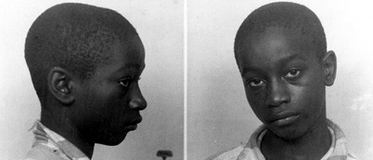
George Stinney
Homicide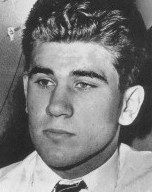 William Heirens
Homicide · USA · 1945
William George Heirens (born November 15, 1928 in Evanston, Illinois) was an Am…
3 victims
William Heirens
Homicide · USA · 1945
William George Heirens (born November 15, 1928 in Evanston, Illinois) was an Am…
3 victims
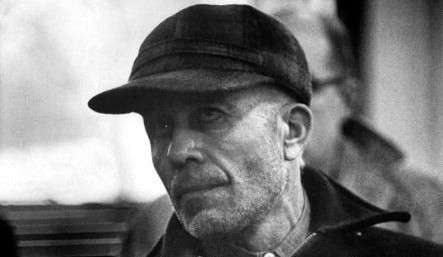 Edward Gein
Homicide · USA · 1954
Edward Gein was sentenced to life imprisonment in 1968. He was found not guilty…
2 victims
Edward Gein
Homicide · USA · 1954
Edward Gein was sentenced to life imprisonment in 1968. He was found not guilty…
2 victims
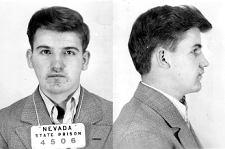 Floyd Loveless
Homicide · USA · 1942
Floyd Loveless was the person executed by asphyxiation-gas on September 29, 194…
1 victim
Floyd Loveless
Homicide · USA · 1942
Floyd Loveless was the person executed by asphyxiation-gas on September 29, 194…
1 victim
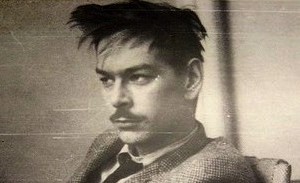 Lucien Carr
Homicide · USA · 1944
Lucien Carr (March 1, 1925 – January 28, 2005) was a key figure in the Beat gen…
1 victim
Lucien Carr
Homicide · USA · 1944
Lucien Carr (March 1, 1925 – January 28, 2005) was a key figure in the Beat gen…
1 victim
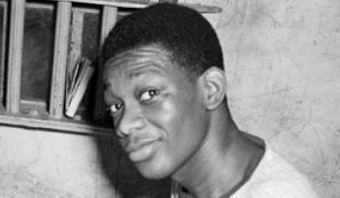 Willie Francis
Homicide · USA · 1944
Willie Francis (c. 1930 – May 9, 1947) was an African American sentenced to dea…
1 victim
Willie Francis
Homicide · USA · 1944
Willie Francis (c. 1930 – May 9, 1947) was an African American sentenced to dea…
1 victim
 Leith Ratten
Murderer · Australia · 1970
Leith Ratten Leith Ratten was sentenced to death in 1970. The death sentence wa…
1 victim
Leith Ratten
Murderer · Australia · 1970
Leith Ratten Leith Ratten was sentenced to death in 1970. The death sentence wa…
1 victim
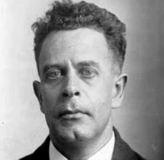 Henry Judd Gray
Murderer · USA · 1927
Henry Judd Gray Henry Judd Gray was executed by electrocution in New York on Ja…
1 victim
Henry Judd Gray
Murderer · USA · 1927
Henry Judd Gray Henry Judd Gray was executed by electrocution in New York on Ja…
1 victim
 Umesh Reddy
Murderer · India · 1998
Umesh Reddy was sentenced to death on October 27, 2006. The Karnataka High Cour…
18 victims
Umesh Reddy
Murderer · India · 1998
Umesh Reddy was sentenced to death on October 27, 2006. The Karnataka High Cour…
18 victims
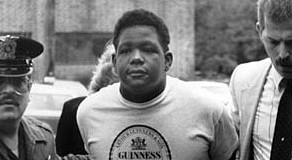 Craig Price
Juvenile serial killer · USA · 1987
Craig Price was a juvenile serial killer from the Buttonwoods neighbourhoods of…
4 victims
Craig Price
Juvenile serial killer · USA · 1987
Craig Price was a juvenile serial killer from the Buttonwoods neighbourhoods of…
4 victims
 Stephen Nefstad
Murderer · USA · 1987
Stephen Nefstad was an Oregon state prisoner. He appealed the district court’s…
1 victim
Stephen Nefstad
Murderer · USA · 1987
Stephen Nefstad was an Oregon state prisoner. He appealed the district court’s…
1 victim
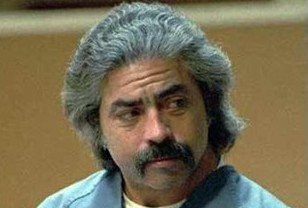 Richard Allen Davis
Murderer · USA · 1973
Richard Allen Davis was sentenced to death on August 5, 1996. Richard Allen Dav…
2 victims
Richard Allen Davis
Murderer · USA · 1973
Richard Allen Davis was sentenced to death on August 5, 1996. Richard Allen Dav…
2 victims
- Gender
- male
- Country
- USA
- Location
- Clarendon County, South Carolina, USA
- Date of birth
- October 21, 1929
- Age at first offence
- 15
- Characteristics
- juvenile (14), child killer, child abuse
- Victim profile
- Betty June Binnicker, 11, and Mary Emma Thames, 8
- Method of murder
- Beating with a 15 inch railroad spike
- Date(s) of murder
- March 24, 1944
- Years active
- 1944
- Date of arrest
- Next day
- Status
-
Executed
Executed by electrocution on June 16, 1944
Case record
George Junius Stinney Jr. was executed by electrocution on June 16, 1944. He was born October 21, 1929, and died June 16, 1944. He was 14 years old at the time of his arrest and 14 years old at the time of his execution.
Background
George Stinney Jr. lived in Alcolu, in Clarendon County, South Carolina. The town was described as a quiet farming community whose routine was rarely, if ever, interrupted by a climatic event such as child murder. Alcolu was described as a small town off Route 521 in Clarendon County, South Carolina, about 50 miles east of Columbia. The region was described as producing forest products, along with tobacco, cotton and corn, and cucumbers grown in abundance in Clarendon County.
The offence
George Stinney Jr. was arrested for murdering two white girls, Betty June Binnicker, age 11, and Mary Emma Thames, age 8, in Alcolu, Clarendon County, South Carolina, on March 23, 1944.
The girls had disappeared while out riding their bicycle looking for flowers. They were described as having left their homes to pick flowers and as alternately walking and riding Betty’s bicycle along the railroad tracks that ran through Alcolu. The girls often played in this area on the opposite side of the town.
According to the account of the events, when the girls passed the Stinney property they asked young George Stinney and his sister, Katherine, if they knew where to find “maypops”, a type of flower. When the girls did not return, search parties were organized.
In the accounts of deputies, Stinney confessed to killing both girls. According to the confession, Stinney wanted to “have sex with” Betty June Binnicker, the 11-year-old girl, and could not do so until Mary Emma Thames was removed from the scene; he thus decided to kill Mary Emma. When he went to kill Mary Emma, both girls “fought back” and he thus decided to kill Betty June as well. Stinney was said to have killed both with a 15 inch railroad spike found in the same ditch a distance from the bodies.
According to descriptions provided in the narrative, Stinney had caused major blunt trauma to the girls’ heads, shattering the skulls of each into at least 4–5 pieces. Betty June had severe head wounds in the back of the skull. Mary Emma had five separate skull fractures. The cause of death in both cases was determined to be severe trauma to the head, with the girls described as being viciously beaten with a heavy, blunt object.
Investigation
After the girls disappeared, search parties were organized, with hundreds of volunteers. The bodies were found the next morning in a ditch filled with muddy water. The ditch was surrounded by thick, thorn-covered bushes, with signs of being crushed. The outline of the girls’ bicycle could be seen under the water.
Scott Lowden, a member of the search party, jumped into the muddy hole and the bodies were found. Betty June had severe head wounds in the back of the skull, and Mary Emma had five separate skull fractures. The cause of death was later determined to be severe trauma to the head.
After a few hours of investigation, the local sheriff deputies located and arrested George Stinney Jr., based on reports from neighbors who had seen him in the area where the girls were found. He was brought to the local sheriff’s office, where he was interrogated.
The narrative described that there were no Miranda Warnings, even to a juvenile, and that the interrogation continued without a parent being present or attorney representation.
Clarendon County Sheriff’s Deputy H. S. Newman and a representative from the Governor’s Office questioned Stinney. Officer S. J. Pratt was also mentioned in connection with the questioning.
Stinney confessed to the crime within less than one hour. Deputy H. S. Newman later described the event for the court, stating:
“I was notified that the bodies had been found. I went down to where the bodies were at. I found Mary Emma she was rite at the edge of the ditch with four or five wounds on her head, on the other side of the ditch the Binnicker girl, were laying there with 4 or 5 wounds in her head, the bicycle which the little girls had were side of the little Binnicker girl. By information I received I arrested a boy by the name of George Stinney, he then made a confession and told me where a piece of iron about 15 inches long were, he said he put it in a ditch about 6 feet from the bicycle which was lying in the ditch”
Later that same day, Stinney voluntarily led police to the crime scene outside the town, where the murder weapon—a large railroad spike at least 14 inches long—was recovered.
Immediately after the murders, there was described grief and outrage in Alcolu. Mill workers were especially angered since both girls had relatives who worked at the mill. Passions became further inflamed when details of the crime supplied by Stinney became public.
Angry townspeople and mill workers gathered together in Alcolu and formed into a mob. On the night of March 26, 1944, a mob of angry whites headed for the Clarendon County jail. Sheriff’s deputies escorted Stinney out of the county jail to the City of Columbia in adjoining Sumter County where he was held in a more secure facility for his own safety.
Arrest
George Stinney Jr. was arrested a few hours after the girls’ bodies were found. He was interrogated by several white officers in a locked room with no witnesses aside from the officers. The next day, he was charged with first-degree murder.
Trial
The trial took place on April 24, 1944, at the Clarendon County Courthouse. Jury selection began at 10:00 a.m., ending just after noon. The trial commenced at 2:30 p.m. Closing arguments concluded at 4:30 p.m. The jury retired just before 5 p.m. and deliberated for 10 minutes before returning a guilty verdict with no recommendation for mercy.
The court appointed Charles Plowden as Stinney’s lawyer. Charles Plowden was described as a 30-year-old aspiring politician.
Plowden did not cross-examine witnesses. The defense was reported to consist of the claim that Stinney was too young to be held responsible for the crimes. The narrative stated that under South Carolina law at the time anyone over the age of 14 was regarded as an adult. Stinney’s birth date was given as October 21, 1929, and he was 14 years and five months old.
Stinney dressed in “blue Junes” and maintained a calm demeanor throughout the afternoon, described as:
“He remained calm and apparently little concerned”
Prosecutor Frank McLeod introduced Stinney’s statements of March 25 into evidence. In the initial statement to Deputy Sheriff Newman, Stinney explained that he was near his own home outside Alcolu when the oldest girl came by and asked where she could pick flowers. He attempted to show the girls where the flowers grew, said that the younger girl accidentally fell into a ditch, and said that as he tried to help Mary Emma both girls attacked him. He admitted to hitting the girls with the railroad spike but claimed he did so in self-defense.
In the second statement, also given to Deputy Newman and Officer Pratt, Stinney told police that he was at his own home when he first saw the girls go by and followed them into the woods. He stated he was interested in the older one, Betty June. He said that to have Betty June to himself, he killed Mary Emma first by hitting her with the railroad spike. He stated that Betty June attempted to run away and that Stinney chased and caught her, and that when she continued to resist his sexual advances he battered her with the same railroad spike.
Judge P. Stoll, from Kingstree, halted testimony to give women in the courtroom a chance to leave prior to “morbid details.”
Scott Lowden, who found the dead girls, testified about the condition of the bodies. He described a broken bicycle lying over the girls. The bodies were entangled with each other and lay submerged in the water where Stinney had dumped them.
Betty June’s sister, Lorraine Binnicker Bailey, testified that it was she who gave the scissors to the girls to cut flowers.
Dr. R. F. Baker and Dr. A. C. Bozard of the Tuomey Hospital in Sumter performed the post mortem examination. The autopsy reports were read into testimony, stating:
“We examined the body of eleven year old white girl. There was evidence of at least seven blows on the head of the child that seemed to have been made by a blunt instrument with a small round head about the size of a hammer. Some of these have only cracked the skull while two have punched definite holes in the skull”
The narrative stated that Dr. Baker was unable to positively state that a rape or sexual assault had occurred, but he said it was possible.
The narrative also described that the presentation by McLeod moved quickly and that the defense presented no witnesses or evidence for Stinney. It stated that the trial proceeded after eight minor cases had been disposed of in the morning.
Sentencing
Stinney was sentenced to die in the electric chair.
The narrative described that Stinney’s sentencing occurred at Central Correctional Institution in Columbia, South Carolina, on June 16, 1944. Stinney was quickly escorted out of court, and he had less than two months to live.
When asked about appeals, Plowden replied that there would be no appeal because the Stinney family had no money to pay for a continuation.
Appeals
No appeal was made.
Outcome
Stinney was executed by electrocution on June 16, 1944.
The execution was carried out at the South Carolina State Penitentiary in Columbia, South Carolina, on the morning of June 16, 1944, less than three months after the crime.
At 7:30 a.m., Stinney walked to the execution chamber with a bible under his arm. The narrative stated there were difficulties strapping the boy into the electric chair because it was designed for adults, and that the face mask used in executions did not fit properly; it slid off during the execution, exposing his face to the witnesses.
He was pronounced dead less than four minutes after the execution began.
Witnesses to the execution included Betty June’s father and brother, Raymond. The narrative also stated that Stinney refused to make any statement when given the opportunity by prison officials.
Aftermath
Local churches, the N.A.A.C.P., and unions pleaded with Governor Olin D. Johnston to stop the execution and commute the sentence to life imprisonment, citing Stinney’s age as a mitigating factor.
The narrative included the statement by Lorraine Binnicker Bailey, sister of Betty June Binnicker:
“Everybody knew that he done it, even before they had the trial they knew that he done it. But, I don't think that they had too much of a trial”
The narrative described controversy and public controversy about the pending execution. It included letters or comments attributed to correspondents to Johnston, including:
“Child execution is only for Hitler”
and:
“Sure glad to hear of your decision regarding the nigger Stinney.”
The narrative stated Governor Johnston did nothing, thereby allowing the execution to proceed.
The narrative also stated that on June 13, 1944, the A.M.E. Church protested to Governor Olin D. Johnston in a telegram about the imminent execution June 16 of a 14-year-old Negro boy convicted of the murder of a young white girl.
The narrative stated that Stinney was buried in an unknown location.
In 1994, on the 50th anniversary of the case, Stinney’s sister, Catherine Robinson, was interviewed. She stated that her brother wrote to her parents while he was on Death Row in Columbia, South Carolina, and that George told them he was innocent.
In the same article, Vermelle Tucker, Betty June’s sister, stated:
“All my dad said was ‘Thank God he won’t do it to anybody else’”
Other details
The narrative described that on June 16, 1944, Stinney weighed just over 90 lbs and stood 5 feet, 1 inch tall.
The narrative described that Stinney had been charged with first-degree murder and that the trial ended with a guilty verdict with no recommendation for mercy.
The narrative stated that the beam used to kill the girls weighed over twenty pounds and that it was ruled that George wasn’t able to lift the beam, let alone swing it hard enough to kill the two girls.
The narrative stated that in 1988 the case gave rise to the novel “Carolina Skeletons” by David Stout. In 1991, it became the base for the film “Carolina Skeletons” (also “The End of Silence”) directed by John Erman, featuring Kenny Blank (who changed his name to Kenn Michael later) as Linus Bragg, the 14-year-old protagonist meant for George Stinney Jr.
The narrative described that Althea Gibson, Peggy Parish, and five governors of South Carolina were associated with Alcolu, and that the Central Correctional Institution was in Columbia, South Carolina.
Spotted an error, or have more information about this case?