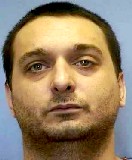
Joseph Bishop Goff
Murderer Robert Martines Perez
Murderer · USA · 1994
Name: Robert Martines Perez · Other name used in proceedings: Robert Martinez P…
15 victims
Robert Martines Perez
Murderer · USA · 1994
Name: Robert Martines Perez · Other name used in proceedings: Robert Martinez P…
15 victims
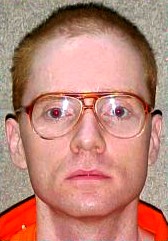 Robert Glen Jones
Murderer · USA · 1996
Defendant: Robert Glenn Jones (ADC#070566) · Co-defendant: Scott Nordstrom (ADC…
7 victims
Robert Glen Jones
Murderer · USA · 1996
Defendant: Robert Glenn Jones (ADC#070566) · Co-defendant: Scott Nordstrom (ADC…
7 victims
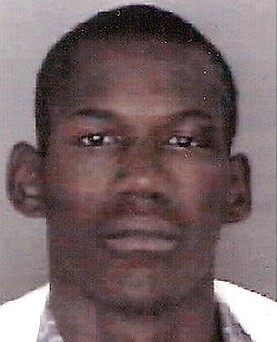 Joshua Wayne Andrews
Murderer · USA · 2000
Joshua Wayne Andrews was a serial killer accused of killing several people in V…
5 victims
Joshua Wayne Andrews
Murderer · USA · 2000
Joshua Wayne Andrews was a serial killer accused of killing several people in V…
5 victims
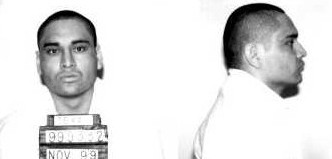 Juan Carlos Alvarez
Murderer · USA · 1998
Juan Carlos Alvarez, born on March 9, 1977, in San Luis, Mexico, was a Hispanic…
5 victims
Juan Carlos Alvarez
Murderer · USA · 1998
Juan Carlos Alvarez, born on March 9, 1977, in San Luis, Mexico, was a Hispanic…
5 victims
 David Tamihere
Murderer · New Zealand · 1972
David Tamihere was sentenced to life imprisonment with a 10-year non-parole per…
3 victims
David Tamihere
Murderer · New Zealand · 1972
David Tamihere was sentenced to life imprisonment with a 10-year non-parole per…
3 victims
 Antoinette Pelzer
Murderer · USA · 2012
Antoinette Pelzer was homeless and had been diagnosed with schizophrenia. Her f…
2 victims
Antoinette Pelzer
Murderer · USA · 2012
Antoinette Pelzer was homeless and had been diagnosed with schizophrenia. Her f…
2 victims
 Sharon Carr
Homicide · United Kingdom · 1992
Sharon Louis Carr was born 21 December 1979. She was twelve years old when she…
1 victim
Sharon Carr
Homicide · United Kingdom · 1992
Sharon Louis Carr was born 21 December 1979. She was twelve years old when she…
1 victim
 Chai Soua Vang
Mass murderer · USA · 2004
Chai Soua Vang (born September 24, 1968) shot several deer hunters in northern…
6 victims
Chai Soua Vang
Mass murderer · USA · 2004
Chai Soua Vang (born September 24, 1968) shot several deer hunters in northern…
6 victims
 Judith Hawkey
Murderer · USA · 2003
Judith Hawkey was convicted for orchestrating the death of her former husband,…
1 victim
Judith Hawkey
Murderer · USA · 2003
Judith Hawkey was convicted for orchestrating the death of her former husband,…
1 victim
 Corey Duane Hamilton
Mass murderer · USA · 1992
Corey Duane Hamilton was convicted by jury of Robbery with a Firearm (Count I)…
4 victims
Corey Duane Hamilton
Mass murderer · USA · 1992
Corey Duane Hamilton was convicted by jury of Robbery with a Firearm (Count I)…
4 victims
- Gender
- male
- Country
- USA
- Location
- George County, Mississippi, USA
- Date of birth
- January 2, 1976
- Age at first offence
- 28
- Characteristics
- mutilation
- Victim profile
- Brandy Stewart Yates, 29
- Method of murder
- Cutting her throat
- Date(s) of murder
- August 27, 2004
- Years active
- 2004
- Date of arrest
- Same day
- Status
-
Sentenced to death
Sentenced to death on May 6, 2005
Case overview
Joseph Bishop Goff was convicted by the George County Circuit Court in the capital murder of Brandy Stewart Yates during the commission of a robbery and was sentenced to death by lethal injection. Goff also was convicted of second-degree arson and was sentenced to ten (10) years in the custody of the Mississippi Department of Corrections; the sentence in Count II was to run consecutive to the sentence in Count I.
Timeline
- August 1, 2004 — Brandy Stewart Yates left her husband of eight years, James Yates, Jr., and their two young children to travel with Joseph Goff.
- August 26, 2004 (3:53 p.m.) — Brandy checked into room 121 at Rocky Creek Inn in Lucedale, Mississippi, accompanied by Goff.
- August 26, 2004 (11:30 p.m.) — Goff approached the front desk stating that he and his girlfriend were locked out of room 121; desk clerk Margaret Clark made keys for him after returning attempts.
- August 27, 2004 (approximately 8:45 a.m.) — A 911 call was received advising of a fire and a possible body in a room at Rocky Creek Inn.
- August 27, 2004 (approximately 8:55 a.m.) — George County Sheriff Gary Welford arrived.
- August 27, 2004 (approximately 9:10 a.m.) — Detective Ronnie Lambert arrived on the scene.
- August 27, 2004 — Trooper Jason Ginn observed a white Ford Mustang on Interstate 20 near Vicksburg, Mississippi with an expired temporary tag and initiated a traffic stop.
- August 28, 2004 (early morning) — Goff arrived at the George County Sheriff’s Department; Miranda warnings were given and he was interviewed by Detective Lambert.
- October 19, 2004 — A George County grand jury handed down a two-count indictment against Goff charging capital murder with underlying felony of robbery and second-degree arson.
- November 30, 2004 — At arraignment, Goff pleaded not guilty to both charges.
- April 7, 2005 — Pretrial hearings began; the court heard numerous defense motions, including several motions to suppress and a motion to quash.
- May 2, 2005 — Jury selection began in George County Circuit Court, Circuit Judge Dale Harkey presiding.
- May 5, 2005 — The jury found Goff guilty on both counts: capital murder and second-degree arson.
- May 6, 2005 — A separate sentencing hearing occurred; the trial court sentenced Goff to death by lethal injection; the trial court also sentenced him to ten years on the arson charge.
- June 30, 2005 — Goff’s post-trial “Motion for Judgment Notwithstanding the Verdict or, in the Alternative, for a New Trial” was denied.
- May 28, 2009 — The Mississippi Supreme Court decided Goff v. State of Mississippi, en banc.
Background
Brandy Stewart Yates had left her husband, James Yates, Jr., and their two young children to travel with Joseph Goff. Brandy had become acquainted with Goff while working as a waitress at the Bama Barn, a bar in Theodore, Alabama.
The offence
Capital murder and underlying robbery
Goff was convicted of capital murder of Brandy Stewart Yates during the commission of a robbery and was sentenced to death by lethal injection. The capital murder charge included the underlying felony of robbery.
Second-degree arson
Goff was convicted of second-degree arson and was sentenced to ten (10) years in the custody of the Mississippi Department of Corrections.
Victim
Brandy Stewart Yates was 29 years old. Her body was found burned and mutilated. Her phone conversations with her husband, James Yates, were described as part of the events leading to the discovery.
Investigation
Investigators found Brandy’s mutilated body between the two beds in her partially burned room. A 911 call led to responses including George County Sheriff Gary Welford and Detective Ronnie Lambert. The scene was photographed, secured with barrier tape, and officers were instructed to prevent entry.
Law enforcement later identified Brandy as the victim based on motel registration materials, including a photocopied copy of Brandy’s license on the reverse side of the registration card. Authorities also learned that Brandy arrived at the motel in a white Ford Mustang.
Forensic scientist Stacy Smith arrived at approximately 1:00 p.m. on August 27, 2004, entered the motel room, and noticed a layer of soot covering the entire room. Smith observed curtains, beds, lamps, and the floor were damaged, and the victim’s feet were visible on the floor between the beds. Smith also testified that the victim’s organs were lying on the floor throughout the room.
Physical evidence recovered included:
- a pillow without a pillowcase
- a bag of toothpicks and toothpicks lying in the room
- a gas can
- a pack of cigarettes
- a metal drawer track that appeared to contain bloody fingerprints
- tissue and blood
- two white, two-holed buttons Numerous photographs of the motel room taken by Investigator Smith were admitted into evidence and presented to the jury.
Investigators also searched Goff’s vehicle and recovered multiple items, including a blue-flannel shirt with a white pillowcase underneath it; inside the pillowcase was a shirt, a piece of wood containing what appeared to be blood and tissue, and an Econolodge notepad containing a note from Brandy. Other recovered items included a baseball cap, two shoes, a white glove containing reddish stains, and an empty pizza box. A plastic trash bag containing cigarette butts, pizza crust, and a pink-colored blade-guard from a disposable razor also was recovered.
A woman’s wallet was found in the area of the console. The wallet contained Brandy’s driver’s license, her social security card, photos of her children, the children’s birth certificates, their medicaid cards, a carrot-cake recipe, and $509 in cash and two dollars in quarters.
Forensic biologist Paige Bowlus examined items to locate possible biological material for DNA analysis. Bowlus collected a reddish-brown stain from the metal track and identified it as human blood. Bowlus swabbed the right shoe recovered from Goff’s vehicle and it was identified as human blood. Bowlus testified no DNA testing was performed on any evidence, and the testing conducted did not identify the source of the blood.
Arrest
Mississippi Highway Safety Patrol troopers arrested Goff near Vicksburg, Mississippi during a traffic stop on Interstate 20. Trooper Jason Ginn observed a white Ford Mustang traveling west on Interstate 20 near Vicksburg, Mississippi with a temporary tag that was defaced and expired.
Trooper Ginn noticed the strong smell of cigarette smoke, red marks on the driver’s neck, and that the vehicle was “trashed” on the inside. The driver stated to Trooper Ginn that he was on a “spiritual experience” and traveling to Texas. Trooper Ginn requested a driver’s license and vehicle registration, contacted the dispatcher in Jackson, requested a check to see if the license was valid, and noticed an odor of gasoline on the documents provided. Trooper Ginn again contacted the dispatcher and requested information regarding whether the driver (identified as Joseph Goff) had a criminal record. Trooper Ginn called for backup.
Trooper Henley arrived, and Trooper Ginn informed Henley of what he had observed. Henley spoke with Goff and relayed that Goff had approximately $3,000 in cash on him, that he was a convicted felon, and that he had just been released from prison for shooting someone. Trooper Ginn later asked whether Goff had any stolen merchandise, weapons, or drugs in the vehicle. Goff responded that he did not. Trooper Ginn requested and received permission to search the vehicle. During the search, Henley had to leave; before the search ended, it was conducted long enough for the center console to be searched and bank-rolls of fifty-dollar bills to be found. Trooper Ginn removed the money and handed it to Goff.
After Trooper Ginn learned from the George County Sheriff’s Office that Goff was a person of interest in the murder of Brandy, Goff was arrested. In total, the traffic stop lasted just less than one hour. After being informed of his arrest, Sheriff Welford sent two investigators to retrieve Goff and his vehicle.
Trial
Representation and waiver
After jury selection began, Goff requested to “exercise [his] constitutional right to represent [himself]” and proceed pro se. The trial judge examined Goff to ensure waiver of counsel was knowingly, intelligently, and voluntarily made. The trial judge found Goff competent to waive his right to counsel and authorized Goff’s attorneys Jeff Deen and Scott McNally to act as co-counsel, while directing them to remain and provide support, assistance, and advice sufficient to seek from them.
Goff’s co-counsel roles included participation throughout voir dire, objections, cross-examination of multiple witnesses, direct examination of additional witnesses, a motion for directed verdict, and closing argument in the guilt phase; at sentencing, counsel represented Goff and conducted opening statement and direct examination of additional witnesses.
Autopsy and injuries
Dr. Stephen Hayne performed the autopsy and determined that the cause of Brandy’s death was four slash wounds to the neck, which cut through two major blood vessels: the left jugular vein and the left common carotid artery.
Dr. Hayne also found numerous other injuries including gaping wounds inflicted by blunt-force trauma over the right facial area, the front surface of the neck, and the right-middle-to-lower chest wall. Numerous bone fractures were present in the facial area, the right chest wall, and the rib cage. Brandy’s teeth were knocked out. Fragments of charred toothpicks were located in the neck and facial area. A small silver metal screw and two pieces of splintered wood were removed from Brandy’s scalp hair. Organs, including portions of the small and large bowels and the spleen, had been torn out via the hole in her chest. Charring injuries were present over the entire body.
Goff’s statement and described actions
Goff explained in an interview with Detective Lambert that marks on his body had been inflicted by Brandy during a physical altercation after they arrived at the motel, during which he had slapped her on the head. Goff described that he accused Brandy of being sexually unfaithful and not wanting to be with him anymore. After the altercation, Goff said he left and returned later that night.
Goff stated that when he opened the motel room door he noticed a note written by Brandy. Goff said he noticed a “smell” only after he shut the door behind him. Goff described the scene and stated that Brandy’s body “was mutilated, ․ the face and everything crushed in.” In particular, he said:
“it looked like someone had reached in through a hole in her chest and pulled out all her organs and slung them all over the room.”
Goff stated that after he found Brandy’s body he lay on top of her body for over an hour and “just [hold] her,” and that he “laid there and held her ․ kissed her head and everything else ․ before I got up.”
Goff also said he became worried he would be considered a suspect and stated:
“So I stole everything out of the room that might have had my fingerprints on it and wiped the room down,”
Goff said he placed the items inside his vehicle and backed the car up to the front of the room. He stated he grabbed a pair of white gloves and a gas can. Goff said he returned to the room and: “poured the gas, threw the can and set it on fire[,]”
and then left.
The note stated: “Joseph, went to see kids. Be back soon.”
Witness testimony and scene description
At trial, George County Sheriff Gary Welford testified that investigators found Brandy’s body between the two beds in room 121. Welford testified:
“I saw two feet sticking beyond the ends of the beds and what appeared to be body organs thrown about the room,”
Welford also described responding to a 911 call made by the motel manager about a fire and body in room 121.
Margaret Clark, the Rocky Creek Inn desk clerk, testified she made a duplicate key for Goff after he told her he and his girlfriend were locked out of the room.
Verdict
On May 5, 2005, the jury found Goff guilty on both counts: capital murder and second-degree arson.
Sentencing
On May 6, 2005, a separate sentencing hearing was held as required in capital cases.
The State presented evidence of aggravating factors including that:
- Goff had been convicted of prior violent crimes including second-degree assault and discharge of a gun in an occupied building and vehicle.
- Goff’s act of setting the motel on fire knowingly created a great risk of death to many persons.
- The capital offense was committed while engaged in the commission of robbery.
- The capital offense was committed to avoid a lawful arrest.
- The capital offense was especially heinous, atrocious, and cruel.
Goff initially directed counsel not to present mitigation evidence, but later changed his mind. Defense counsel presented mitigation evidence including that Goff had a tumultuous childhood; that Goff was the child of an incestuous relationship; that despite average intelligence he suffered from serious mental illness; and that he had been suffering from a psychotic episode when he killed Brandy.
At the conclusion of sentencing, the jury found the following aggravating circumstances existed:
- Goff previously was convicted of a felony involving the use or threat of violence to the person.
- Goff knowingly created a great risk of death to many persons.
- The capital offense had been committed while Goff was engaged in the commission of a robbery.
- The capital offense had been committed to avoid or prevent lawful arrest.
- The capital offense had been especially heinous, atrocious, and cruel.
The jury found that Goff should be sentenced to death.
The judge sentenced Goff to 10 years on the arson charge.
Appeals
Goff appealed to the Mississippi Supreme Court, raising twelve issues. The Mississippi Supreme Court decided in favor of the State. The convictions and death sentence were affirmed.
Outcome
Count I: CONVICTION OF CAPITAL MURDER AND SENTENCE OF DEATH BY LETHAL INJECTION, AFFIRMED. Count II: CONVICTION OF ARSON (SECOND DEGREE) AND THE SENTENCE OF TEN (10) YEARS IN THE CUSTODY OF THE MISSISSIPPI DEPARTMENT OF CORRECTIONS, AFFIRMED. THE SENTENCE IN COUNT II IS TO RUN CONSECUTIVE TO THE SENTENCE IN COUNT I.
Other details
People connected to the events
- Brandy Stewart Yates was the victim and wife of James Yates, Jr.
- James Yates, Jr. was Brandy’s husband and testified at trial.
- Margaret Clark was the Rocky Creek Inn desk clerk.
- Sheriff Gary Welford testified at trial.
- Detective Ronnie Lambert was an investigator with the George County Sheriff’s Department.
- Trooper Jason Ginn and Trooper Henley participated in the traffic stop and search process.
- Stacy Smith was a forensic scientist with the Mississippi Crime Lab.
- Paige Bowlus was a forensic biologist at the Mississippi Crime Lab.
- Dr. Stephen Hayne performed the autopsy.
- Circuit Judge Dale Harkey presided over the proceedings.
Goff’s age and descriptions given during proceedings
The jury was informed that Goff was 29 years old at the time of trial proceedings. Goff was described as from Theodore, Alabama.
Motion practice and procedural points
Goff’s motion for judgment notwithstanding the verdict or new trial was denied on June 30, 2005.
Goff’s execution method challenge and other constitutional claims were addressed and rejected.
Note on “CSI effect” discussion and quoted voir dire/closing language
During voir dire, the district attorney asked the following:
“You know, if you watch TV a lot, you probably get to watch-I don't know how many of you-how many of you watch CSI? Well, raise your hand. See, there's a lot of you. A lot of you. It's a very popular show. My kids love it. All right? They're older and they love that show. They like Law and Order. But, can everybody tell me that they can separate what they see on TV from what you see in the courtroom? I know that sounds like a silly question, but some people go, oh, well, it was on CSI, so how come they don't do it in every case? All right. And I can tell you how I know, I know CSI and Law and Order are make-believe. If you flip the channel, you may see Scotty beaming somebody else up, and that's on TV. All right? So, can everybody tell me-and, again, this kind of goes to the burden of proof, you know, about what evidence you have-and can everyone tell me that they will listen to the evidence and not speculate because they don't have, say, DNA or they don't have fingerprints and things you may see or hear about on CSI? Can everyone tell me they can do that? Yeah?”
During closing arguments, the State reminded the jury of the question posed during voir dire, stating in part:
“[Y]ou were asked in voir dire, you all know about CSI. Can you set that aside if it's not needed and return a verdict, and you all said yes. So we ask you to hold to that. It's not necessary here, and it's not needed. The evidence was overwhelming.”
Closing-argument quotation about the shirt
The prosecutor stated during closing arguments:
“[F]irst off, the shirt. You can bring the shirt up, please. This is his shirt. Just look at the stain on this shirt. She told you there were droplets. Droplets. All right. These are where the buttons are missing. Does that look like what you would get by laying on somebody? Now, I know he says he was there for an hour and a half, we're going to talk about that in a minute. But that's a lot of blood, members of the jury. That's a lot of blood. Could you flip to the back, please, sir? The back of the shirt, look at these droplets. That is blood in motion. That is this. (Motioned with arm in a slashing motion.) That's how that gets there. That ain't laying on top of her. How do you get blood on the back of a shirt if you're laying on top of a girl? What did he do? Lay on her and waddle on the back, too? Please. Please. It makes no sense. Use your common sense. That shirt right there tells you, he killed her.”
Voir dire and opening statement quotation about Brandy’s work
During voir dire, the prosecutor asked:
“She worked as a cocktail waitress at a bar in Alabama where she worked to help support her family. And you're going to hear that from her husband. And she left 24 days before her death with the defendant. Now, the question I have for ya'll is, will you hold that against the State of Mississippi that she worked in a bar? Some people just don't like that. Some people think you ought not work in a bar. Can everybody tell me her profession or her career that she was doing at the time will not affect your verdict? Can everybody tell me that? That you can follow the law? Because the law doesn't say you have the right to life unless you're a cocktail waitress, or you have the right to life unless you left your kids 24 days before with another man. It doesn't say that. It doesn't say that. And I need to know. And it's all right. Again, as the Judge told you, this is America, we can believe what we want. And that's the great thing about our country. But we need to know now. Because if that's going to bother you, we have to know now. So, can everybody tell me they can follow the law as given to you by the Court?”
During the prosecution’s opening statement, the district attorney stated:
“[…] on August the 2nd, Brandy Stewart Yates was 29 years old. She had a husband named James. She had a son eight years old, James IV, and she had a daughter named Sissy. Her mother Carolyn, her father Jack, her sister Crystal, and her brother Jeff loved her dearly and cared for her greatly. On August the 2nd, they could not understand the decision Brandy had made, a decision to leave her family and go to with that man right there, the defendant that you see in this courtroom. Now, Brandy, you will hear, was a cocktail waitress at a bar in Alabama. She worked there to help support the family. James worked construction. She met Mr. Goff at that bar, and for reasons we will probably never know, she made a decision to go with him. But at that time, all the concern, all the love, no one, no one ever dreamed that 24 days later she would lay dead in Room 121 of the Rocky Creek Inn here in Lucedale, Mississippi.”
Spotted an error, or have more information about this case?