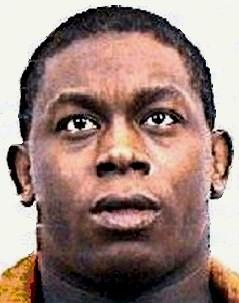
Corey Duane Hamilton
Mass murderer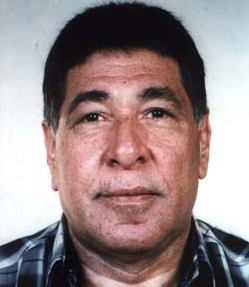 Gameel Al-Batouti
Mass murderer · USA · 1999
Gameel Al-Batouti (also rendered “Gamil ElBatouty” or “El Batouty” in U.S. offi…
216 victims
Gameel Al-Batouti
Mass murderer · USA · 1999
Gameel Al-Batouti (also rendered “Gamil ElBatouty” or “El Batouty” in U.S. offi…
216 victims
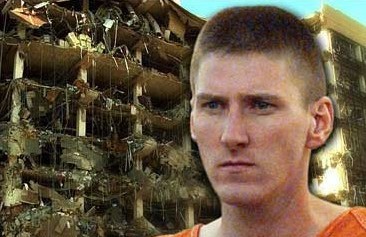 Timothy McVeigh
Mass murderer · USA · 1995
Timothy James McVeigh (April 23, 1968 – June 11, 2001) was a United States Army…
168 victims
Timothy McVeigh
Mass murderer · USA · 1995
Timothy James McVeigh (April 23, 1968 – June 11, 2001) was a United States Army…
168 victims
 Julio Gonzalez
Mass murderer · USA · 1990
Julio Gonzalez was sentenced to 174 twenty-five-year sentences (a total of 4,35…
87 victims
Julio Gonzalez
Mass murderer · USA · 1990
Julio Gonzalez was sentenced to 174 twenty-five-year sentences (a total of 4,35…
87 victims
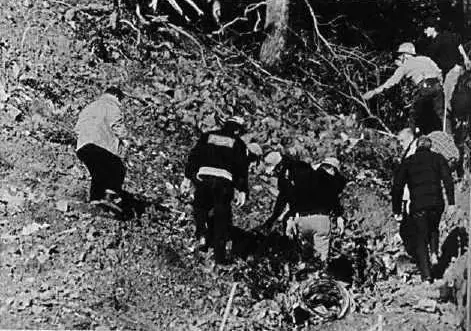 David Burke
Mass murderer · USA · 1987
David Augustus Burke (May 18, 1952–December 7, 1987) was an employee of USAir,…
43 victims
David Burke
Mass murderer · USA · 1987
David Augustus Burke (May 18, 1952–December 7, 1987) was an employee of USAir,…
43 victims
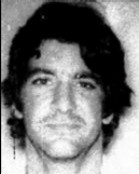 George Jo Hennard
Mass murderer · USA · 1991
George Jo Hennard carried out a mass killing at a Luby’s Cafeteria in Killeen,…
23 victims
George Jo Hennard
Mass murderer · USA · 1991
George Jo Hennard carried out a mass killing at a Luby’s Cafeteria in Killeen,…
23 victims
 Bradley Stone
Mass murderer · USA · 2014
Bradley W. Stone was 35 and was an ex-husband of Nicole Stone. He was also desc…
6 victims
Bradley Stone
Mass murderer · USA · 2014
Bradley W. Stone was 35 and was an ex-husband of Nicole Stone. He was also desc…
6 victims
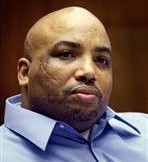 Chester Turner
Serial killer · USA · 1987
Chester Dewayne Turner was born November 5, 1966 in Warren, Arkansas. He became…
13 victims
Chester Turner
Serial killer · USA · 1987
Chester Dewayne Turner was born November 5, 1966 in Warren, Arkansas. He became…
13 victims
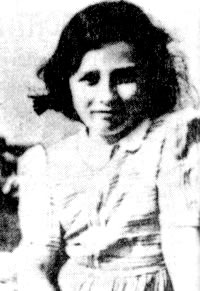 William Hepper
Murderer · United Kingdom · 1954
William Sanchez de Pina Hepper was a 62-year-old painter. He had a studio in Br…
1 victim
William Hepper
Murderer · United Kingdom · 1954
William Sanchez de Pina Hepper was a 62-year-old painter. He had a studio in Br…
1 victim
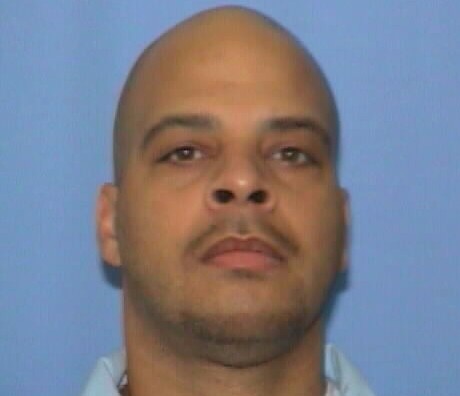 Ralph Harris
Serial killer · USA · 1992
Ralph Harris was found guilty by a jury on March 3, 1999, for the August 17, 19…
6 victims
Ralph Harris
Serial killer · USA · 1992
Ralph Harris was found guilty by a jury on March 3, 1999, for the August 17, 19…
6 victims
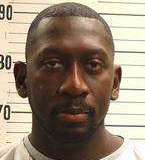 Kennath Henderson
Murderer · USA · 1997
April 26, 1997 — Kennath Henderson was planning an escape from the Fayette Coun…
1 victim
Kennath Henderson
Murderer · USA · 1997
April 26, 1997 — Kennath Henderson was planning an escape from the Fayette Coun…
1 victim
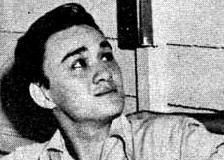 Narding Anzures
Murderer · Philippines · 1948
Bernardo “Narding” Anzures was a Filipino former child actor who was tried and…
2 victims
Narding Anzures
Murderer · Philippines · 1948
Bernardo “Narding” Anzures was a Filipino former child actor who was tried and…
2 victims
- Gender
- male
- Country
- USA
- Location
- Tulsa, Oklahoma, USA
- Date of birth
- January 1, 1969
- Age at first offence
- 23
- Characteristics
- robbery
- Victim profile
- Joseph Gooch, Theodore Kindley, Senaida Lara and Steven Williams (restaurant employees)
- Method of murder
- Shooting (.38 handgun)
- Date(s) of murder
- August 18, 1992
- Years active
- 1992
- Date of arrest
- —
- Status
-
Executed
Executed by lethal injection in Oklahoma on January 9, 2007
Case overview
Corey Duane Hamilton was convicted by jury of Robbery with a Firearm (Count I) and Murder in the First Degree, Malice Aforethought and Felony (Counts II–V) in Case No. CF-92-3584 in the District Court of Tulsa County, before the Honorable Jay D. Dalton, District Judge. The jury found four aggravating circumstances as to each victim and recommended a sentence of 500 years imprisonment for Count I and death for Counts II–V. The Oklahoma Court of Criminal Appeals affirmed the murder convictions and the death sentence, but reversed the robbery conviction and remanded it to the District Court with instructions to dismiss. Corey Duane Hamilton was later executed by lethal injection in Oklahoma on January 9, 2007.
Timeline
- 02/28/1997 — The Oklahoma Court of Criminal Appeals issued its opinion in Hamilton v. State, reversing the judgment and sentence for Robbery with a Firearm and affirming the death sentence for Counts II–V.
- 12/07/2006 — The Oklahoma Court of Criminal Appeals set Jan. 9 as the execution date for Tulsa County death row inmate Corey Duane Hamilton.
- 01/09/2007 — Oklahoma executed Corey Duane Hamilton by lethal injection.
The offence
Hamilton’s case involved the 1992 killings of four employees of Lee’s Famous Recipe Chicken Restaurant in Tulsa, Oklahoma. The victims were Joseph Gooch, Theodore Kindley, Senaida Lara, and Steven Williams. The victims were murdered during a restaurant robbery at Lee’s Famous Recipe Chicken, a restaurant on South Sheridan Road. Each victim died of a close-range gunshot wound to the back of the head.
In the course of the robbery, the employees were ordered into a walk-in cooler and were made to kneel down. The four victims were later shot once in the back of the head with a .38-caliber pistol and were left to die. Hamilton later told his accomplices that he shot “Ted and Sandy and them.”
Family members and other witnesses described the crime as a restaurant robbery in which the victims were herded into the restaurant’s walk-in cooler and shot during a robbery that netted slightly more than $2,000.
Investigation
Gaylon Frazier discovered the bodies of four employees of Lee’s Famous Recipe Chicken Restaurant in the cooler of the restaurant. Dr. Distefano testified that all four died of close range gunshot wounds to the back of the head. The gun was recovered from a field near the apartment complex where Hamilton lived.
Co-defendant Donnie Daniels’ blue Chevrolet automobile was found parked at the apartment complex where Hamilton lived. Witness testimony included observations of a black male driving a blue Chevrolet up and down 9th Street several times, picking up another black male wearing a distinctive shirt with a blue seven, and retrieving what appeared to be a shotgun from a ditch. Another witness testified that he saw three black males, described their clothing and ages, and testified that both men got into a blue Chevrolet that he had observed earlier going up and down the street several times. Testimony also described Hamilton as wearing a blue Bugle Boy tank top and white shorts with black stripes on them on the night in question.
Additional testimony addressed the men’s actions before the robbery. Daniels testified that during the evening hours of August 17, 1993, he, Hamilton, Will Hamilton, and Tyrone Johnson played cards at Gunter’s home. Earlier in the day, Daniels and Johnson obtained a .38 caliber pistol from a relative of Johnson’s. They discussed robbing Lee’s. Daniels was a former employee of Lee’s and was familiar with the closing procedures and with the procedure for opening the restaurant’s safe. After discussing the robbery, the four men went back into Gunter’s apartment and changed clothes. The men left at approximately 9:45 p.m., taking Daniels’ car, so they could be at Lee’s before 10:00 p.m. when it closed. In addition to the .38 pistol, the men also had a shotgun. Hamilton and Daniels knew that Ted Kindley and Sandy Lara were working at Lee’s that night and would recognize them, and they did nothing to disguise their appearance.
When Hamilton and Daniels entered Lee’s, Kindley was met by Hamilton, who pulled the gun and told Kindley to lock the doors, which he did. Kindley was up front attempting to open the store safe. Will Hamilton carried the shotgun and guarded the back door. After Hamilton got the money from the safe, he placed Kindley in the cooler. Daniels walked out on the loading deck area and shortly thereafter heard shots from inside. Daniels walked away from the store and did not return. When the four men met a short time later, Hamilton told them he shot “Ted and Sandy and them.”
Arrest
No arrest details were included in the provided material.
Trial
Charges and jury findings
Hamilton was tried and convicted by jury of Robbery with a Firearm (Count I) and Murder in the First Degree, Malice Aforethought and Felony (Counts II–V) in Case No. CF-92-3584. The trial judge sentenced Hamilton in accordance with the jury’s recommendation of 500 years imprisonment for Count I and death for Counts II–V.
The jury found four aggravating circumstances as to each victim:
- Appellant had knowingly created a great risk of death to more than one person.
- The murder was especially heinous, atrocious or cruel.
- The murder was committed for the purpose of avoiding or preventing a lawful arrest or prosecution.
- Appellant would constitute a continuing threat to society.
Witnesses and testimony
The trial included testimony from co-defendant Donnie Daniels and other witnesses described in the appellate opinion, including Gaylon Frazier, Lisa Frazier, John Andrew Waltrip, Denicsha Gunter, Mildred Elaine Mangrum, Dr. Distefano, and others.
Flight instruction and related objections
Hamilton raised objections to flight instructions given over his objection. The appellate opinion addressed multiple arguments connected to those instructions, including due process, presumption of innocence, trial by jury, right to testify, right to counsel, and right to be free of cruel and unusual punishment. The Oklahoma Court of Criminal Appeals found that the flight instruction was properly given under the standard used prior to Mitchell, and the contention was denied.
Alleged prosecutorial misconduct during closing argument
Hamilton challenged prosecutorial comments during closing argument, including statements described as “Cloak of Innocence,” “Reverse Caldwell Error,” and comments purportedly related to the right to remain silent and to the duty to impose death.
The “Cloak of Innocence” comments included these statements by the prosecutor (verbatim):
- “When we started with this case, the defendant was presumed to be not guilty. You said you could do that. This evidence now strips the cloak of innocence from him.”
- “Have we proved what we said we could prove? Yes. I submit to you, as I said a few minutes ago, the cloak of innocence is stripped away.”
Hamilton’s objections to these statements were denied.
The appellate opinion also included the comment from a prior case attributed to “Ladies and gentlemen” in the discussion of similar comments:
“Ladies and gentlemen, the defendant stands guilty as charged and the cloak of innocence that he wore, and he did indeed by our law wear it, when you heard the evidence, the evidence is all through now. The dust is settled, a term I used earlier, and that cloak is gone. It's been ripped away from him by the testimony of three men--four men, actually. He stands guilty as charged.”
Victim impact evidence and life without parole
Hamilton challenged the use of victim impact evidence in Oklahoma. He argued about the jury’s potential misuse absent instructions setting forth its appropriate use. The appellate opinion treated the issue as trial error and found it harmless beyond a reasonable doubt, citing the jury’s finding of four aggravating circumstances.
Hamilton also challenged the refusal to allow testimony about the meaning of life without parole and the refusal to submit an instruction explaining that life without parole would mean a defendant would serve his natural life in a maximum security prison.
Reversal of robbery conviction
Hamilton sought reversal of the robbery with a firearm conviction. The appellate opinion stated that where the jury verdict did not specify which theory was used, the verdict must be interpreted as felony murder in order for the defendant to receive the benefit of the rule precluding conviction of a lesser crime necessary to prove the greater crime. The appellate court reversed and remanded with instructions to dismiss the robbery conviction.
Mandatory sentence review
The appellate court conducted mandatory sentence review pursuant to 21 O.S.1991, § 701.13(C). It reviewed whether the death sentence was imposed under the influence of passion, prejudice, or any other arbitrary factor and whether the evidence supported the jury’s findings of aggravating circumstances.
The appellate court stated that it found evidence to support the four aggravators, including findings that the robbery in an establishment with several employees created a great risk of death to more than one person; the forced kneeling in the back room cooler uncertain of their fate while each but the first listened to co-workers being killed supported “especially heinous, atrocious, or cruel”; entry knowing he would be recognized supported the avoiding or preventing lawful arrest or prosecution aggravator; and that the callous nature and disregard for the importance of human life supported continuing threat to society.
The appellate court considered mitigation evidence including:
- That Corey Hamilton is 24 years old.
- That he has a family who loves him and would be severely impacted if he was put to death.
- Hamilton’s contention that Corey Hamilton was not the shooter.
- That Corey Duane Hamilton’s family, educational and spiritual backgrounds are inconsistent with one who would shoot four people in the manner described by the evidence.
- That Corey Duane Hamilton’s psychological profile is inconsistent with one who would shoot four people in the manner described by the evidence.
- That Corey Duane Hamilton has no history of violence.
- That Corey Duane Hamilton is the type of person who poses no threat of violence if incarcerated for life.
- That Corey Duane Hamilton turned himself in, in Detroit, Michigan, after learning there was an outstanding warrant for his arrest.
- That neither Donnie Eugene Daniels nor Tyrone Johnson received a death sentence by the jury.
The appellate court found the death sentence factually substantiated and appropriate and found it was not imposed under the influence of passion, prejudice, or any other arbitrary factor. It affirmed the judgments and sentences except for the robbery-with-a-firearm conviction, which was reversed and remanded for dismissal.
Sentencing
At sentencing, the trial judge imposed 500 years imprisonment for Count I (Robbery with a Firearm) and death for Counts II–V following the jury’s recommendation.
The appellate court affirmed the death sentence and reversed and remanded the robbery with a firearm conviction with instructions to dismiss.
Other individuals convicted in connection with the case were described as:
- William Hamilton (Corey Hamilton’s brother), Donnie Daniels, and Tyrone Johnson were sentenced to life in prison for their part in the crime, including life without parole on each of the four counts for William Hamilton and Donnie Daniels, and life on each counts for Tyrone Johnson. (These sentencing details were presented in the narrative and also referenced in the appellate opinion’s footnote and discussion.)
Appeals
Direct appeal (Oklahoma Court of Criminal Appeals)
Hamilton perfected his appeal from the District Court’s judgments and sentences. The Oklahoma Court of Criminal Appeals addressed multiple propositions of error raised by Hamilton, including notice issues, flight instruction issues, evidentiary issues, prosecutorial misconduct issues, jury instruction issues, and sufficiency issues related to aggravators and sentencing.
The court affirmed the murder convictions and death sentence, except for the robbery conviction. It reversed the judgment and sentence for Robbery with a Firearm and remanded with instructions to dismiss.
U.S. Supreme Court
The Oklahoma Attorney General’s press release referenced that the U.S. Supreme Court denied Hamilton’s final appeal prior to setting an execution date.
Outcome
Corey Duane Hamilton was executed by lethal injection in Oklahoma on January 9, 2007.
Execution details and last statements
Hamilton was executed at 6:14 p.m. on January 9, 2007, at the Oklahoma State Penitentiary. The drugs began to flow at about 6:08 p.m.
Hamilton’s last statement included:
“I wish everybody could experience the love of God the way I have. I love everybody and hope to see you on the other side.”
He also said:
“To the victims' families, I pray that you have peace and all that you are in need of.”
And:
“Into thy hands I commit my spirit, O Lord.”
Family members and others commented after the execution, including:
- Janice Ramsey, Williams’ mother, commented: “these four beautiful people were put on their knees and executed like they were a piece of trash.”
- She also said: “He had no remorse.” and “None at all.”
- Patricia Hudson, Gooch’s mother, said: “I am grateful it is over.”
- Gilbert Lara, the husband of Sendy Lara, said: “He’d just be wasting his time saying, 'I'm sorry.' “
- Ann Scott said: “We want people to know who the victims were.”
A written statement released from the Laras’ daughter, Amanda Lara of Dallas, included this verbenatim text:
“After all of these years of pain and suffering, of sleepless nights and nightmares, the day has finally come when Corey Duane Hamilton will be executed,” she wrote. “My mother was only 26 years old when she was taken away from us. . . . Today my sister turned 16 years old. She was 18 months old when our mother passed away. “I regret that she did not get to know how wonderful our mother was. I try to make sure that in some way, through our memories, she can know her as I did.”
Aftermath
The Oklahoma Attorney General’s office stated that Drew Edmondson requested the execution date after the U.S. Supreme Court denied Hamilton’s final appeal. The Pardon and Parole Board unanimously voted Dec. 27 to deny clemency for Hamilton, despite allegations from his attorney that Hamilton was not the shooter. The Tulsa County District Attorney Tim Harris said he had no doubt that Hamilton pulled the trigger.
Jerry Massie, Oklahoma Department of Corrections spokesman, stated that Hamilton was the 84th Oklahoma inmate executed by lethal injection. The most recent previous execution in the state was that of Grady County killer Patrick Malicoat, who was put to death on Aug. 31, 2006.
Hamilton was described as the first inmate put to death in the nation in 2007, and the first of 30 U.S. executions scheduled for that year according to the Death Penalty Information Center.
Other details
Execution date setting
W.A. Drew Edmondson, Attorney General, was quoted in a press release that stated:
“Execution Date Set for Hamilton.”
That press release also stated that the Oklahoma Court of Criminal Appeals set Jan. 9 as the execution date for Tulsa County death row inmate Corey Duane Hamilton and referenced that the U.S.
Specific participants named in the appellate opinion
The appellate opinion identified:
- Hamilton as Appellant.
- State of Oklahoma as Appellee.
- Johnson as the judge authoring the opinion and Jay D. Dalton as the trial judge.
- Will Hamilton and Tyrone Johnson as co-defendants mentioned in the footnote.
Habeas corpus and appellate litigation
A later federal appellate decision involved Hamilton v. Mullin and stated that Hamilton filed a petition for a writ of habeas corpus pursuant to 28 U.S.C. § 2254 after his convictions and death sentence were affirmed on appeal and after the U.S. Supreme Court denied certiorari.
The federal appellate decision concluded that Hamilton was not entitled to habeas relief and affirmed the district court’s denial of the 28 U.S.C. § 2254 petition. The decision addressed claims including:
- prosecutorial misconduct during closing argument violating the right to remain silent and the presumption of innocence;
- the trial court’s exclusion of testimony and jury instructions defining life without parole;
- failure to instruct the jury on victim impact evidence;
- sufficiency of evidence supporting the “heinous, atrocious or cruel” aggravating circumstances; and
- cumulative error.
It also described the standard used for “cloak of innocence” comments and stated that any error related to such comments was harmless beyond a reasonable doubt. The decision included a verbatim question posed during closing argument:
“What is the explanation for calling someone to take you across the street?” and discussed the use of “common sense” and flight in the prosecutor’s argument.
The decision further referenced victim impact testimony quotes including:
“God only knows the fear and sheer terror and pain and the intense agony those last few moments of his life brought him. How ··· cold he must have been in that freezer.” and “There is no greater crime than murder. It violates very human right.” and “senseless” and stated one of the victim's “was shot in the head like an animal and killed in cold blood without mercy.”
Spotted an error, or have more information about this case?