
Sharon Carr
Homicide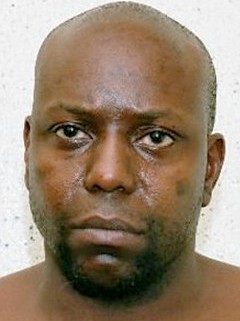 Peter Bryan
Homicide · United Kingdom · 1993
Peter Bryan was a schizophrenic cannibal who was sentenced to closed psychiatri…
3 victims
Peter Bryan
Homicide · United Kingdom · 1993
Peter Bryan was a schizophrenic cannibal who was sentenced to closed psychiatri…
3 victims
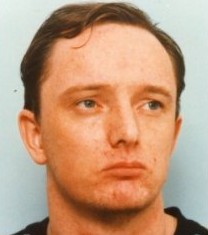 Robert Napper
Homicide · United Kingdom · 1992
Robert Clive Napper (born 25 February 1966) was a paranoid schizophrenic convic…
3 victims
Robert Napper
Homicide · United Kingdom · 1992
Robert Clive Napper (born 25 February 1966) was a paranoid schizophrenic convic…
3 victims
 Lorraine Thorpe
Homicide · United Kingdom · 2009
Lorraine Thorpe was 15 at the time of the killings and was later 16. Desmond Th…
2 victims
Lorraine Thorpe
Homicide · United Kingdom · 2009
Lorraine Thorpe was 15 at the time of the killings and was later 16. Desmond Th…
2 victims
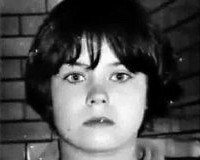 Mary Bell
Homicide · United Kingdom · 1968
Mary Flora Bell was convicted of manslaughter on the grounds of diminished resp…
2 victims
Mary Bell
Homicide · United Kingdom · 1968
Mary Flora Bell was convicted of manslaughter on the grounds of diminished resp…
2 victims
 Charles Mamou
Murderer · USA · 1998
Name: Charles Mamou · TDCJ Number: 999333 · Date of birth: 12/06/1974 · Receive…
2 victims
Charles Mamou
Murderer · USA · 1998
Name: Charles Mamou · TDCJ Number: 999333 · Date of birth: 12/06/1974 · Receive…
2 victims
 Luther Douglas
Murderer · USA · 1999
Luther Douglas was sentenced to death on June 14, 2002. On the evening of 12/25…
1 victim
Luther Douglas
Murderer · USA · 1999
Luther Douglas was sentenced to death on June 14, 2002. On the evening of 12/25…
1 victim
 Dennis Roark
Mass murderer · USA · 1989
Dennis Roark Roark returned to the home after a night of drinking at 5:00 a.m.…
4 victims
Dennis Roark
Mass murderer · USA · 1989
Dennis Roark Roark returned to the home after a night of drinking at 5:00 a.m.…
4 victims
 Pierre Bodein
Murderer · 2004
Pierre Bodein was nicknamed “Pierrot le fou,” or “Crazy Pierre.” He was 59 at t…
3 victims
Pierre Bodein
Murderer · 2004
Pierre Bodein was nicknamed “Pierrot le fou,” or “Crazy Pierre.” He was 59 at t…
3 victims
 Charles Rice
Murderer · USA · 2000
Charles Rice was sentenced to death on January 14, 2002. He was convicted of fi…
1 victim
Charles Rice
Murderer · USA · 2000
Charles Rice was sentenced to death on January 14, 2002. He was convicted of fi…
1 victim
 Willie McNair
Murderer · USA · 1990
Inmate name: MCNAIR, WILLIE · Gender: M · Race: B · Date of birth: 11/18/1964 ·…
1 victim
Willie McNair
Murderer · USA · 1990
Inmate name: MCNAIR, WILLIE · Gender: M · Race: B · Date of birth: 11/18/1964 ·…
1 victim
- Gender
- female
- Country
- United Kingdom
- Location
- Camberley, Surrey, England, United Kingdom
- Date of birth
- December 21, 1979
- Age at first offence
- 13
- Characteristics
- juvenile (12), child killer, mentally ill, torture, dismemberment, mutilation, murder for hire
- Victim profile
- Katie Rackliff, 18
- Method of murder
- Stabbing with knife (32 times)
- Date(s) of murder
- June 7, 1992
- Years active
- 1992
- Date of arrest
- January 1996
- Status
-
Life imprisonment
Sentenced to life imprisonment (minimum 14 years) on March 25, 1997. Minimum reduced to 12 years on December 10, 2003
Background
Sharon Louis Carr was born 21 December 1979. She was twelve years old when she committed the murder on 7 June 1992. She later became the UK’s youngest female murderer to be sentenced.
Carr was brought up by her mother and stepfather, a soldier. After moving to England the family settled in Camberley, Surrey. Her parents split up and she was briefly fostered, but after a month she returned to the home of her mother.
At school, her teachers initially described her as polite and helpful, but her behaviour deteriorated and she became disruptive and attention-seeking.
Police discovered that she had a history of cruelty to animals, including that she had decapitated a neighbour’s dog with a spade and that there was also a “suggestion” from a friend that she had fried live hamsters.
Criminal psychologist Gordon Tressler described Carr as “This is a difficult case to understand. One can find precedents of young children killing other young children, but in this case it was a child killing someone who was almost an adult.” Tressler said Carr was “This is an extremely dangerous person because she is clearly prepared to kill without an adequate motive. That makes her conduct very unpredictable and very dangerous. She is a great danger to the public.”
Carr was detained at Broadmoor Hospital. She remained in the care of mental health professionals. She was eventually sectioned under the Mental Health Act 1983 and transferred to Broadmoor Hospital on 16 June 1998, where she was assessed as suffering from schizoaffective disorder. When Broadmoor changed from being a mixed-sex hospital to male-only, she was moved to a different secure hospital in London.
The offence
Sharon Carr murdered Katie Racliffe, who was 18 years old when she died. The killing occurred on 7 June 1992. Katie Racliffe died after being stabbed approximately 30 times. The crime scene involved multiple stab wounds to the breasts, vagina and anus, and the body was left almost naked, which led police initially to believe that a male was responsible and to speculation that she had been raped.
A later report described that Carr stabbed Katie Racliffe 32 times and used a six-inch blade. Some of the knife thrusts went clean through Katie’s body and her breasts were mutilated. Carr’s attack also involved mutilation of Katie’s sexual organs, and her clothes were pulled up, although there was no evidence of sexual assault.
Katie Racliffe was picked up by Carr and two other youths in a car after she was involved in an argument. She had left a nightclub in Farnborough, Hants, on June 6, 1992. She got a lift to her home from Ragamuffins nightclub in Camberley. Police spent three-and-a-half years searching for a male sex-killer.
Investigation
The murder remained unsolved despite four years of intensive investigation by police. Detectives seized Carr’s writings and drawings and questioned her for 27 hours.
Carr gave three different accounts of how Katie Racliffe had been killed, but in all versions the central theme was that she repeatedly stabbed Katie.
In two versions, Carr said she was with two boys in a car at the time of the attack, and they had engaged in sexual activity with Katie before dumping the body. She named the two boys. Police interviewed them; the boys provided alibis for each other and were eliminated from the inquiry.
The prosecution relied on Carr’s knowledge and her writings. There was no forensic evidence, but she had knowledge of the murder not available to the public, including graphically describing one particular injury with details that the police had deliberately withheld. She also knew that a bracelet had been stolen from Katie Racliffe, which only the killer would have known.
While in custody for other offences, staff alerted police after Carr began talking about the killing of Katie Racliffe on the telephone to her friends and family and wrote about it in her diaries. She also gave details of what she had done to a prison officer, on whom she had developed a crush, and she talked about it to a probation officer.
Police obtained Carr’s diaries after she received a two-year prison sentence for stabbing a fellow schoolgirl at Collingwood College in Surrey.
Carr’s diary entries included quoted statements about killing and sexual pleasure. Verbatim entries included:
- “I wish I could kill you again. I promise I would make you suffer more. Your terrified screams turn me on.”
- “I swear I was born to be a murderer. Killing for me is a mass turn-on and it just makes me so high I never want to come down.”
- “Every night I see the Devil in my dreams – sometimes even in my mirror – but I realise it was just me and my heart of terror.”
- “Killing is my business and business is good.”
- “I was born to be a murderer. Every night I see the Devil in my dreams - sometimes even in my mirror, but I realise it was just me.”
- “I bring the knife into her chest. Her eyes are closing. She is pleading with me so I bring the knife to her again and again. I don't want to hurt her but I need to do violence to her ... I need to overcome her beauty, her serenity, her security. There I see her face when she died. I know she feels her life being slowly drawn from her and I hear her gasp. I guess she was trying to breathe. ”
- “The air stops in the back of her throat. I know all her life her breathing has worked, but it does not now. And I am joyful”.
- “Respect to Katie Rackliff. Four years today.”
- “I am not like one of those pretty girls who breaks down due to a guilty conscience. Through six and a half years of causing people grief, I still have not found one.”
Detective Sergeant Paul Clements, who interviewed Carr extensively, recalled: “It was almost as if she was in another world. What sticks in my mind about talking to her was the coldness. Most people that you interview show some feeling as to why they have done what they have done. But with her there was a complete absence of emotion and reason.”
Arrest
The investigation ended when Carr was caught after she was locked up for stabbing a 13-year-old girl in 1994. The prosecution described that the Rackliff killing had remained unsolved until she was found after the later stabbing.
Carr told a warder she had murdered Katie in January 1996.
Trial
Sharon Carr was convicted of the murder after trial. She denied that she had murdered Katie Racliffe at the trial.
Her conviction was based on police interviews and the contents of her diaries.
At Winchester Crown Court, the jury was told that Carr seemed to be exultant over the killing and yet haunted by it, and that she was endlessly writing about the murder and drawing pictures of a knife. Samples of her notes were described as graphic.
In March 1997, she was found guilty and sent to Broadmoor psychiatric hospital, Berks. She was tried and convicted of murder.
During sentencing proceedings for related offences, in June 1994, Carr attacked a pupil called Ann-Marie Clifford with a knife at Collingwood College Comprehensive in Camberley, Surrey. While awaiting trial, she was sent to an assessment centre where she tried to strangle two members of staff. Two counts of actual bodily harm were taken into account when she was convicted of wounding Ann-Marie and sentenced to be detained at Her Majesty’s pleasure.
At Bulwood Hall young offenders’ institution, staff alerted police after Carr began talking about the killing of Katie Racliffe on the telephone and wrote about it in her diaries.
Sentencing
Carr was convicted of the murder on 25 March 1997 and was sentenced to life imprisonment. The minimum term was set at 14 years in 1999.
The tariff was reviewed on 17 October 2003 by the Lord Chief Justice, who ruled that it should remain at 14 years. Subsequent representations were submitted, and the Lord Chief Justice reviewed the tariff again on 10 December 2003 and recommended that her tariff be reduced to 12 years.
At the Royal Courts of Justice, Lord Woolf refused to cut Carr’s 14-year tariff to the nine years recommended by her legal team. Lord Woolf concluded: “Nothing in the pages before me suggests the tariff of 14 years in this case should be revised despite Carr’s youth at the time of the offence.” Lord Woolf also said Carr will only win her freedom when it is deemed that she no longer poses a threat to society.
Carr’s tariff expired on 25 March 2009, which meant she was eligible to apply for parole if she was returned to prison after being discharged from her section. While she was subject to section, she was not eligible to apply for parole or be considered for release.
Appeals
Carr planned to challenge her conviction for murder. During a challenge against her 14-year tariff, England and Wales’ top judge, the Lord Chief Justice Lord Woolf, said Carr’s lawyers also wished to highlight that Carr’s confession to the murder may now be in doubt and that the papers submitted to the trial judge—upon which he based his assessment of her psychiatric condition—were edited by the prison service. Lord Woolf said Carr wants her murder conviction replaced with one of manslaughter on the grounds of diminished responsibility.
Lord Woolf refused to revise the tariff at the hearing described in October 2003.
Outcome
Sharon Carr was convicted of the murder of Katie Racliffe. Her minimum tariff was reduced to 12 years on 10 December 2003.
Her later mental health management continued while she remained sectioned.
Aftermath
Family members opposed any early release.
Helen Rackliff begged for Sharon Carr not to be freed. Helen claimed she should be left to rot behind bars and feared she would murder again if released. Helen said: “We were horrified when her sentence was reduced. “We just couldn’t believe it. The whole family was flabbergasted – but life doesn’t mean life any more, unfortunately. “The fact she is now eligible for parole brings it all back up to the surface and forces us to think about it again. “I don’t feel she should ever be let out because she’s a psychopath. She’s far too dangerous. She didn’t show any remorse at the trial. “The family are really concerned she could be out on the street and it could happen to someone else.”
Miss Rackliff’s sister Joanne, her mother Helen and father Joseph were all in court at the tariff review described. Lord Woolf said: “They have expressed the view that Carr should never be released because they consider that the murder was pre-meditated and they regard the defendant as a threat to society. It appears from their statements that they all continue to suffer stress and anxiety as a result of the murder.”
Outside court, Helen said: “It is just like I’m serving the sentence myself and my family is serving the sentence. “Not a day goes by when you don’t think about it. It’s not natural for your children to die before it’s behind me. “You just think, ‘Why her?’. Katie was very trusting. She often used to say to me that I worried too much. “She was a normal jolly girl. I don’t think there will ever be a time when it’s behind me. I’ll carry it to the grave.”
Katie’s father Joe was distraught at news that Carr was to marry another prisoner in Broadmoor. He said: “At the time I said Carr should hang, and I stand by that. “It's no kind of punishment. She took my little girl from me and now she's allowed to get married - to have a life. “This is not justice, it's an absolute disgrace.”
Carr proved extremely difficult to manage in prison and attacked other prisoners and staff on several occasions, leading to several transfers between prisons. She was sectioned under the Mental Health Act 1983 and transferred to Broadmoor Hospital on 16 June 1998.
Carr remained at Broadmoor Hospital until Broadmoor changed from being a mixed-sex hospital to male-only, when she was moved to a different secure hospital in London.
Carr was involved in an incident where she allegedly assaulted staff and other residents and admitted wanting to kill a fellow inmate by slitting her throat. It was also said that on occasions she believes she is a lizard and tried to cut herself to find out whether she is still human.
Carr married fellow inmate Robbie Layne in Broadmoor inside the high-security mental hospital. Carr was described as 21 and Layne as 24 in connection with the wedding. They met during recreation period meetings, and were allowed regular, supervised hour-long meetings during which they were allowed to kiss and cuddle. The marriage was planned to be conducted by Broadmoor chaplain Trevor Walt in the chapel of the Berkshire hospital later in the month, attended by several other patients who had become close friends of the couple, and it was said the ceremony would last just 20 minutes with relatives allowed to attend; the couple would not be allowed to consummate the marriage.
Robbie Layne was described as having killed his own mother by gouging out her eyes. It was also described that when Layne was 17 he stabbed and battered his mother in a fit of jealousy, believing she favoured his sister, then gouged out her eyes with the handle of a carpet sweeper. He was sent to Broadmoor in 1996.
It was said that Carr and husband-to-be Layne were detained for life. They were described as striking up a friendship at Broadmoor, meeting regularly in unsegregated areas while housed in separate wings. Carr was on Harrogate Ward and Layne shared Woodstock Ward with other killers.
During one match at the hospital grounds, Layne was described as playing football with other offenders and as an avid cricketer, and during a match he boasted that he was very excited because he was going to be marrying Carr. The statement included: “I was born to be a killer. Every night I see the Devil in my dreams.”


Spotted an error, or have more information about this case?