
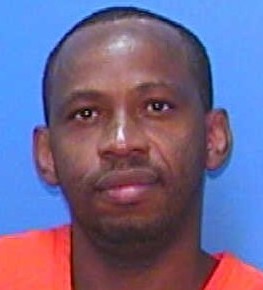
Steven Dean Gordon
Serial killer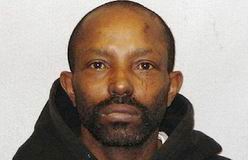 Anthony Sowell
Serial killer · USA · 2007
Anthony Edward Sowell (born August 19, 1959) was an American serial killer iden…
11 victims
Anthony Sowell
Serial killer · USA · 2007
Anthony Edward Sowell (born August 19, 1959) was an American serial killer iden…
11 victims
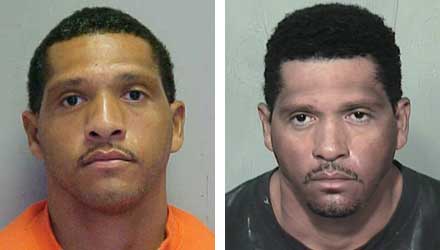 Mark Goudeau
Serial killer · USA · 2005
Mark Goudeau was a suspected serial killer from Phoenix, Arizona, who was charg…
9 victims
Mark Goudeau
Serial killer · USA · 2005
Mark Goudeau was a suspected serial killer from Phoenix, Arizona, who was charg…
9 victims
 Israel Keyes
Serial killer · USA · 2011
Israel Keyes (January 7, 1978 – December 2, 2012) was an American criminal who…
8 victims
Israel Keyes
Serial killer · USA · 2011
Israel Keyes (January 7, 1978 – December 2, 2012) was an American criminal who…
8 victims
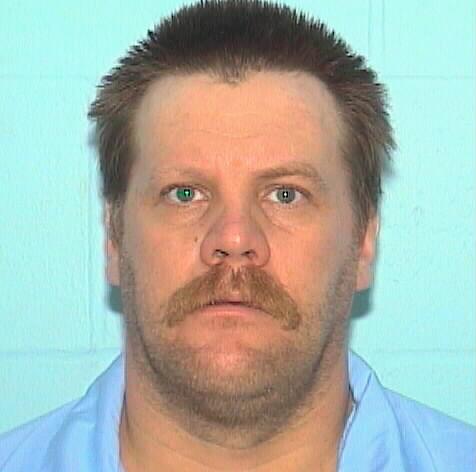 Larry Bright
Serial killer · USA · 2003
Larry Bright Larry Bright pleaded guilty to seven counts of First Degree Murder…
8 victims
Larry Bright
Serial killer · USA · 2003
Larry Bright Larry Bright pleaded guilty to seven counts of First Degree Murder…
8 victims
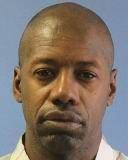 Darren Vann
Serial killer · USA · 2013
Darren Deon Vann — suspected perpetrator; arrested in October 2014; confessed t…
7 victims
Darren Vann
Serial killer · USA · 2013
Darren Deon Vann — suspected perpetrator; arrested in October 2014; confessed t…
7 victims
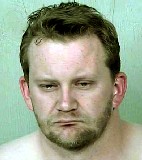 Dale Hausner
Serial killer · USA · 2005
Dale Hausner was convicted of six counts of first-degree murder, 18 attempted f…
6 victims
Dale Hausner
Serial killer · USA · 2005
Dale Hausner was convicted of six counts of first-degree murder, 18 attempted f…
6 victims
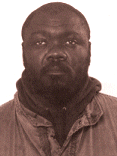 Eldridge Broussard
Homicide · 1988
Eldridge Broussard was the founder of the Ecclesia Athletic Association. Eldrid…
1 victim
Eldridge Broussard
Homicide · 1988
Eldridge Broussard was the founder of the Ecclesia Athletic Association. Eldrid…
1 victim
 Stephen Lawrence Anderson
Mass homicide · New Zealand · 1997
1995 — Stephen Lawrence Anderson was diagnosed with schizophrenic. · 8 February…
6 victims
Stephen Lawrence Anderson
Mass homicide · New Zealand · 1997
1995 — Stephen Lawrence Anderson was diagnosed with schizophrenic. · 8 February…
6 victims
 Betty Smithey
Murderer · USA · 1963
Betty Smithey was a live-in babysitter who murdered a 15-month-old child, Sandy…
1 victim
Betty Smithey
Murderer · USA · 1963
Betty Smithey was a live-in babysitter who murdered a 15-month-old child, Sandy…
1 victim
 Winnie Ruth Judd
Murderer · USA · 1931
Winnie Ruth Judd (January 29, 1905 – October 23, 1998) was a Phoenix, Arizona m…
2 victims
Winnie Ruth Judd
Murderer · USA · 1931
Winnie Ruth Judd (January 29, 1905 – October 23, 1998) was a Phoenix, Arizona m…
2 victims
- Gender
- male
- Country
- USA
- Location
- Anaheim and Santa Ana, Orange County, California, USA
- Date of birth
- February 3, 1969
- Age at first offence
- 44
- Characteristics
- abduction, rape
- Victim profile
- Kianna Jackson, 20 / Josephine Vargas, 34 / Martha Anaya, 28 / Jarrae Estepp, 21 (Estepp’s body was found at an Anaheim recycling plant, while the other bodies have never been discovered. All four were prostitutes.)
- Method of murder
- Strangulation
- Date(s) of murder
- 2013 - 2014
- Years active
- 2013–2014
- Date of arrest
- April 11, 2014
- Status
-
Sentenced to death
Sentenced to death on February 3, 2017
Case record: Steven Dean Gordon
STATUS
Steven Dean Gordon was sentenced to death on February 3, 2017.
Timeline
- 2013 (late) — Kianna Jackson disappeared in Santa Ana.
- 2013 (late/October 2013) — Investigators said Gordon and Franc Cano abducted and killed Kianna Jackson, 20.
- 2013 (November) — Herlinda Salcedo described her daughter’s panic when her daughter vanished in November 2013.
- 2013 (November 12) — Martha Anaya asked her boyfriend to pick up their five-year-old daughter so she could work on November 12.
- 2013 (November, late) — Josephine Monique Vargas disappeared after leaving a family birthday party in Santa Ana to go to a store.
- 2014 (March) — Jarrae Estepp’s body was found in an Anaheim recycling plant.
- 2014 (April) — Gordon provided two versions of each woman’s death to Anaheim detectives during a 13-hour interview.
- 2016 (November 2016) — A jury convicted Gordon of the murders and voted that he should die.
- 2016 (December 7) — Trial testimony continued after it broke until Dec. 7.
- 2016 (December 9) — Franc Cano invoked the Fifth Amendment to avoid testifying in Gordon’s capital murder trial.
- 2016 (December 13) — Gordon testified that he was responsible for the deaths.
- 2016 (December 16) — Gordon was found guilty of four counts of murder; jurors decided he should be executed.
- 2016 (December 21) — An Orange County jury decided a serial killer should be executed for the abduction and murder of four women.
- 2017 (February 3) — Orange County Superior Court Judge Patrick H. Donahue sentenced Gordon to death; the judge ordered Gordon taken to death row at San Quentin.
Background
Steven Dean Gordon was a homeless sex offender at the time of the killings. He worked at a body shop in Anaheim.
Gordon and Franc Cano were registered sex offenders and wore ankle monitors as a condition of parole or probation during the period of the killings. Detectives managed to link their monitors to the last known location of the victims.
Gordon said he deserved to die for his crimes. He repeatedly said he ought to be executed and that he fired his public defender and represented himself at trial in hopes of speeding along the system.
The offence
Gordon and Franc Cano abducted and killed four women who had been working as prostitutes in Santa Ana and Anaheim in 2013 and 2014.
Victims and discovery information
Three victims’ bodies were never found:
- Kianna Jackson, 20, of Las Vegas
- Josephine Vargas, 34, of Santa Ana
- Martha Anaya, 27, of Santa Ana
The fourth victim was found:
- Jarrae Estepp, 21, of Elk City, Okla. — her body was found in an Anaheim recycling plant in March 2014. The discovery launched the investigation that led to Gordon and Franc Cano.
In court, Gordon admitted responsibility for the deaths.
Gordon’s account during interview and testimony
During taped confessions and at trial, Gordon admitted responsibility for the deaths.
In a videotaped interview shown during the trial, Gordon described picking up women, having sex with them, and that Cano strangled them to death; he described disposal in a trash bin at the Anaheim industrial park where Gordon worked and lived. Only Estepp’s body was found.
Gordon testified that he and Cano abducted and had sex with five prostitutes, and he said Cano strangled them to death, with both men helping clean the bodies and leaving them in a trash bin at the Anaheim industrial park where Gordon worked and lived. Authorities said investigators were never able to locate or identify the fifth suspected victim.
In testimony, Gordon said he did not plan to kill Jackson, but was driven by anger at the law enforcement system. He said he and Cano abducted Jackson and sexually assaulted her, and that Cano grabbed Jackson while he drove away. He said that by the time they reached the Anaheim industrial park, they could not let Jackson leave.
On questioning by Deputy District Attorney Larry Yellin, Gordon gave answers about his decision-making including:
- When asked “When did you decide you wanted to do it again?”, Gordon answered “Ten days.”
- When asked “What were you angry at?”, Gordon answered “The system.”
Gordon described that they chose nights when they knew garbage pickup would be the next day to quickly dispose of the bodies left in the trash bin, and that there were many other times when they went out looking for prostitutes to pick up and failed to find any.
Gordon said he didn’t want the last victim, Estepp, killed, but that Cano insisted. Gordon recounted that he kissed Estepp on the lips saying, “I’m so sorry,” and he said Estepp suddenly started moving again and Cano allegedly responded by stomping on her body.
Gordon described that he tried to help in locating Estepp’s body by removing trash bags:
- “I took those garbage bags off her so she would be found, hoping she would be found,” Gordon told Detective Trapp.
When the video interview ended, Detective Julissa Trapp thanked Gordon in the effort to locate their bodies and Gordon replied:
- “I hope you find them,” in a quiet voice.
Investigation
GPS and cell data linking Gordon and Cano to the victims
Investigators used GPS tracking and cell phone records to link Gordon and Cano to the disappearances. Their monitors were tied to the last known locations of the victims.
Investigators said they compared the defendants’ tracking data with information from the missing women’s cell phones. Authorities said that:
- For the first disappearances (Kianna Jackson and Josephine Vargas), law enforcement officials had information from both Gordon and Cano’s GPS units.
- For the second disappearances (Martha Anaya and Estepp), Gordon no longer had a GPS unit, so they could only track Cano’s.
- At some point each day they were last heard from, the women were in the area near First Street and Harbor Boulevard in Santa Ana at the same time that Gordon and Cano were there.
- The same data indicated that the pair had met up with Estepp on Beach Boulevard.
- In all four cases, GPS and cell information indicated the women and at least one of the men headed back to the industrial center where Boss Paint and Body and Hardy Windows are located.
Link created after Estepp’s body was found
Anaheim detective Bruce Linn testified that he was the first detective to arrive at the Republic Waste Services building after Estepp’s remains were discovered.
Linn testified that he spotted materials such as wood, baseboard, floor trim and blue plastic that appeared to be from a residential remodel. A crime-scene investigator brought back what looked like the cleanest piece of trash—a tube of caulk—to the police lab. Fingerprints on the tube led detectives to a laborer who worked at Hardy Windows, a window installation business in Anaheim:
- Elias Sanchez testified that he routinely brought materials he used for door and windows insulation, such as the tube of caulk, back to a dumpster behind Hardy Windows.
Dr. Yong-Son Kim, a forensic pathologist with the Orange County Crime Lab, testified that Estepp’s autopsy would unveiled signs of sexual assault. Deputy District Attorney Larry Yellin said a tampon found in Estepp’s body contained the DNA of two unknown men who would end up being the suspects.
Lead investigator Detective Julisa Trapp used tracking data to see whether any sex offenders had been near the dumpster behind Hardy Windows. She found two: Gordon and Cano.
Authorities said their tracking devices linked them to the disappearance of the women.
Prosecutor characterization
Prosecutor Larry Yellin said the pair had worked together as “a very efficient killing and evidence-hiding machine.”
Yellin also described the men during trial as “two incredibly sadistic, cruel, vile people” brought together by “the strangest and wrongest happenstance.”
Yellin told jurors to think of the terror Gordon and Cano inflicted on the victims. In closing arguments, Gordon’s own statements to jurors were also presented during the trial.
Arrest and charging
Gordon and Cano were arrested after investigators linked their GPS data to the killings and compared it with evidence including cell phone records.
Each was charged with four felony counts of special circumstances murder and four felony counts of rape. Investigators said they could face a minimum sentence of life without parole or the death penalty if convicted.
Authorities said prosecutors charged both men with rape but later dropped the rape charges against Gordon.
Cano was being tried separately.
Trial
Representation and procedure
Gordon represented himself at trial in Santa Ana. He fired his public defender and represented himself in hopes of speeding along the system.
Gordon asked to have a mistrial citing media coverage and the number of deputies in the courtroom:
- “I don’t think I can get a fair trial.” Orange County Superior Court Judge Patrick H. Donahue checked with jurors to ensure none had run across any news about the case and told Gordon:
- “I don’t believe there is anything that would cause the jury to be unfair to you,"
Gordon suppressed his 13-hour videotaped confession on Miranda grounds before trial, but insisted on playing it for jurors himself.
Gordon volunteered to give another taped confession.
Statements and evidence presented by Gordon
Gordon showed jurors text messages and other evidence. He defended himself and argued about parole and probation supervision.
Gordon made statements about Cano during opening and other proceedings:
- “You heard the prosecutor refer to myself and Franc Cano as predators,” Gordon told jurors. “I would agree with that statement partially. In no way am I a saint, but I have a conscience. He does not. And I am going to prove it to you.”
- “This is not about the murder of four women,” Gordon said. “This is the murder of five, maybe six. Five for sure. Six, you’d have to ask (Cano).”
Gordon also described Cano as a man without a conscience and said Cano may have also killed another one or two women.
When asked about blame, Gordon stated:
- “The person sitting here and that piece of (expletive),” Gordon said, pointing to a picture of Cano.
Gordon blamed parole and probation agents for failing to properly supervise them:
- Gordon said the victims would be alive if agents had monitored him more diligently and prevented him from associating with Cano.
Text messages (grand jury transcripts excerpted for Estepp)
The following text messages were exchanged March 13 and March 14 between Steve Gordon and Franc Cano on the night they killed Jarrae Estepp (edited for length, graphic material and clarity by the reporter):
- 10:22 p.m. Gordon: I can't hurt this cat. I just can't.
- 10:36 Gordon: Why is the cat's phone here?
- 10:40 Gordon: Are you gonna answer?
- 10:42 Cano: Phone is power off. No worry. Your last question, if you want, you can let her go.
- 10:44 Gordon: Why?
- 10:46 Cano: Cuz you don't want to take care of it.
- 10:47 Gordon: I (need) that cash.
- 10:48 Cano: Then go get it after you take care of her ... Or I will go get it.
- 10:50 Gordon: How? Walk into the hotel room?
- 10:52 Cano: Maybe
- 10:53 Gordon: What you wanna do seriously?
- 10:58 Cano: You're gonna get your hands dirty.
- 10:58 Cano: That's all
- 11:28 Cano: Wake up
- 11:44 Gordon: How?
- 11:48 Cano: You go down there while I watch her but first you survey the area for cams out ... . I would park the truck on the street.
- 11:50 Gordon: You are forgetting what I'm wearing, huh?
- 11:52 Cano: So don't let that stop you. I would do it if it wasn't curfew, but if I has (my parole agent). I would go.
- 11:54 Gordon: Well, I'm (fearful).
- 11:55 Cano: Then get rid of her.
- 11:56 Gordon: How?
- 11:58 Cano: Happy hand
- 12:00 Gordon: Can you do it?
- 12:01 a.m.: Cano: I thought the next one, you were going to go at it.
- 12:03 Gordon: I can't. Cat is beautiful.
- 12:08 Gordon: This is the best one yet.
- 12:13 Gordon: Bye-bye, Kitty
- 12:16 Cano: No time for that. Either Kitty walks or goes to sleep ... I am not gonna sit here (all) night and text.
- 12:18 Gordon: Kitty goes to sleep. Can I sleep till 2 a.m.?
- 12:26 Cano: Then get some water so that cat can take a hot shower since it might walk with seven lives.
- 12:36 Gordon: She can't leave.
- “How four womens' killings evolved into one case” — This appeared as a header within the provided material, without additional new factual details.
Witnesses and testimony about monitoring and past
Federal probation officer questioning
Gordon asked Manuel Ontiveros, a federal probation officer:
- “Did you ever review them?” Ontiveros replied:
- “I didn’t see a need.” Gordon then said:
- “I bet you do now,”
Gordon’s questioning included prior sexual abuse conviction details
Gordon elicited testimony about his criminal past during questioning. During response to Gordon’s queries, Ontiveros described in detail how Gordon molested his young nephew, leading to a conviction that left him on the sex offender list.
Former psychologist testimony
While questioning Shiloh Catamese, Gordon brought up a session with a group of sex offenders that he said he was kicked out of for inciting an expletive-laced argument and throwing a clipboard:
- “You don’t remember me saying, ‘You make me so mad I want to kill somebody?’” Catamese replied:
- “No, I don’t,”
Witnesses from Boss Paint & Body
Gordon called the manager and owners of Boss Paint & Body, an Anaheim automotive shop where Gordon worked. They said they were aware that Gordon was a sex offender wearing an ankle monitor, knew Cano often hung out with Gordon, and said both men slept in cars behind the automotive shop.
Jerry Montgomery, the shop manager, recalled what Gordon told him when police arrived to take Gordon into custody:
- “You said, ‘I’m a piece of (expletive), I killed someone,’ and you said I would probably never see you again,” Montgomery said.
Gordon asked Montgomery:
- “Do I have anger issues?” Montgomery responded:
- “Oh, yes,” prompting Gordon to laugh briefly.
Co-defendant: Franc Cano
Franc Cano invoked the Fifth Amendment to avoid testifying in Gordon’s capital murder trial:
- “Your honor, I am invoking my client’s right under the Fifth Amendment not to testify,” Hasse interjected.
Gordon asked Cano:
- “Do you know me?” and it was described as Gordon’s only query to Cano.
Cano had pleaded not guilty.
Verdict and sentencing
Guilt and jury recommendation
Gordon was found guilty of four counts of murder for attacks in 2013 and 2014. Jurors deliberated for about an hour before issuing the verdict.
In December, a jury convicted Gordon of the murders and voted he should die.
Jurors found true special circumstances of murder during a kidnapping and multiple murders, making him eligible for a death sentence.
During the penalty phase, the prosecution called the four victims’ mothers to the stand.
Gordon’s closing argument statements to jurors
Gordon told jurors:
- “If you kill four people like this in cold blood, you deserve to die — I believe that.”
- “My actions were evil and horrible, and you're gonna get your justice very shortly.” He said he was sorry to have caused pain to the families of Kianna Jackson, Josephine Vargas, Martha Anaya, and Jarrae Estepp.
He also said he had to fire his public defender because she would not let him plead guilty and he wanted to speed the case along. He said defendants representing themselves cannot plead guilty in capital cases under the law.
Sentencing hearing (Feb. 3, 2017)
Donahue sentenced Gordon to death on February 3, 2017.
Judge Donahue ordered Gordon taken to death row at the state prison in San Quentin and nodded briefly, saying:
- “Mr. Gordon — good luck, sir. OK.”
Victim family statements at sentencing hearing
Herlinda Salcedo, Martha Anaya’s mother, told the judge:
- “My daughter was everything to me,” and she described the grief of her daughter’s young children:
- “Every day when they ask me about their mother, I just tell them that their mother is another star in the sky,” Salcedo said.
Katherine Menzies, Jackson’s mother, said that after her daughter’s disappearance, she was haunted by the thought that her daughter might still be alive, perhaps as the captive of a human trafficking ring.
At the sentencing hearing, she thanked Gordon for putting the question to rest and said:
- “I feel the death penalty is the right sentence,” and:
- “I will never see my daughter, and she will never see my family.”
Gordon cried as some victims’ families spoke.
When it came time for Gordon to speak, he said:
- “I am sorry for everything, but those are hollow words.”
Gordon denounced his co-defendant, Cano, who had taken the 5th rather than testify at his trial:
- “He’s a coward. That doesn’t make me any better.”
After the sentencing, Menzies said she struggled to understand Gordon’s motives and “the whole idea of why,” and she said she is a Christian and has studied the Bible, adding:
- “Satan,” she said.
Jodi Estepp-Pier, Estepp’s mother, said she was not moved by the killer’s apology:
- “He needs to address his apologies to God.”
- “It’s a little late to apologize to us.”
Outcome
Steven Dean Gordon was sentenced to death.
Gordon and Cano both faced the death penalty if convicted; Cano was being tried separately.
Gordon had been convicted of the murders of four women:
- Martha Anaya, 27, of Santa Ana
The other bodies (Jackson, Vargas, Anaya) were never found, while Estepp’s body was found in an Anaheim recycling plant in March 2014.
Aftermath
Gordon was taken to death row at San Quentin following sentencing.
Cano was expected to be tried for the murders later (described in the provided material as later this year and also as expected to be tried next year in other parts of the material).
Spotted an error, or have more information about this case?