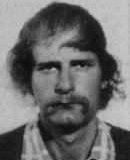
David Malcolm Gray
Mass murderer Raymond Ratima
Mass murderer · New Zealand · 1992
Raymond Wahia Ratima was an unemployed shearer and was aged 25. At the beginnin…
7 victims
Raymond Ratima
Mass murderer · New Zealand · 1992
Raymond Wahia Ratima was an unemployed shearer and was aged 25. At the beginnin…
7 victims
 Brian Schlaepfer
Mass murderer · New Zealand · 1992
Brian Schlaepfer was a farmer in Paerata, New Zealand, and he owned over one hu…
6 victims
Brian Schlaepfer
Mass murderer · New Zealand · 1992
Brian Schlaepfer was a farmer in Paerata, New Zealand, and he owned over one hu…
6 victims
 Eric Stanley Graham
Mass murderer · New Zealand · 1941
Eric Stanley Graham (also known as Stan) was a New Zealand mass murderer who ki…
7 victims
Eric Stanley Graham
Mass murderer · New Zealand · 1941
Eric Stanley Graham (also known as Stan) was a New Zealand mass murderer who ki…
7 victims
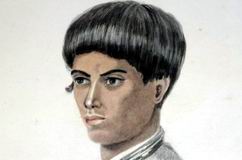 Maketu
Mass murderer · New Zealand · 1841
Maketu (also known as Maketu Wharetotara or Waretotara) (c. 1824 – 7 March 1842…
5 victims
Maketu
Mass murderer · New Zealand · 1841
Maketu (also known as Maketu Wharetotara or Waretotara) (c. 1824 – 7 March 1842…
5 victims
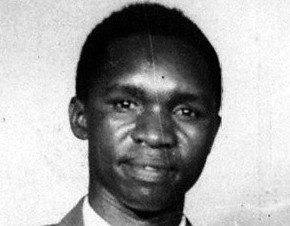 Joseph Kibweteere
Mass murderer · Uganda · 2000
Joseph Kibweteere led a breakaway sect known as the Movement for the Restoratio…
1000 victims
Joseph Kibweteere
Mass murderer · Uganda · 2000
Joseph Kibweteere led a breakaway sect known as the Movement for the Restoratio…
1000 victims
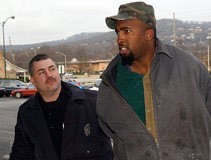 Emanuel Patterson
Mass murderer · USA · 2003
Emanuel Burl Patterson was 23 at the time of the shootings. Police said Patters…
4 victims
Emanuel Patterson
Mass murderer · USA · 2003
Emanuel Burl Patterson was 23 at the time of the shootings. Police said Patters…
4 victims
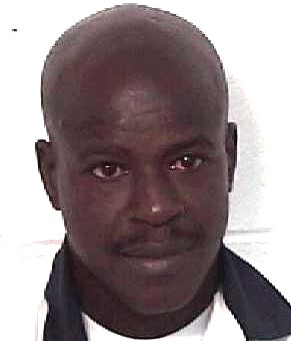 Nelson Earl Mitchell
Murderer · USA · 1986
Nelson Earl Mitchell, 34, was sentenced to death on February 14, 1990. He was s…
1 victim
Nelson Earl Mitchell
Murderer · USA · 1986
Nelson Earl Mitchell, 34, was sentenced to death on February 14, 1990. He was s…
1 victim
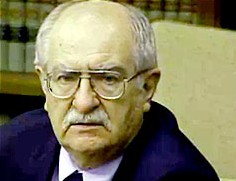 Gary Leiterman
Murderer · USA · 1969
Name: Gary Leiterman · Case: State of Michigan Court of Appeals opinion 265821…
1 victim
Gary Leiterman
Murderer · USA · 1969
Name: Gary Leiterman · Case: State of Michigan Court of Appeals opinion 265821…
1 victim
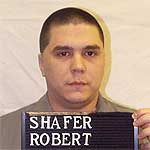 Robert Andrew Shafer
Murderer · USA · 1990
Robert Andrew Shafer was sentenced to death on January 6, 1993. His conviction…
2 victims
Robert Andrew Shafer
Murderer · USA · 1990
Robert Andrew Shafer was sentenced to death on January 6, 1993. His conviction…
2 victims
- Gender
- male
- Country
- New Zealand
- Location
- Aramoana, Otago, New Zealand
- Date of birth
- November 20, 1956
- Age at first offence
- 34
- Characteristics
- murder for hire
- Victim profile
- 8 men (including local police Sergeant Stewart Guthrie) , 1 woman and 4 children
- Method of murder
- Shooting (Norinco AK-47 assault rifle)
- Date(s) of murder
- November 13, 1990
- Years active
- 1990
- Date of arrest
- —
- Status
-
Died in custody
Shot dead by police after a 34-hour siege beginning on 13 November 1990 in Aramoana, New Zealand
Case record: David Malcolm Gray
David Malcolm Gray was an unemployed resident of Aramoana, New Zealand, who carried out a mass shooting in the township on 13 November 1990.
Background
Gray lived in Aramoana and was on the unemployment benefit. He lived in a small crib in Aramoana and was described as a recluse whose neighbours thought he was odd but harmless. He was an avid reader of warfare, weaponry, and survivalist literature, and he had amassed a cache of firearms and ammunition. His mental and physical state had deteriorated rapidly in the six months prior to the tragedy, though this was only appreciated in hindsight.
Gray was born in Dunedin, New Zealand, and was raised in Port Chalmers. His father, David Francis, worked in a manufacturing company, and his mother, Mary Elizabeth, was a machinist. He had two siblings: sister Joan and brother Barry. He attended Port Chalmers Primary School, and later enrolled at the Otago Boys' High School from 1971 to 1973, where he was a mid-stream student.
A former classmate stated Gray was quiet and unassuming, and that "there was nothing frightening about him then". Those who knew Gray remembered him as having been a loner since primary school. He had worked occasionally as a farmhand but had been unemployed for a few years before 1990. He lost both his parents: his father in 1978 and his mother in 1985. His sister said the death of their mother deeply affected David and prompted him to move from Port Chalmers to the Gray family holiday home in Aramoana.
Gray was a regular customer at Galaxy Books and Records in Dunedin. The store owner, Bill Brosnan, knew him for seven years and said Gray was a fan of military books and Soldier of Fortune magazine. In January 1990, Gray threatened an assistant of the bookshop with what appeared to be a shotgun in a cardboard box, and Brosnan served him with a trespass notice in February.
Gray’s mental state was described as having deteriorated after his mother died earlier in 1990. Gray was reported to have been mentally and physically declining, and residents said he always dressed like an Army commando. A local boy who turned mass murderer was described as having a fascination for weapons and military magazines and being regarded by neighbours as "different" and "strange".
Aramoana residents said the local boy had shunned human contact and was regarded as a “loner” who upset by the recent death of his mother was fatally wounded by police after gunning down 11 people.
A Muri St resident, Laura Young, who lived next door to Gray, said his manner always left her feeling uncomfortable, and she stated: "No one really liked him... just didn't have much to do with him." Gray’s mother had warned her to stay away from the quiet man who kept to himself.
Jason Percy of Port Chalmers, whose aunt, uncle and niece were slain by the gunman, said Gray had often been seen when visiting Aramoana. Percy stated: "He always kept to himself. I don't think anyone really knew him well." Percy added: "He'd just walk up and down the street all the time, and if you were on the same side, he would cross over before he reached you." The man, widely regarded as a "very quiet chap.", was not known to have a police record or a history of violence.
Bill Brosnan said that when Brosnan first heard that an unnamed gunman had gone on a shooting rampage, he immediately said "that's Dave Gray." Brosnan reported that he had seen Gray mentally decline, and described Gray as a loner who felt he had been dealt a raw deal by life and had a "massive chip on the shoulder". Brosnan reported that Gray came into the shop about once a fortnight for eight years to buy second-hand militaria and Soldier of Fortune magazines. Brosnan said Gray also had an interest in whole-earth material.
Brosnan reported that late last year or early in 1990 Gray twice came into Brosnan’s shop to fight a staff member who had apparently rubbed him up the wrong way. On the second occasion Gray carried a shotgun or a high-powered rifle and put it on a desk. Brosnan said Gray wanted to fight the shop employee and "made it clear" the gun was there for back-up.
Gray’s sister said he was an animal lover; locals said this was a source of conflict with his next-door neighbour, Garry Holden, whose pets kept dying.
The offence
In November 1990, Gray slaughtered people during a 24-hour rampage in the hamlet of Aramoana, a tiny seaside settlement in the province of Otago near Dunedin in the South Island. One account said that by the time he was shot, 12 people would have been executed; another account stated that by the time he was shot dead the total was 13 people lost their lives, including victims and that the gunman was also dead. Another count stated that 13 people were killed and that 14 people including Gray were dead.
The incident began on 13 November 1990. Residents of Aramoana awoke to what was described as a horrific nightmare, with Gray running riot through the village and shooting helpless individuals. By the time he was shot, the events were described as a 34-hour siege.
A timeline described the massacre beginning on 13 November at 7.30 pm, when Gray confronted neighbour Garry Holden about one of Holden's daughters wandering onto his property. After the confrontation, Gray retrieved a Norinco AK-47 assault rifle and shot Holden dead. Nearby were three young girls: Holden's two daughters, Chiquita and Jasmine, and his girlfriend Julie's adopted daughter, Rewa. The girls ran into Holden's house as Gray walked onto Holden's property.
Gray shot Chiquita through her left arm and chest, with the bullet lodging in her abdomen. Chiquita fled past her father's body to the nearby house of Julie Ann Bryson, and Gray set the Holden house on fire. Bryson drove her van there in an attempt to save the girls, taking Chiquita with her, while realising Rewa and Jasmine were still in the Holden house.
Gray shot at the van as it passed the house, which was by then ablaze. Gray then started shooting indiscriminately, targeting a utility vehicle full of locals who had seen the Holden house burning and stopped to help. Gray shot and killed Vanessa Percy as she ran down the street in terror, then killed two young boys, Leo Wilson and Dion Percy. Stacey Percy, the boys’ sister, suffered severe wounds to her abdomen.
Ross Percy, the children's father, was driving them home after a day fishing when they saw the fire, and he was the next to die, followed by Aleki Tali, who had also been with them fishing that day. Gray entered the home of Tim Jamieson and killed Tim Jamieson and another elderly local, former Green Island mayor Vic Crimp.
James Dickson, looking for his dog Patch, was killed. Helen Dickson, James’s mother, and neighbour Chris Cole went into the road to see what the noise was. Gray shot at both of them, wounding Cole and forcing Helen to dive for cover. Helen, who had recently had a hip replacement and was unable to walk without assistance, pulled herself along using her arms and feet to get inside and phone for help. She later crawled back to Cole to tell him help was coming. After waiting, Helen again crawled back to her house and phoned 111. The dispatcher advised her to stay inside. Cole died in hospital.
Sergeant Stewart Guthrie, from Port Chalmers police, and Russell Anderson, local Fire Chief, approached Aramoana with sirens and an ambulance following. During this time, Guthrie was shot and killed by Gray.
The Armed Offenders Squad had been called in and surrounded Aramoana. Police moved slowly and cleared houses. Eventually Gray was located and, after tear gas was thrown in, he came out of a house shooting and yelling "Kill Me". He was shot multiple times and killed by police.
A quote from Gray was recorded in the account of his final encounter:
"Kill me! Fucking kill me!"
Investigation
The first stage of the police strategy was described as "cordon, contain, appeal". Sergeant Stewart Guthrie observed Gray’s movements inside the house and relayed his movements to police headquarters. After some time Guthrie lost sight of Gray and advised a detective to warn everyone to be alert.
Arrest / police operation and death
Sergeant Stewart Guthrie, an officer in charge of Port Chalmers police station and an NCO in the Armed Offenders Squad (AOS), approached Gray’s house with a .38 Smith & Wesson police revolver, since New Zealand police ordinarily did not carry firearms. Guthrie enlisted the help of Constable Russell Anderson, who had arrived with the fire service, and armed Anderson with a rifle belonging to a resident.
With darkness approaching, Guthrie deployed Anderson to cover the front while Guthrie moved to cover the more dangerous rear of the house. A detective and two constables arrived and began the first step of the "cordon, contain, appeal" standard strategy.
Anderson spotted Gray coming out of the front of his property and issued a challenge, to which Gray retreated quickly by passing through the rear of his property. Guthrie later encountered Gray coming out of the darkness. Guthrie yelled at the gunman to surrender and fired a warning shot. Gray shouted, "Don't shoot!", leading Guthrie to believe he was surrendering. Guthrie then was shot in the head by Gray and killed instantly.
Minutes later, the Dunedin branch of the AOS arrived, sealed off the township, and secured it with a roadblock about 250 metres along the only road out of Aramoana using an armoured car. AOS units from Christchurch, Timaru and Invercargill were called in for support, and it was considered dangerous because Gray had a scoped rifle and could be accurate at long range.
Special Tactics Group Commissioner of Police John Jamieson authorised the Special Tactics Group (STG) to travel to Dunedin and locate Gray. STG members were in Christchurch, Wellington and Auckland, and the group traveled by early morning business flight on the 14th because they could not obtain transport with the Air Force. The group took Heckler & Koch MP5 submachine guns and encountered some problems taking firearms on a commercial aircraft. Minister of Police John Banks and Julie Holden were also on the flight; Julie Holden described Aramoana to the STG.
A large number of reporters met the flight on arrival at Dunedin. A bus took the STG to Port Chalmers, where residents from Aramoana briefed the group about the township and Gray. STG members took a reconnaissance flight over the township in an Air Force Iroquois. The helicopter initially flew high because it had no armour from small arms fire; Gray had shot at a private news helicopter earlier that morning. After reconnaissance, the STG moved out as two squads and met up with the Timaru AOS, who held positions. The group received fire orders: "if he has a firearm, he is to be shot".
Gray had entered a crib, eaten a small meal, and gone to sleep. The STG went first to Gray’s house and cleared neighbouring houses. They placed a stun grenade into the crib and blew out windows, then found it was empty.
The group worked down the road, checking houses with squads on either side of the street. The STG called up AOS members from Wanganui, Palmerston North, Napier, and New Plymouth. They discovered Sergeant Guthrie’s revolver in a garden and a woman hiding under a table for more than twenty hours.
After searching from house to house, the STG checked a crib with a broken window on the north-eastern side of the township. The crib had large hedges and a fibrolite shed at the rear. Police spotted Gray briefly at a window and a battle ensued. Police put a stun grenade through a window; it bounced off a mattress barricade and landed back near police. Police fired tear gas into the crib.
Gray began shooting through the fibrolite shed. The STG opened fire and both sides shot for two minutes. Gray walked around inside firing randomly. A stray bullet that passed through the crib struck an STG officer in the ankle.
As the shooting started, the Air Force Iroquois took an overhead position to prevent Gray from escaping into nearby bushes in the fading light of the approaching second night. At around 5.50 pm, Gray ran out of the house, shooting from the hip and shouting "Kill me! Fucking kill me!" He took several steps before being struck and knocked down by STG gunfire.
Gray was hit five times: in the eye, neck, chest, and twice in the groin. Even with these injuries, he struggled and broke free of plastic handcuffs before being re-handcuffed. Gray was berating police for not having killed him. Ambulance officers treated him at the scene by providing him oxygen, but he died where he fell at 6:10 pm.
Inside the crib police found a .22 Winchester rifle fitted with a silencer, an air rifle, hundreds of rounds of .22 ammunition, and approximately 100 rounds of .223 ammunition. Gray was carrying a .22 Remington rifle as well as a .223 Norinco when he was shot. Police fired between 50 and 60 shots, and at least 150 police officers were involved in the operation.
Victims and casualties
Killed
Rewa Ariki Bryson, 11; friend of Jasmine. Simon Christopher "Chris" Cole, 62; killed after being shot. Victor James "Vic" Crimp, 71. James Alexander "Jim" Dickson, 45. Sergeant Stewart Graeme "Stu" Guthrie, 41; Port Chalmers police officer; shot and killed. Garry John Holden, 38. Jasmine Amber Holden, 11; daughter of Garry Holden. Magnus "Tim" Jamieson, 69. Ross James Percy, 42. Vanessa Grace Percy, 26; wife of Ross Percy. Dion Raymond Jack Percy, 6; son of Ross and Vanessa Percy. Aleki Tali, 41. Leo Wilson, 6. Additionally, accounts described that fourteen people including Gray were dead, and that thirteen people lost their lives overall, with Gray also dead.
Wounded
Stacey Percy, 4; daughter of Ross and Vanessa Percy; suffered severe wounds to her abdomen. Chiquita Holden, 9; daughter of Garry Holden; wounded. Stephen Vaughan, Wellington police officer; described as injured in the final shootout in one count.
Key quotations
- Gray shouted: "Don't shoot!"
- Gray yelled while being engaged by the STG: "Kill me! Fucking kill me!"
- The quote recorded during the tear gas and final emergence: "Kill Me"
Other details
Timeline of events (dated events)
- 13 November 1990, 7.30 pm — Gray began confronting neighbour Garry Holden and retrieved weapons after the confrontation.
- 8.30 pm — Injured young girl taken to Dunedin Hospital by ambulance.
- 9.30 pm — Residents evacuated from their homes.
- 12.30 am — Police said gunman had not fired a shot for three hours.
- 1.00 am — Shots resumed.
- 2.00 am — Police announced a 61-year-old man died in hospital (later confirmed as Simon Christopher Cole).
- 6.00 am — Gray fired a volley of shots at a police helicopter.
- 12.30 pm — Police confirmed eight people dead.
- 1.00 pm — Anti-terrorist police land by helicopter at Heyward Pt.
- 1.30 pm — Police move in on Gray.
- 2.10 pm — Ten officers moved towards a burnt house.
- 2.24 pm — Police within 30m of a burnt building.
- 4.10 pm — Small explosion and assault team ran to the house where the gunman was believed to be.
- 5.00 pm — Houses on the north-eastern side of town evacuated.
- 5.55 pm — Gray shot by police.
- 6.30 pm — Gray reported dead.
A separate narrative account stated the siege took 34 hours and ended the next day, with police locating Gray and shooting him dead as he came out of a house after tear gas.
Cause of changes in his mental and physical state
Gray’s mental and physical state worsened in the months leading up to the attack. On the morning of 13 November he traveled into Dunedin city, visited a bank where he objected angrily to a NZ$2.00 bank fee for a cheque, and then went to Elio's Gun Shop, placing a $100 deposit on a gun he intended to collect the next week. At the Continental Coffee Bar he was served a cold pie and became confrontational, threatening the owners: "I'll be back, I'm going to get you. I'll blow you away." when asked to leave.
Aftermath
Three days after the incident, Gray's house at 27 Muri Street in Aramoana was deliberately set on fire and burnt to the ground. The Port Chalmers Fire Brigade attended and doused surrounding vegetation to prevent the fire spreading, and around fifty residents watched it burn. Gray's relatives asked any investigation of arson be stopped when contacted by police.
The incident sparked debate about gun control, and it indirectly resulted in an amendment to New Zealand's firearms regulations in 1992, tightening gun control. Many of the officers involved received gallantry awards, and Sergeant Guthrie receiving a posthumous George Cross was stated.
A memorial to the victims was erected in the township.
Cultural influence
At least two non-fiction books were written about the shootings: Tragedy at Aramoana by journalist Paul Bensemann and Aramoana: Twenty-two hours of terror by police officer Bill O'Brien. Chapters were also said to be devoted to the shootings in Gordon Johnston's history of the settlement, Journey to Aramoana - His Story, and Confessions from the front line by STG leader Murray Forbes.
A movie based on the massacre, Out of the Blue, directed by Robert Sarkies, premiered at the Toronto International Film Festival on September 12, 2006. Opposition from some citizens in Aramoana was described, and the community allowed some scenes to be shot only if the title was not Aramoana and if they were to see the movie beforehand.
The Mutton Birds referenced the massacre in the song "A Thing Well Made" on their self-titled debut album. The song narration described sending "one of those AK-47s for some collector down the line." The Dunedin band The Chills addressed the Aramoana incident in "Strange Case" from the 1992 album Soft Bomb.
Spotted an error, or have more information about this case?