James Stack
Mass murderer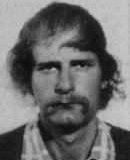 David Malcolm Gray
Mass murderer · New Zealand · 1990
David Malcolm Gray was an unemployed resident of Aramoana, New Zealand, who car…
13 victims
David Malcolm Gray
Mass murderer · New Zealand · 1990
David Malcolm Gray was an unemployed resident of Aramoana, New Zealand, who car…
13 victims
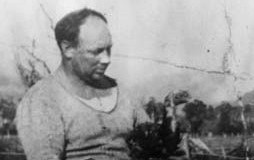 Eric Stanley Graham
Mass murderer · New Zealand · 1941
Eric Stanley Graham (also known as Stan) was a New Zealand mass murderer who ki…
7 victims
Eric Stanley Graham
Mass murderer · New Zealand · 1941
Eric Stanley Graham (also known as Stan) was a New Zealand mass murderer who ki…
7 victims
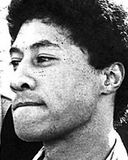 Raymond Ratima
Mass murderer · New Zealand · 1992
Raymond Wahia Ratima was an unemployed shearer and was aged 25. At the beginnin…
7 victims
Raymond Ratima
Mass murderer · New Zealand · 1992
Raymond Wahia Ratima was an unemployed shearer and was aged 25. At the beginnin…
7 victims
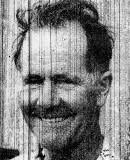 Brian Schlaepfer
Mass murderer · New Zealand · 1992
Brian Schlaepfer was a farmer in Paerata, New Zealand, and he owned over one hu…
6 victims
Brian Schlaepfer
Mass murderer · New Zealand · 1992
Brian Schlaepfer was a farmer in Paerata, New Zealand, and he owned over one hu…
6 victims
 Maketu
Mass murderer · New Zealand · 1841
Maketu (also known as Maketu Wharetotara or Waretotara) (c. 1824 – 7 March 1842…
5 victims
Maketu
Mass murderer · New Zealand · 1841
Maketu (also known as Maketu Wharetotara or Waretotara) (c. 1824 – 7 March 1842…
5 victims
 Alexander Keith
Mass murderer · Germany · 1875
Alexander “Sandy” Keith Jr. (1827–1875) was known by the assumed name of Willia…
88 victims
Alexander Keith
Mass murderer · Germany · 1875
Alexander “Sandy” Keith Jr. (1827–1875) was known by the assumed name of Willia…
88 victims
 Reinaldo Rivera
Serial killer · USA · 1999
Reinaldo Rivera was arrested in a motel room where he tried to kill himself by…
4 victims
Reinaldo Rivera
Serial killer · USA · 1999
Reinaldo Rivera was arrested in a motel room where he tried to kill himself by…
4 victims
 David Lynn Simonsen
Murderer · USA · 1988
David Lynn Simonsen was sentenced to death on February 24, 1989. The judgment o…
2 victims
David Lynn Simonsen
Murderer · USA · 1988
David Lynn Simonsen was sentenced to death on February 24, 1989. The judgment o…
2 victims
 Christopher Spreitz
Murderer · USA · 1989
Christopher John Spreitz was Caucasian. On the night in question, Ruby Reid spe…
1 victim
Christopher Spreitz
Murderer · USA · 1989
Christopher John Spreitz was Caucasian. On the night in question, Ruby Reid spe…
1 victim
 Ramiro Rubi Ibarra
Murderer · USA · 1987
Ramiro Rubi Ibarra was a Hispanic male. His hair color was black, and he weighe…
1 victim
Ramiro Rubi Ibarra
Murderer · USA · 1987
Ramiro Rubi Ibarra was a Hispanic male. His hair color was black, and he weighe…
1 victim
 Wayne Cordell Mitchell
Murderer · USA · 1997
Wayne Cordell Mitchell Wayne Cordell Mitchell and Robin Little met and began da…
1 victim
Wayne Cordell Mitchell
Murderer · USA · 1997
Wayne Cordell Mitchell Wayne Cordell Mitchell and Robin Little met and began da…
1 victim
- Gender
- male
- Country
- New Zealand
- Location
- Otahuhu, Auckland, New Zealand
- Date of birth
- ???
- Characteristics
- —
- Victim profile
- Mary Finnegan and her three sons, James 18, Benjamin 14 and John 10
- Method of murder
- Hitting with a hammer
- Date(s) of murder
- September 26, 1865
- Years active
- 1865
- Date of arrest
- December 27, 1865
- Status
-
Executed
Executed by hanging at the Mt Eden Gaol on April 7, 1866
Case overview
James Stack was executed by hanging at the Mt Eden Gaol on April 7, 1866. He was accused of the murder of four members of the Finnigan family. The victims were James, Benjamin and John, and their mother, Mary Finnegan. A fourth son, Alexander, was away serving with the Militia in Tauranga at the time of the murders.
The offence
James Stack was accused of murdering four members of the Finnigan family: Mary Finnegan and her sons James, Benjamin and John. Their bodies, with the exception of a son, were discovered buried on the property boundary where they lived. The missing body was discovered several years later.
All four victims were found to have died from severe blows to the head from a blunt instrument, possibly the hammer James Stack had borrowed. James had two blows to his head. Benjamin’s throat had been cut.
Background
James Stack was described as an old soldier of the British 65th Regiment, once based in Otahuhu. He married the daughter of Mrs. Mary Finnegan, and he later took up residence with Mary Finnegan after his new wife died suddenly. Mary Finnegan was a widow of one of the early Fencible settlers.
They lived in their cottage on Lot 7 of Section 8 on what was then called Chapel Road, Otahuhu. Like typical Fencible cottages, it was divided into two separate homes, with the Finnegan’s on one side and the widow Mrs. Weaver on the other.
Mary’s sons were:
- James, aged 18
- Benjamin, aged 14
- John, aged 10
Alexander was away serving with the Militia in Tauranga.
Investigation
Mrs. Weaver expressed concern that the entire Finnegan family had suddenly disappeared overnight. She had spoken to Mary Finnegan only the previous day and she had expressed concern over Stack’s intentions toward her and the boys. On the night the family disappeared, Mrs. Weaver had heard only the normal noises of people moving around next door.
The following morning Mrs. Weaver went next door and asked James Stack for the return of a hammer she had loaned him a few days earlier. Stack claimed he could not find it and instead gave her two shillings in payment for it. Mrs. Weaver did not see James Stack again that day, but over the next few days she observed him digging furiously in the garden until he also disappeared.
Constable Negus initially showed reluctance to investigate. After that initial reluctance, Constable Negus was finally convinced to investigate, but he made only cursory inquiries. Each time he visited the Finnegan cottage, it was locked and he failed to proceed further. Later, Negus received considerable criticism from many quarters for his inaction at this time.
Negus eventually managed to track James Stack down late December. Stack produced a plausible story that the Finnegan’s had traveled to the Hokitika gold fields. He also supplied a letter, supposedly written by Mary Finnegan, to support his story. The letter was later proven to have been a forgery written by a friend of James Stack.
Meanwhile, Negus lapsed into inaction again until just prior to Christmas, when he learned that Stack had fled the district because of concerns over the Constables questioning. Finally, the cottage and its gardens became the subject of a full search.
During the search:
- Searchers discovered the body of James Finnegan buried in the garden.
- Benjamin’s body was found nearby.
- Mary was located buried beneath a bed of carrots.
- Ten-year-old John’s body was not discovered until several years later.
Police Commissioner James Naughton arrived from Auckland to take charge of the investigation. He offered a reward of twenty pounds for the arrest of James Stack. Messages were sent out to all districts across the country on the new telegraph system.
Arrest
On 27 December 1865, James Stack was apprehended at Kaipara north of Auckland. He was recognized by a sergeant from his former Regiment. Stack had grown a moustache to change his appearance and used a false name.
James Stack was returned to Auckland under armed escort. On arrival, he was marched through a large crowd and into the City Gaol in Queen Street.
Trial
James Stack was subsequently convicted of the Finnegan murders by a trial jury. He was sentenced to death by hanging.
A letter given in evidence proved to be damning. Stack’s letter to Mary Finnegan read “until death do us part.”
Mary Finnegan’s surviving son Alexander went to the gaol early on the morning of 7 April 1866 and pleaded with Stack to say where the body of 10-year-old John could be found. Stack pretended to deny all knowledge of the deaths.
Stack maintained his innocence until he was hanged.
Sentencing
James Stack was sentenced to death by hanging.
Outcome
James Stack was taken to the gallows at 7.00 am and was executed on 7 April 1866 at Mt Eden Gaol. His body remained on the rope until 8.00 am.
Other details
Stack was briefly arrested as a suspect and then released without charge.
Stack borrowed a hammer from the next door neighbour, and when the neighbour asked for its return, Stack paid two shillings to him to get a new one.


Spotted an error, or have more information about this case?