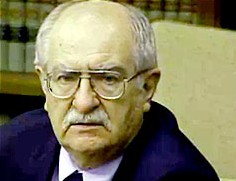
Gary Leiterman
Murderer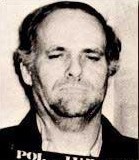 Ervil LeBaron
Murderer · USA · 1972
Ervil Morrell LeBaron (1925 to August 16, 1981) was the leader of a polygamous…
35 victims
Ervil LeBaron
Murderer · USA · 1972
Ervil Morrell LeBaron (1925 to August 16, 1981) was the leader of a polygamous…
35 victims
 Marvin Gray
Murderer · USA · 1975
Marvin Gray was convicted killer who claimed responsibility for 23 slayings and…
23 victims
Marvin Gray
Murderer · USA · 1975
Marvin Gray was convicted killer who claimed responsibility for 23 slayings and…
23 victims
 Charles Manson
Murderer · USA · 1969
Charles Milles Manson (born November 12, 1934) was an American criminal and mus…
9 victims
Charles Manson
Murderer · USA · 1969
Charles Milles Manson (born November 12, 1934) was an American criminal and mus…
9 victims
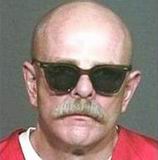 Barry Byron Mills
Murderer · USA · 1979
Barry Byron Mills (born 1948) was a leader of the Aryan Brotherhood (AB) prison…
8 victims
Barry Byron Mills
Murderer · USA · 1979
Barry Byron Mills (born 1948) was a leader of the Aryan Brotherhood (AB) prison…
8 victims
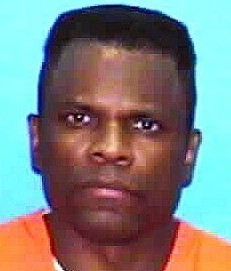 John Errol Ferguson
Murderer · USA · 1977
John Errol Ferguson was sentenced to death and was executed by lethal injection…
8 victims
John Errol Ferguson
Murderer · USA · 1977
John Errol Ferguson was sentenced to death and was executed by lethal injection…
8 victims
 Peter Contos
Murderer · USA · 1997
Peter Contos was convicted on three indictments charging murder in the first de…
3 victims
Peter Contos
Murderer · USA · 1997
Peter Contos was convicted on three indictments charging murder in the first de…
3 victims
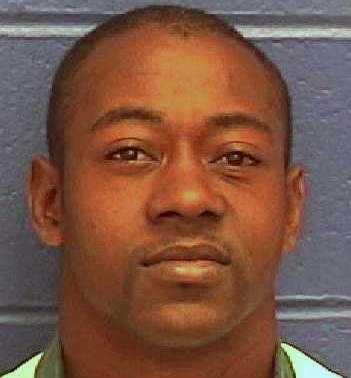 Timothy Tyrone Foster
Murderer · USA · 1986
Timothy Tyrone Foster was 29 when he was sentenced to death in Floyd County in…
1 victim
Timothy Tyrone Foster
Murderer · USA · 1986
Timothy Tyrone Foster was 29 when he was sentenced to death in Floyd County in…
1 victim
 Silvio Izquierdo-Leyva
Mass murderer · USA · 1999
Silvio Izquierdo-Leyva was a hotel employee who opened fire inside a hotel crow…
5 victims
Silvio Izquierdo-Leyva
Mass murderer · USA · 1999
Silvio Izquierdo-Leyva was a hotel employee who opened fire inside a hotel crow…
5 victims
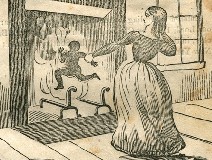 Patty Cannon
Murderer · USA · 1821
Martha “Patty” Cannon (circa 1760 – May 11, 1829) led a gang in the early 19th…
11 victims
Patty Cannon
Murderer · USA · 1821
Martha “Patty” Cannon (circa 1760 – May 11, 1829) led a gang in the early 19th…
11 victims
- Gender
- male
- Country
- USA
- Location
- Washtenaw County, Michigan, USA
- Date of birth
- 1943
- Age at first offence
- 26
- Characteristics
- drugs, history of mental illness, rape, motive unknown
- Victim profile
- Jane L. Mixer, 23
- Method of murder
- Shooting (.22-caliber gun)
- Date(s) of murder
- March 20, 1969
- Years active
- 1969
- Date of arrest
- November 2004 (35 years after)
- Status
-
Life imprisonment
Sentenced to life imprisonment on August 30, 2005
Case identification
- Name: Gary Leiterman
- Case: State of Michigan Court of Appeals opinion 265821
- Victim: Jane Mixer
STATUS / legal outcome
Gary Leiterman was sentenced to life imprisonment on August 30, 2005.
The offence
Jane Mixer was murdered in 1969. Her body was found March 21, 1969, in a cemetery west of Ann Arbor. She was 23. She was garroted with a nylon stocking that was “not her own” and was shot twice in the head with a .22. Afterward, her killer had pulled up her jumper to reveal her underwear and then carefully covered the body with her yellow raincoat and positioned it atop a grave. The killer had neatly set Mixer’s shoes and her copy of “Catch 22” near the body. She had not been beaten or sexually molested. Jane Mixer disappeared after telling her family she was accepting a ride home for spring break with a stranger. She planned to leave Ann Arbor around 6 p.m. and was expecting to arrive by 9:30 p.m. that evening. Her murder date was described as March 20, 1969, and also referenced as March 10, 1969. A phone book was found in a Michigan dorm with “Mixer” and “Muskegon” written on it in handwriting attributed to the killer.
Related background and context
In the late 1960s, there were killings of young women near Ann Arbor and in the nearby area. Over a two-year period beginning in the summer of 1967, seven young women residing on or near the University of Michigan campus or the campus of Eastern Michigan University in nearby Ypsilanti were murdered, with their bodies left for discovery in public places. Years after the murders, the case had been treated as linked to a serial killer, and police arrested John Norman Collins for one of the killings in 1969. Collins was convicted and sentenced to life in prison for the Beineman murder, and the case had been treated as closed until DNA testing led to new focus on Gary Leiterman.
Investigation
DNA evidence linked Gary Leiterman to the Mixer murder.
- Lab technicians tested residue from three drops of sweat on the victim’s pantyhose and a single drop of blood on her hand; the evidence saved for more than three decades was described as producing a match to Leiterman rather than to John Collins.
- The genetic code in sweat from the pantyhose was described as matching “a grandfatherly former nurse from southwestern Michigan.”
- Detectives sent old crime scene evidence for DNA testing in 2002.
- In 2004, technicians at the state police lab found a hit on genetic material gleaned from Mixer’s pantyhose.
The investigation also included analysis tied to another individual:
- A blood drop scraped from Mixer’s left hand was linked by DNA to John Ruelas, a Detroit man serving life in prison for an unrelated murder. The defense argued that Ruelas being only 4 years old in 1969 indicated contamination.
- The defense argued contamination could explain the DNA findings. Prosecutor Steven Hiller acknowledged that the prosecution was still unable to explain how the presence of convicted killer Don Ruelas at the crime scene occurred.
The case included an issue of alleged lab contamination:
- Earl James testified that jurors heard from forensic technicians and that “The issue of contamination at the lab is key in the case.”
- Sarah Thiabault testified that she tested the man’s clothing and “never handled evidence from the Mixer case.” She described working on a sterile surface and using only her personal tools.
Arrest and charges
Gary Leiterman was arrested last year after reinvestigation turned up stains on Mixer’s pantyhose that matched his DNA. Based upon DNA evidence, Leiterman was charged with being the person who wrote “Mixer” and “Muskegon” and was linked to the murder through the genetic material on the pantyhose.
Other criminal conduct mentioned in the case
Leiterman had pleaded guilty to forging drug prescriptions and was arrested in 2001 for passing a forged prescription. Police found a stack of prescription blanks stolen from the Kalamazoo hospital where he worked, and he was charged with illegally obtaining painkillers, including Vicodin and Lorcet. He said he lapsed into addiction after a bout with kidney stones and was allowed to plead guilty when he agreed to enter drug rehab. As a felon, he was required to provide a DNA swab under a state law that took effect just three days before his conviction. While searching Leiterman’s home, police found concealed Polaroid photos of a 16-year-old South Korean girl who had lived with the Leitermans as a foreign exchange student. The images showed the girl drugged and unconscious on Leiterman’s bed with her clothing pulled back to expose her genitals. The girl told authorities she did not remember taking the photos. Police also found a vial in Leiterman’s shaving kit containing a mixture of valium and a sedative described as putting users in a deep sleep nearly to unconsciousness. Authorities found a 1987 police report in which Leiterman reported that a .22-caliber pistol had been stolen from his house. Mixer was killed by a .22-caliber weapon. Leiterman pleaded guilty to possession of child pornography in the Polaroids of the exchange student before his murder trial in 2005.
Trial
Washtenaw County trial opening and charges
In 2005, a circuit court jury convicted Leiterman of first-degree murder of Jane Mixer. The panel found Gary Leiterman, 62, guilty of first-degree murder on a Friday afternoon following five hours of deliberations. Jurors had deliberated for five hours, with another description of deliberations lasting only minutes, and other references to deliberation for hours; the verdict followed deliberations after a two-week trial. The jury verdict was described as an endorsement of DNA evidence hotly disputed during the two-week trial. Leiterman showed no reaction to the verdict.
Prosecution witnesses and evidence
The prosecution presented DNA evidence as the star evidence. Former state police assistant commander Earl James testified about evidence that the quick, relatively painless way Mixer was killed and her body’s arrangement showed “tenderness absent from the other killings.” Earl James testified:
“A coat had been used to cover her body, almost as if she were alive to keep her warm” “It almost looked like the perpetrator of that murder had compassion for the victim”
James also testified regarding other evidence:
“They were just dumped, whereas it appeared that Mixer had been placed in the cemetery with care,”
James testified that Mixer’s only injuries were two point-blank bullet wounds to the head and that she was not sexually assaulted, while other victims were tortured with sexual assault, beatings, and stabbings. He also acknowledged similarities on cross-examination:
- A woman killed three months after Mixer was shot with a .22-caliber gun and was seen in the company of Collins on the night of her death.
- Similarities included garrotes around necks such as the stocking wrapped around Mixer’s neck.
- A medical examiner said the silk stocking was placed on the law student’s neck after she died from the gunshots and did not contribute to her death.
The prosecution presented testimony from lab technicians about DNA and contamination concerns. A spot of blood on Mixer’s hand matched the profile of a man already serving a life sentence who was 4 years old when the murder occurred; this was described as raising contamination questions due to the blood being physically impossible in age at the time.
Deputy Chief Assistant Prosecuting Attorney Steven Hiller referenced evidence described in court papers by describing a roommate’s account:
“Esper fired the weapon on one occasion. Afterwards, the defendant lost interest in having Esper shoot the gun,” Deputy Chief Assistant Prosecuting Attorney Steven Hiller wrote in court papers.
Defense arguments and disputes
Leiterman’s defense argued that an alleged serial killer, Don Norman Collins, was responsible for the murder. They also claimed lab contamination because a second man’s DNA was present as blood on the victim’s hand. Defense attorney Gary Gabry insisted the state police lab had somehow contaminated the samples. Gabry testified:
“I believe there’s innocent explanations in which the DNA could have been on there,” “Such as having contact with the pantyhose in the laundromat.” He also argued that DNA transfer could occur in a public place, such as via a sneeze, as described by his expert. Gabry argued against selective trust in parts of the lab results: “It’s going out on quite a limb to say, ‘well, there’s contamination in this part, but there’s not contamination in this part.'”
The defense also highlighted evidence against Leiterman:
- Leiterman’s fingerprints did not match any of the prints still unidentified in the case.
- Leiterman did not own a car similar to the one seen speeding away from the cemetery. Leiterman did not take the stand.
Leiterman continued to proclaim his innocence from behind bars and appealed based on DNA issues.
Sentencing
On August 30, 2005, Judge Donald Shelton handed down the mandatory sentence: Leiterman would spend the rest of his life in prison. Another account referenced Judge Donald Fhelton imposing his sentence on Aug. 30. Leiterman received a mandatory life term and was sentenced to life imprisonment.
Appeals and current status
Leiterman continued to proclaim his innocence from behind bars and appealed based on the DNA results and contamination dispute.
Outcome
Gary Leiterman was convicted by a jury of first-degree murder of Jane Mixer and sentenced to life imprisonment on August 30, 2005. Leiterman continued to deny involvement and maintained innocence during appeal processes.


Spotted an error, or have more information about this case?