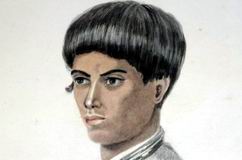
Maketu
Mass murderer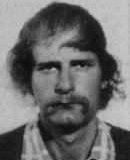 David Malcolm Gray
Mass murderer · New Zealand · 1990
David Malcolm Gray was an unemployed resident of Aramoana, New Zealand, who car…
13 victims
David Malcolm Gray
Mass murderer · New Zealand · 1990
David Malcolm Gray was an unemployed resident of Aramoana, New Zealand, who car…
13 victims
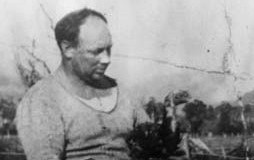 Eric Stanley Graham
Mass murderer · New Zealand · 1941
Eric Stanley Graham (also known as Stan) was a New Zealand mass murderer who ki…
7 victims
Eric Stanley Graham
Mass murderer · New Zealand · 1941
Eric Stanley Graham (also known as Stan) was a New Zealand mass murderer who ki…
7 victims
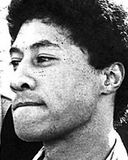 Raymond Ratima
Mass murderer · New Zealand · 1992
Raymond Wahia Ratima was an unemployed shearer and was aged 25. At the beginnin…
7 victims
Raymond Ratima
Mass murderer · New Zealand · 1992
Raymond Wahia Ratima was an unemployed shearer and was aged 25. At the beginnin…
7 victims
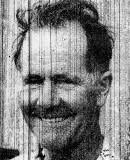 Brian Schlaepfer
Mass murderer · New Zealand · 1992
Brian Schlaepfer was a farmer in Paerata, New Zealand, and he owned over one hu…
6 victims
Brian Schlaepfer
Mass murderer · New Zealand · 1992
Brian Schlaepfer was a farmer in Paerata, New Zealand, and he owned over one hu…
6 victims
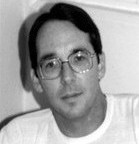 William Zeigler
Mass murderer · USA
William Thomas Zeigler Jr. was prosecuted in Florida for the murders of four pe…
1975 victims
William Zeigler
Mass murderer · USA
William Thomas Zeigler Jr. was prosecuted in Florida for the murders of four pe…
1975 victims
 James Erin McKinney
Murderer · USA · 1991
James Erin McKinney was a defendant described as Caucasian. His half-brother wa…
2 victims
James Erin McKinney
Murderer · USA · 1991
James Erin McKinney was a defendant described as Caucasian. His half-brother wa…
2 victims
 Alis Ben Johns
Murderer · USA · 1997
Alis Ben Johns began spending time with Thomas Stewart in the spring of 1996. B…
3 victims
Alis Ben Johns
Murderer · USA · 1997
Alis Ben Johns began spending time with Thomas Stewart in the spring of 1996. B…
3 victims
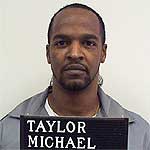 Michael Anthony Taylor
Murderer · USA · 1995
Defendant: Michael Anthony Taylor · Co-defendant: Roderick Nunley · Victim: Ann…
1 victim
Michael Anthony Taylor
Murderer · USA · 1995
Defendant: Michael Anthony Taylor · Co-defendant: Roderick Nunley · Victim: Ann…
1 victim
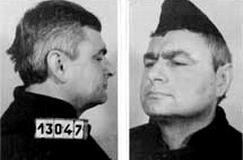 Vinko Pintaric
Serial killer · Croatia · 1973
Vinko Pintarić (3 April 1941 – 25 May 1991) was a Croatian serial killer and ou…
5 victims
Vinko Pintaric
Serial killer · Croatia · 1973
Vinko Pintarić (3 April 1941 – 25 May 1991) was a Croatian serial killer and ou…
5 victims
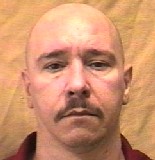 James Adolph Campbell
Murderer · USA · 1992
James Adolph Campbell was convicted by a North Carolina jury of first-degree mu…
1 victim
James Adolph Campbell
Murderer · USA · 1992
James Adolph Campbell was convicted by a North Carolina jury of first-degree mu…
1 victim
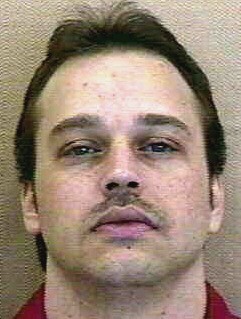 Edward Ernest Hartman
Murderer · USA · 1993
Defendant: Edward Ernest Hartman DOC Number: 0172549 Date of birth: 08/25/1964…
1 victim
Edward Ernest Hartman
Murderer · USA · 1993
Defendant: Edward Ernest Hartman DOC Number: 0172549 Date of birth: 08/25/1964…
1 victim
- Gender
- male
- Country
- New Zealand
- Location
- The Bay of Islands, North Island, New Zealand
- Date of birth
- c. 1824
- Age at first offence
- 17
- Characteristics
- juvenile (17)
- Victim profile
- His employer Elizabeth Robertson, a widow, her two children and Isabella Brind
- Method of murder
- Beating with an adze
- Date(s) of murder
- November 20, 1841
- Years active
- 1841
- Date of arrest
- —
- Status
-
Executed
Executed by hanging in Auckland on March 7, 1842
Identification
Maketu (also known as Maketu Wharetotara or Waretotara) (c. 1824 – 7 March 1842) was a Māori man executed in Auckland, New Zealand, on 7 March 1842.
Background
Maketu was the son of Ruhe of Waimate, a chief of the Ngāpuhi.
The offence
Maketu was accused of the murder of 5 people on 20th November 1841 on Motu Apohia, the island known as Robertson's Island in the Bay of Islands.
- Maketu was accused of killing Thomas Bull (Tamati Puru) with an adze. The explanation for this killing was that Thomas Bull had been mistreating Maketu.
- Maketu was accused of then killing his employer Elizabeth Robertson, a widow; her two children; and Isabella Brind, who was the grand-daughter of Rewa, a chief of the Ngai Tawake hapū of Kerikeri.
- Isabella's parents were Moewaka, Rewa's daughter, and Captain William Darby Brind.
- Maketu was also accused of setting Mrs Robertson's house on fire.
Maketu was around 20 when the crimes were committed.
Investigation and pre-trial events
At first the Ngāpuhi refused to surrender Maketu to the colonial authorities for trial. Ruhe, the father, consented after the Ngāpuhi chiefs supported the surrender of Maketu.
The meeting and events in late 1841 included opposition to the surrender of Maketu and actions taken by those opposed.
- Hone Heke had been absent from the Bay of Islands, and on his return he advocated among the Ngāpuhi for confrontation against the Government.
- A meeting of the Ngāpuhi was arranged by Archdeacon Henry Williams at Paihia at the request of Tāmati Wāka Nene.
- The meeting took place on 16th December 1841. It included Ngāpuhi from Whangaroa and Hokianga, with upwards of a thousand being present.
- The meeting was turbulent, with Heke expressing his opposition to the surrender of Maketu.
- When Heke rose to speak, he interrupted Paerau who was speaking and flourishing his hatchet at him.
- Pomare left the meeting because he did not want to be involved in fighting between different hapū of the Ngāpuhi, which had occurred in 1830 in the so-called Girls' War.
- The meeting ended with Heke and his supporters conducting a Haka on the beach at Paihia and firing their muskets, which were loaded with ball.
- Henry Williams prepared a statement of resolutions made by the Ngāpuhi who dissociated themselves from Maketu's action. The statement was signed by Tāmati Wāka Nene, Pomare, Waikato, Rewa, and Ruhe (Maketu's father).
- This message was sent to George Clarke, who had been appointed by Lieutenant-Governor William Hobson as the 'Protector of Aborigines'.
- The message was published in the New Zealand Herald and Auckland Gazette.
After Ruhe consented to the surrender, he later appeared to regret his decision. He threatened to shoot George Clarke's cattle because George Clarke had taken his son prisoner to Auckland.
Timeline
- 20 November 1841 — Maketu was accused of the murder of 5 people on Motu Apohia (Robertson's Island) in the Bay of Islands.
- 16 December 1841 — A meeting of the Ngāpuhi took place at Paihia; Heke expressed opposition to the surrender of Maketu, and the meeting ended with Heke and supporters conducting a Haka and firing muskets loaded with ball.
- 1 March 1842 — Maketu was tried in the Supreme Court in Auckland with Chief Justice William Martin presiding.
- 7 March 1842 — Maketu was executed by hanging in Auckland.
Trial
Beginning on 1 March 1842, Maketu was tried in the Supreme Court in Auckland with Chief Justice William Martin presiding.
- This was a first time that a Māori had been brought before the colonial courts.
- C.B. Brewer was retained to appear as Maketu's legal counsel about an hour before the trial came on. Brewer had no opportunity of communicating with Maketu, and he did not see the depositions before he came into court that morning.
- Brewer argued that the court did not have jurisdiction over Maketu, on the ground of the prisoner's ignorance of the crime of murder in the penal law of the colony, and that he had no possible means or opportunity of understanding the penal law of the colony.
- Swainson, the prosecuting counsel, argued that there should be one rule for all people, whether Māori or Pakeha.
- Martin CJ ruled that Maketu and could be tried and punished by the court.
- Maketu pleaded not guilty.
- A jury convicted Maketu of murder.
- Maketu was sentenced to death.
Sentencing and execution
Maketu was sentenced to death and was hanged at the corner of Queen and Victoria Streets in Auckland.
On the morning of his execution, Maketu requested to be baptised in the Anglican rite and took the Christian names "Wiremu Kingi".
Just prior to his execution, Maketu dictated a statement:
it is my own doing
and that he had prayed to God to "wash my sins away".
Maketu was approximately 20 when the crimes were committed. He was executed in Auckland on 7 March 1842, and he was the first person executed in New Zealand under British rule.
Aftermath
These events were considered a turning point in the history of the Colony. Hone Heke became an antagonist to the colonial administration and began gathering support among the Ngāpuhi for a rebellion against the colonial administration, which occurred in 1845 with the Flagstaff War.
Spotted an error, or have more information about this case?