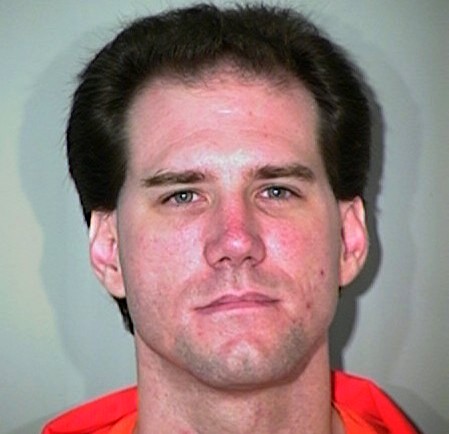
Jack Gordon Greene
Murderer Brian Kevin Rosenfeld
Murderer · USA · 1985
Brian Kevin Rosenfeld Brian Kevin Rosenfeld was sentenced to three concurrent l…
23 victims
Brian Kevin Rosenfeld
Murderer · USA · 1985
Brian Kevin Rosenfeld Brian Kevin Rosenfeld was sentenced to three concurrent l…
23 victims
 Russell Ellwood
Murderer · USA · 1991
Russell Ellwood was a former taxi driver. Authorities suspected him of killing…
20 victims
Russell Ellwood
Murderer · USA · 1991
Russell Ellwood was a former taxi driver. Authorities suspected him of killing…
20 victims
 Robert Martines Perez
Murderer · USA · 1994
Name: Robert Martines Perez · Other name used in proceedings: Robert Martinez P…
15 victims
Robert Martines Perez
Murderer · USA · 1994
Name: Robert Martines Perez · Other name used in proceedings: Robert Martinez P…
15 victims
 Billy Frank Vickers
Murderer · USA · 1993
Billy Frank Vickers Vickers was executed by lethal injection in Texas on Januar…
14 victims
Billy Frank Vickers
Murderer · USA · 1993
Billy Frank Vickers Vickers was executed by lethal injection in Texas on Januar…
14 victims
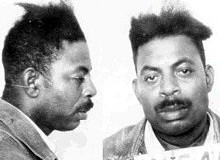 Ernest Patton
Murderer · USA · 1936
Ernest Patton was executed by asphyxiation-gas in Arizona on August 13, 1937. E…
1 victim
Ernest Patton
Murderer · USA · 1936
Ernest Patton was executed by asphyxiation-gas in Arizona on August 13, 1937. E…
1 victim
 Dale R. Anderson
Murderer · USA · 1978
Dale R. Anderson was sentenced to life imprisonment on May 11, 1990. Anderson d…
7 victims
Dale R. Anderson
Murderer · USA · 1978
Dale R. Anderson was sentenced to life imprisonment on May 11, 1990. Anderson d…
7 victims
 Mary Courtney York
Murderer · USA · 2013
Mary Courtney York was a Del City woman. She previously entered a guilty plea t…
1 victim
Mary Courtney York
Murderer · USA · 2013
Mary Courtney York was a Del City woman. She previously entered a guilty plea t…
1 victim
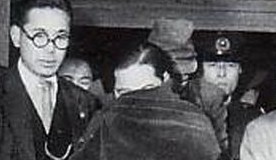 Miyuki Ishikawa
Murderer · Japan · 1944
Miyuki Ishikawa (石川 ミユキ, Ishikawa Miyuki; born 1897; date of death unknown) was…
169 victims
Miyuki Ishikawa
Murderer · Japan · 1944
Miyuki Ishikawa (石川 ミユキ, Ishikawa Miyuki; born 1897; date of death unknown) was…
169 victims
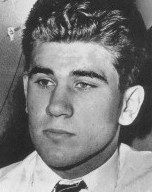 William Heirens
Homicide · USA · 1945
William George Heirens (born November 15, 1928 in Evanston, Illinois) was an Am…
3 victims
William Heirens
Homicide · USA · 1945
William George Heirens (born November 15, 1928 in Evanston, Illinois) was an Am…
3 victims
- Gender
- male
- Country
- USA
- Location
- North Carolina/Arkansas, USA
- Date of birth
- March 13, 1955
- Age at first offence
- 36
- Characteristics
- parricide, robbery, abuse
- Victim profile
- His brother Tommy / Sidney Burnett, 69
- Method of murder
- Shooting (.25-caliber handgun)
- Date(s) of murder
- July 20/23, 1991
- Years active
- 1991
- Date of arrest
- J uly 26, 1991
- Status
-
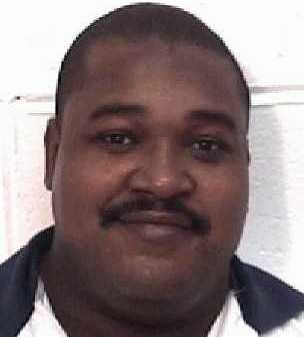
Sentenced to death
Sentenced to death in Arkansas on October 15, 1992; execution stayed by the Arkansas Supreme Court on 12/9/99 to allow review of his capital murder conviction in the 1991 slaying of retired minister Sidney Jethro Burnett; U.S. District Judge Bill Wilson denied a bid by the Arkansas Abolitionist Committee to postpone Greene's execution so mental health experts could examine Greene and determine his competency to waive his right to appeal; Arkansas Supreme Court opinion affirmed denial of postconviction relief on appeal
Case overview
Jack Gordon Greene was convicted in Johnson County Circuit Court of the capital murder of Sidney Jethro Burnett and was sentenced to death in 1992. He also received a life sentence in North Carolina for killing his brother and abducting his niece. Greene appealed his death sentence through multiple stages and later filed a petition for postconviction relief under Ark. R. Crim. P. 37, which the trial court denied without a hearing. The Arkansas Supreme Court affirmed the denial of postconviction relief.
Timeline
- October 15, 1992 — Greene was sentenced to death in Arkansas.
- 1991 — Sidney Jethro Burnett was killed in Johnson County.
- November 1998 — Greene’s 2nd death sentence was overturned.
- July 1999 — Greene was sentenced to death a 3rd time.
- 12/9/99 — The Arkansas Supreme Court issued a stay of execution for Greene to allow time to hear his appeal of his capital murder conviction.
- February 12, 2004 — The Arkansas Supreme Court delivered an opinion addressing Greene’s postconviction appeal.
- Dec. 2 — The court determined it would review all death penalty cases, regardless of whether defendants waived their rights to appeal.
- Dec. 18, 2003 — The Arkansas Supreme Court referenced Scott v. State in the standards and analysis section.
- Dec. 11, 2003 — The Arkansas Supreme Court referenced Simpson v. State in the analysis section.
Background
Greene shot his own brother Tommy five times in North Carolina, stole his car, and left for Arkansas. After that North Carolina killing, Greene invaded the Johnson County home of 69-year-old Sidney Burnett on July 23, 1991.
Greene arrived in Knoxville 3 days after the North Carolina slaying. In the North Carolina case, Greene received a life sentence for killing his brother and abducting his niece. When Greene was arrested, he still had the weapon he used in both murders, a .25-caliber handgun.
The offence
Killing of Sidney Jethro Burnett (Johnson County)
Sidney Jethro Burnett was a preacher and retired minister. In the Johnson County home invasion on July 23, 1991, Burnett was bound and gagged, beaten with a can of hominy, stabbed twice, and his throat was slit. Greene also beat Burnett in the head, probably with a can of hominy; bruised his back, probably by stomping him with his heel; brutally stabbed him in the back; cut the victim “from mouth to ear”; and ultimately shot him in the chest and in the head. Photographs of the crime scene showed macabre horror.
The Arkansas Supreme Court also included Greene’s statement about the motivation and conduct:
Appellant said, "I'm tired of being treated like shit. I was going to take out people that fucked with me. It's like chaining up a dog and treating it like shit. Sooner or later he goes crazy."
Investigation and arrest
After killing Burnett, Greene stole Sidney’s truck and fled to Oklahoma. When he was arrested, he still had the weapon he used in both murders, a .25-caliber handgun.
Trial
Capital murder conviction and death sentence (Arkansas)
Greene was convicted in Johnson County Circuit Court of the capital murder of Sidney Jethro Burnett and was sentenced to death in 1992.
The Arkansas Supreme Court affirmed the conviction for capital murder but reversed and remanded for resentencing because the North Carolina Supreme Court had reversed a previous murder conviction, which the Arkansas trial jury had considered as an aggravating circumstance. The case was described as Greene v. State, 317 Ark. 350, 878 S.W.2d 384 (1994) (Greene I).
The court later reversed and remanded for resentencing again in 1996 because:
- The State had not offered proof that Greene’s bad act in North Carolina constituted a felony under North Carolina law; and
- Greene was entitled to a hearing relating to his objections to his mental evaluation. This was described as Greene v. State, 335 Ark. 1, 977 S.W.2d 192 (1998) (Greene II).
On remand, Greene was sentenced to death and the court affirmed. State, 343 Ark. 526, 37 S.W.3d 579 (2001) (Greene III).
Evidence and sentencing-related context
In closing arguments at Greene’s final sentencing hearing, the State asked the jury to send a message. The prosecutor stated:
If someone comes into our community from off somewhere and does this to one of our citizens, I think we should tell them, "You get the maximum penalty here." Giving the maximum penalty discourages and deters other people from doing things like this to sixty nine year old retired ministers in Johnson County.
Greene’s counsel did not object to this argument.
In a separate colloquy discussed from Greene III, defense counsel argued for a life sentence as keeping Greene from ever getting out of prison. The sequence of events and colloquy between the judge and counsel was:
Defense Counsel: He's exhibited remorse for the death of Sydney Burnett. . . . I think Mr. Wilson argued that, "Well, he's in prison over this thing now." Well, he's in prison. He's not getting out. He's never getting out of Tucker Maximum Security Unit at Tucker, Arkansas.
Prosecutor: Judge, I'm going to object to that. That's misleading to the Jury.
The Court: The Jury has heard the evidence. If Counsel misquotes the evidence, they can disregard it.
Prosecutor: I'm talking about the situation about not getting out of the penitentiary. That's not the law and it's misleading.
The Court: Well, I'll sustain that.
Prosecutor: Thank you, sir.
Defense Counsel: Well, I would submit then that the only way he would ever get out would be a Governor's Pardon, if that helps Mr. Prosecutor Wilson.
Prosecutor: Well, Judge, it doesn't. The law is clear that he maybe released pursuant to commutation, pardon or reprieve of the Governor.
The Court: That's correct.
The Arkansas Supreme Court later quoted the applicable statute:
A person sentenced to life imprisonment without parole shall be remanded to the custody of the Department of Correction for imprisonment for the remainder of his life and shall not be released except pursuant to commutation, pardon, or reprieve of the Governor. Ark. Code Ann. § 5-4-606 (Repl. 1997).
Sentencing
Arkansas death sentences and overturning
Greene was sentenced to death in 1992. The Arkansas Supreme Court reversed the death sentence for resentencing and later again reversed and remanded for resentencing after the 1996 sentencing issues described in Greene II. After remand, Greene was again sentenced to death and the court affirmed in Greene III. In November 1998, Greene’s 2nd death sentence was overturned. He was sentenced to death a 3rd time in July.
North Carolina life sentence
In addition to the Arkansas capital murder case, Greene received a life sentence in North Carolina for killing his brother and abducting his niece. He arrived in Knoxville 3 days after the North Carolina slaying.
Postconviction relief and appeal
Stay of execution and appointment of counsel
The Arkansas Supreme Court stayed Greene’s execution on 12/9/99. A 1-page order stayed execution to give time to hear Greene’s appeal of his capital murder conviction.
The stay order granted Greene’s request to replace his public defender with the Capital Conflicts and Appellate Division of the Arkansas Public Defender Commission.
The actions followed about 5 months after Greene formally waived his right to appeal. Greene’s new attorney argued for the stay in court papers filed this week, and the argument cited the court’s Dec. 2 decision to review all death penalty cases, regardless of whether defendants waived their rights to appeal.
Attorney General Mark Pryor opposed the stay request. David R. Raupp, senior assistant attorney general for Pryor, wrote:
As [Greene] neither alleges nor demonstrates that his waiver was involuntary, he cannot proceed with a belated appeal.
Dorcy K. Corbin, Greene’s new attorney, argued:
Greene is about to be executed despite not having had the review which this court determined, only a week ago, was to be mandated for all death-sentenced defendants.
Corbin further wrote:
The merits of the Greene appeal are for another day.
The question before the court is merely whether Greene will survive long enough to have his sentence reviewed.
Associate Justice Don Corbin did not participate in the court's decision. He said he would recuse from all cases in which his wife, who is Dorcy K. Corbin, is participating.
Federal proceeding on mental health examination
In a separate proceeding, U.S. District Judge Bill Wilson denied a bid by the Arkansas Abolitionist Committee to postpone Greene’s execution so mental health experts the committee retained could examine Greene and determine his competency to waive his right to appeal. Wilson ruled that the committee had no standing to intervene on Greene’s behalf and noted this was the committee’s third attempt to intervene on behalf of a death-row inmate, with two previous attempts also failing.
Arkansas Supreme Court opinion on postconviction appeal
Greene filed a petition for postconviction relief pursuant to Ark. R. Crim. P. 37. The trial court denied the petition without a hearing. Greene appealed, asserting seven points on appeal: failure of written findings compliance with Rule 37; failure to conduct a hearing; ineffective assistance for failing to seek live testimony in the penalty phase instead of submitting transcripts; ineffective assistance for failing to object to State’s closing argument; ineffective assistance for failing to make a proper objection to an improper interpretation of Arkansas law; ineffective assistance for failing to challenge the testimony of the medical examiner; and ineffective assistance for failing to make a constitutional objection to the admission of a T-shirt inscribed “If you love someone, set them free. If they don't come back, hunt them down and shoot them.”
The Arkansas Supreme Court affirmed the order of the trial court.
Legal issues addressed on appeal (as decided)
Standards for ineffective assistance of counsel
The Arkansas Supreme Court set out its standards:
In reviewing a claim of ineffective assistance of counsel, the reviewing court must indulge in a strong presumption that counsel's conduct falls within the wide range of reasonable professional assistance; to rebut this presumption, the petitioner must show that there is a reasonable probability that, but for counsel's errors, the factfinder would have had a reasonable doubt respecting guilt, i.e. , that the decision reached would have been different absent the errors; a reasonable probability is one that is sufficient to undermine confidence in the outcome of the trial.
The court also addressed that totality of evidence must be considered and that it would not reverse unless findings were clearly erroneous or against the preponderance of the evidence. It further restated the requirements for written findings and when remand could occur.
Written findings under Rule 37
The court addressed Greene’s claims about Rule 37 compliance and concluded the trial court’s order was sufficient for review.
Hearing not required
The court rejected the claim that the trial court should have held an evidentiary hearing, stating Rule 37.3 granted discretion to decide whether files and records were sufficient and that death penalty cases differed but still did not require a hearing even in death cases.
Use of trial transcripts in mitigation phase
Greene argued counsel was ineffective for using transcripts rather than live mitigation testimony. The court addressed that matters of trial strategy and tactics fall within counsel’s professional judgment and that Greene did not show a reasonable probability of a different result. The court stated that counsel filed a motion to subpoena ten out-of-state witnesses and discussed that the jury unanimously found two mitigating circumstances probably existed.
Failure to object during closing argument
The court addressed Greene’s claim about failure to object to the prosecutor’s “send a message” theme and concluded the prosecutor’s comments were permissible and that Greene could not show prejudice.
Failure to object regarding possibility of release
The court addressed the sentencing argument and the colloquy about release from prison and concluded that the prosecutor correctly quoted the law and the claim had no merit, and that there was no basis to object.
Failure to impeach the State medical examiner
Greene contended trial counsel was ineffective for failing to challenge Dr. Malak’s testimony. The court discussed that at Greene’s third sentencing hearing in 1998 the State used deposition testimony of Dr. Fahmy Malak taken in 1992, and it addressed that Greene did not identify a doctor who would have disagreed or evidence showing Dr. Malak’s determinations were faulty.
T-shirt constitutional objection
Greene argued counsel was ineffective for failing to make a constitutional objection to the admission of a T-shirt inscribed “If you love someone, set them free. If they don't come back, hunt them down and shoot them.” The court addressed that it had previously held the admission error harmless and declined to find merit in the constitutional argument. It also stated:
The United States Supreme Court has concluded that the First Amendment does not prohibit the evidentiary use of speech to establish the elements of a crime or to prove motive of intent.
People involved
- Jack Gordon Greene — defendant; convicted of the capital murder of Sidney Jethro Burnett; sentenced to death in Arkansas; received a life sentence in North Carolina for killing his brother and abducting his niece.
- Sidney Jethro Burnett — victim; 69-year-old preacher and retired minister; bound and gagged, beaten with a can of hominy, stabbed twice, throat slit, and shot in the chest and head.
- Tommy — Greene’s brother; Greene shot him five times in North Carolina; Greene stole his car.
- Don Corbin — Associate Justice; did not participate in a decision due to recusal considerations related to his wife.
- Dorcy K. Corbin — Greene’s new attorney.
- Mark Pryor — Attorney General; opposed the stay request.
- David R. Raupp — senior assistant attorney general for Pryor; authored opposition reasoning for the stay request.
- Bill Wilson — U.S. District Judge; denied the bid to postpone execution for mental health evaluation due to standing.
- John S. Patterson — judge in Johnson Circuit Court.
- Jeff Rosenzweig — for appellant.
- Mike Beebe — Att’y Gen.; Kent G. Holt, Ass’t Att’y Gen., for appellee.
- Betty C. Dickey — Chief Justice.
- Dr. Fahmy Malak — medical examiner; deposition testimony used by the State at a sentencing hearing; testimony taken in 1992.
- Arkansas Abolitionist Committee — sought to postpone execution for mental health experts to examine Greene; Wilson denied the request.
- Capital Conflicts and Appellate Division of the Arkansas Public Defender Commission — appointed as Greene’s counsel after he replaced his public defender.
Other details
Greene contacted his attorney to rescind his waiver immediately and proceed with an appeal because “significant issues which would require the reversal of the death sentence are present,” according to court papers.
Greene’s postconviction appeal described multiple points, and the Arkansas Supreme Court concluded each had no merit and affirmed the denial of postconviction relief. It also recited that Greene’s conviction for capital murder had been affirmed, but resentencing occurred due to issues relating to an aggravating circumstance and other legal requirements discussed across Greene I, Greene II, and Greene III.
The Arkansas Supreme Court affirmed:
- “Affirmed.”
Spotted an error, or have more information about this case?