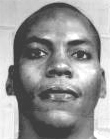
Miguel Richardson
Murderer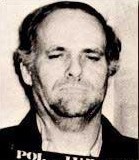 Ervil LeBaron
Murderer · USA · 1972
Ervil Morrell LeBaron (1925 to August 16, 1981) was the leader of a polygamous…
35 victims
Ervil LeBaron
Murderer · USA · 1972
Ervil Morrell LeBaron (1925 to August 16, 1981) was the leader of a polygamous…
35 victims
 Brian Kevin Rosenfeld
Murderer · USA · 1985
Brian Kevin Rosenfeld Brian Kevin Rosenfeld was sentenced to three concurrent l…
23 victims
Brian Kevin Rosenfeld
Murderer · USA · 1985
Brian Kevin Rosenfeld Brian Kevin Rosenfeld was sentenced to three concurrent l…
23 victims
 Marvin Gray
Murderer · USA · 1975
Marvin Gray was convicted killer who claimed responsibility for 23 slayings and…
23 victims
Marvin Gray
Murderer · USA · 1975
Marvin Gray was convicted killer who claimed responsibility for 23 slayings and…
23 victims
 Yahweh ben Yahweh
Murderer · USA · 1980
Yahweh ben Yahweh was born and legally named Hulon Mitchell Jr. (October 27, 19…
23 victims
Yahweh ben Yahweh
Murderer · USA · 1980
Yahweh ben Yahweh was born and legally named Hulon Mitchell Jr. (October 27, 19…
23 victims
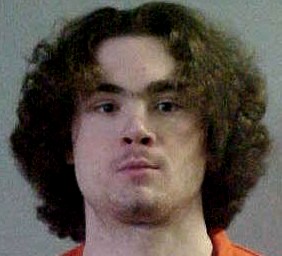 Paul Bradley Speer
Murderer · USA · 2002
Paul Bradley Speer was in jail awaiting trial for burglary. In March 2002, he a…
1 victim
Paul Bradley Speer
Murderer · USA · 2002
Paul Bradley Speer was in jail awaiting trial for burglary. In March 2002, he a…
1 victim
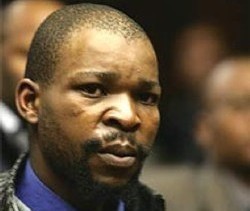 Sipho Dube
Serial killer · South Africa · 2001
Sipho Dube was convicted of seven murders and three rapes and was sentenced to…
7 victims
Sipho Dube
Serial killer · South Africa · 2001
Sipho Dube was convicted of seven murders and three rapes and was sentenced to…
7 victims
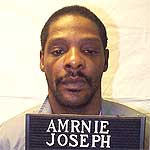 Joseph Amrine
Murderer ? · USA · 1985
Joseph Amrine was a death row inmate in Missouri. He was housed with the victim…
1 victim
Joseph Amrine
Murderer ? · USA · 1985
Joseph Amrine was a death row inmate in Missouri. He was housed with the victim…
1 victim
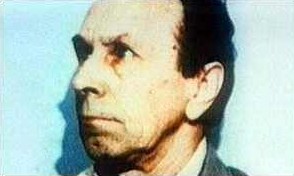 Sidney Cooke
Murderer · United Kingdom · 1985
Sidney Cooke was sentenced for the manslaughter of Jason Swift to 19 years in p…
1 victim
Sidney Cooke
Murderer · United Kingdom · 1985
Sidney Cooke was sentenced for the manslaughter of Jason Swift to 19 years in p…
1 victim
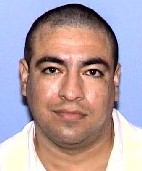 Abel Revilla Ochoa
Mass murderer · USA · 2002
Abel Revilla Ochoa (TDCJ number 999450), born 01/23/1973, was convicted of capi…
5 victims
Abel Revilla Ochoa
Mass murderer · USA · 2002
Abel Revilla Ochoa (TDCJ number 999450), born 01/23/1973, was convicted of capi…
5 victims
- Gender
- male
- Country
- USA
- Location
- Bexar County, Texas, USA
- Date of birth
- J uly 7, 1954
- Age at first offence
- 25
- Characteristics
- robbery, drug addict, history of mental illness, attempt to collect insurance money, fugitive
- Victim profile
- John Ebbert and Howard Powers ( security guards )
- Method of murder
- Shooting ( .38 caliber pistol)
- Date(s) of murder
- March 31, 1979
- Years active
- 1979
- Date of arrest
- June 1980
- Status
-
Executed
Executed by lethal injection in Texas on June 26, 2001
Case information
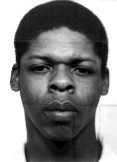
Miguel Richardson was sentenced to death for the intentional murder of John Ebbert during a robbery in San Antonio, Texas. His conviction and death sentence were affirmed by the Texas Court of Criminal Appeals, were vacated and remanded by the United States Supreme Court, and were again affirmed after remand. His requests for state and federal habeas relief were denied, and his application for clemency and a reprieve with the Texas Board of Pardons and Paroles was denied. He was executed by lethal injection in Texas on June 26, 2001.
Miguel Richardson was also known as “Silky” Richardson.
Timeline
- March 31, 1979 — John Ebbert and Howard Powers were dispatched to investigate a complaint from a guest at a Holiday Inn in San Antonio, Texas; the bodies of Ebbert and Powers were later found in a first floor stairwell.
- March 1979 — John Ebbert and Howard Powers were security guards at a Holiday Inn in San Antonio, Texas.
- March 1976 — Richardson was paroled (after serving part of a six-year sentence in a federal reformatory for possession of stolen mail).
- April, 20, 1980 — Richardson attacked the shift commander at the Denver County Jail and attempted to strike the officer with a fire extinguisher.
- June 19, 1980 — Richardson attempted to escape after being taken to the hospital and stabbed Deputy Sheriff Kenneth Hall in the neck with a homemade shank.
- September 16, 1981 — A jury found Richardson guilty of a capital offense of intentional murder of John Ebbert during a robbery, and rejected a lesser-offense instruction on murder.
- September 18, 1981 — The jury answered affirmatively the two special issues submitted pursuant to former Article 37.071 of the Texas Code of Criminal Procedure; the trial court assessed punishment at death.
- October 28, 1987 — The Texas Court of Criminal Appeals affirmed the conviction and sentence.
- July 3, 1989 — The United States Supreme Court granted certiorari, vacated the judgment, and remanded the action.
- September 18, 1991 — After remand, the Texas Court of Criminal Appeals denied Richardson’s motion for rehearing.
- June 28, 1993 — The United States Supreme Court granted certiorari again, vacated the judgment, and remanded.
- September 21, 1994 — After remand, the Texas Court of Criminal Appeals denied Richardson’s motion for rehearing.
- June 26, 1995 — The United States Supreme Court denied certiorari review.
- December 1996 — Richardson filed an application for state writ of habeas corpus with the state trial court of conviction.
- June 10, 1998 — The Court of Criminal Appeals adopted the trial court’s findings of fact and conclusions of law recommending that habeas relief be denied.
- November 30, 1998 — The United States Supreme Court denied Richardson’s petition for writ of certiorari.
- October 8, 1998 — Richardson filed a petition for writ of habeas corpus in the United States District Court for the Western District of Texas, San Antonio Division.
- March 28, 2000 — The district court denied habeas relief and permission to appeal.
- April 16, 2000 — The district court denied post-judgment relief and again denied permission to appeal.
- January 23, 2001 — The United States Court of Appeals for the Fifth Circuit denied permission to appeal.
- June 11, 2001 — The United States Supreme Court denied Richardson’s petition for writ of certiorari.
- June 5, 2001 — Richardson filed a request for clemency and a reprieve with the Texas Board of Pardons and Paroles.
- June 22, 2001 — The Board voted to deny clemency and a reprieve.
- June 7, 2001 — Richardson filed a motion with the state trial court of conviction claiming that he was incompetent to be executed or was forcibly medicated for the purpose of rendering him competent to be executed.
- June 19, 2001 — The trial court rejected these claims.
- June 14, 2001 — Richardson filed a successive application for state writ of habeas corpus raising competency claims and claiming newly discovered evidence demonstrating bipolar disorder and possible effects at the time of the offense.
- June 20, 2001 — The trial court denied the application for state writ of habeas corpus.
- June 21, 2001 — The Texas Court of Criminal Appeals dismissed the appeal as an abuse of the writ.
- June 21, 2001 — Richardson filed a petition for writ of certiorari that was pending before the U.S. Supreme Court.
- June 21 and June 22, 2001 — The United States District Court dismissed two petitions raising competency claims.
- June 22, 2001 — Richardson filed an appeal to the U.S. Court of Appeals for the Fifth Circuit.
- June 25, 2001 — The U.S. Court of Appeals for the Fifth Circuit denied a certificate of appealability and stay of execution.
- June 26, 2001 — Richardson was executed by lethal injection; he was pronounced dead at 6:28 p.m. CDT.
Background
Miguel Richardson was an Oklahoma native.
At the time of the March 1979 shootings of security guards John Ebbert and Howard Powers at a San Antonio Holiday Inn, Richardson was sharing a room with three prostitutes, two 17 years old and one 16.
Richardson had a history of violence and attempted escapes. He also had a history of mental illness, and he had a federal conviction for possession of stolen mail.
Richardson later adopted the nickname “Silky” after the lead character in a 1970s book about a Harlem, N.Y., pimp.
The offence
In March 1979, John Ebbert and Howard Powers were security guards at a Holiday Inn in San Antonio, Texas. Ebbert and Powers were dispatched early in the morning of March 31, 1979, to investigate a complaint from a guest that someone was trying to break into her room.
The room was occupied by women from Mexico City. Shortly after the front desk clerk had sent the guards to investigate the complaint, the guest called again and stated she thought she had heard gunshots. Less than one hour later, the bodies of the two security guards were found in a first floor stairwell. Both had been shot at close range with a .38 caliber pistol. The empty wallet of one of the guards was found nearby.
At the time of the offense, Richardson was traveling with three young women and the four of them occupied the room across the hall from the Mexico City guest who had called security originally. The three young women, aged 17, 17 and 16, were working as prostitutes in the various cities the group visited. All three women testified at the trial.
According to testimony, Richardson had mentioned on the evening before the offense that one of the women from Mexico City was wearing what he considered to be expensive jewelry. Richardson awakened one of the prostitutes on the morning of the offense and told her he had disguised himself and, armed with a .38 caliber pistol he had acquired several days earlier, attempted to gain entry to the room occupied by the women from Mexico City.
Richardson was interrupted while trying to break in by the two security guards. The guards were escorting Richardson down the stairs to the front desk to establish his identity when Richardson’s pistol, which was in his waistband, fell to the floor. Richardson grabbed the gun, handcuffed one of the guards, took their money, shot and killed both of them, and returned to his room.
At Richardson’s request, one of the women went to the scene of the murders and wiped the area with a towel to remove any fingerprints. She returned to the room and, at Richardson’s request, disposed of the bullets and spent shells by flushing them down the toilet.
Richardson later told another of the prostitutes about the murders and boasted to two of the women that he killed the guards after they had given him their money and begged for their lives.
Investigation and arrest
Richardson was on the run for more than a year after the March 31, 1979 robbery and slayings.
Within days of the shooting, Richardson and two of the underage prostitutes fled the State of Texas and reached Denver, Colorado, where they were apprehended. Richardson fought extradition to Texas for more than two years.
While in Colorado, during extradition proceedings, Richardson confessed to these murders to Mark Stanley Seiver, another inmate.
Trial
In May 1981, Richardson was charged by an indictment returned in Bexar County, Texas, with the capital offense of intentional murder of John Ebbert during a robbery.
A jury found Richardson guilty of the capital offense on September 16, 1981, rejecting a lesser-offense instruction on murder. A separate punishment hearing ensued, and on September 18, 1981, the jury answered affirmatively the two special issues submitted pursuant to former Article 37.071 of the Texas Code of Criminal Procedure. In accordance with state law, the trial court assessed punishment at death.
Sentencing
The trial court assessed punishment at death after the jury answered affirmatively the two special issues.
Appeals
Appeal was automatic to the Texas Court of Criminal Appeals, which affirmed the conviction and sentence on October 28, 1987.
On July 3, 1989, the United States Supreme Court granted Richardson’s petition for writ of certiorari, vacated the judgment, and remanded the action for further consideration. On remand, the Court of Criminal Appeals again affirmed the conviction and sentence, then denied Richardson’s motion for rehearing on September 18, 1991.
On June 28, 1993, the Supreme Court again granted certiorari, vacated the judgment, and remanded for further consideration. On remand, the Court of Criminal Appeals again affirmed the conviction and sentence, then denied Richardson’s motion for rehearing on September 21, 1994. On June 26, 1995, the Supreme Court denied certiorari review.
Richardson filed an application for state writ of habeas corpus with the state trial court of conviction in December 1996. After an evidentiary hearing, the trial court entered findings of fact and conclusions of law recommending that habeas relief be denied. The trial court’s findings were adopted by the Court of Criminal Appeals on June 10, 1998.
Richardson proceeded into federal court by filing a petition for writ of habeas corpus on October 8, 1998 in the United States District Court for the Western District of Texas, San Antonio Division. By orders entered on March 28, 2000, the district court denied habeas relief and permission to appeal. On April 16, 2000, the district court denied post-judgment relief sought by Richardson and again denied permission to appeal. On January 23, 2001, the United States Court of Appeals for the Fifth Circuit similarly denied Richardson permission to appeal.
Richardson again filed a petition for writ of certiorari, which the Supreme Court denied on June 11, 2001.
Richardson pursued further competency-related litigation. On June 7, 2001, Richardson filed a motion with the state trial court claiming he was incompetent to be executed or was forcibly medicated for the purpose of rendering him competent to be executed. On June 19, 2001, the trial court rejected these claims.
On June 14, 2001, Richardson filed a successive application for state writ of habeas corpus raising the competency claims and also claiming that newly discovered evidence demonstrates that he suffers from bipolar disorder and that he might have been under its effects at the time of the offense. On June 20, 2001, the trial court denied his application for state writ of habeas corpus. Richardson appealed that decision to the Texas Court of Criminal Appeals, which dismissed it as an abuse of the writ on June 21, 2001.
On June 21st, Richardson filed two petitions for writ of habeas corpus in the United States District Court for the Western District of Texas, San Antonio Division raising his competency claims. The district court dismissed those petitions on June 21st and June 22nd, respectively.
On June 21st, Richardson filed a petition for writ of certiorari pending before the U.S. Supreme Court. On June 22nd, Richardson filed an appeal to the U.S. Court of Appeals for the Fifth Circuit, which was pending.
The United States Court of Appeals for the Fifth Circuit issued an order denying a certificate of appealability and stay of execution on June 25, 2001. The Fifth Circuit’s stated procedural posture included that Richardson’s October 8, 1998 federal habeas petition asked the federal courts to overturn his 1981 capital murder conviction and death sentence; the court noted that on January 23, 2001, it affirmed the district court’s denial of federal habeas corpus relief and stay of execution. The Supreme Court denied certiorari on June 11, 2001.
The Fifth Circuit denied Richardson’s request that a hearing be conducted to determine if he was competent to be executed and to stay his execution scheduled for June 26, 2001. The Fifth Circuit denied the request for certificate of appealability and the request for application for stay of execution.
Prior criminal history
At the punishment phase of trial, the state presented evidence about Richardson’s prior criminal history and conduct.
In 1973, Richardson was convicted of possession of stolen mail, a federal offense.
A parole officer testified that he was regularly asked to predict future behavior and that the parole officer considered Richardson to be a high risk and dangerous.
On April 20, 1980, Richardson attacked the shift commander at the Denver County Jail where he was being held pending his extradition to Texas. Richardson became violent and agitated in the shift commander’s office after being informed that he would be placed in isolation, and he attempted to strike the officer with a fire extinguisher.
On June 19, 1980, Richardson attempted to escape from Denver authorities after being taken to the hospital. After his handcuffs were removed, Richardson stabbed Deputy Sheriff Kenneth Hall in the neck with a homemade shank concealed in his pants. The shank penetrated the right side of Hall’s neck to his spine. Richardson attempted to escape from custody again.
In the early morning hours of May 6, 1997, Richardson and several other inmates, including two other death row inmates, were being returned to state prison in Huntsville from the Bexar County jail. The guard driving the transport vehicle stopped for a restroom break near Houston. As the driver went to ascertain whether the restroom was secure to permit the inmates to use it, the other guard opened the van’s side door. Suddenly, Richardson and the two other death row inmates pushed their way through, knocking the guard to the ground. As the inmates beat the fallen guard and attempted to wrest the gun from the guard’s holster, the first guard returned and, using his baton, knocked them away from the fallen guard. One guard was able to draw his weapon and convince Richardson and the other two death row inmates to get back inside the van.
Competency and medication claims
Richardson claimed that he was incompetent to be executed or was forcibly medicated to render him competent to be executed.
In June 2001, the trial court rejected his claims. In his successive state habeas application, Richardson also claimed that he suffered from bipolar disorder and might have been under its effects at the time of the offense.
In the Fifth Circuit’s June 25, 2001 order, the court referenced findings of fact issued by the 175th Judicial District Court and approved by the Texas Court of Criminal Appeals. Those findings included that Richardson “presents no factual information, however, concerning his current mental health status.” The court also found that “applicant points to nothing which shows that he is presently incompetent to be executed.” The state habeas court detailed record evidence to support its conclusion that the applicant understood he was to be executed, that his execution was imminent, and the reason for his execution.
The Fifth Circuit noted that there were difficulties with Richardson’s involuntary medication claim, including whether it was cognizable in habeas. The larger hurdle identified by the Fifth Circuit was that the claim “has no factual legs.” It referenced state habeas court findings that no showing of involuntary medication was made and that there was no showing that any medication was given “for the purpose of making him competent to be executed.” It also referenced affidavits of Dr. Peccora and Gwendolyn Bundy that Richardson was not involuntarily medicated. The Fifth Circuit further referenced the state habeas court’s finding that “Dr. Sparks affirms that he found nothing, in all the records that he reviewed, which contradicts Dr. Peccora’s statement that Richardson accepted and received the medications voluntarily.”
Clemency
On June 5, 2001, Richardson filed a request for clemency and a reprieve with the Texas Board of Pardons and Paroles. On June 22, 2001, the Board voted to deny clemency and a reprieve.
Execution and last statements
Richardson was executed by lethal injection on June 26, 2001. He was pronounced dead at 6:28 p.m. CDT.
Richardson spoke for nearly eight minutes before his execution.
The following quotations were attributed to Miguel Richardson:
“I feel so much love,”
“take me! I'm ready! I'm your friend, I'm not a monster being executed. I am a minister of love,”
“good day to die. Take me God.”
“I go out loving everyone and everything ... I shed tears of love - may they nourish everyone.”
“I am a minister of love.”
Aftermath
After the execution, John Ebbert’s wife stated that Richardson did not apologize for the murders and did not ask for forgiveness. She also stated that “justice had been served.”
John Ebbert’s wife was quoted as saying:
“It was a promise I made to my husband 22 years ago when he was lying in his coffin that I was going to see this through to the end. This is the end.”
Spotted an error, or have more information about this case?