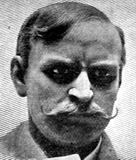
James Canham Read
Murderer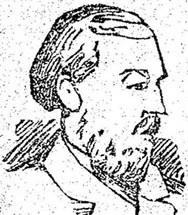 William Henry Bury
Murderer · United Kingdom · 1888
William Henry Bury was executed by hanging in Dundee on April 24, 1889. He was…
2 victims
William Henry Bury
Murderer · United Kingdom · 1888
William Henry Bury was executed by hanging in Dundee on April 24, 1889. He was…
2 victims
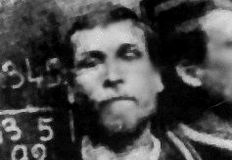 Albert Milsom
Murderer · United Kingdom · 1896
Albert Milsom (33) was executed by hanging at Newgate Prison on June 9, 1896. ·…
1 victim
Albert Milsom
Murderer · United Kingdom · 1896
Albert Milsom (33) was executed by hanging at Newgate Prison on June 9, 1896. ·…
1 victim
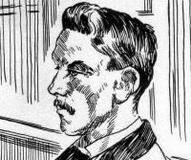 Herbert John Bennett
Murderer · United Kingdom · 1900
Herbert John Bennett was convicted of murdering his wife, Mrs Bennett. · 22 Jul…
1 victim
Herbert John Bennett
Murderer · United Kingdom · 1900
Herbert John Bennett was convicted of murdering his wife, Mrs Bennett. · 22 Jul…
1 victim
 Israel Lipski
Murderer · United Kingdom · 1887
Israel Lipski Israel Lipski (1865 - 1888) was born Israel Lobulsk. He was of Po…
1 victim
Israel Lipski
Murderer · United Kingdom · 1887
Israel Lipski Israel Lipski (1865 - 1888) was born Israel Lobulsk. He was of Po…
1 victim
 Anthony Chebatoris
Murderer · USA · 1937
Anthony Chebatoris Anthony Chebatoris (1898–1938) was executed by hanging at Mi…
1 victim
Anthony Chebatoris
Murderer · USA · 1937
Anthony Chebatoris Anthony Chebatoris (1898–1938) was executed by hanging at Mi…
1 victim
 De'Marquise Elkins
Homicide · USA · 2013
De'Marquise Elkins was a Georgia teenager who fatally shot a baby in a stroller…
1 victim
De'Marquise Elkins
Homicide · USA · 2013
De'Marquise Elkins was a Georgia teenager who fatally shot a baby in a stroller…
1 victim
 William Sallie
Murderer · USA · 1990
William C. Sallie was sentenced to death and convicted by a jury of malice murd…
1 victim
William Sallie
Murderer · USA · 1990
William C. Sallie was sentenced to death and convicted by a jury of malice murd…
1 victim
 John Wesley Wable
Murderer · USA · 1953
John Wesley Wable was convicted for murdering truck drivers who pulled off the…
2 victims
John Wesley Wable
Murderer · USA · 1953
John Wesley Wable was convicted for murdering truck drivers who pulled off the…
2 victims
 William Richard Stevens
Murderer · USA · 1977
William Richard Stevens offered to pay Corey Milliken to murder Stevens’s wife,…
3 victims
William Richard Stevens
Murderer · USA · 1977
William Richard Stevens offered to pay Corey Milliken to murder Stevens’s wife,…
3 victims
- Gender
- male
- Country
- United Kingdom
- Location
- London, England, United Kingdom
- Date of birth
- 1855
- Age at first offence
- 39
- Characteristics
- —
- Victim profile
- Florence Dennis, 18 (his pregnant mistress)
- Method of murder
- Shooting
- Date(s) of murder
- June 24, 1894
- Years active
- 1894
- Date of arrest
- 6 days after
- Status
-
Executed
Executed by hanging at Springfield prison in Chelmsford on December 4, 1894
Case information
James Canham Read was a middle-aged married bookkeeper at the London Docks. He lived at 57 Jamaica Street, Stepney, and worked as a cashier at the Royal Albert Docks. He had eight children. He was described as “a lothario who carried on many affairs” and as “moralis[tic]” on the surface.
Timeline
- In August 189— — Read met Mrs. John Ayriss “quite by accident.”
- In 1889 — During the trial of Florence Maybrick for poisoning her husband in Liverpool, Read wrote a letter to a newspaper condemning the sympathy displayed to such a murderess.
- In 1889 — Read had an affair with Mrs. Bertha Ayriss.
- In 1892 — Read met Bertha Ayriss’s 18-year-old sister, Florence Dennis.
- In 1892 — A quarrel developed between the two sisters about Read, which led to Read apparently breaking off relations.
- In the spring of 1894 — Florence Dennis told her mother she was pregnant and that Read was the father.
- Monday, June 24, 1894 — Florence Dennis went to Prittlewell to meet Read; he shot her in the head.
- After Monday, June 24, 1894 — Read walked back to Stepney all night, stopping several people for directions and stopping a “smart constable.”
- Tuesday morning following the shooting — Read returned home and was at his desk at the Albert Dock; he received a message from Bertha Ayriss asking where Florence was.
- After receiving Bertha Ayriss’s message — Read sent a response denying seeing Florence for two years.
- After sending the response — Read robbed the safe at the Albert Dock and fled.
- After fleeing — Read went to a cottage associated with another girlfriend at Mitcham, where he let his beard grow as a disguise.
- After he fled to the cottage — Read had contact with his brother Harry; the police tracked him down to the village.
- After police tracked him down — Read was arrested in the cottage and taken to London to stand trial for the murder of Florence Dennis.
- On Nov. 13, 1893 — Read stood trial for Florrie Dennis’ murder.
- On Dec. 4, 1894 — Read was executed by hanging at Springfield Prison in Chelmsford.
Background
Read was married and had eight children. The narrative described him as having multiple affairs and as living in what was described as “a fool’s paradise.” It also described his method of contacting Florence through “third party drop off points under assumed names.”
In 1889, during the trial of Florence Maybrick for poisoning her husband in Liverpool, Read wrote a letter to a newspaper condemning the sympathy displayed to “such a murderess.” In the same year, he had an affair with Mrs. Bertha Ayriss. In 1892, he met Bertha Ayriss’s 18-year-old sister, Florence Dennis. A quarrel developed between the two sisters about Read, which led to Read apparently breaking off relations. Bertha was “sure that Read had visited hersister, but couldn't prove it.”
A letter in Read’s handwriting “turned up in someclothes of Florence,” which was described as giving Bertha “a firmer basis for believing Read was in touchwith Florence.” Florence went to Southend to live with her mother. The narrative described that in the spring of 1894 Florence told her mother she was pregnant and that Read was the father. Florence contacted Read and asked what he was going to do about her problem.
Read’s contact with Florence was described as involving third-party drop-off points under assumed names, and Florence was described as following Read’s instructions to a point where “he thought she kept what was going on quiet, and that nobody knew about their connection.” The narrative stated that Florence had confided in her mother and that Bertha knew on her own. It described Read as possibly planning to get rid of Florence “for awhile,” based on how he avoided direct contact.
The narrative also stated that Read had another girlfriend who lived at Mitcham and that he had married this woman. It also described that Read arrived at Mitcham intending to hide out, that he let his beard grow, and that he had a mustache and small sideburns as part of his disguise.
The offence
Florence Dennis was killed in Prittlewell. The narrative described that on Monday, June 24, 1894, Florence went to Prittlewell to meet Read and was met by a man. They walked through woodland park at dusk. In an isolated spot, Read asked Florence if she had mentioned that they were meeting; she replied, “No”. When her back was turned, Read shot her in the head.
The narrative stated that Read hoped to catch a train from Prittlewell back to London and missed it. It also stated he could not afford to wait for the next train and decided to walk “the many miles back to Stepney,” taking all night. In this walk, he stopped several people for directions and stopped a “smart constable.”
Florence’s body was described as being found shot in a field at Prittlewell.
Investigation
After the shooting, Bertha Ayriss sent a message to Read asking where Florence was. Read decided to “brazen it out” and sent a response denying seeing Florence for two years.
The narrative also stated that people remembered Read dropping off messages for Florence and being in the vicinity of Prittlewell and being on the road trip back to London, including the “smart constable.”
It stated that Bertha Ayriss told of what she found in the note from Read to Florence, and Florence’s mother told of what she heard from Florence. It also stated that Alfred Cock scored a point against Bertha, who had to admit that her relationship with Florence was ruined by their battling over Read.
It further stated that Scotland Yard tracked down Read after he had contact with his brother Harry, and that Read was arrested in the cottage.
Arrest
Read was arrested in a cottage in the village after the police tracked him down. He was then taken to London to stand trial for the murder of Florence Dennis.
Another portion of the narrative described a separate custody event: “On June 29, persistent Scotland Yard detectives knocked on the front door of Rose Cottage and took Jimmy into custody.”
Trial
Read was defended by Alfred Cock, Q.C. His defense was described as claiming there was no proof he had been seen or in contact with Florence since 1892 and that he was not at Prittlewell on the night of the murder. The narrative stated that this defense was confronted by multiple recalled events about his messages and his presence in the vicinity of Prittlewell and the road trip back to London.
The narrative also described trial details that used “Florrie Dennis” rather than “Florence Dennis.” It stated that on Nov. 13, 1893, Read stood trial for Florrie Dennis’ murder. The Crown presented a circumstantial case, and a witness named Mr. Douthwaite testified that he had seen Jimmy and Florrie walking hand in hand beside the hedge where her body was later found.
It also stated that the distraught Miss Kemper told the court that on the Monday following the murder, Read had shown up at Rose Cottage and had insisted she purchase all the newspapers which featured the murder. The narrative stated that the English jury took only 30 minutes to bring in a guilty verdict. Read was found guilty, protesting his innocence to the end.
Sentencing
The narrative stated that Read was executed in 1894. It also included a gallows scene in which Read asked the executioner, “Will it hurt?” before he found out.
Outcome
James Canham Read was executed by hanging at Springfield Prison in Chelmsford on December 4, 1894. The narrative stated that he was found guilty and protesting his innocence to the end.
Aftermath
Bertha Ayriss was divorced by her husband. The narrative stated that “the father of the woman who Read bigamously married died of a heart attack from the strain and disgrace.” It also stated that Read’s brother Harry committed suicide. The narrative further stated that “the real Mrs. Read and her children were disgraced and impoverished.”
Other details
Read was described as having written a letter in the handwriting attributed to him that later turned up in some clothes of Florence. It was also stated that Read used assumed names and third-party drop-off points to contact Florence.
The narrative included additional biographical elements:
- Read worked at the Royal Albert Docks and lived at 57 Jamaica Street, Stepney.
- The narrative described that he met Bertha Ayriss in 1889 and then later met her younger sister Florence Dennis in 1892.
- The narrative described a meeting with Mrs. John Ayriss “in August,” and later described that about a month after Read commenced a regular relationship with Mrs. Ayriss, he met her younger sister Florrie on Clapham Common.
The narrative also included names of women involved in the affairs:
- Mrs. John Ayriss
- Mrs. Bertha Ayriss
- Florence Dennis
- Florrie (Florence) Dennis
- Miss Kemper, who was described as living at Rose Cottage in Mitcham and as being introduced to Read as “commercial traveller Edgar Benson”
- A woman at Rose Cottage in Mitcham whom Read was described as having married
The narrative included additional prosecution and evidence details:
- Mr. Douthwaite was described as the witness to seeing Jimmy and Florrie walking hand in hand beside the hedge where her body was later found.
- The court was told by Miss Kemper that Read insisted she purchase all the newspapers featuring the murder.
The narrative also included a robbery related to Read’s escape:
- The narrative stated Read robbed the safe at the Albert Dock and fled.
- It further stated that he took “160 pounds.”
The narrative described the theft being discovered as part of the suspicion after the murder:
- It stated that Florrie’s body was discovered behind the hedge on the same day that Read stole the money from the safe, and that a medical examination revealed she was pregnant.
The narrative also included references for further study:
- Leonard Piper — “MURDER BY GASLIGHT: TRUE TALES OF MURDER IN VICTORIAN AND EDWARDIAN ENGLAND” (New York: Gallery Books, ,1991), p. 11-28 “A Man of High Character”
- Charles Kingston — “ENEMIES OF SOCIETY” (London: Stanley Paul & Co., Ltd., 1927), p. 220-231 “The Southend Mystery”
- George Dilnot — “CELEBRATED CRIMES” (New York: Duffield & Co., 1925), p. 76-89 “The Gallant in the Dock”

Spotted an error, or have more information about this case?